Japanese bridge Symbolism
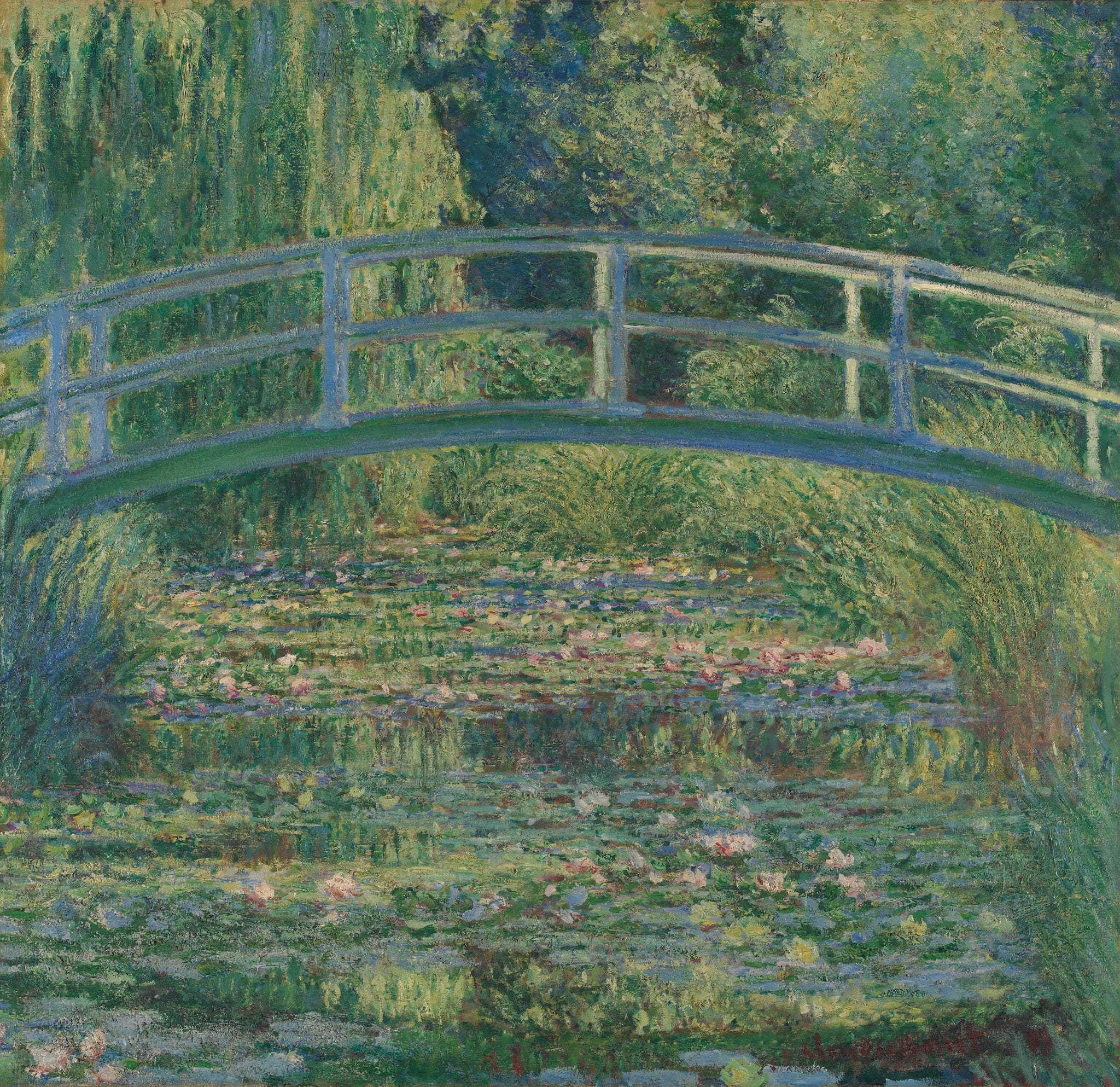
In art, the Japanese bridge is an arched garden crossing that signals a threshold and connection between cultivated design and the fluid, natural world. It marks a place of passage and pause, linking land and water while inviting reflection—both visual and contemplative. In late nineteenth-century painting, the motif often serves to probe the act of seeing and the meeting of surface and depth.
Japanese bridge in The Water Lily Pond
In Claude Monet’s The Water Lily Pond (1899), the pale, arched Japanese bridge spans a carefully designed garden while hovering over a pond where lilies, reeds, and mirrored willow fronds blur the line between water and sky. The bridge establishes human order within the scene yet is visually absorbed by reflection, functioning as a threshold between solid form and its shifting image. Monet uses this motif to make perception itself the subject: the bridge becomes a hinge for looking, guiding the viewer between tangible structures and the mutable surface that holds their reflections.