Mirror-like water surface (reflection) Symbolism
In art, mirror-like water presents the world as an indirect, doubled image, shifting attention from objects to the act of seeing. Such reflective surfaces can flatten depth and foreground the picture plane, prompting viewers to consider how perception is mediated. Across landscape traditions, still water often marks thresholds and reversals that question what is seen and how it appears.
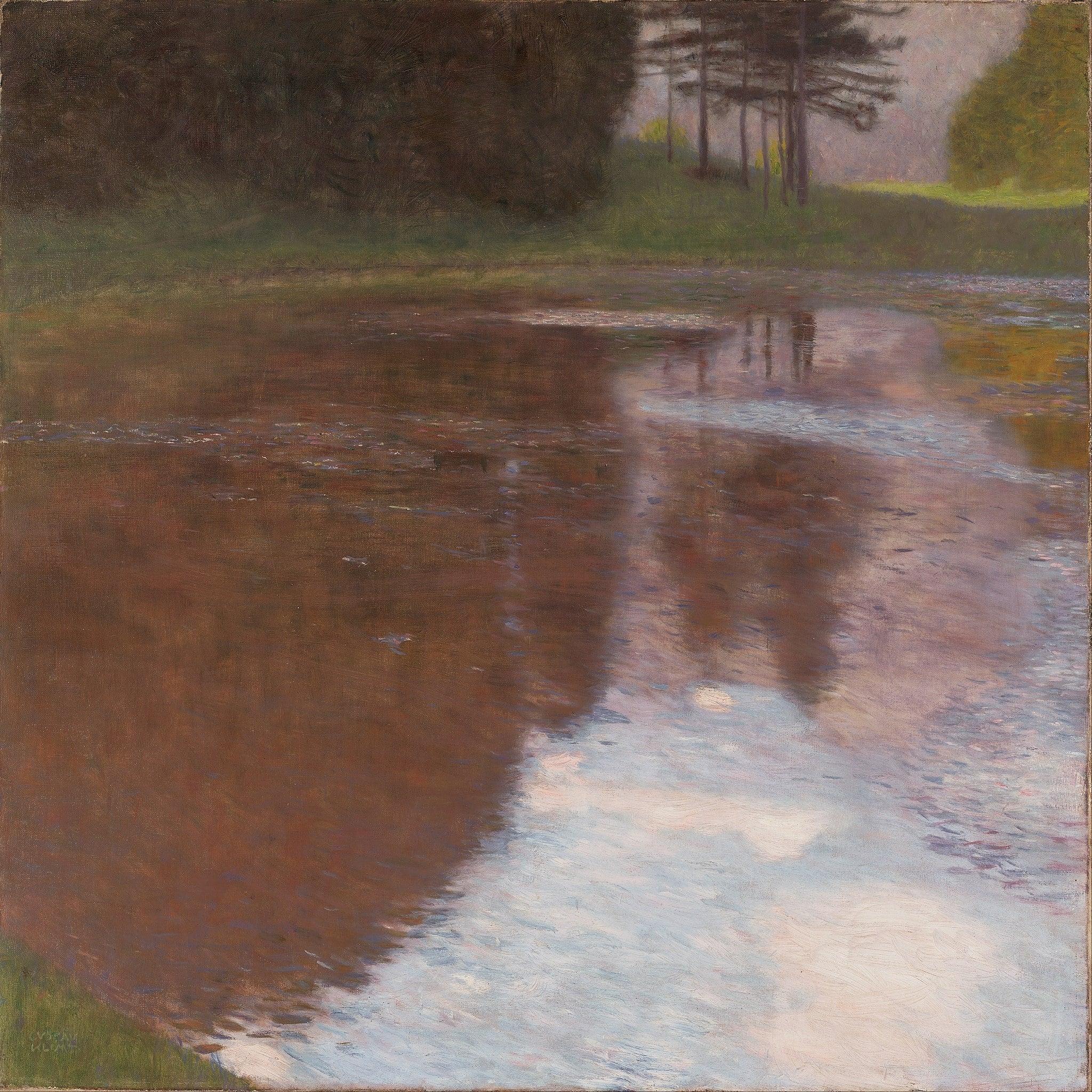
Mirror-like water surface (reflection) in A Morning by the Pond
In A Morning by the Pond (1899), Gustav Klimt turns the Egelsee shoreline into a continuous field of reflection in which trees, bank, and sky dissolve into a single surface. The square format compresses depth so that water becomes the true subject, its reflective plane staging a luminous threshold between night and day. By presenting nature chiefly as reflection, the painting foregrounds perception itself—seeing the world indirectly through a mirror-like surface—as a central modern theme.