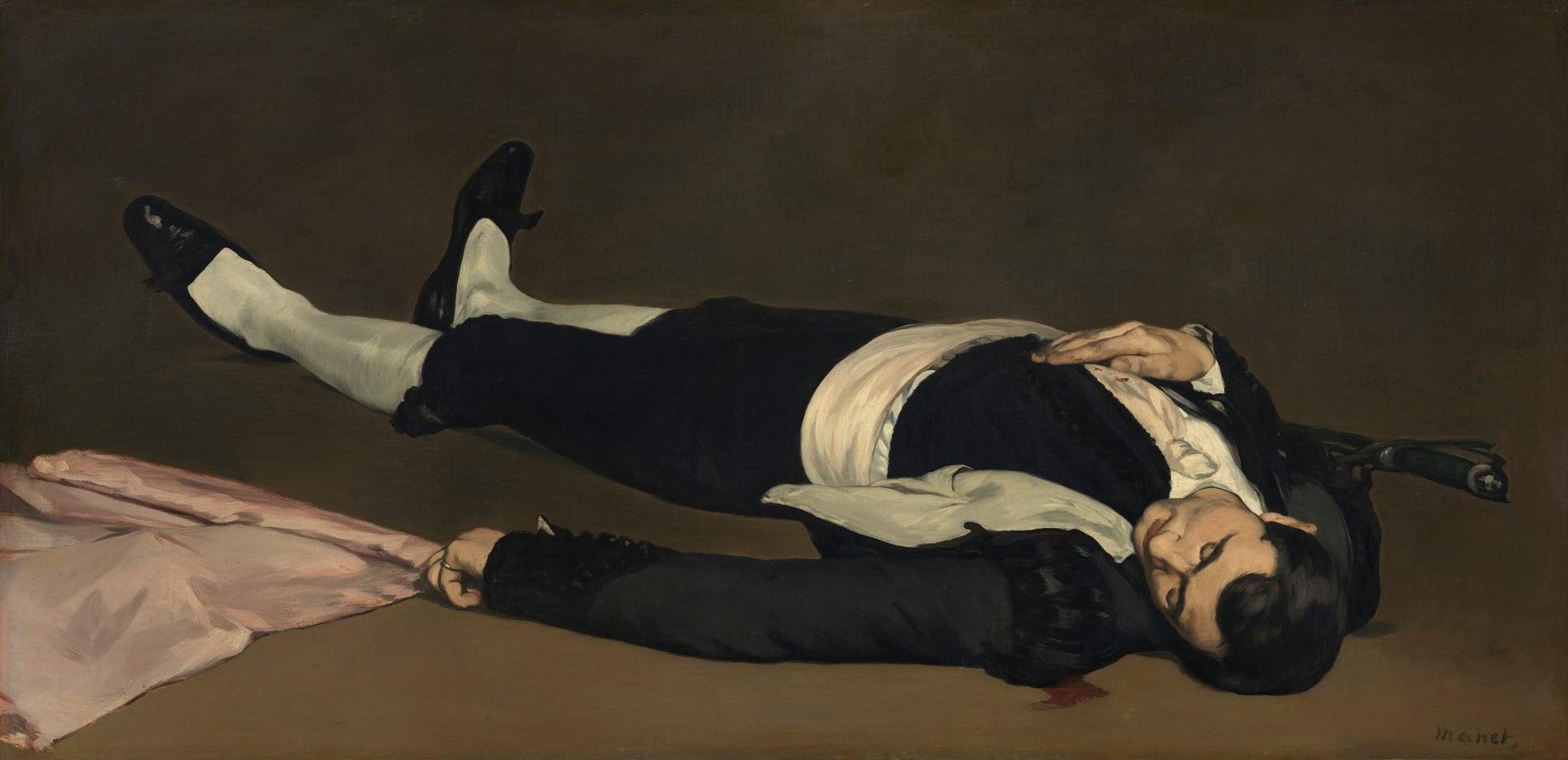
Sword hilt Symbolism
The sword hilt—the part held in the hand—condenses a weapon’s meanings of power, control, and potential violence. Across art history, swords often mark authority and conflict; focusing on the hilt shifts attention to human intention and agency. When shown alongside death, an inert hilt can register the end of action and the costs of violence.
Sword hilt in The Dead Toreador
In Édouard Manet’s The Dead Toreador (probably 1864), the sword’s hilt appears among a pared set of motifs—black costume, white stockings, pale pink cape, and a small pool of blood—that replace the spectacle of the bullring with silence and abrupt finality. Isolated beside the matador’s body, the hilt signals his profession and the instrumental means of violence, yet its stillness turns it into a mute remnant. In Manet’s cool, modern vocabulary of death, the hilt underscores lost agency and the futility that follows the action it once promised.