Symphony of black clothing Symbolism
In art, a “symphony of black clothing” describes compositions that organize garments and accessories into dominant black tonal fields to convey elegance, restraint, and gravity. Across European portraiture, especially in the nineteenth century, black dress signaled modern urban style while inviting painters to model form with light and texture rather than color. Here, black functions not as emptiness but as an active, expressive surface that shapes mood and identity.
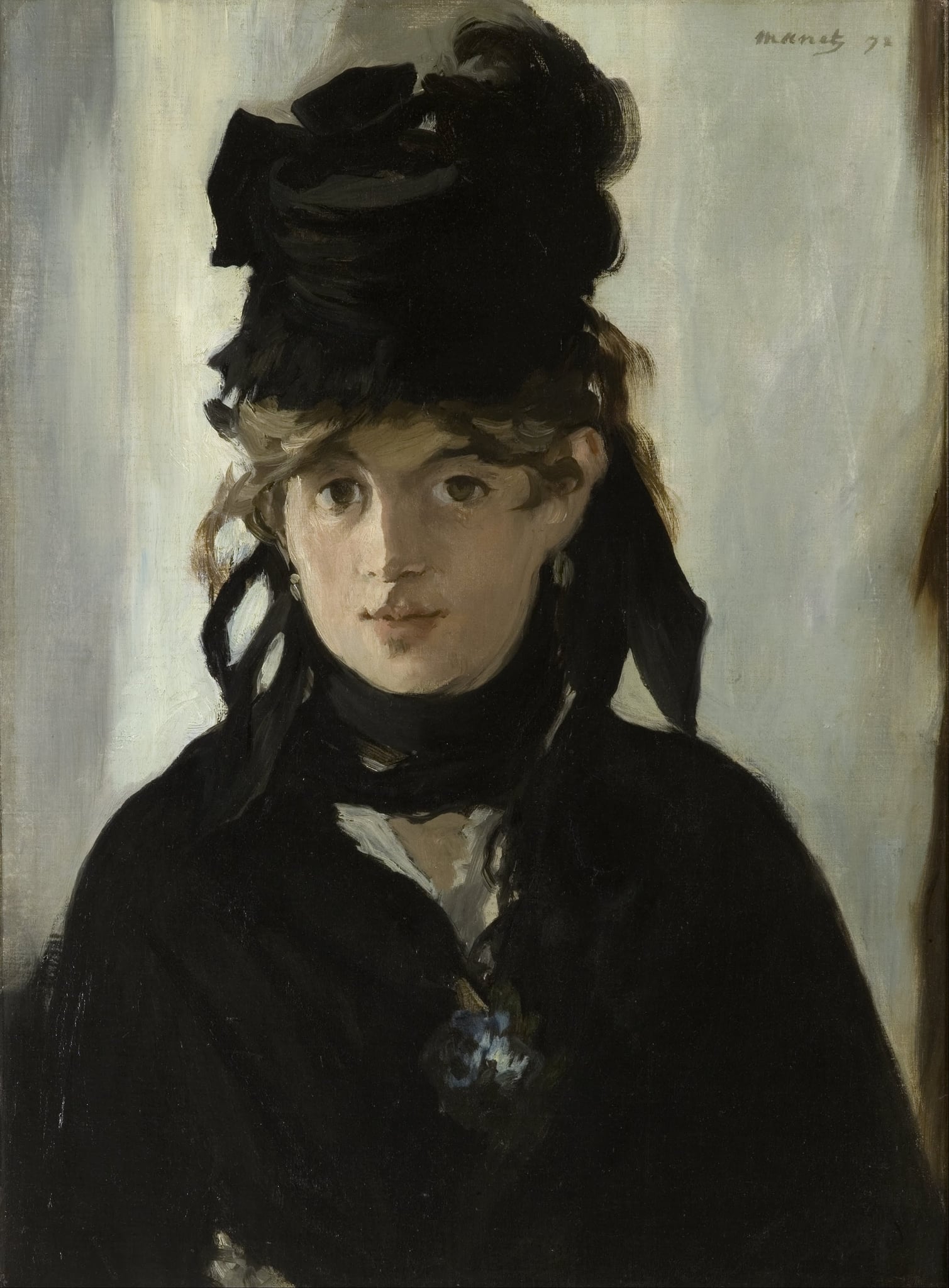
Symphony of black clothing in Berthe Morisot with a Bouquet of Violets
Édouard Manet’s Berthe Morisot with a Bouquet of Violets (1872) exemplifies the symbol: hat, scarf, and coat fuse into a single dark silhouette against a cool, silvery ground, producing a true symphony in black. Side‑light chisels the face, and the eyes are rendered strikingly black, intensifying the portrait’s poised elegance and gravity. The tiny knot of violets provides the sole chromatic accent—a discreet, coded tenderness that punctuates the work’s refined restraint and demonstrates how Manet uses black as an expressive presence rather than a void.