Nu couché
Study Print Studio
Create a personal study print
Build a companion study sheet around the part of this painting that speaks to you most. Choose a detail, shape an interpretation, and walk away with something personal and display-worthy.
Fast Facts
- Year
- 1917
- Medium
- Oil on canvas
- Dimensions
- 60 x 92 cm
- Location
- Private collection (widely reported: Long Museum, Shanghai)
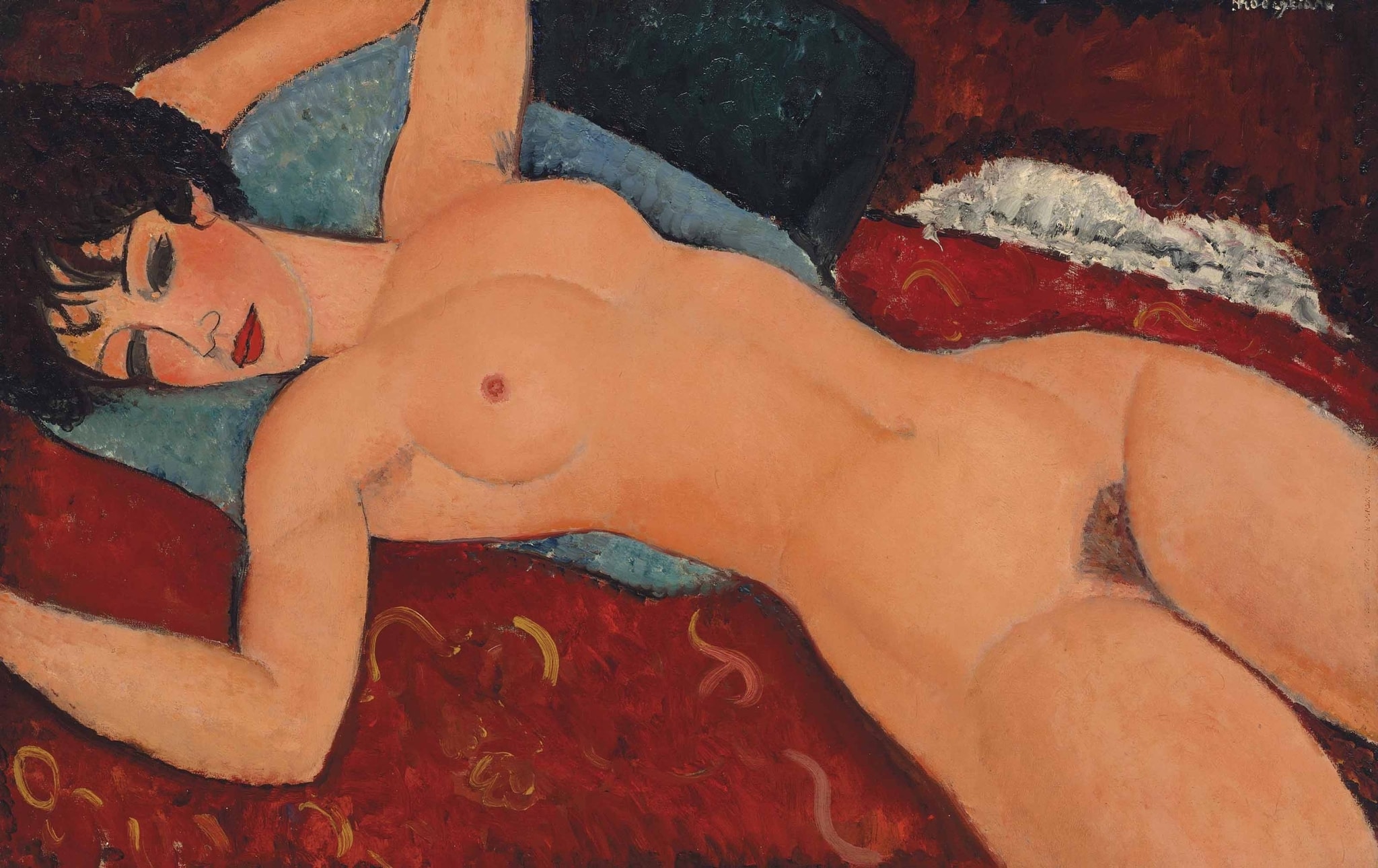
Click on any numbered symbol to learn more about its meaning
Meaning & Symbolism
Explore Deeper with AI
Ask questions about Nu couché
Popular questions:
Powered by AI • Get instant insights about this artwork
Interpretations
Technical Process and Evolution
Source: Courtauld Institute of Art
Reception, Censorship, and the Gaze
Source: Musée de l’Orangerie; Britannica
Lineage: From Venus and Odalisque to the Modern Nude
Source: The Met Museum; The Guardian (Jonathan Jones)
Market Afterlife and Canon Formation
Source: Christie’s; TIME
Primitivism, Sculpture, and the Ethics of Influence
Source: The Guardian (Jonathan Jones); Guggenheim
Related Themes
About Amedeo Modigliani
More by Amedeo Modigliani
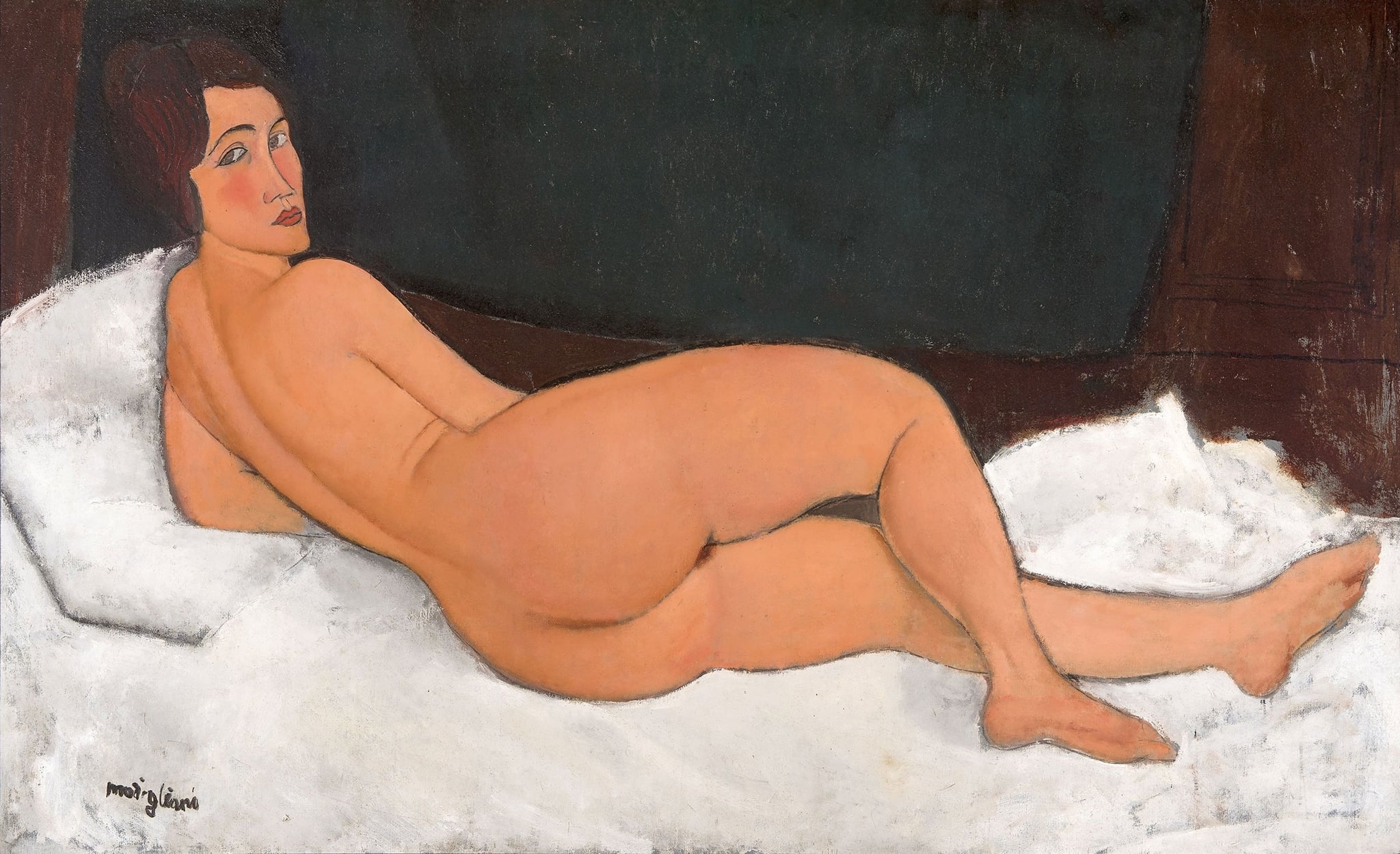
Nu couché (sur le côté gauche)
Amedeo Modigliani (1917)
Nu couché (sur le côté gauche) is a 1917 oil painting in which Amedeo Modigliani monumentalizes a reclining nude through a continuous, sculptural contour and a flattened, nearly void backdrop. The figure’s warm terracotta body, set against crisp white sheets and a dark field, fuses <strong>modern candor</strong> with <strong>classical poise</strong> <sup>[1]</sup><sup>[2]</sup>. The direct, appraising gaze and masklike face assert a new, <strong>autonomous modern nude</strong>.
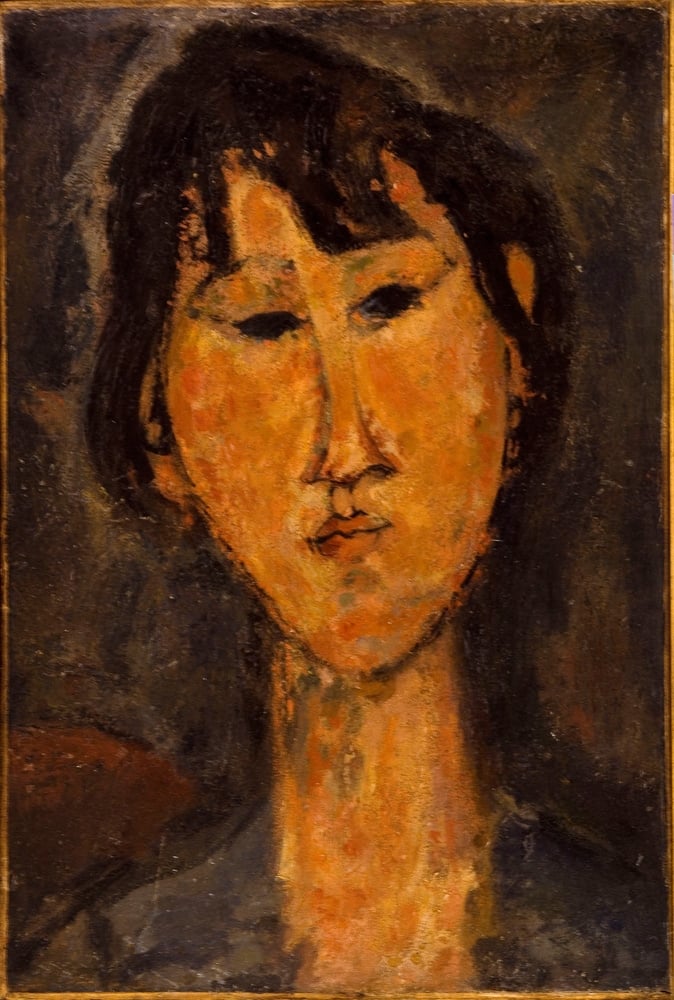
Tête
Amedeo Modigliani (1915)
<strong>Tête</strong> distills a human face into an icon: an ovoid head, blade-like nose, tight bow of lips, and slitted, pupil-less eyes emerging from a dark, smoky field. Drawing on his sculptural idiom, Amedeo Modigliani fuses <strong>elegance and estrangement</strong> so the sitter becomes a universal sign rather than a likeness <sup>[1]</sup><sup>[2]</sup>.
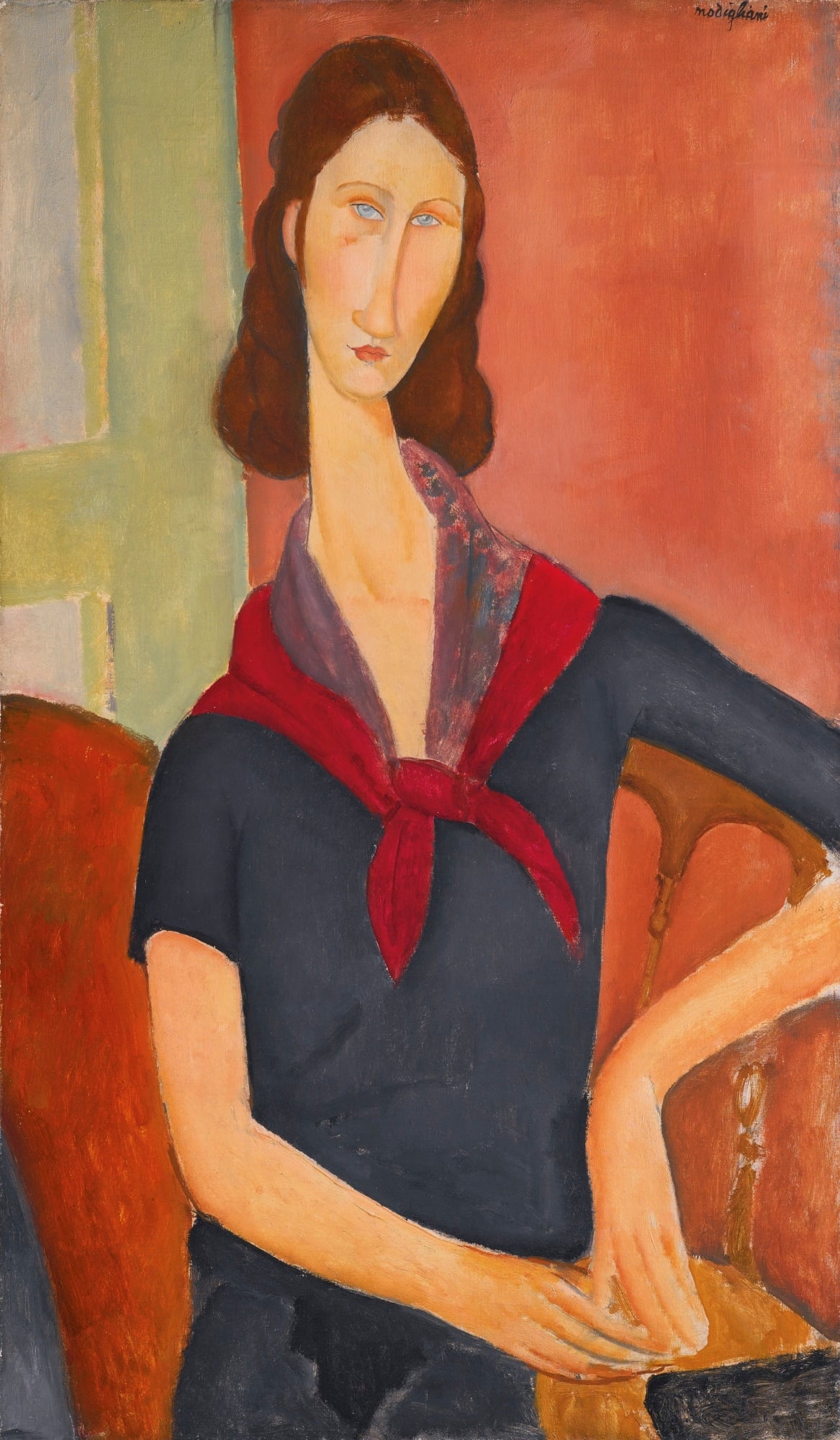
Jeanne Hébuterne (au foulard)
Amedeo Modigliani (1919)
Jeanne Hébuterne (au foulard) crystallizes Modigliani’s late style into a poised emblem of <strong>tenderness held in restraint</strong>. The elongated neck, <strong>masklike visage</strong>, and cool navy dress are pierced by the <strong>red scarf</strong> at the throat, a chromatic node that concentrates feeling and presence <sup>[1]</sup><sup>[2]</sup>. The subtly indicated pupils—rare in many Modigliani portraits—sharpen her psychological immediacy amid the flattened, terracotta field <sup>[1]</sup>.
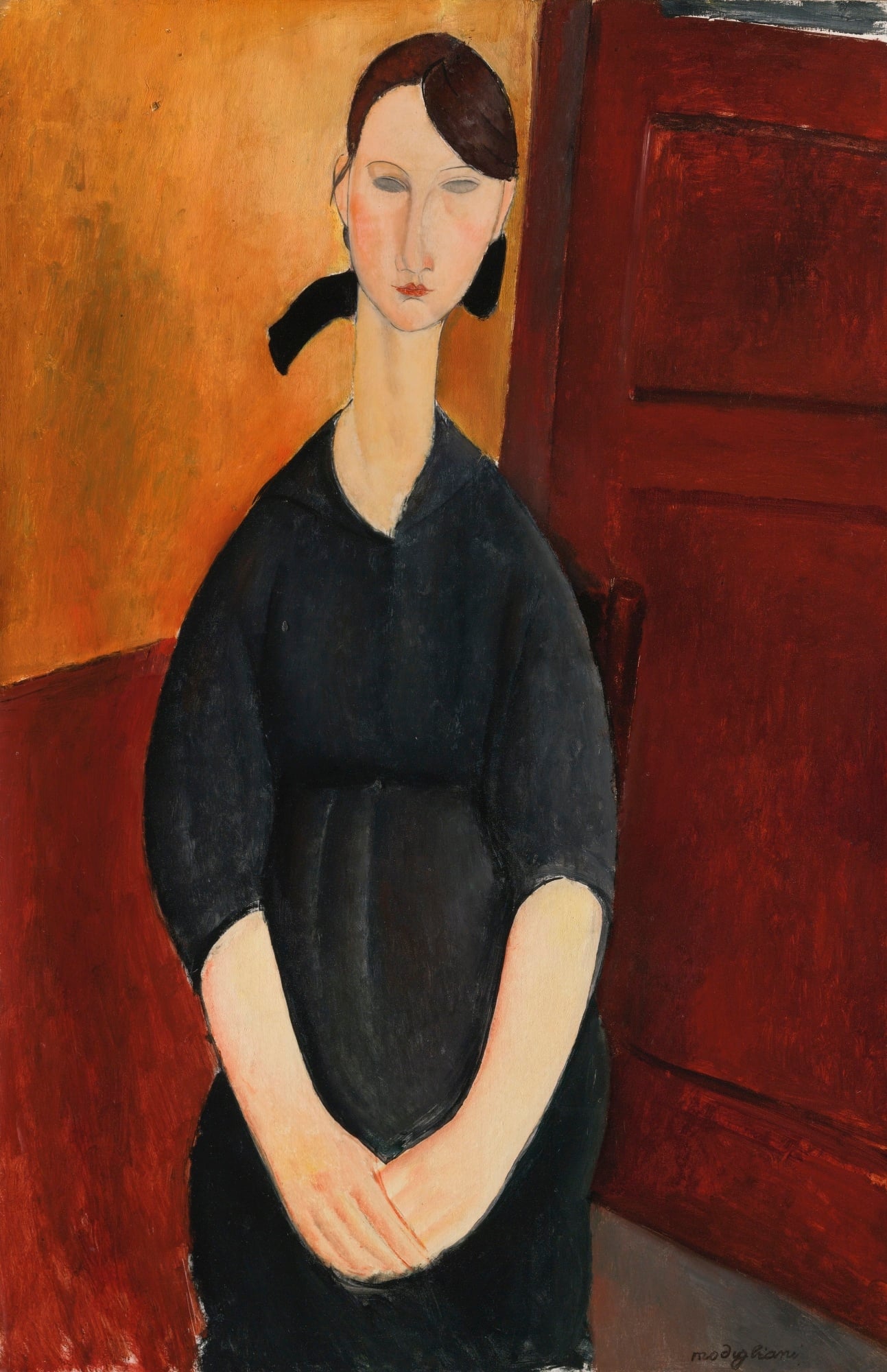
Portrait of Paulette Jourdain
Amedeo Modigliani (1919)
Portrait of Paulette Jourdain crystallizes a young sitter into a <strong>poised, timeless icon</strong>: an attenuated neck, mask-like almond eyes, and gently folded hands set before ochre walls and a <strong>slightly ajar red door</strong>. Modigliani’s sculptural contour and restrained palette turn likeness into an <strong>archetype of grace and inwardness</strong> <sup>[1]</sup><sup>[2]</sup><sup>[3]</sup>.