How Much Is Ashes Worth?
Last updated: April 29, 2026
Quick Facts
- Methodology
- comparable analysis
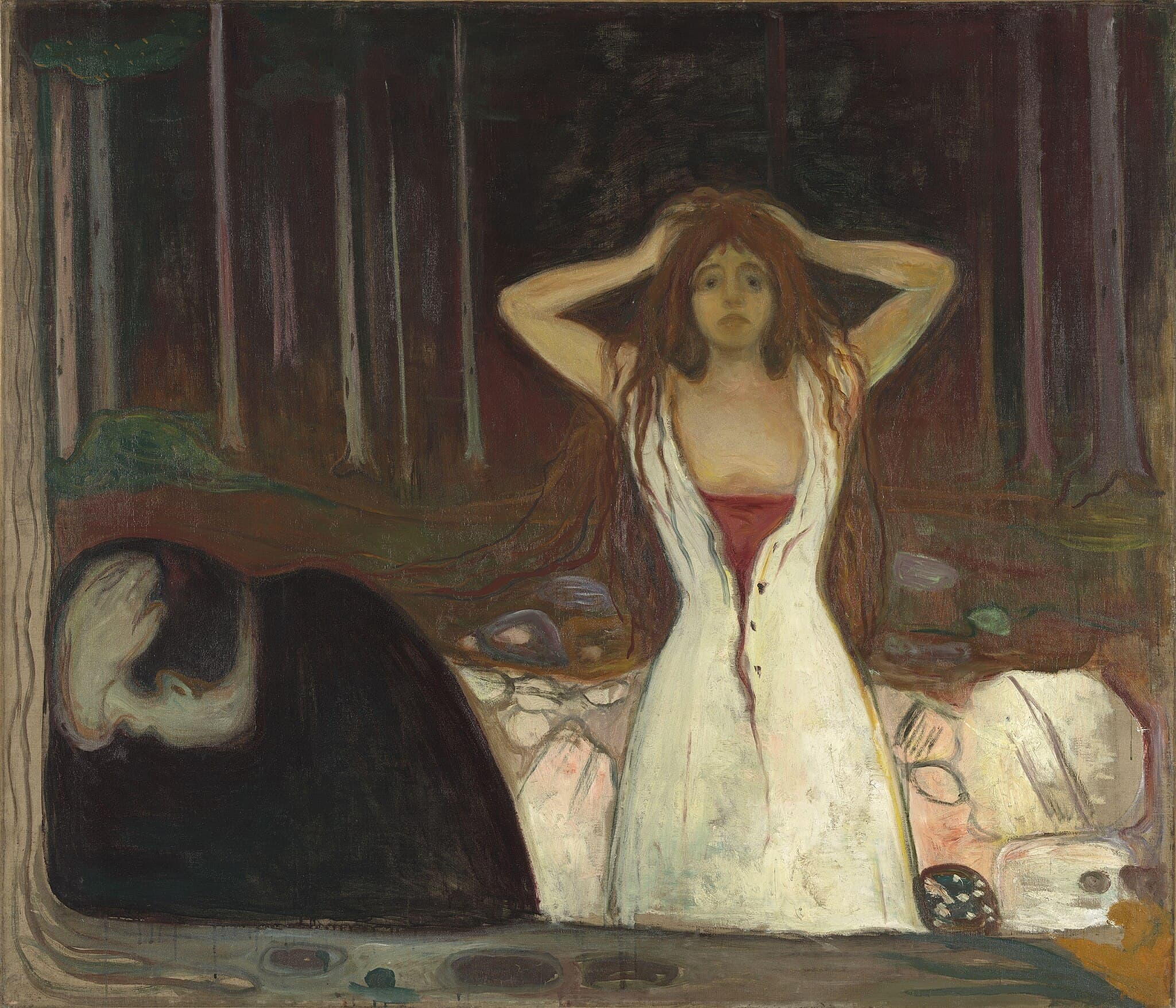
If a fully authenticated, market‑ready 1894 oil 'Ashes' by Edvard Munch were offered with clean, museum‑quality provenance and excellent condition, a realistic auction estimate today is USD 5,000,000–35,000,000. If the object is the canonical 1894 canvas held by the National Museum of Norway (NG.M.00809), it is institutional and effectively not marketable.
Valuation Analysis
Valuation conclusion: Based on a comparable‑analysis of recent Munch auction results and current market dynamics, a market‑ready, fully authenticated 1894 oil titled "Ashes" would reasonably be estimated at USD 5,000,000–35,000,000 at auction today. This band is conditional on clean provenance, excellent condition and absence of legal restrictions; the canonical 1894 canvas recorded as NG.M.00809 in the National Museum of Norway is institutional property and therefore effectively off‑market.[1]
Methodology and comparables: I derived the range by mapping "Ashes" against Munch’s market tiers—anchoring to the artist’s auction ceiling and to recent museum‑quality sales. The record sale(s) of The Scream establish an absolute upper bound, while other large figural canvases and documented early‑period works sold in the mid‑to‑high tens of millions provide operational comparables. More common or less documented variants sell substantially lower; a key mid‑tier indicator is works that have realized in the low‑to‑mid tens of millions in recent high‑visibility auctions.[2]
Key price drivers: The primary upward drivers are museum‑quality provenance, inclusion in exhibition catalogues and a catalogue raisonné entry, flawless or well‑documented condition, and strong technical authentication (IRR/X‑ray/pigment analysis). These elements reduce risk for buyers and encourage institutional and competitive bidding. Negative drivers are incomplete provenance, major restoration or unstable paint layers, and any legal or export encumbrances—each of which can materially depress value or remove global buyers.
Market context and liquidity: Munch’s market is stratified: a small set of canonical masterpieces draws exceptional prices while a broader set of important works trade in the low‑single to mid‑double‑digit millions. Top works are frequently marketed via private treaty as much as auctions, which can lift realized private‑sale prices above public auction comparables but reduce transparent price discovery. Single‑owner events, restitution settlements, and museum exhibitions periodically concentrate attention and can push results above baseline comparables.
Scenarios: With full authentication, pristine condition, and museum pedigree expect placement in the mid‑range (USD 5–15M); with exceptional provenance, major exhibition history and institutional interest the painting could test USD 15–35M. If provenance is thin, condition compromised, or export is restricted, value will likely fall well below USD 5M or the work may remain effectively unsellable on the international market.
Next steps to refine: To tighten this estimate to a ±10–20% interval, obtain high‑resolution front/back images (including signature), a full provenance and exhibition record, a conservator’s technical/condition report, and an expert attribution letter or catalogue‑raisonné confirmation. With that documentation, an auction house specialist or independent appraiser can produce a presale estimate and sales strategy tailored to the painting’s profile.
Key Valuation Factors
Art Historical Significance
High Impact"Ashes" occupies a respected place within Edvard Munch’s Frieze of Life thematic cycle and embodies core psychological motifs central to his oeuvre. While not as universally iconic as The Scream or Madonna, the composition is familiar to scholars and museum audiences and has clear curatorial value. This status drives institutional interest and collector recognition: museums and major private collectors prize canonical thematic works from an artist’s formative period. The painting’s art‑historical importance therefore contributes a meaningful premium versus undistinguished studio variants or later repetitions, especially when the work is dated to the mid‑1890s and documented in scholarly literature.
Provenance & Exhibition History
High ImpactProvenance and exhibition/publication history are among the single most important determinants of value. A clean chain of ownership, notable prior custodians, and inclusion in major retrospectives or catalogue entries materially increase buyer confidence and competitive bidding. Works with museum provenance or prominent exhibition histories routinely outperform similar pieces that lack documentation. Conversely, gaps in ownership, unverified private transfers, or unresolved restitution claims can severely limit marketability and cause substantial discounts. For a high‑value Munch sale, documented loans to major institutions and published scholarly treatment are near‑essential to achieve top estimates.
Condition & Conservation
High ImpactPhysical condition and the transparency of restoration history directly affect insurability, buyer willingness and final price. Issues such as paint instability, inpainting, aggressive overpaint, relining or significant varnish discoloration are negative modifiers. Conversely, thorough conservation documentation, recent technical imaging and evidence that any interventions were conservative and expertly performed support market confidence. For a work like Ashes — where surface handling and subtle color relationships are integral to meaning — condition sensitivity is especially pronounced and can swing value by multiples depending on severity and documentation.
Market Comparables & Demand
Medium ImpactComparable sales for museum‑quality Munch canvases (from low‑tens to mid‑50s of millions for the strongest lots) establish the realistic upper range for a high‑quality Ashes; less prominent variants and prints trade far lower. The market is demand‑constrained by availability: infrequent top‑tier consignments concentrate buyer interest and can elevate prices, while periods of low supply or private treaty activity reduce public price discovery. Auction timing, house marketing and the presence of institutional interest (or pre‑sale indications) materially shape achievable results.
Legal / Cultural Property & Export Controls
High ImpactNorwegian cultural‑property regulations and the concentration of major Munch holdings within national museums create a substantial legal overlay. Works deemed nationally important may be subject to export restrictions, preemption rights, or other measures that limit cross‑border sale. Even when legal sale is possible, the risk of cultural claims or restricted exportability narrows the buyer pool—often excluding major international institutions—and can suppress bids or redirect sale strategy toward domestic placement. Confirming clear title and exportability is therefore essential before estimating a realistic market value.
Sale History
Ashes has never been sold at public auction.
Edvard Munch's Market
Edvard Munch is a blue‑chip modern artist whose market is anchored by a handful of superstar works (most notably The Scream) that set the artist’s ceiling. Beyond those outliers, museum‑quality canvases and important figural compositions have realized in the low‑to‑mid tens of millions, while studies, prints and later variants trade in far lower bands. The market is selective: well‑provenanced, exhibition‑backed works attract institutional buyers and competitive bidding, but many good works remain in private or national collections and only rarely come to auction. Demand is steady among major collectors and institutions, with episodic spikes driven by single‑owner consignments or high‑profile exhibitions.
Comparable Sales
The Scream (pastel on board, 1895)
Edvard Munch
Artist's market ceiling and best-known work; establishes the upper bound for Munch auction values and buyer appetite for iconic, museum-quality rarities.
$119.9M
2012, Sotheby's New York
~$168.7M adjusted
The Girls on the Bridge (1902)
Edvard Munch
Large, museum-quality Munch canvas sold in the mid‑tens of millions; a strong, recent benchmark for top-level Munch oils (shows demand for major figural canvases).
$54.5M
2016, Sotheby's New York
~$73.3M adjusted
Sankthansnatt (Midsummer Night) (c.1901–03)
Edvard Munch
Recent high-value sale (2025) of a museum-quality early-20th-century Munch canvas—useful as a near‑term market indicator for significant, non‑superstar canvases.
$35.1M
2025, Sotheby's New York (Leonard A. Lauder single-owner sale)
Dans på stranden (Dance on the Beach)
Edvard Munch
Significant 2023 sale (≈£16.9M / ≈$20.5M) driven by provenance/restoration story; indicates pricing for important works below the very top tier.
$20.5M
2023, Sotheby's London
~$21.7M adjusted
Current Market Trends
The Modern/Expressionist market has been cyclical recently: a cooling in 2023–24 followed by selective high‑end recoveries in 2025. Supply constraints (owners preferring private sales), single‑owner events and museum exhibitions drive episodic price spikes. For Munch specifically, institutional exhibitions, technical publications and provenance/resolution stories (restitution or forced sales) have been the primary catalysts for renewed demand. Condition transparency and documented provenance are now more important than ever in buyer decision‑making.
Sources
- National Museum of Norway — collection entry for Ashes (Aske) / NG.M.00809
- LA Times — coverage of Sotheby’s sale of Edvard Munch’s The Scream (2012) and market context
- Bloomberg — report on sale of The Girls on the Bridge (Sotheby’s, 2016)
- Associated Press — coverage of Dance on the Beach sale / context for Munch comparables (Sotheby’s, 2023)