How Much Is Madonna Worth?
Last updated: April 29, 2026
Quick Facts
- Methodology
- comparable analysis
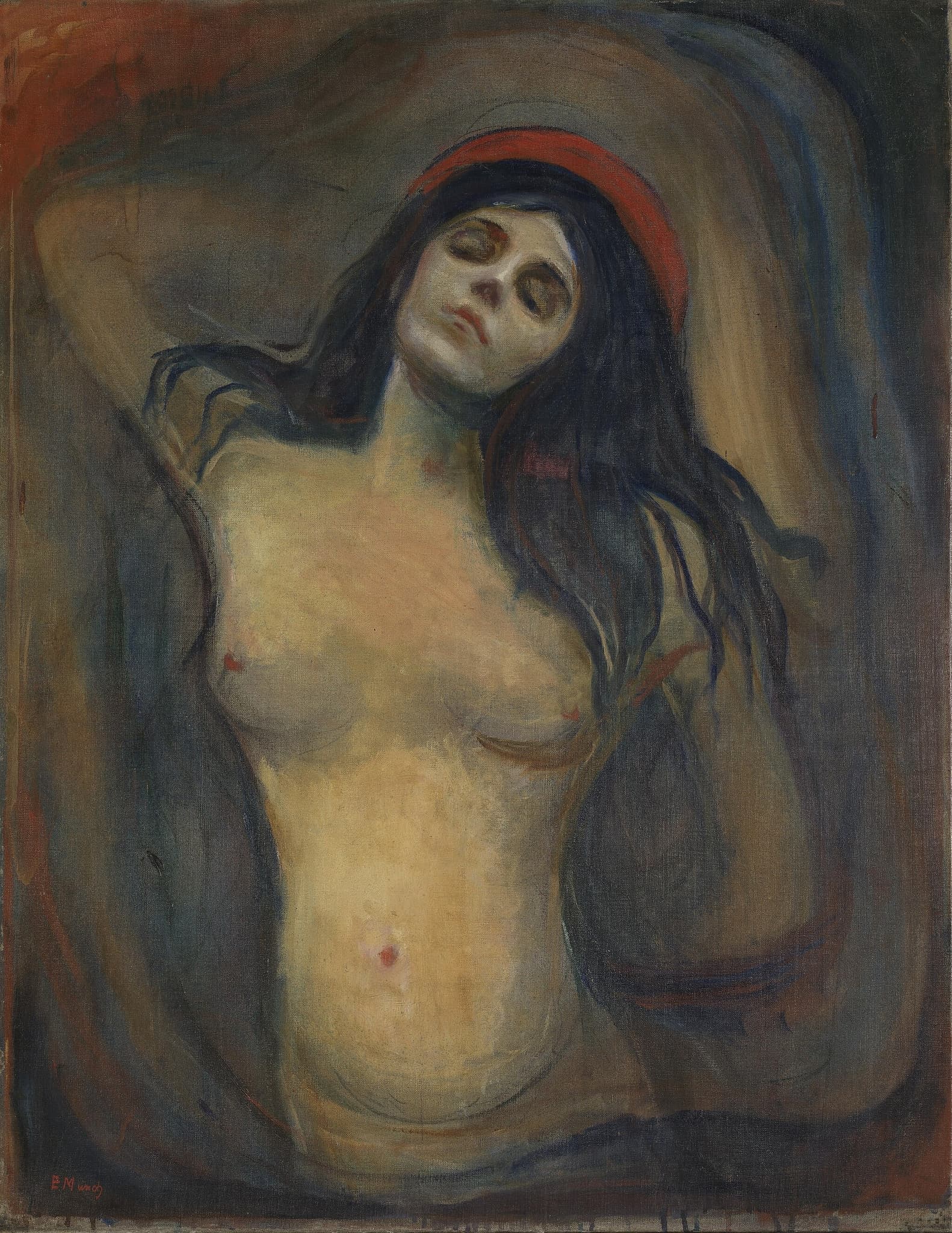
Hypothetical open‑market value for Edvard Munch’s 1894 oil Madonna (National Museum of Norway) is estimated at $80–130 million. The range reflects its status as a canonical Frieze of Life masterpiece, the likelihood that this canvas is the earliest painted version, and the scarcity of painted Madonnas, set against demonstrated nine‑figure demand for Munch’s most iconic imagery.
Valuation Analysis
Estimate: $80–130 million for a hypothetical, unconstrained sale of the 1894 oil‑on‑canvas Madonna in the National Museum of Norway. This canvas is a cornerstone of Munch’s Frieze of Life, long recognized as a defining image of fin‑de‑siècle Symbolism. The museum records the work as 1894 and documents extensive exhibition history, while recent technical research indicates underdrawing consistent with the composition being the first painted version—enhancing its primacy within the motif’s painted corpus [1][6].
Market benchmarks and placement: Nine‑figure appetite for blue‑chip Munch icons is firmly established by the 2012 sale of the 1895 pastel The Scream at $119.9 million [2]. For oils, top results include Girls on the Bridge at $54.5 million (2016) and Love and Pain (Vampire) at $38.16 million (2008), with recent major Munch paintings achieving $20–35 million (e.g., Midsummer Night at $35.1 million in 2025; the restituted Dance on the Beach at ~£16.9 million/$20.5 million in 2023) [3][4][7]. Within this landscape, a prime Madonna oil—among Munch’s most culturally resonant subjects—warrants positioning above the demonstrated $50 million tier for leading oils and within striking distance of nine figures.
Rarity and supply: The MUNCH museum confirms just five painted versions of Madonna, the great majority in institutional hands, and painted Madonnas have been effectively absent from the modern marquee auction market [5]. While the Madonna lithographs are widely traded—and have even set print records—the prints are not valid price comparables for a canonical oil; they do, however, attest to the motif’s extraordinary reach and recognition, factors that amplify demand at the apex when a painted version is considered [8].
Work‑specific strengths: The Oslo canvas’s early date, likely status as the first version, museum‑grade quality, and exhaustive literature/exhibition history make it an A‑plus example with cross‑category appeal to trophy collectors and institutions. Its scale, iconic pose, and erotic‑metaphysical charge place it in the same echelon of fame as The Kiss and Vampire—surpassed only by The Scream—supporting a valuation that bridges the highest published Munch oil prices and the nine‑figure benchmark set by The Scream pastel [1][2][3].
Risk and upside: Although deaccession/export constraints make an actual sale improbable, the hypothetical range assumes open global bidding with clean title. In a highly competitive environment (e.g., third‑party guarantee and multiple principals), the work could press beyond the top of the range. Conversely, any adverse condition findings or transactional constraints could moderate bidding. On balance, the subject’s icon status, likely primacy, and near‑nonexistent supply justify the $80–130 million range today [1][5][6].
Key Valuation Factors
Art Historical Significance
High ImpactMadonna is a cornerstone image within Edvard Munch’s Frieze of Life, synthesizing themes of love, sexuality, birth, and death that define his contribution to modern art. Painted in 1894, the National Museum’s canvas sits at the heart of his Symbolist period when the artist crystallized an idiom that profoundly influenced Expressionism. The composition’s psychological intensity and distilled, iconic silhouette have ensured its constant reproduction and centrality in scholarship. Few works in Munch’s oeuvre—apart from The Scream—match Madonna’s symbolic weight, making this example a top‑tier art‑historical asset with pan‑institutional recognition and lasting relevance for global museums and connoisseurs.
Iconicity and Subject
High ImpactWithin Munch’s pantheon, Madonna ranks just below The Scream in breadth of cultural recognition. Its sensual yet metaphysical charge and the memorable, eyes‑closed pose have permeated visual culture through both paintings and widely circulated prints. That ubiquity increases the pool of qualified buyers willing to compete for a canonical painted version, including collectors who target museum‑level trophies across categories. When an image is this well‑known, the price elasticity at the top end widens: bidders pay for recognizability, narrative, and status signaling as much as for authorship. The subject’s resonance thus acts as a multiplier on otherwise strong fundamentals of date, scale, and condition.
Rarity and Supply
High ImpactOnly five painted versions of Madonna are documented, and most are in public collections. This near‑absence of supply for a motif with global name recognition is a powerful price driver. Painted Madonnas have scarcely, if ever, traded at modern marquee auctions, and top‑period oils by Munch generally appear infrequently. Scarcity concentrates demand from both private and institutional buyers whenever a prime example is even hypothetically considered. While the print market is active, those editions do not satisfy demand for the unique, museum‑grade painted image and therefore do not dilute pricing power for the oil; if anything, they reinforce the motif’s cultural dominance.
Provenance and Exhibition History
High ImpactThe National Museum’s Madonna entered the collection in 1909 as a gift from major patron Olaf Schou and has sustained a deep exhibition and literature record. This long public stewardship confers exceptional provenance quality, clear title, and exhaustive scholarly visibility—attributes that reduce transactional risk and support aggressive bidding at the apex. Recent technical study by the museum suggests underdrawing consistent with the work being the earliest painted version, adding primacy to its narrative. Although any deaccession or export would face policy and legal scrutiny, in a hypothetical open sale these pedigree elements would underpin buyer confidence and justify valuation at the very top of Munch’s painted market.
Sale History
Madonna has never been sold at public auction.
Edvard Munch's Market
Edvard Munch is a blue‑chip modern master with a concentrated collector base and very limited supply of top‑period oils. His all‑time auction record is The Scream (1895 pastel), sold for $119.9 million at Sotheby’s in 2012, confirming nine‑figure demand for his most iconic imagery [2]. Among oils, Girls on the Bridge realized $54.5 million in 2016, and Love and Pain (Vampire) made $38.16 million in 2008, establishing a durable $30–55 million corridor for major paintings when offered well [3]. Recent marquee results—Midsummer Night at $35.1 million (2025) and the restituted Dance on the Beach at ~£16.9 million/$20.5 million (2023)—show selective but healthy demand for strong works, with pricing sensitive to subject, date, and condition [4][7].
Comparable Sales
Love and Pain (Vampire)
Edvard Munch
Same artist; same core 1890s Frieze of Life cycle and erotic/psychological theme; mid‑size oil broadly comparable in scale and period to Madonna.
$38.2M
2008, Sotheby's New York
~$56.5M adjusted
Girls on the Bridge
Edvard Munch
Same artist; iconic subject from Munch’s mature period; top-tier auction benchmark for a major oil painting by Munch.
$54.5M
2016, Sotheby's New York
~$72.5M adjusted
Sankthansnatt (Midsummer Night)
Edvard Munch
Same artist; prime early-1900s oil in the Frieze of Life orbit; most recent high-level market data point for a strong Munch painting.
$35.1M
2025, Sotheby's New York
Embrace on the Beach (Summer Day) (The Linde Frieze)
Edvard Munch
Same artist; thematically linked to love/eroticism in the Frieze of Life; early-1900s oil of comparable scale and collector appeal.
$22.4M
2021, Sotheby's London
~$26.4M adjusted
Dance on the Beach (The Reinhardt Frieze)
Edvard Munch
Same artist; major frieze subject and important museum-level provenance; recent public pricing for a significant Munch composition.
$20.3M
2023, Sotheby's London
~$21.1M adjusted
The Scream (pastel on board, 1895)
Edvard Munch
Same artist; ultimate benchmark for Munch’s most iconic psychological motif; establishes nine‑figure appetite for blue‑chip Munch icons even across media.
$119.9M
2012, Sotheby's New York
~$166.7M adjusted
Current Market Trends
The Modern/Expressionist segment remains bifurcated: trophy‑level, institution‑quality works attract deep global bidding, while mid‑tier material is estimate‑sensitive. After a cooler 2023–2024, 2025 saw renewed strength at the apex, aided by disciplined consignments and third‑party guarantees. For Munch specifically, the combination of brand recognition, museum exposure, and extreme scarcity of prime 1890s oils supports robust liquidity when A‑plus subjects surface. Restitution‑driven supply and single‑owner collections have provided sporadic catalysts, but frequency remains low. In this context, an iconic, canonical motif like Madonna would command a scarcity and brand premium, positioning it credibly in the high eight‑ to low nine‑figure range in today’s market.
Study print
Study this painting as a print
Pair the full artwork with a museum-style study sheet focused on one meaningful detail.
Sources
- National Museum of Norway – Madonna (NG.M.00841) object record
- The New York Times – Munch’s ‘The Scream’ Sells for a Record $119.9 Million at Sotheby’s (May 3, 2012)
- Bloomberg – Munch’s ‘Girls’ Painting Sells for $54.5 Million at Sotheby’s (Nov 15, 2016)
- Sotheby’s – Sankthansnatt (Midsummer Night), Leonard A. Lauder Collection Evening Auction (Nov 18, 2025)
- MUNCH (Oslo) – Madonna motif overview (painted versions and prints)
- National Museum of Norway – IRR discovery: underdrawings in Munch’s Madonna (2021 press release)
- AP News – Restituted Munch ‘Dance on the Beach’ sells at Sotheby’s London (Mar 1, 2023)
- The Guardian – Munch’s Madonna print sets UK record (July 13, 2010)