How Much Is Love and Pain (Vampire) Worth?
Last updated: April 29, 2026
Quick Facts
- Last Sale
- $38.2M (2008, Sotheby's New York, Impressionist & Modern Evening Sale (Lot 21))
- Methodology
- comparable analysis
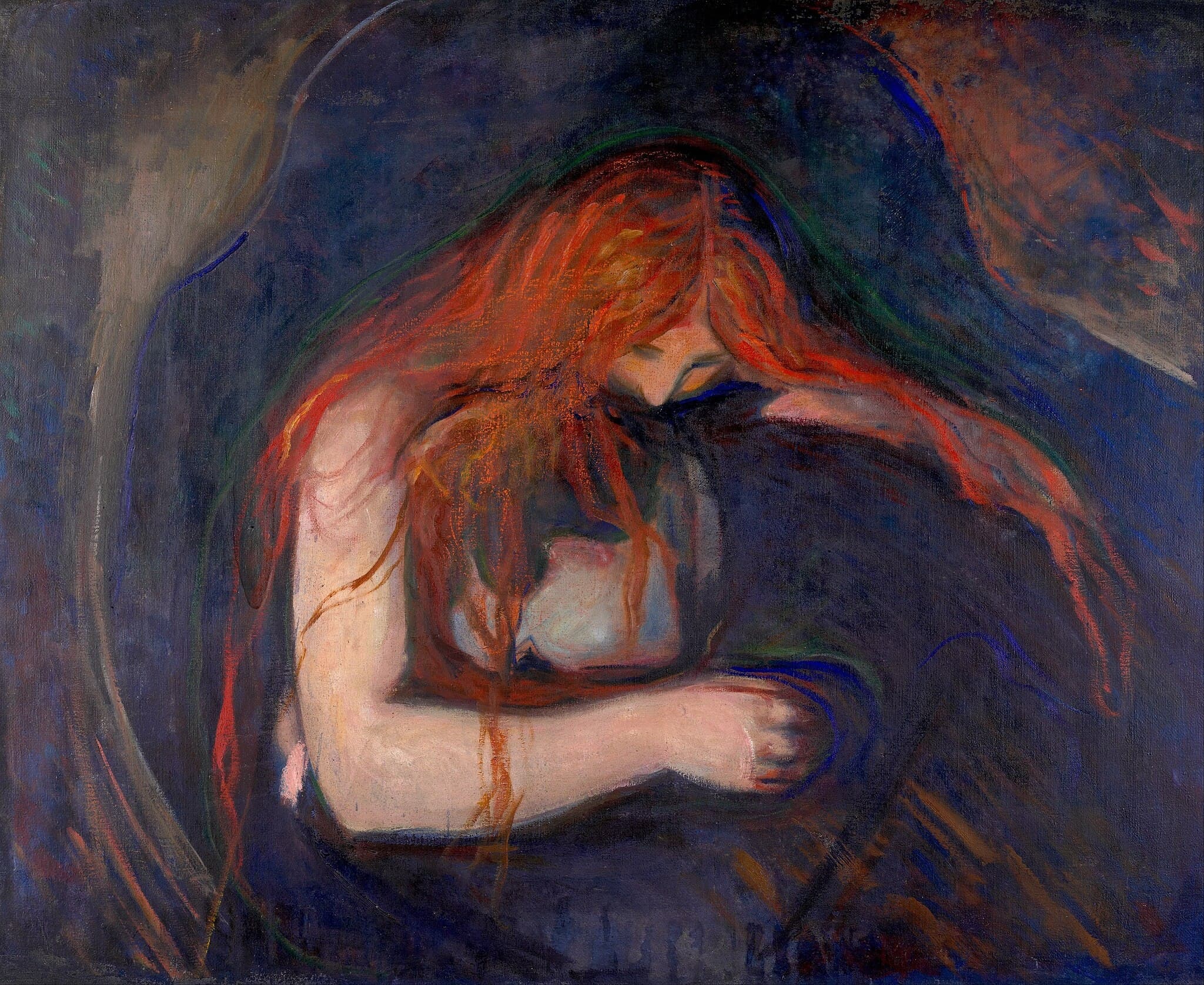
For an authenticated, full-scale 1894 oil on canvas in good condition with strong provenance and exhibition history, I estimate a present-market value of approximately $30–60 million. This range is driven primarily by the direct 2008 Sotheby's sale of the same composition (US$38.16M) and subsequent high‑quality Munch sales; secondary versions or works with uncertain provenance/condition fall into a markedly lower band ($0.5–3M).
Valuation Analysis
Valuation conclusion: For an authenticated, full-scale 1894 oil on canvas of Love and Pain (Vampire) in good to very good condition and with solid, published provenance and exhibition history, I estimate a market value today of roughly $30–60 million. The principal market datum is the Sotheby’s New York sale of the same composition on 3 November 2008, realized at approximately US$38,162,500, which anchors the midpoint of this range [1].
Comparative reasoning: The 2008 result is a direct precedent for this composition and demonstrates that prime, privately offered 1894 Vampire oils attract top‑tier bids when provenance and condition are strong [1]. When that sale is viewed alongside other recent museum‑quality Munch oils sold in the 2020s, the $30–60M bracket is consistent with the current buyer appetite for major Munch canvases and reasonable adjustments for market movement since 2008 [2].
Upside and downside drivers: Upside toward or above the high end requires exceptional exhibition history, catalogue‑raisonné confirmation, immaculate condition and sale under optimal auction marketing conditions (major evening sale, strong competitive guarantees). Downside occurs if the work proves to be a later replica, a studio variant, a small study, or if there are condition problems or provenance gaps — such scenarios typically reduce value into the mid‑six‑figure to low‑seven‑figure range (roughly $0.5–3M).
Key contingencies: This valuation is conditional on three items that materially change price: (1) confirmed catalogue‑raisonné identification / authentication, (2) a current conservation/condition report and technical imaging that verify original materials and authorship, and (3) documented provenance and exhibition/publication history. Absent these, market participants will price the work conservatively and often treat it as a study or studio work.
Practical recommendation: Before marketing or insuring, obtain (a) high‑resolution photography of front/back/labels, (b) a technical report (X‑ray, IRR, pigment analysis), and (c) an authoritative specialist opinion or Munch Museum consultation. With those in hand, a major auction house can provide a firm pre‑sale estimate and sales strategy. Given the direct 2008 precedent and recent comparable sales, the $30–60M bracket is the defensible market range today for a confirmed 1894 original; otherwise expect the substantially lower secondary range noted above.
Key Valuation Factors
Art Historical Significance
High ImpactThe 'Vampire' motif is an important and recurring subject in Munch's exploration of eroticism, melancholy and psychological conflict. Painted circa 1894 during Munch's mature Symbolist phase, the full‑scale oil versions are treated in scholarship as canonical expressions of his thematic concerns. While not as globally iconic as The Scream or Madonna, Vampire is nevertheless a signature composition that carries curatorial weight and institutional interest. A museum‑quality, well‑published 1894 oil will therefore attract both institutional buyers and deep‑pocketed private collectors seeking canonical works, making this factor a strong positive influence on price for an authenticated primary version.
Provenance & Exhibition History
High ImpactProvenance and exhibition records are decisive for value. The 2008 Sotheby's lot was strengthened by early ownership and an intact private provenance which materially increased buyer confidence and drove the strong result. Published provenance, documented loans to museums, and appearances in major catalogues all reduce buyer risk and justify higher estimates. Conversely, gaps in ownership, wartime transfers, or legal disputes depress realized prices. For Munch in particular, a clear, published provenance and inclusion in scholarship often distinguishes a mid‑range sale from a ten‑figure result.
Condition & Technical Authenticity
High ImpactCondition and technical verification are among the largest single price levers. Original paint surface, stable canvas/support, minimal intrusive restoration and forensic confirmation of period pigments and technique sustain top prices. Major relinings, large overpaints, or structural instability can reduce value sharply. Technical imaging (X‑ray, IRR), pigment analysis and conservation reports that corroborate Munch's hand significantly increase buyer confidence and therefore the likely hammer price. A current, detailed condition report is essential before final valuation or sale planning.
Rarity & Version Specificity
High ImpactMunch produced multiple oil variants, studies and prints of the Vampire motif; market value depends critically on which variant is offered. Among the small group of primary oils, only a minority are ever in private hands. A confirmed primary 1894 full‑scale oil that is distinct in size and composition from studies or later replicas is comparatively rare and commands a premium. Accurate catalogue‑raisonné identification (Woll/Schiefler references) and clarity about whether the work is a studio or autograph painting materially alter market positioning.
Market Comparables & Buyer Demand
High ImpactThe Munch market is anchored by a few marquee results but otherwise is concentrated among institutions and specialist collectors. The principal direct comparable is the 2008 Sotheby's Vampire sale at c. US$38.16M; other museum‑quality oils in recent years have realized in the ~$20–35M band, showing steady demand for prime canvases. Buyer demand is strong for canonical works but sensitive to economic cycles; guarantees, private sales and evening auction marketing all affect final outcomes. This factor therefore exerts strong influence on the expected price band.
Sale History
Sotheby's New York, Impressionist & Modern Evening Sale (Lot 21)
Sotheby's London, Evening Sale
Sotheby's New York
Edvard Munch's Market
Edvard Munch is among the most valuable Northern European modernists. His auction record is anchored by The Scream, and authenticated major oils routinely trade in the multi‑million to tens‑of‑millions range. Institutional collecting and specialist private buyers dominate the top end; prints and studies sell at substantially lower levels. Scarcity of prime works and consistent scholarly interest sustain robust pricing for canonical canvases.
Comparable Sales
Love and Pain (Vampire)
Edvard Munch
Direct match — the exact 1894 oil (same composition, dimensions and provenance) sold at auction; primary market datum for valuing this composition.
$38.2M
2008, Sotheby's New York (Impressionist & Modern Evening Sale)
~$57.1M adjusted
Summer Day (Embrace on the Beach / Sommertag)
Edvard Munch
Museum-quality Munch oil sold in 2021; similar market tier for important canvases and useful for post-2008 market context and buyer demand trends.
$22.3M
2021, Sotheby's London (Evening Sale)
~$26.5M adjusted
Sankthansnatt (Midsummer Night)
Edvard Munch
Recent, large museum-quality Munch canvas sold under current market conditions; closely comparable in importance and price level to high‑tier Munch oils.
$35.1M
2025, Sotheby's New York (Lauder Collection evening sale)
The Scream
Edvard Munch
Artist's auction record and iconic work; serves as the top-of-market anchor for Munch but is far more significant (and rare) than a standard 1894 Vampire oil.
$119.9M
2012, Sotheby's New York
~$168.3M adjusted
Current Market Trends
High‑end demand for museum‑quality Munch oils has remained resilient, with competitive bidding for fresh, well‑provenanced works. Prices are sensitive to macroeconomic conditions and liquidity, but scarcity and strong provenance continue to support premiums for canonical works. Sale timing, house, and guarantees remain important tactical considerations for achieving top results.