How Much Is Melancholy Worth?
Last updated: April 29, 2026
Quick Facts
- Methodology
- comparable analysis
For an authenticated, catalogue‑listed 1891 oil‑on‑canvas 'Melancholy' in good original condition with secure provenance, the estimated market range is approximately $3,000,000–$15,000,000. If the work is a smaller studio variant, later repetition, condition‑affected, or lacks provenance/exhibition history, value will likely fall well below this band.
Valuation Analysis
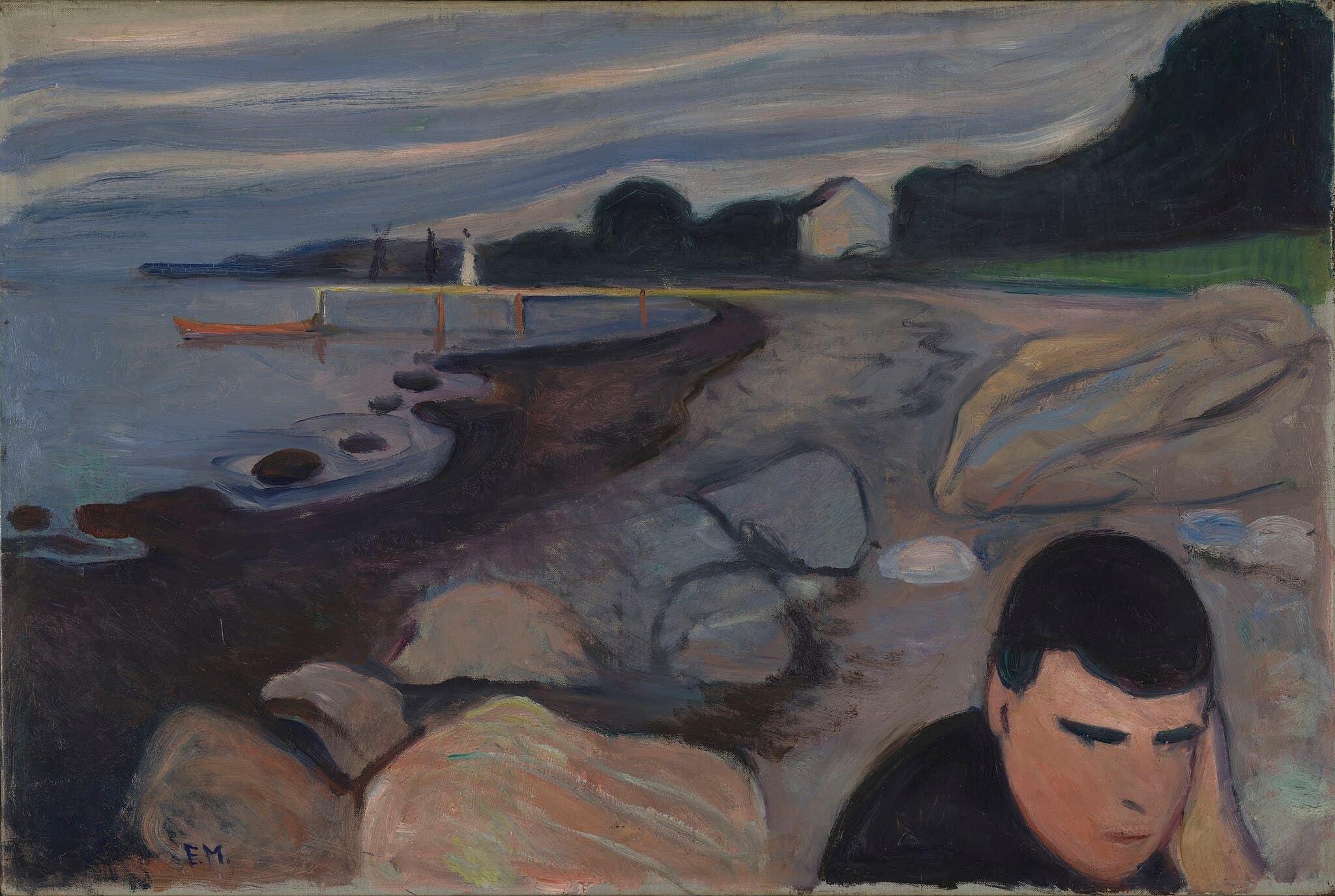
Valuation conclusion: For an authenticated 1891 oil‑on‑canvas 'Melancholy' by Edvard Munch in good condition with clear provenance and catalogue‑raisonné inclusion, I estimate a market range of $3,000,000–$15,000,000. This band reflects the difference between privately traded, museum‑quality Munch oils that enter the blue‑chip market and the more common studio repeats or condition‑compromised works that attract more limited bidding.
Comparables and market context: Public auction evidence for the 'Melancholy' motif is dominated by prints and woodcuts, which have achieved strong results in the high five‑ to low seven‑figure range; for example, a high‑state 'Evening (Melancholy I)' woodcut achieved a top public result at Sotheby’s London (2013) [2]. By contrast, canonical Munch oils (e.g., The Scream, Girls on the Bridge) have realized tens of millions at auction, demonstrating the market ceiling for greatest‑tier works and the wide valuation gulf between prints/minor variants and primary oils [3]. Several painted Melancholy variants are held in major public collections, which both underlines the motif’s art‑historical importance and limits available supply of top‑quality oils on the market [1].
Primary drivers: The single most important determinants are (1) unbroken, early provenance and documented exhibition/publication history; (2) condition and conservation record (paint loss, relining, significant overpaint materially reduce value); and (3) confirmed catalogue‑raisonné entry or specialist authentication. A large, early oil with museum exhibition history and scholarly citation will sit at the upper end of the band; a small study, later studio repetition, or a canvas with heavy restoration will trade in the lower part of the band or below.
Valuation sensitivity & next steps: If key documentation and technical/authentication work confirm a primary 1891 oil in good condition, the $3M–$15M band is realistic for a competitive market sale. If the work is not confirmed as a primary oil (studio variant, uncertain attribution) or shows significant condition issues, market value contracts toward $300,000–$3,000,000. To narrow the range to a sale estimate, obtain high‑resolution images (front/back/details), a conservator’s condition report and technical imaging (X‑ray, IRR, pigment analysis), check catalogue‑raisonné entries, and seek formal pre‑sale opinions from modern art specialists at Sotheby’s/Christie’s/Phillips.
Key Valuation Factors
Art Historical Significance
High ImpactEdvard Munch’s 'Melancholy' is a recurrent motif in his 1890s output and a substantive example of his psychological landscape compositions. While not as universally iconic as The Scream or Madonna, 'Melancholy' is important within Munch’s development of Symbolist/early Expressionist vocabulary and remains a subject of scholarly interest. Its significance supports strong institutional interest when an oil of demonstrable vintage and provenance appears on the market. Works with early dating, documented exhibition history and appearances in major monographs are perceived as important examples of Munch’s mature 1890s practice, and that art‑historical weight translates into higher competitive prices among museums and private collectors seeking representative examples of the artist’s oeuvre.
Provenance & Exhibition History
High ImpactProvenance is a decisive value driver. A continuous ownership chain back to early collectors, documented early sales, or long museum loans and exhibition citations materially increase buyer confidence and price. Published illustrations in major catalogues and monographs, and inclusion in notable museum collections or exhibitions, can move the work to the top of the valuation band. Conversely, gaps in provenance, undocumented transfers, or any suggestion of post‑war ownership irregularities depress interest and can trigger additional due diligence or legal risk premiums that reduce the sale estimate significantly.
Condition & Technical Integrity
High ImpactCondition exerts immediate, quantifiable impact on price. Buyers of single‑owner masterpieces demand stable surfaces and minimal invasive restoration; relining, heavy overpaint, loss, or unstable ground layers are commonly discounted heavily at sale. A thorough conservator report and technical imaging (X‑ray, IRR, pigment analysis) will both inform attribution and quantify restoration, allowing precise discounting. In many Munch lots, technical confirmation of original materials and brushwork by recognized laboratories or museum conservators is required to reach the upper valuation band.
Rarity & Variants
Medium ImpactMunch produced multiple painted variants, studies and prints of many motifs. The existence of several museum‑held painted Melancholy variants reduces the pool of private‑market, top‑grade oils and therefore supports prices for genuinely scarce, exhibition‑quality versions. At the same time, the availability of numerous prints and workshop items creates a tiered market: prints regularly achieve high prices relative to prints markets, but they are not direct substitutes for major oils. Distinguishing primary, artist‑executed oils from later studio repetitions is therefore critical to placing the work in the correct rarity tier.
Comparative Market Performance
Medium ImpactPublic auction results show a bifurcated market: high results for a handful of canonical oils (tens of millions) and strong prices for prints/woodcuts in the mid‑to‑high six figures. Recent top results for 'Melancholy' compositions at auction are principally prints rather than oils, indicating steady collector demand for the motif but also rarity of painted examples on the secondary market. Accordingly, comparative analysis of similar‑scale Munch oils with stable provenance and condition informs the upper range, while print and studio‑variant sales set the realistic lower comparables.
Sale History
Melancholy has never been sold at public auction.
Edvard Munch's Market
Edvard Munch is a major figure in European modernism and the preeminent Scandinavian artist on the global market. His highest‑profile works (notably The Scream) have set auction records in the tens of millions, establishing a high ceiling for museum‑quality oils. The market is highly segmented: single‑owner, well‑provenanced oils attract institutional and deep‑pocket private bidders, while prints and workshop pieces trade at lower but often strong absolute levels. Institutional demand, exhibition history and rarity sustain robust pricing for important Munch works.
Comparable Sales
Evening (Melancholy I) — woodcut (1896)
Edvard Munch
Direct match to the Melancholy motif; one of the highest public-results for this composition (colour woodcut) and therefore a top-market indicator for the motif in print form.
$1.5M
2013, Sotheby's, London — Prints & Multiples (17 Sep 2013)
~$2.1M adjusted
Evening (Melancholy I) — woodcut (from Catherine Woodard / Nelson Blitz sale)
Edvard Munch
Same motif and artist; shows mid‑market pricing for Melancholy prints a few years after the 2013 top result (helps demonstrate range and volatility by state/colour/condition).
$610K
2017, Sotheby's, New York — Important Prints (23 Oct 2017)
~$814K adjusted
Melancholy III — colour woodcut
Edvard Munch
Another Melancholy woodcut sold at the same New York sale; gives a comparable for different states/colouring and confirms repeat strong results for the motif in prints.
$470K
2017, Sotheby's, New York — Important Prints (23 Oct 2017)
~$627K adjusted
The Girls on the Bridge (1902) — oil on canvas
Edvard Munch
Major, high‑profile Munch oil sold at auction; while not the same subject, it illustrates the market ceiling and demand for top‑tier canonical Munch oils from the period.
$54.5M
2016, Sotheby's, New York (14–15 Nov 2016)
~$74.3M adjusted
The Scream (pastel on board, 1895)
Edvard Munch
Artist's single‑work auction record and the clearest demonstration of extreme demand for a canonical Munch oil; useful to set an absolute market ceiling (not a direct Melancholy comparable).
$119.9M
2012, Sotheby's, New York (2 May 2012)
~$170.8M adjusted
Current Market Trends
The blue‑chip modern art market remains selective; high‑quality, well‑provenanced works continue to attract strong buyer competition, while macroeconomic uncertainty and liquidity cycles can temper pricing and bidder depth. For Munch, limited availability of top‑grade painted works plus continued institutional interest tends to support prices for museum‑quality oils, while prints and minor variants are price‑sensitive to market cycles.