How Much Is Summertime Worth?
Last updated: February 22, 2026
Quick Facts
- Insurance Value
- $15.0M (Valuation analysis (comparable-sales uplift))
- Methodology
- comparable analysis
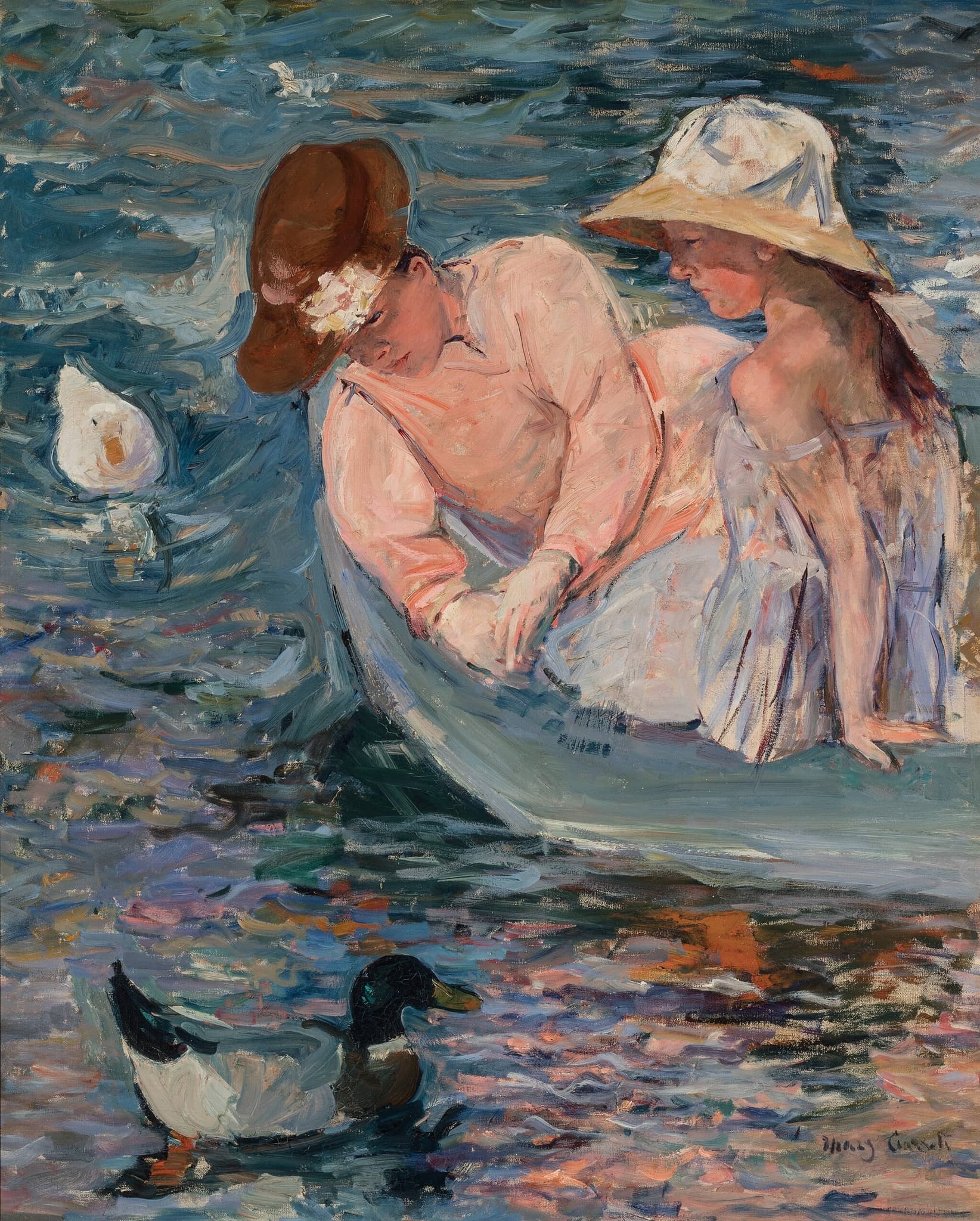
Hypothetical fair market value for Mary Cassatt’s Summertime (1894, Terra Foundation) is estimated at $8–13 million. The work is a prime-period, exhibition-scale oil with a rare, highly appealing boating subject and strong scholarly visibility, positioning it above most Cassatt oils and plausibly near the artist’s auction apex. Recommended insurance/replacement value: approximately $15 million.
Valuation Analysis
Conclusion: Based on recent price benchmarks for Mary Cassatt and the specific attributes of Summertime (1894), a fair market value of $8–13 million is appropriate if the work were hypothetically offered today. The painting is an exhibition-scale, fully resolved oil from a prime moment in Cassatt’s career, held by the Terra Foundation for American Art and extensively reproduced, which collectively supports a position at the upper end of the artist’s oil market [1].
Market anchors and record context: The current auction record for Cassatt is $7,489,000, achieved in 2022 for the iconic pastel Young Lady in a Loge Gazing to Right during the Ann & Gordon Getty Collection sale at Christie’s—an institutional-caliber image that drew broad competition and set a modern watermark for the artist’s market [2]. While that record was for a work on paper, it underscores that best-in-class, instantly recognizable Cassatts can command high–single-digit millions regardless of medium, provided freshness, subject, and visibility align.
Oil comparables and positioning: Recent oil benchmarks help triangulate Summertime’s value. In 2018, Children Playing with a Dog (oil) achieved $4.8 million at Christie’s—among the strongest modern-era oil results for Cassatt, and an important reference point [3]. In 2021, Baby Charles Looking Over His Mother’s Shoulder (No. 3) (oil) brought $1,593,000 at Sotheby’s, reflecting healthy demand for quality but more common maternal themes in a day-sale context [4]. Relative to these, Summertime benefits from a rarer and highly marketable leisure/boating subject, prime 1894 date (contemporaneous with The Boating Party), larger scale, and broad recognition, all of which warrant a substantial premium over typical interior portraits or later oils.
Work-specific drivers: The Terra version of Summertime—roughly 100.6 x 81.3 cm—exhibits luminous, high-key color and vigorous Impressionist facture. It is frequently reproduced and has traveled internationally, reinforcing its profile and scholarly currency [1]. Outdoor leisure/boating motifs by Cassatt are materially scarcer on the market than her mother-and-child interiors, which boosts perceived rarity and desirability. These features, combined with its secure provenance (including early Ambroise Vollard ownership) and foundation stewardship, elevate the painting into the band where a new artist record for an oil would be plausible under strong sale conditions.
Risk, sensitivity, and insurance view: The principal sensitivities are macro liquidity, venue and timing (evening-sale placement, cross-category bidding), and condition/technical findings. Against recent benchmarks, the indicated $8–13 million FMV reflects the confluence of prime period, subject rarity, and museum-caliber finish, leaving upside if competitive institutional or cross-border demand emerges. For loan or collection purposes, a replacement/insurance value of approximately $15 million (about 20–30% over the FMV midpoint) is prudent, given replacement scarcity and the premium associated with high-visibility, prime-period Cassatt oils [2][3].
Key Valuation Factors
Art Historical Significance
High ImpactSummertime (1894) sits squarely in Cassatt’s prime period, contemporaneous with The Boating Party, and showcases the confident, high-key palette and fluid facture that define her mature Impressionism. Within her oeuvre, boating and outdoor-leisure scenes are scarce relative to the more common mother-and-child interiors, which elevates the image’s standing among collectors. The work’s sustained scholarly presence and frequent reproduction contribute to its recognizability and resonance beyond specialist audiences. While not quite at the canonical status of The Child’s Bath, it is a signature, museum-caliber painting whose date, handling, and subject align with the traits most correlated with top-tier Cassatt prices.
Subject and Aesthetic Appeal
High ImpactThe refined leisure scene—two women in a boat amid rippling water and waterfowl—offers a quintessentially Impressionist motif with broad decorative and thematic appeal. Its bright tonality, summery light, and balanced composition are highly market-friendly, particularly for interiors-focused collectors seeking a rare outdoor counterpart. The theme bridges European modernity and genteel American taste, expanding the potential buyer pool across geographies. Importantly, the subject stands apart from Cassatt’s more numerous maternal images, conferring rarity without leaving the artist’s core visual language. This combination of scarcity and beauty typically commands a premium over routine portraiture or later, smaller works.
Rarity, Scale, and Finish
High ImpactAt roughly 100.6 x 81.3 cm, the Terra Summertime is an exhibition-scale, fully worked oil—precisely the format that leads the Cassatt market. High-quality oils of this ambition are far less available than her prints and even her pastels, creating an intrinsic scarcity premium. The composition’s resolution and painterly assurance indicate a finished presentation rather than a study. As observed across major auction cycles, collectors and institutions show the deepest liquidity for large, quintessential examples with strong wall power. In Cassatt’s case, the supply of such oils is thin; when one emerges, competition tends to center on date, subject, and finish—areas where this work excels.
Provenance and Exhibition Visibility
Medium ImpactSummertime’s provenance—from the artist to Ambroise Vollard and, ultimately, to the Daniel J. Terra Collection and the Terra Foundation—conveys strong custodial history and signals institutional-grade quality. The painting has been widely reproduced and has traveled for exhibitions, reinforcing its scholarly profile and market recognition. While foundation ownership means the work is not practically available, that status supports confidence in attribution, condition stewardship, and importance—all positive for a hypothetical valuation. The visibility also aids marketing narratives should a comparable work surface, and it helps justify an insurance figure that reflects true replacement difficulty for a prime Cassatt oil.
Sale History
Summertime has never been sold at public auction.
Mary Cassatt's Market
Mary Cassatt is a blue-chip Impressionist whose market is characterized by thin supply of high-quality oils and strong institutional interest in best-in-class pastels and color prints. Top works—especially prime 1880s–1890s images with hallmark subjects (loge scenes, iconic mother-and-child, or rare outdoor leisure)—can achieve high–single-digit millions and, in recent years, the artist’s overall auction record was reset by a marquee pastel. Prints and secondary pastels are abundant and price-sensitive, while large, fully resolved oils remain the category leaders when they appear. Buyer pools span the U.S., Europe, and Asia, with museums occasionally active at the top end, underscoring the competitive context for A-level examples.
Comparable Sales
Young Lady in a Loge Gazing to Right
Mary Cassatt
Same artist; prime Impressionist period image, widely recognized and museum-caliber. While on paper (not oil), it is the current auction record and sets the ceiling for demand for A‑tier Cassatts.
$7.5M
2022, Christie's New York
~$8.2M adjusted
Children Playing with a Dog
Mary Cassatt
Same artist; oil on canvas; comparable exhibition-scale work and market-leading oil result in recent years. Strong family/child subject; close in ambition if not exact theme.
$4.8M
2018, Christie's New York
~$6.1M adjusted
Baby Charles Looking Over His Mother’s Shoulder (No. 3)
Mary Cassatt
Same artist; oil on canvas; useful oil benchmark from the last five years. Later date and a more common mother‑and‑child theme; smaller scale/day-sale context.
$1.6M
2021, Sotheby's New York
~$1.9M adjusted
Sketch of “Sara in a Green Bonnet”
Mary Cassatt
Same artist; pastel on canvasboard. Smaller, secondary example that calibrates day‑sale demand for works on paper; not directly comparable in medium/scale but helpful for market texture.
$152K
2025, Christie's New York
Reine Lefebvre with Blond Baby and Sara Holding a Cat (counterproof)
Mary Cassatt
Same artist; pastel counterproof on Japan paper. Hammer price (premium not reported). Illustrative of lower‑tier paper works vs. master‑level oils like Summertime.
$178K
2026, Christie's New York
~$174K adjusted
Current Market Trends
The Imp/Mod segment has favored a flight to quality: best-of-category works with institutional visibility, strong provenance, and instantly legible subjects continue to outperform amid selective overall demand. Women Impressionists have enjoyed renewed curatorial focus and collector interest, with marquee results supporting upward pressure on top examples. Supply remains the chief governor for Cassatt; mid-level works (especially minor pastels and routine prints) trade steadily in six figures, but true, exhibition-scale oils are rare and command step-change prices when fresh and well-presented. Against this backdrop, a prime 1890s Cassatt oil with a distinctive, market-friendly subject can credibly test or exceed past artist benchmarks.
Study print
Study this painting as a print
Pair the full artwork with a museum-style study sheet focused on one meaningful detail.
Sources
- Terra Foundation for American Art – Collection: Mary Cassatt, Summertime (1894)
- Christie’s – Ann & Gordon Getty Collection: Volume 1 sale results (includes Cassatt record)
- Christie’s – Mary Cassatt: Artist page and notable auction results
- Western Art & Architecture – Auction Block: Happy Trails (Sotheby’s May 19, 2021 results)