Most Expensive Mary Cassatt Paintings
Mary Cassatt’s market stands at the confluence of blue-chip Impressionism and the growing recognition of women modernists, a combination that keeps her best works fiercely pursued and tightly held. Collectors prize her rare, museum-caliber oils that distill domestic intimacy, modern urban spectacle, and radical compositional viewpoints into scenes of enduring immediacy. At the top end, The Boating Party and The Child’s Bath each command an estimated $25–45 million, signaling how her grand, authoritative canvases set the benchmark for value. Masterpieces of private tenderness such as Breakfast in Bed at $20–40 million and Young Mother Sewing at $12–20 million showcase the luminous handling and psychological nuance that drive competition. Works capturing the theater of seeing—In the Loge at $20–35 million and Woman with a Pearl Necklace in a Loge at $15–30 million—underscore her modern gaze and collectability across portrait and genre categories. Meanwhile, Little Girl in a Blue Armchair at $20–35 million and beach or tea tableaux from $17–25 million highlight the scarcity of prime-period subjects, strong provenance, and exhibition histories that sustain Cassatt’s top-tier prices.
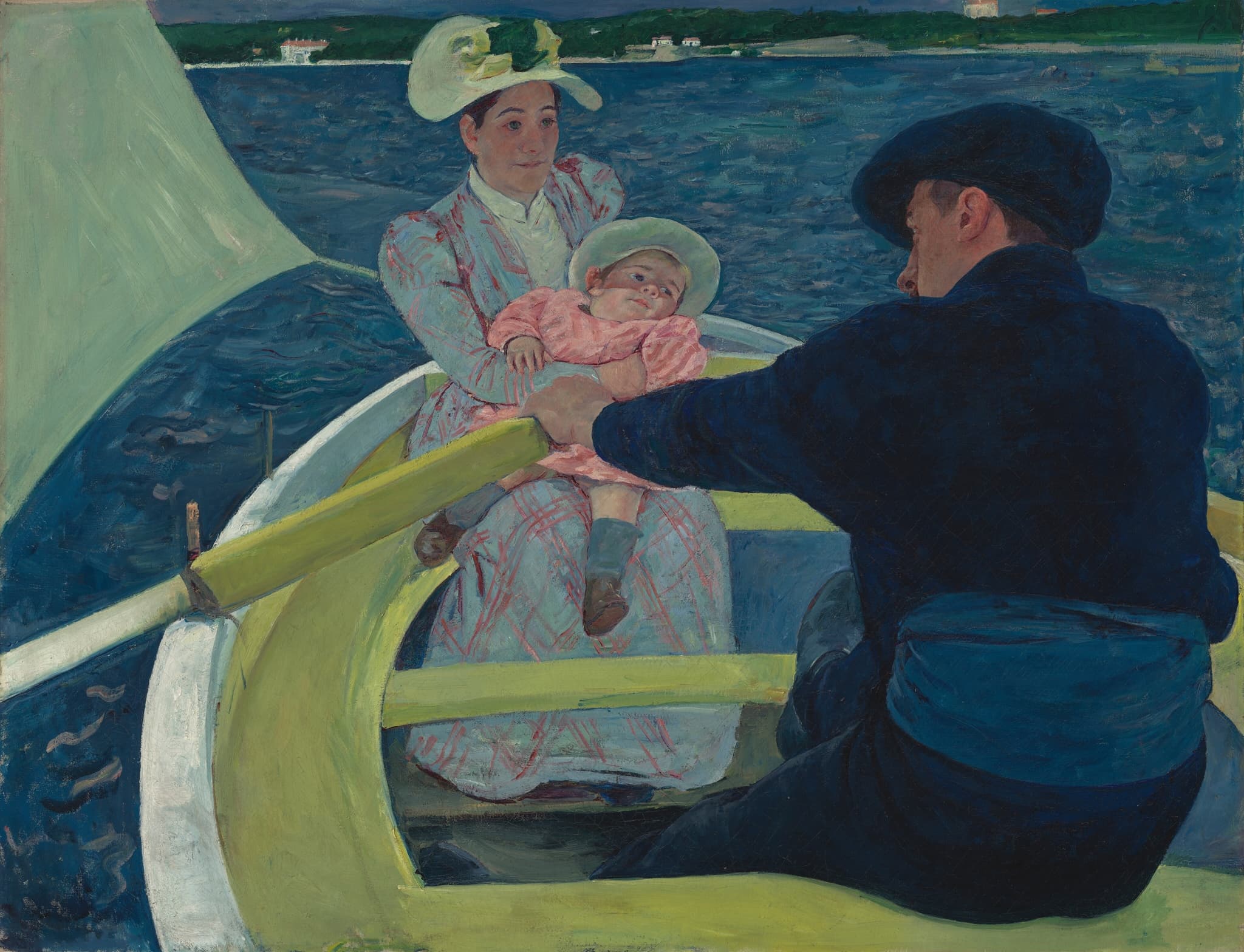
$25-45 million
As a large 1893–94 masterpiece, it would likely command multiples of Cassatt’s $7.5M auction record, a level previously unreachable for her oils.
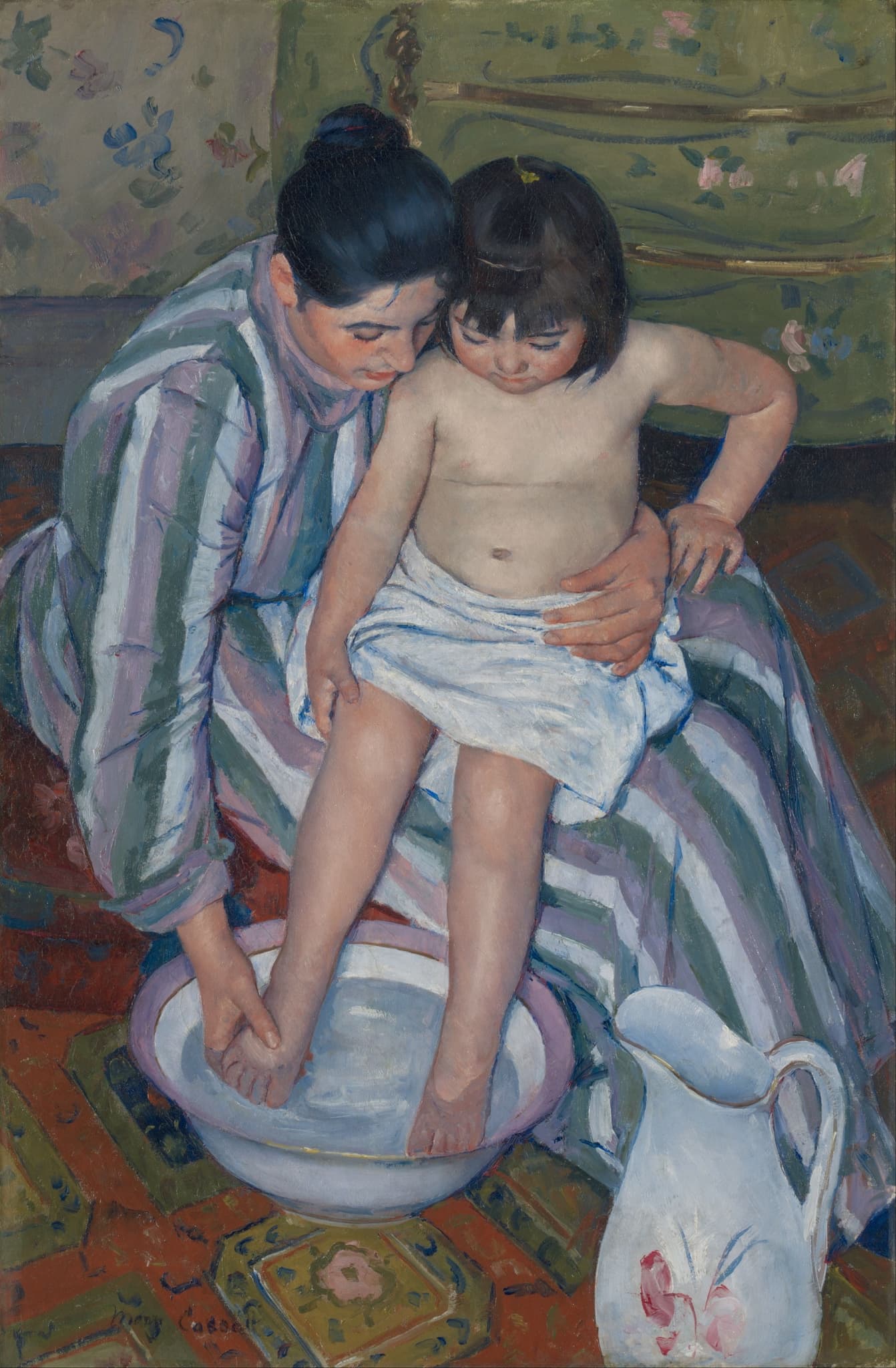
$25-45 million
Irreplaceable AIC masterpiece with a recommended $60M insurance benchmark, it would vastly exceed Cassatt’s $7.5M auction record if hypothetically sold.
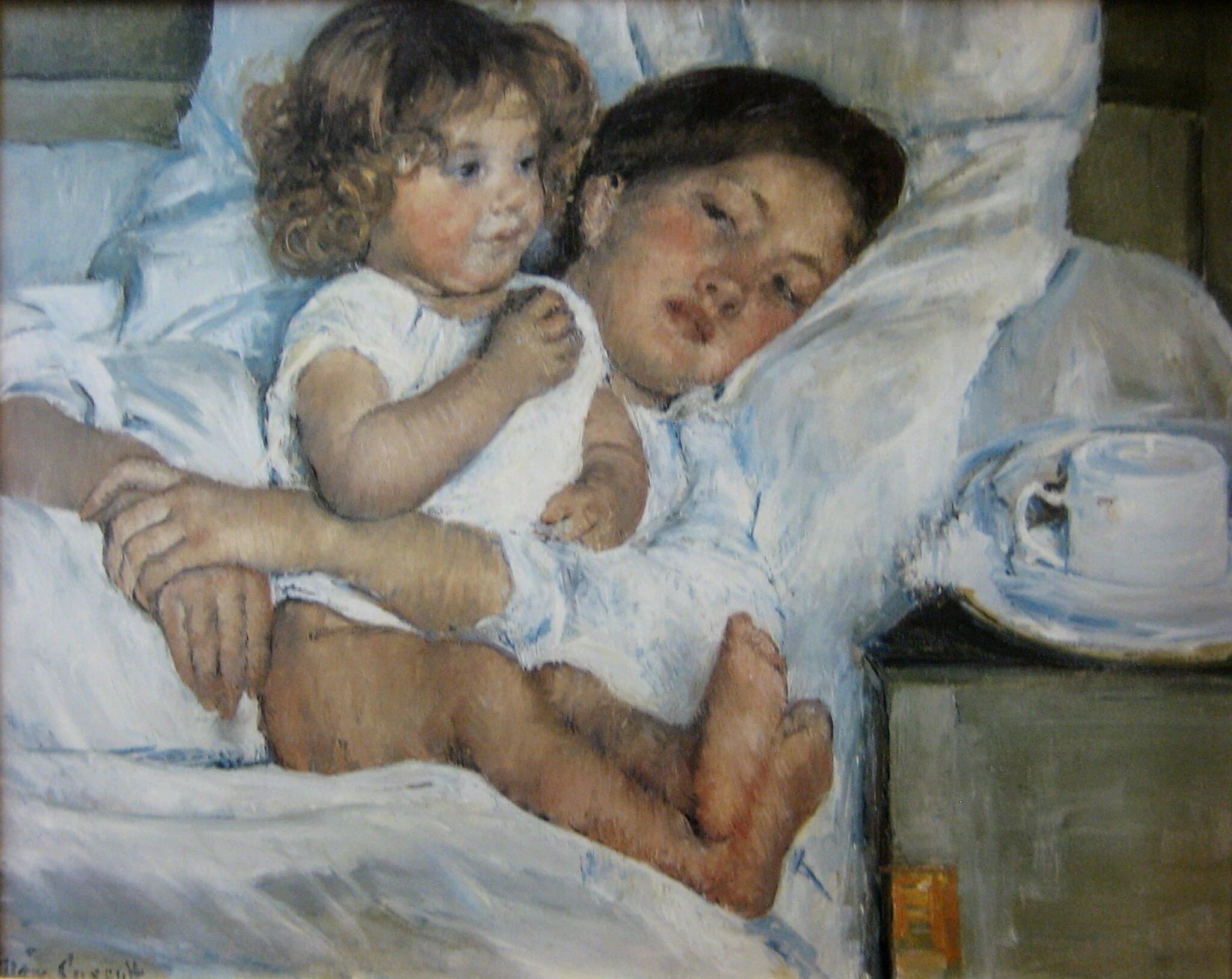
$20-40 million
A prime 1897 Huntington icon, its market debut would likely reset Cassatt’s $7.5M auction record given its rarity, condition, and marquee‑sale appeal.
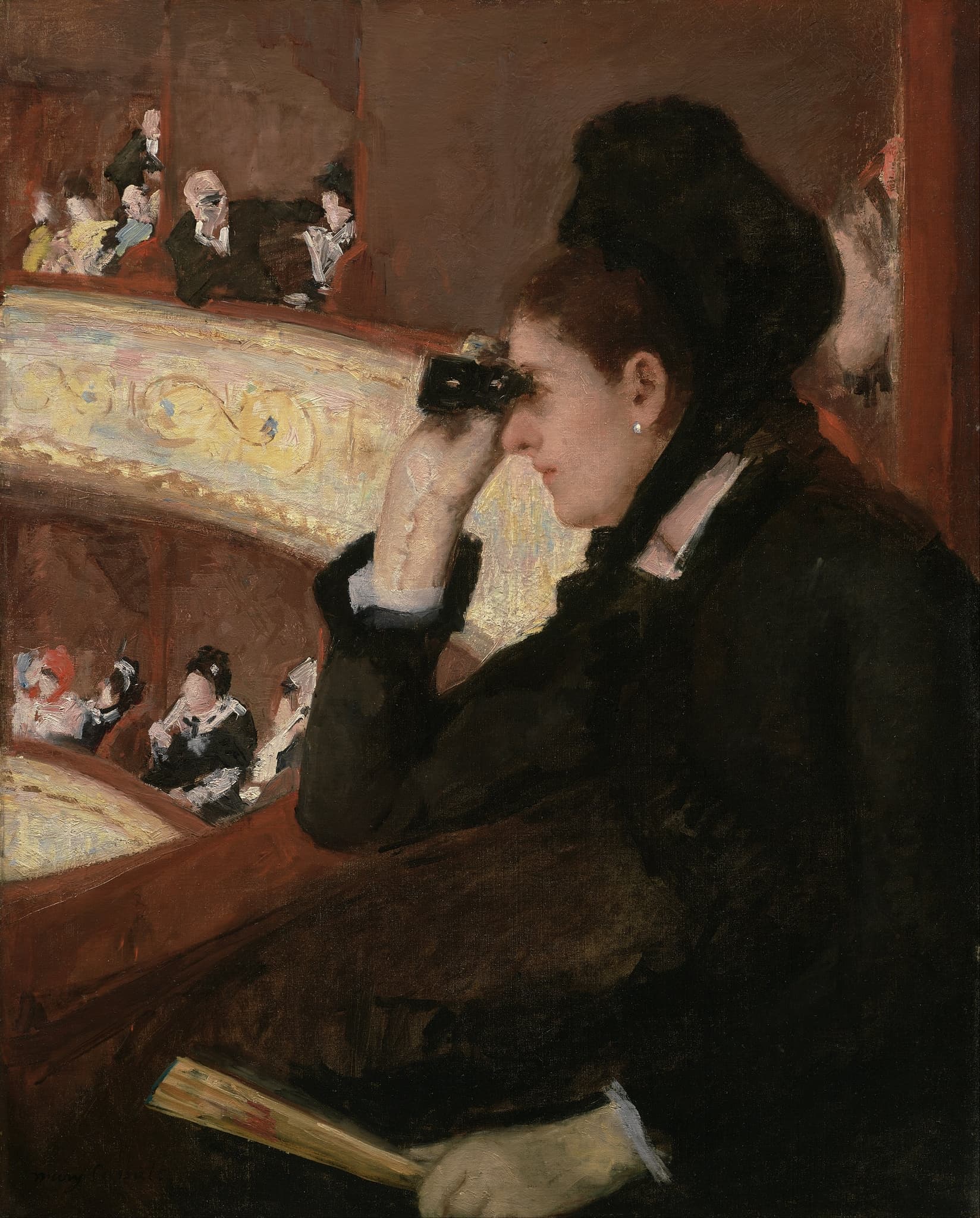
$20–35 million
Anchored to Cassatt’s 2022 record for a related loge work on paper, a painting of this subject would likely establish a new auction high for the artist.
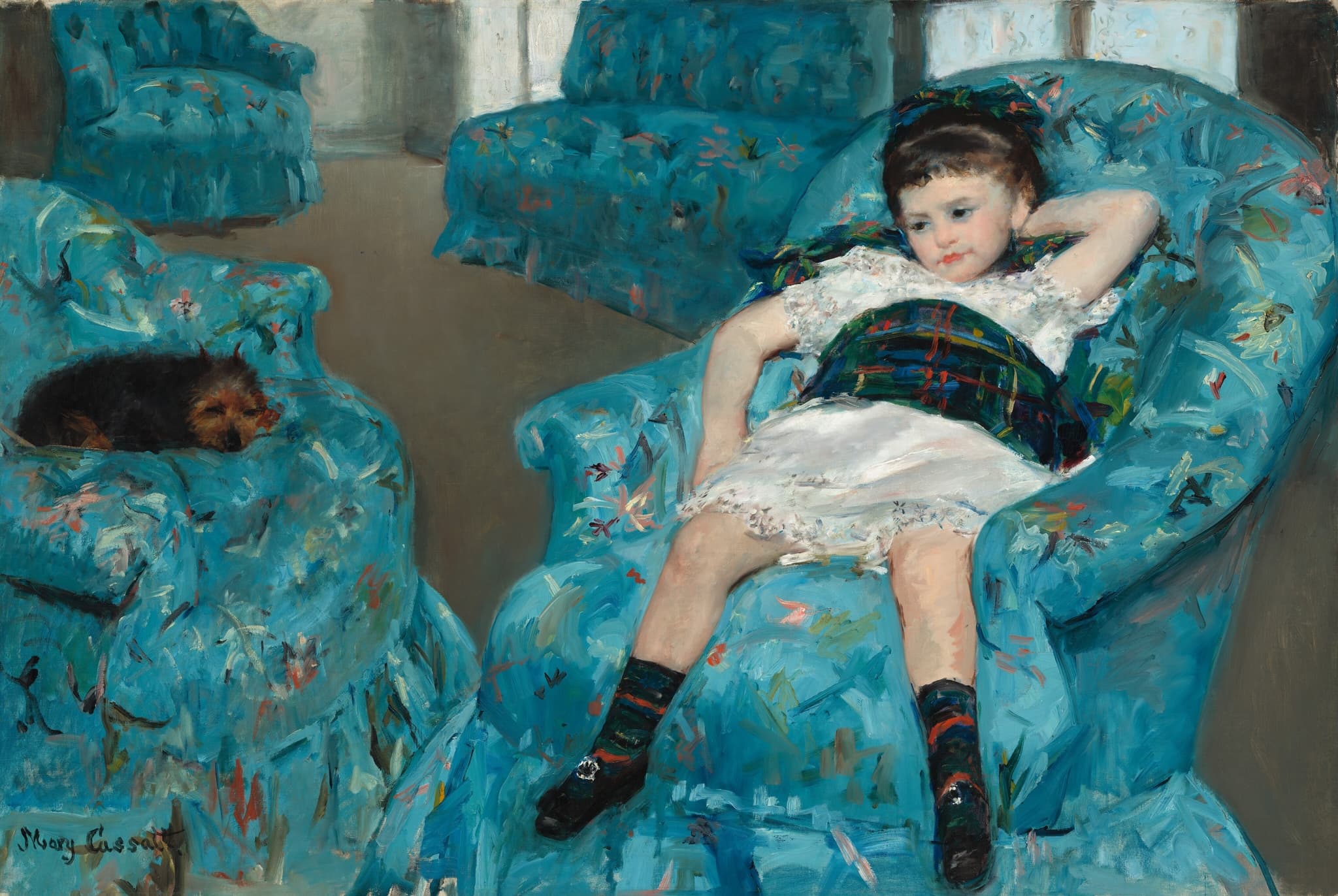
$20-35 million
Documented Degas input makes this 1878 masterwork uniquely desirable, likely commanding a masterpiece premium far above Cassatt’s $7.5M auction record.
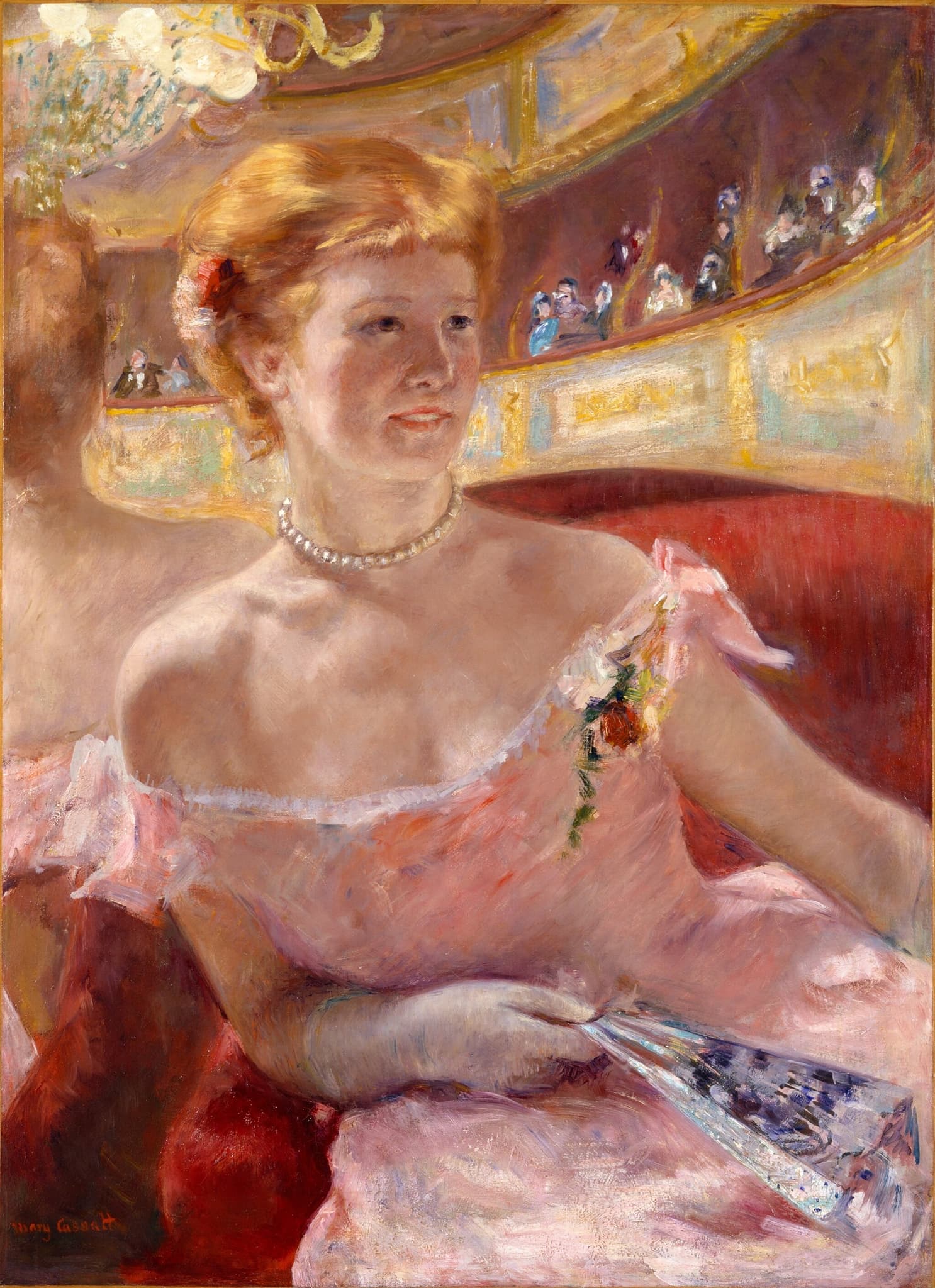
$15-30 million
Exhibited at the 1879 Impressionist show, this canonical opera‑loge oil would plausibly reset Cassatt’s $7.5M auction record in an unrestricted sale.
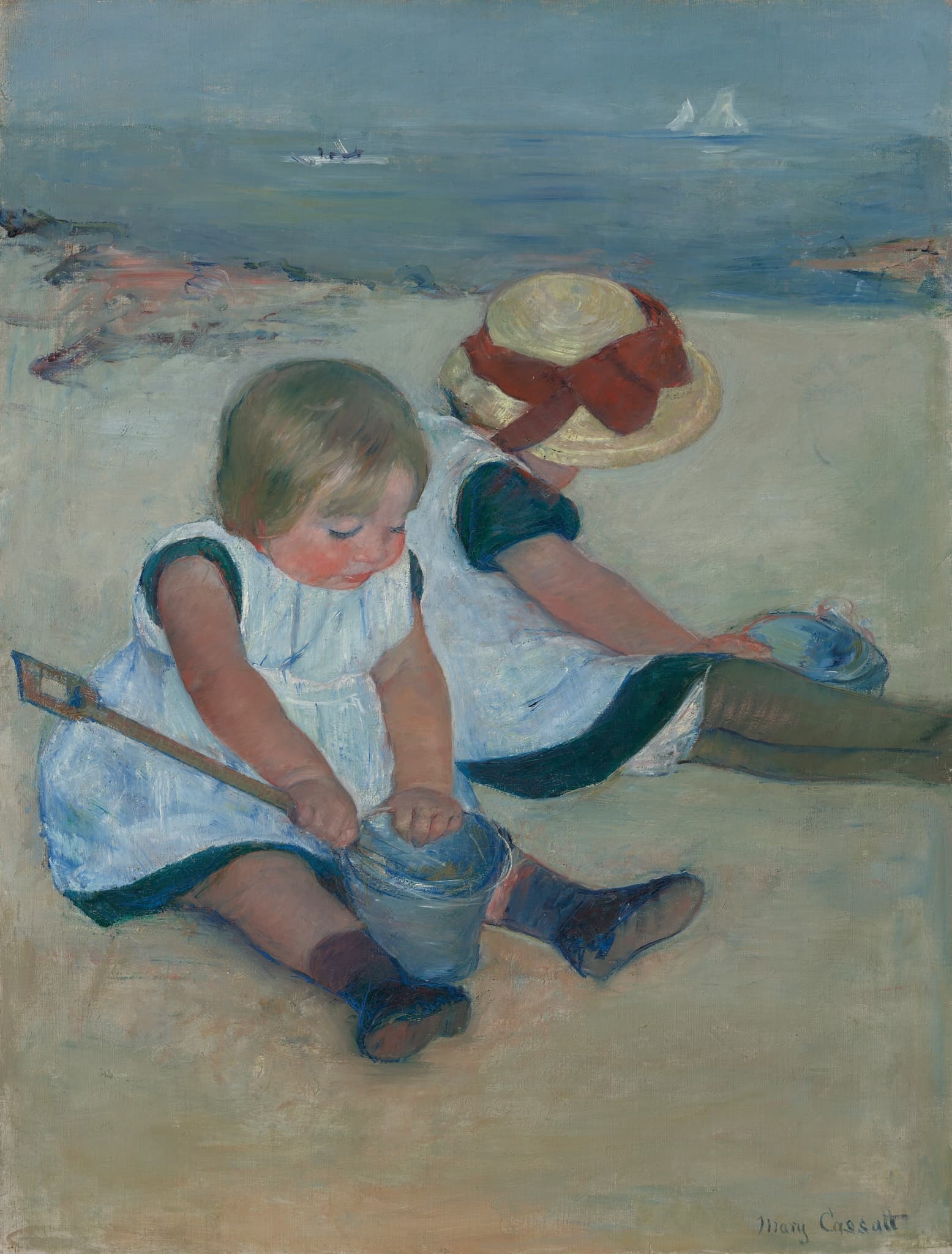
$15-30 million
Despite no modern public sale history, its prime-period, museum-held status suggests a result eclipsing Cassatt’s standing $7.5M auction record.
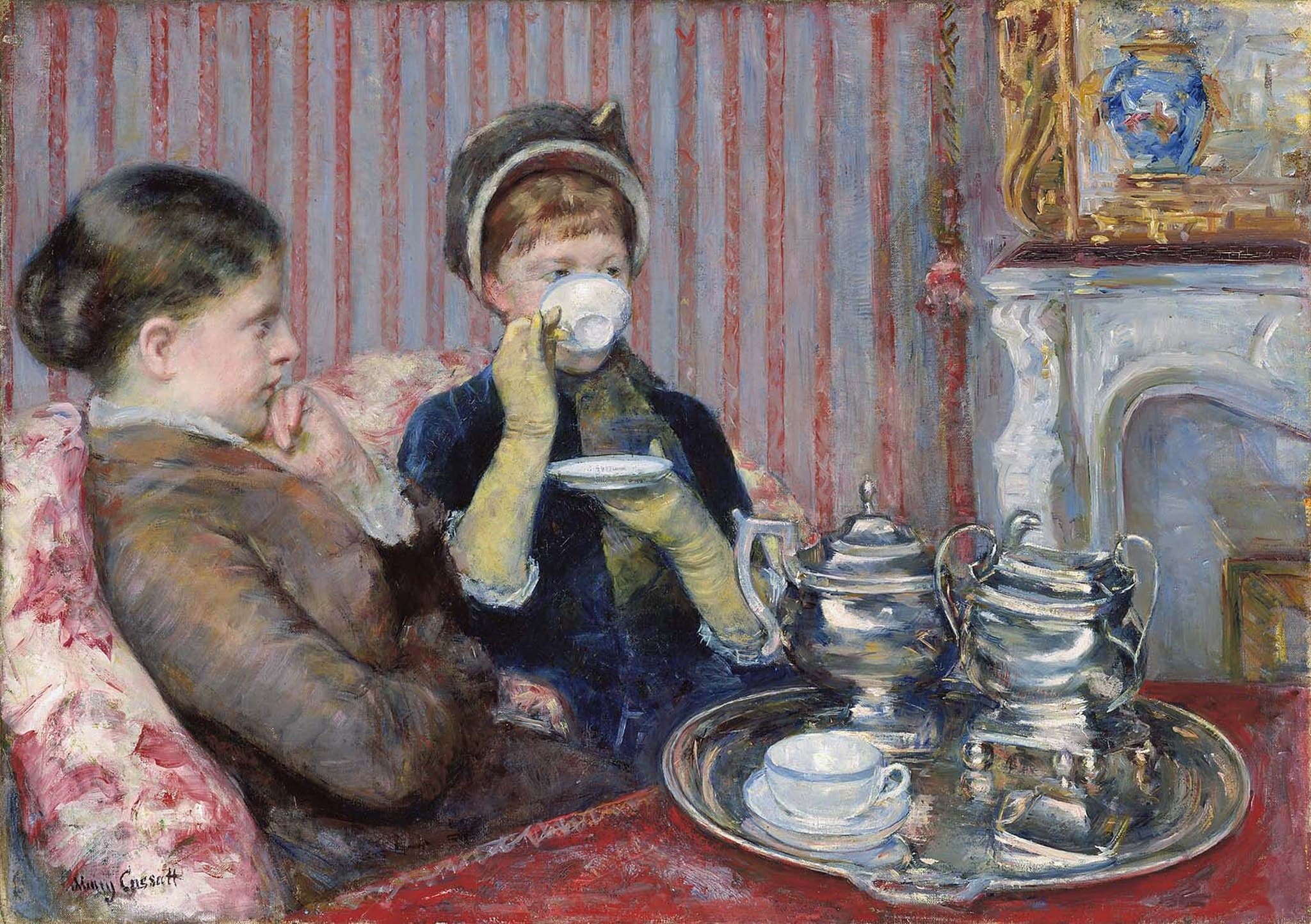
$17-25 million
Benchmarked against Morisot and Cassatt’s best results, this canonical MFA Boston oil would likely rank among the artist’s highest auction outcomes.
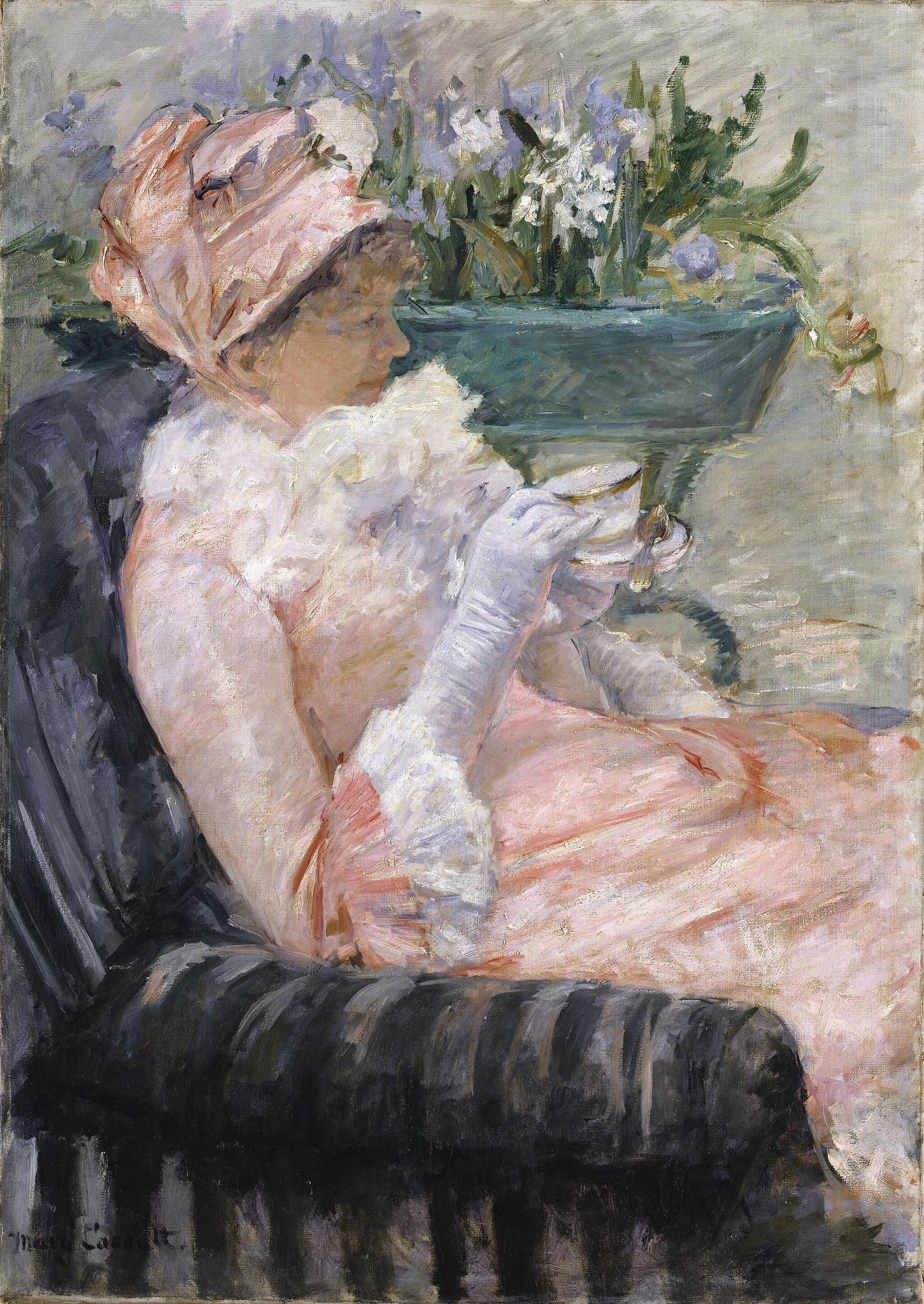
$18-25 million
With 1881 Impressionist‑exhibition pedigree and prime‑period date, it would likely set a new benchmark for Cassatt oils at auction.
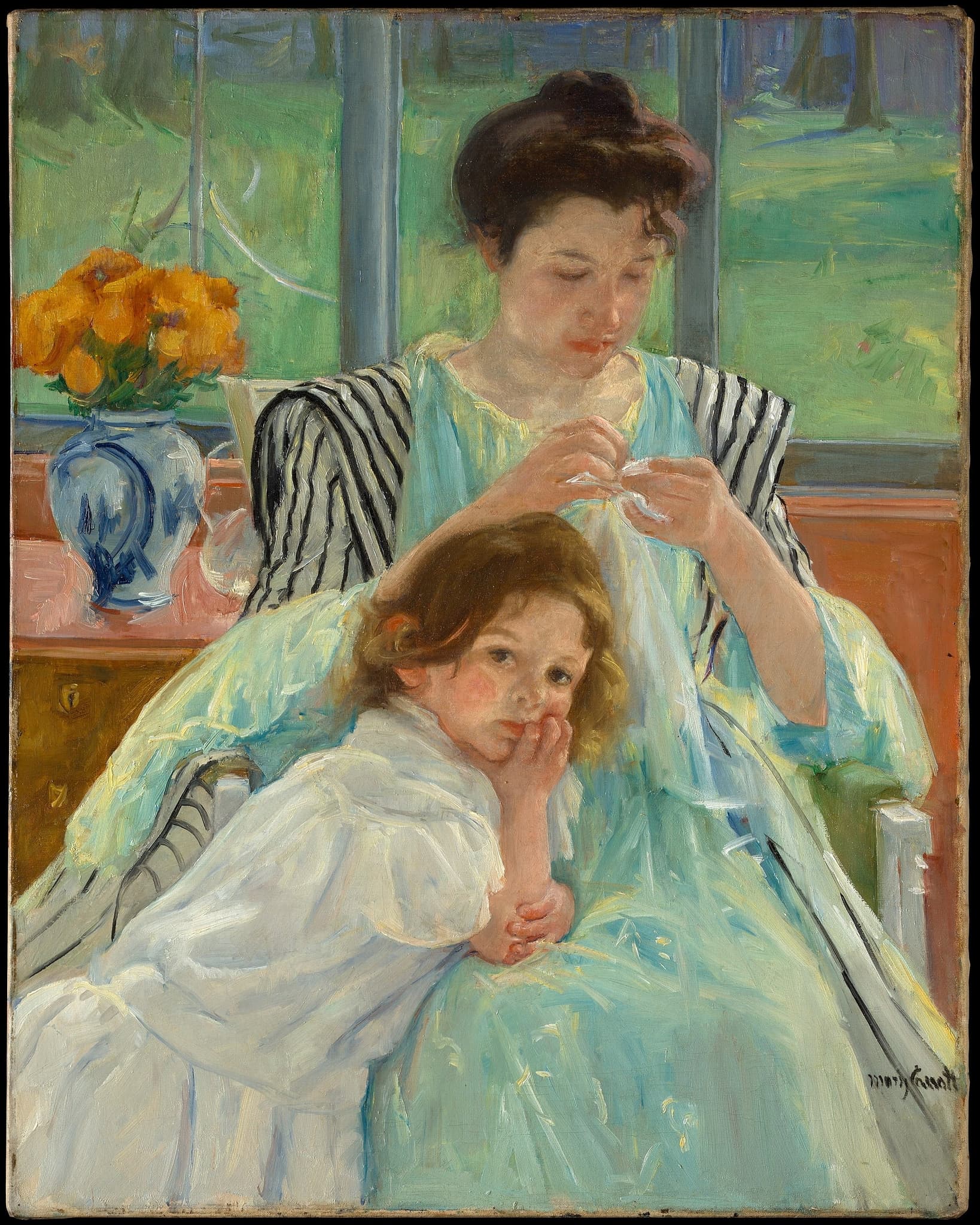
$12-20 million
At The Met via the Havemeyer bequest, this iconic mother‑and‑child oil would trade above typical Cassatt prices due to extreme rarity and trophy appeal.
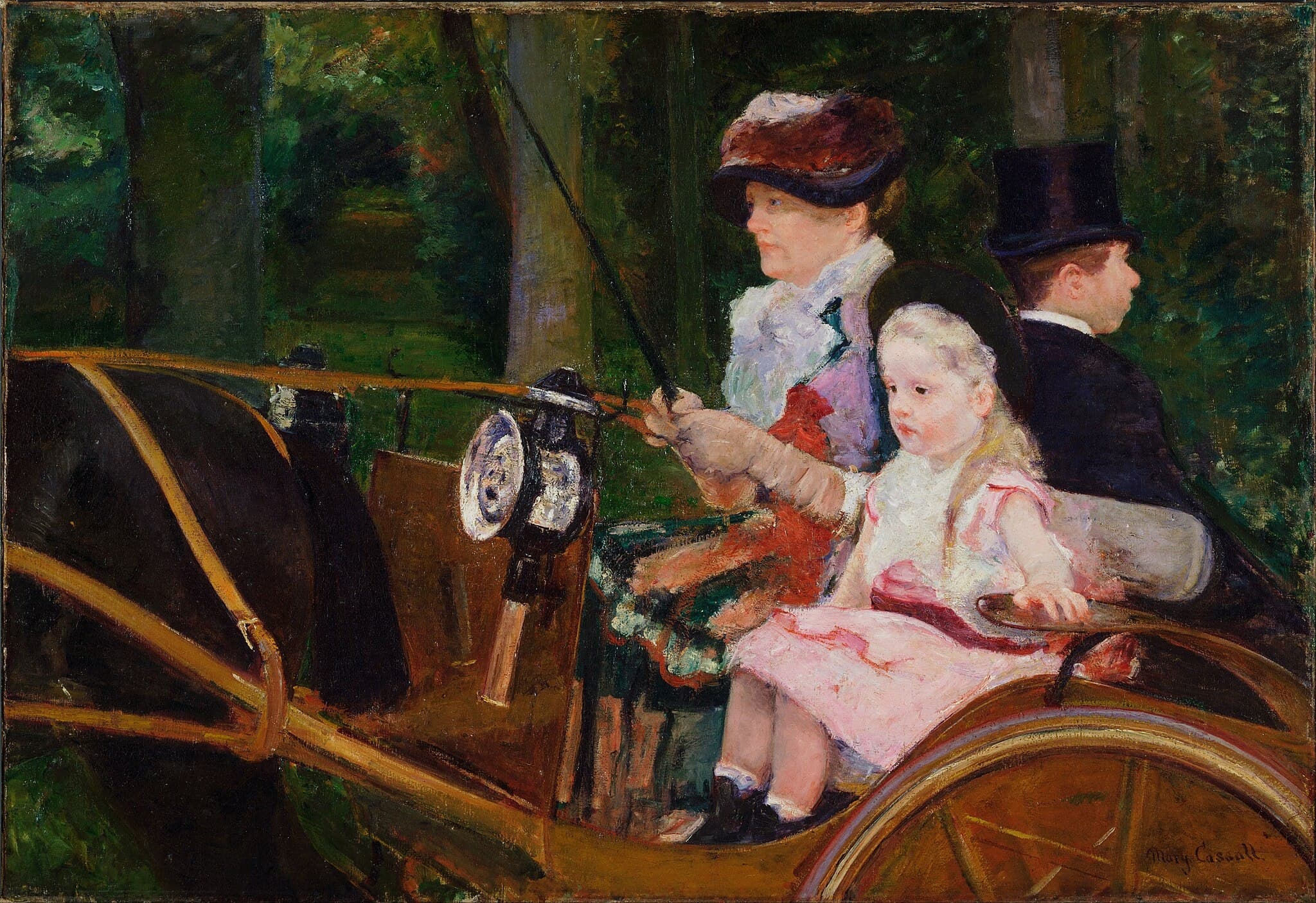
$10-18 million
A large 1881 modern‑life scene, its hypothetical sale would likely set a new auction record for Cassatt.
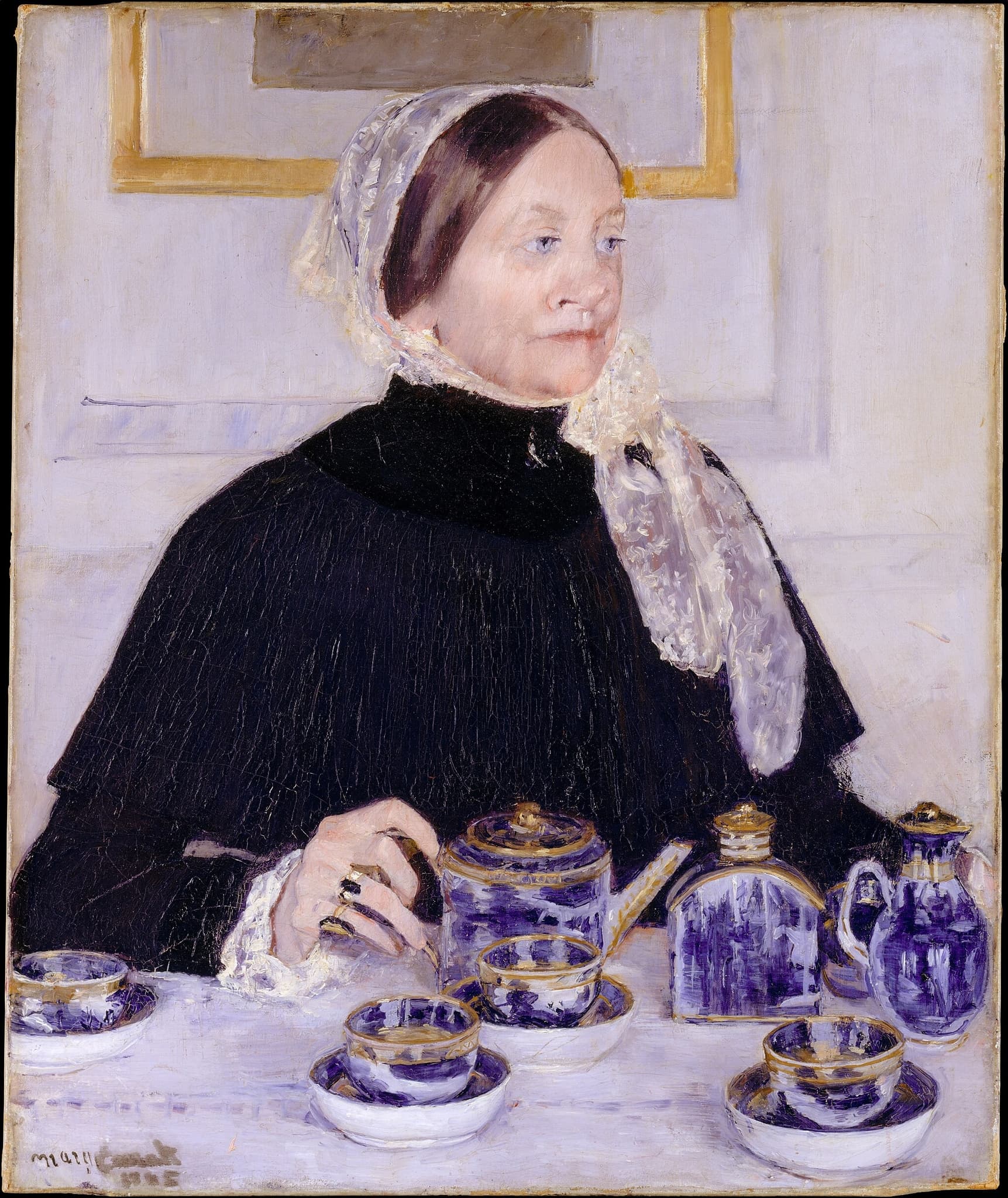
$10-17 million
As a fully realized 1883–85 oil with iconic domestic subject, it would likely challenge or surpass Cassatt’s $7.5M auction record.
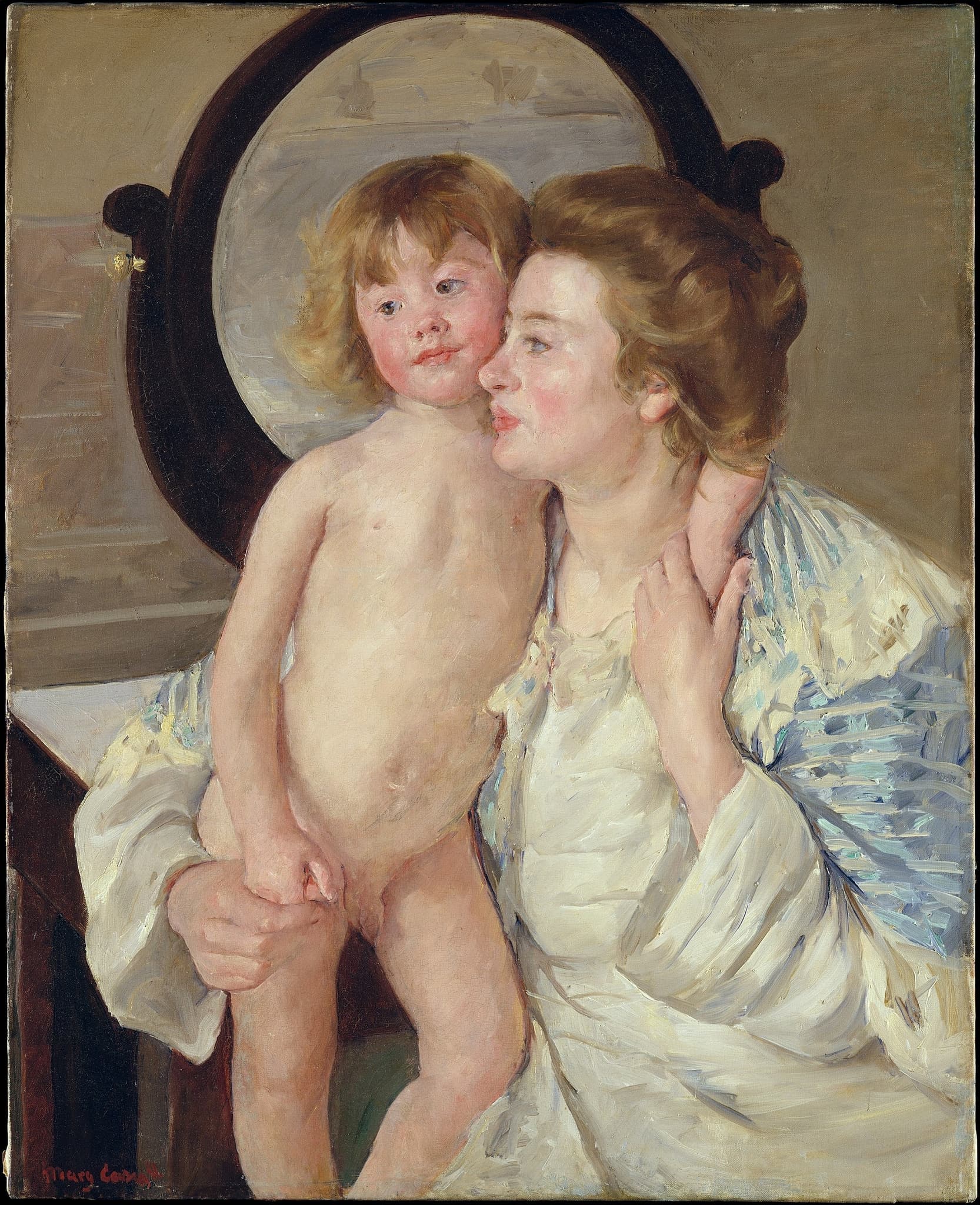
$9–15 million
With Havemeyer/Met pedigree and prime‑period mother‑and‑child theme, it would command top‑evening‑sale interest at levels above most Cassatt auction results.
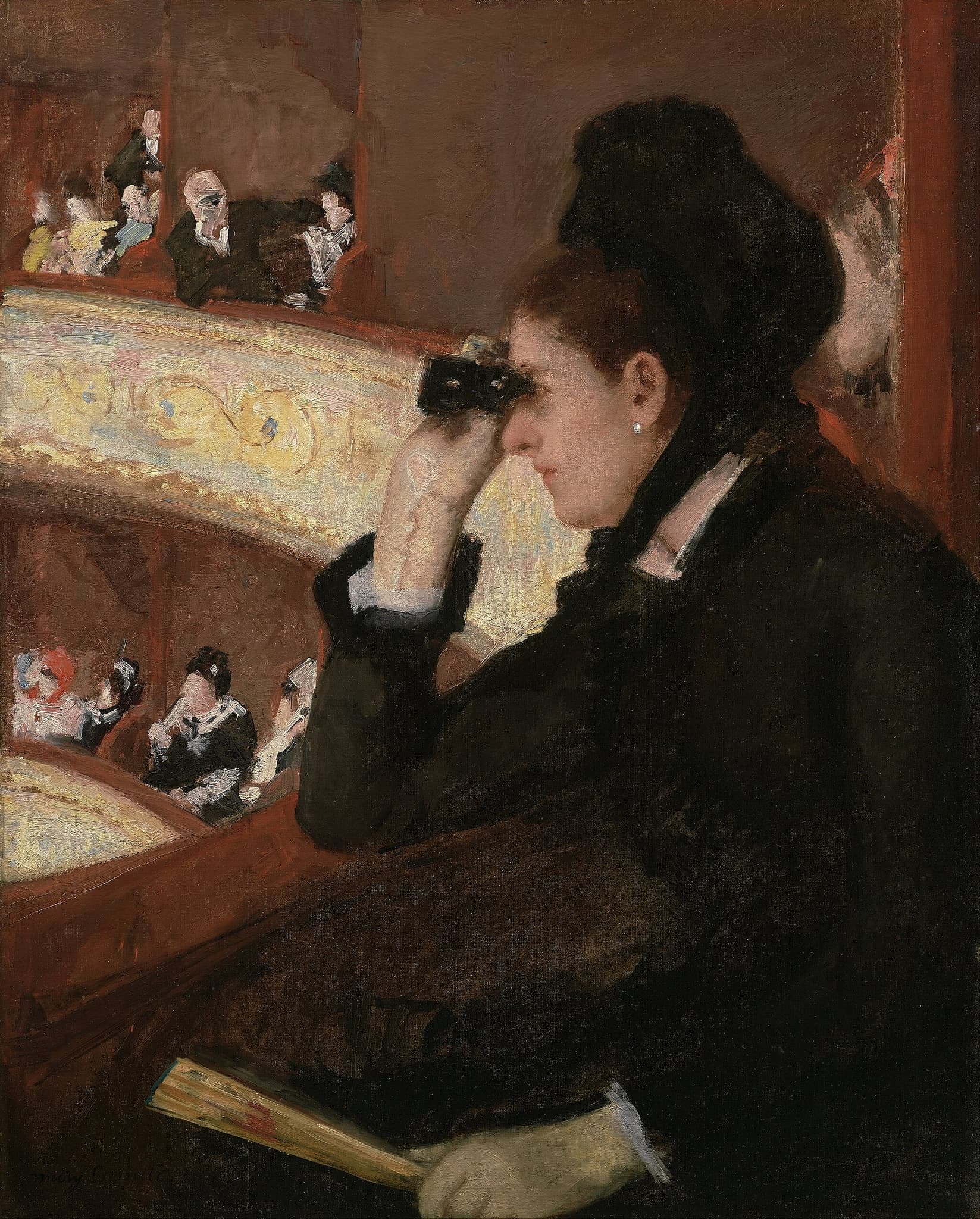
$10-15 million
A rare 1878 opera‑loge oil, its value is buoyed by scarcity and proximity to Cassatt’s record‑setting late‑1870s theater images on paper.
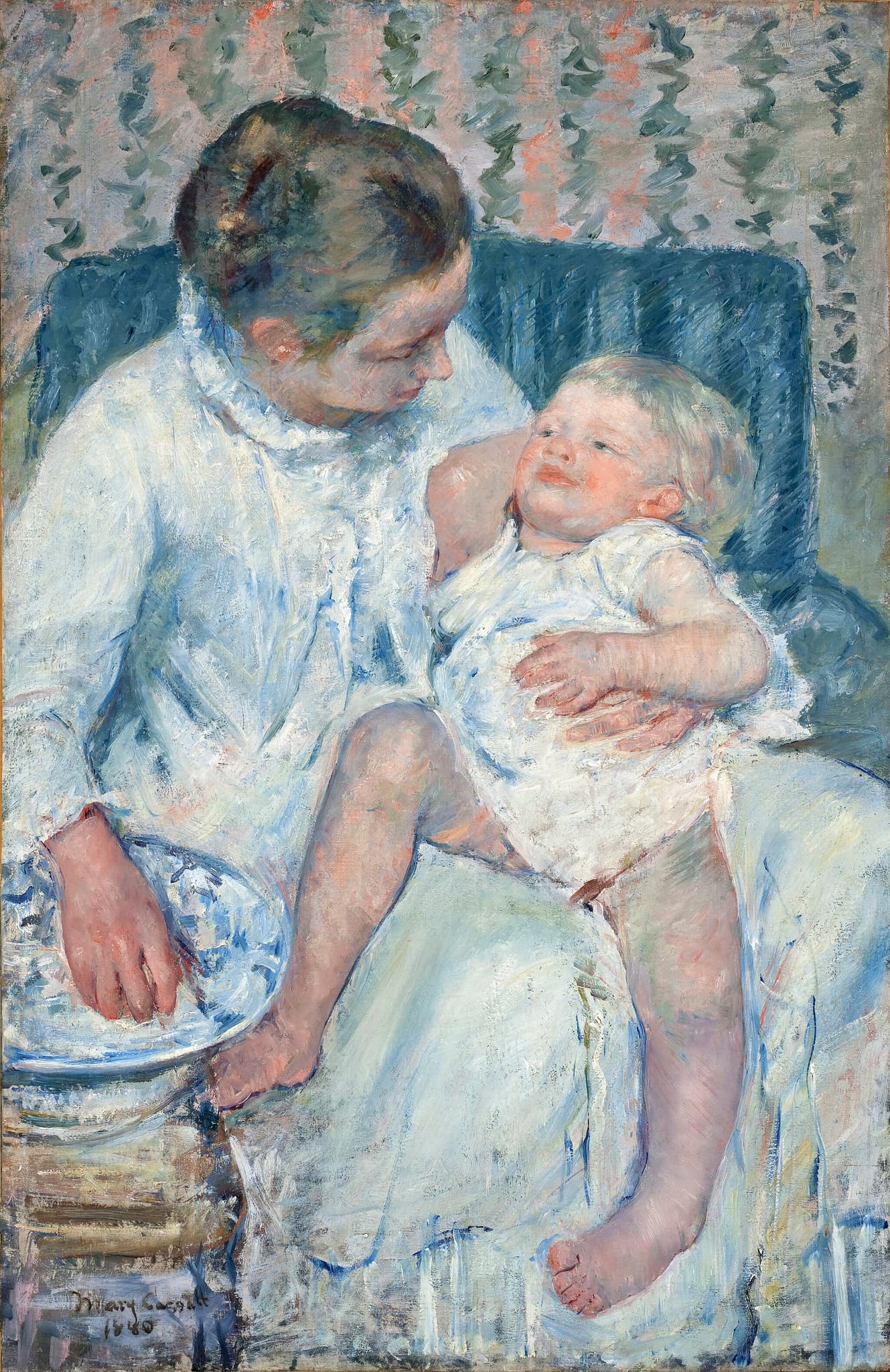
$8–14 million
This prime 1880 LACMA mother‑and‑child oil could challenge Cassatt’s $7.5M auction record under ideal sale conditions.
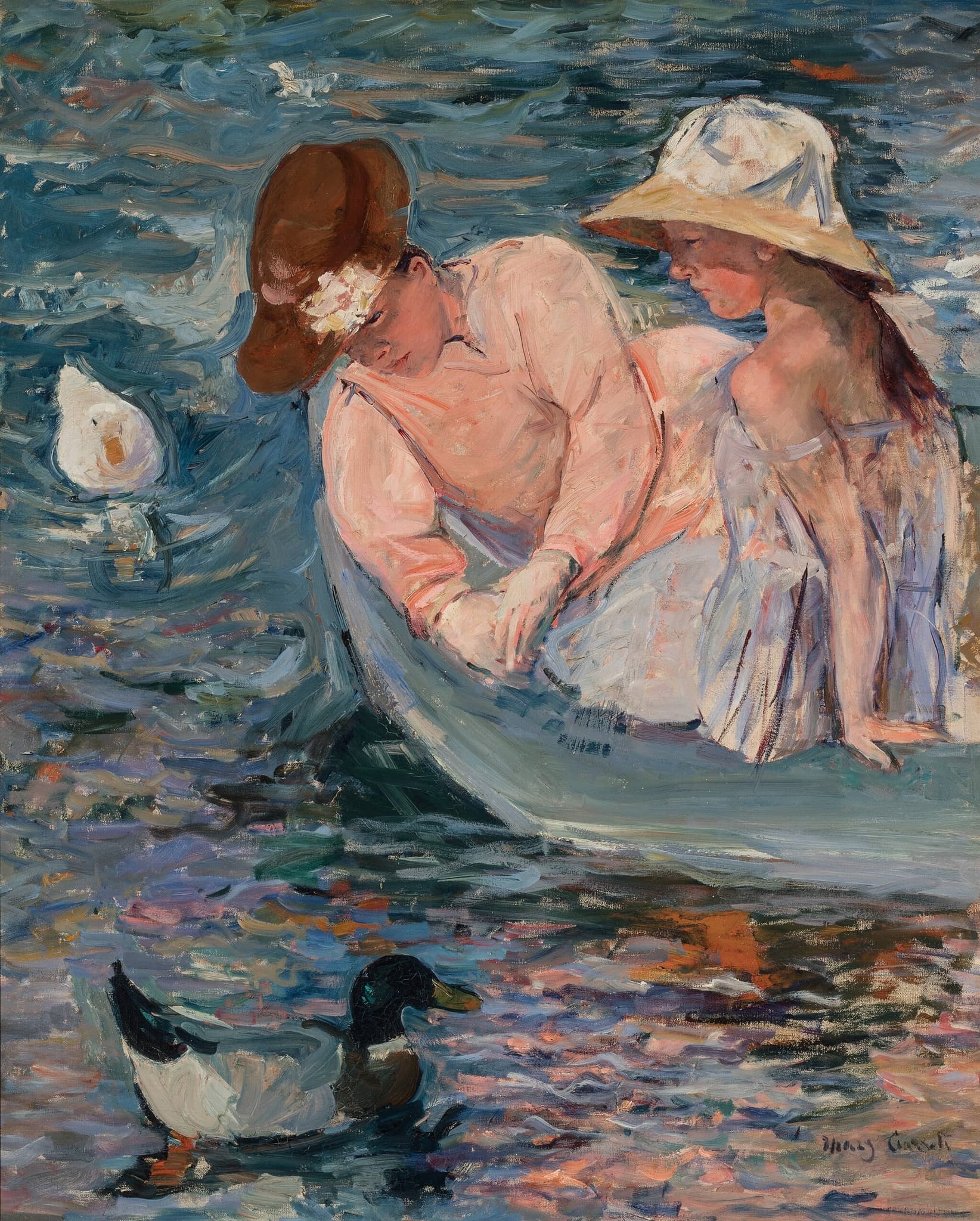
$8-13 million
Exhibition‑scale and unusually with a boating subject, it would trade above most Cassatt oils, with replacement value prudently set around $15M.
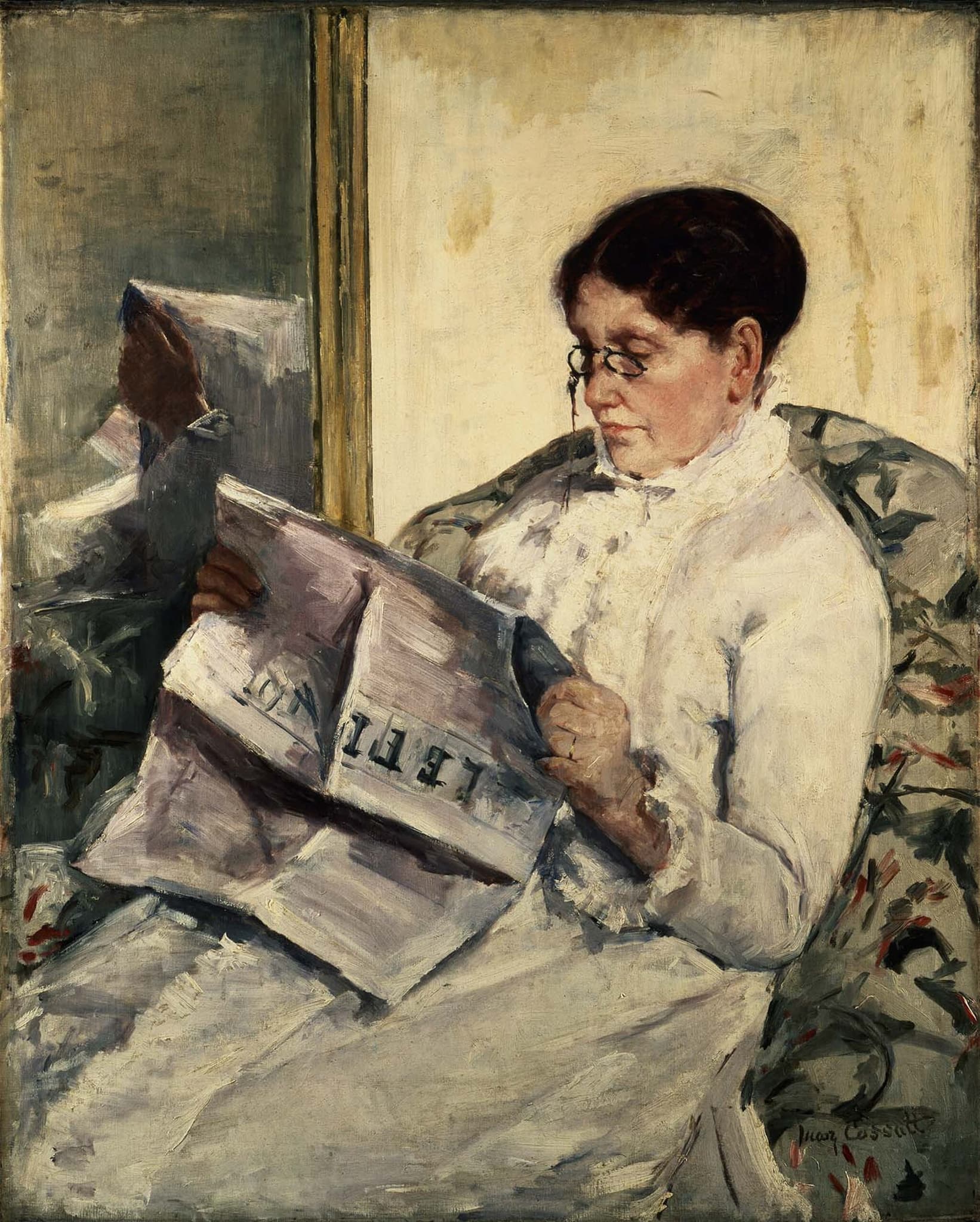
$6–12 million
Last sold publicly at Christie’s in 1983 for $1.1M, with Cassatt‑family provenance and notable exhibition history strengthening today’s much higher market expectation.
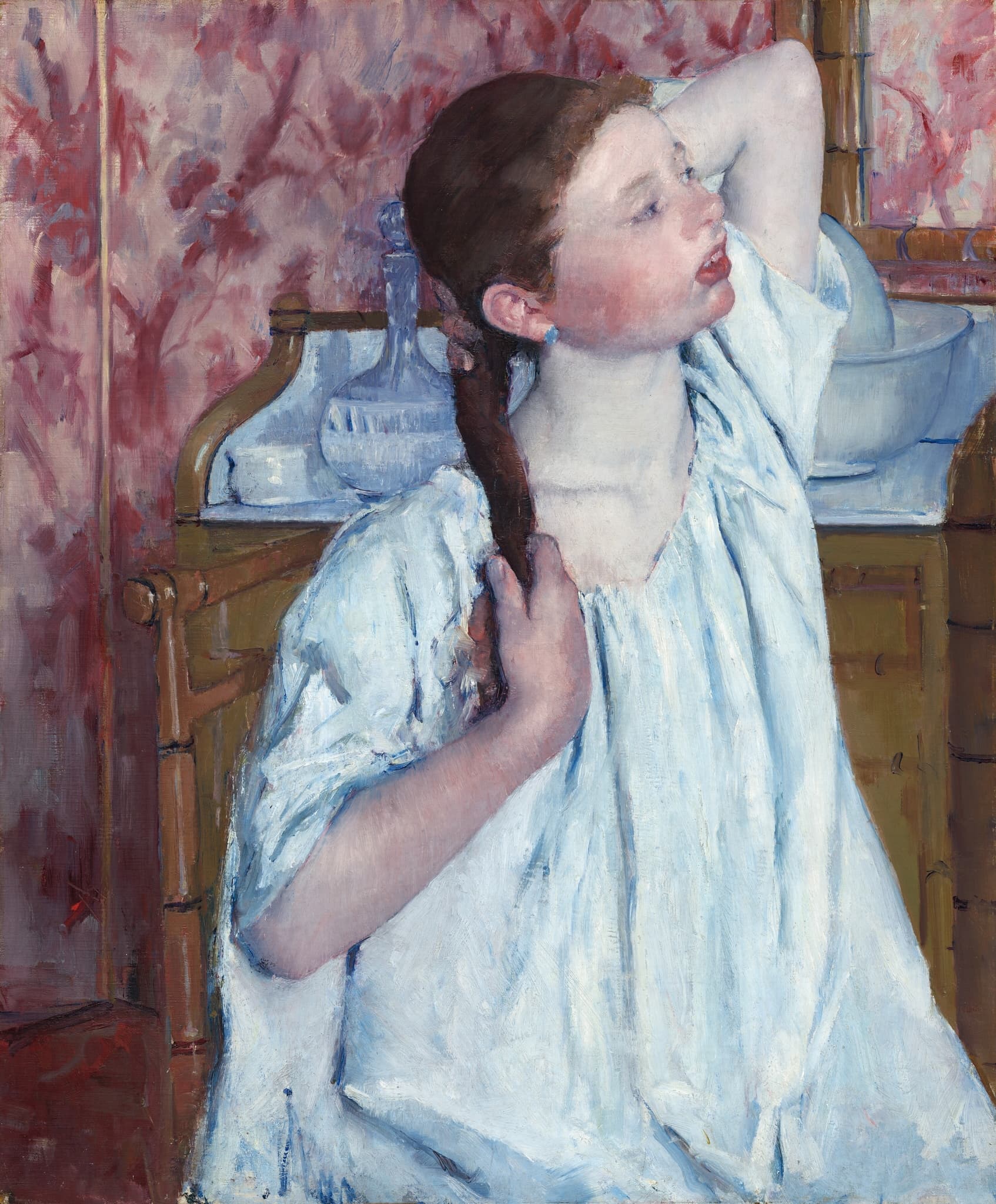
$8–12 million
Prime‑period oil with ex‑Degas/Havemeyer provenance, its extreme scarcity merits an indicated ~$16M replacement insurance value.
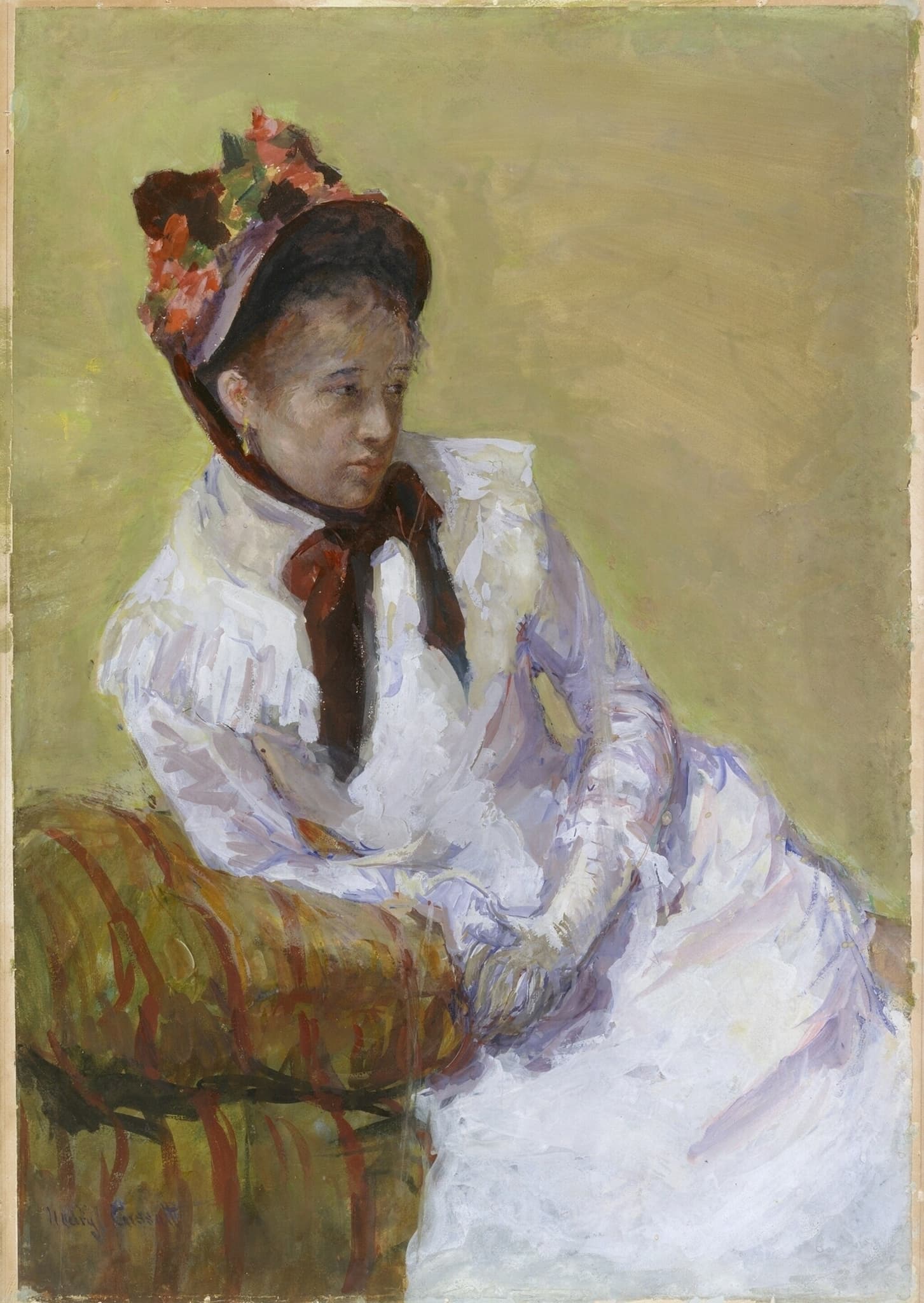
$6-10 million
The Met’s rare 1878 self‑portrait on paper is valued alongside Cassatt’s ~$7.5M auction record for prime‑period works on paper, tempered by paper‑condition considerations.
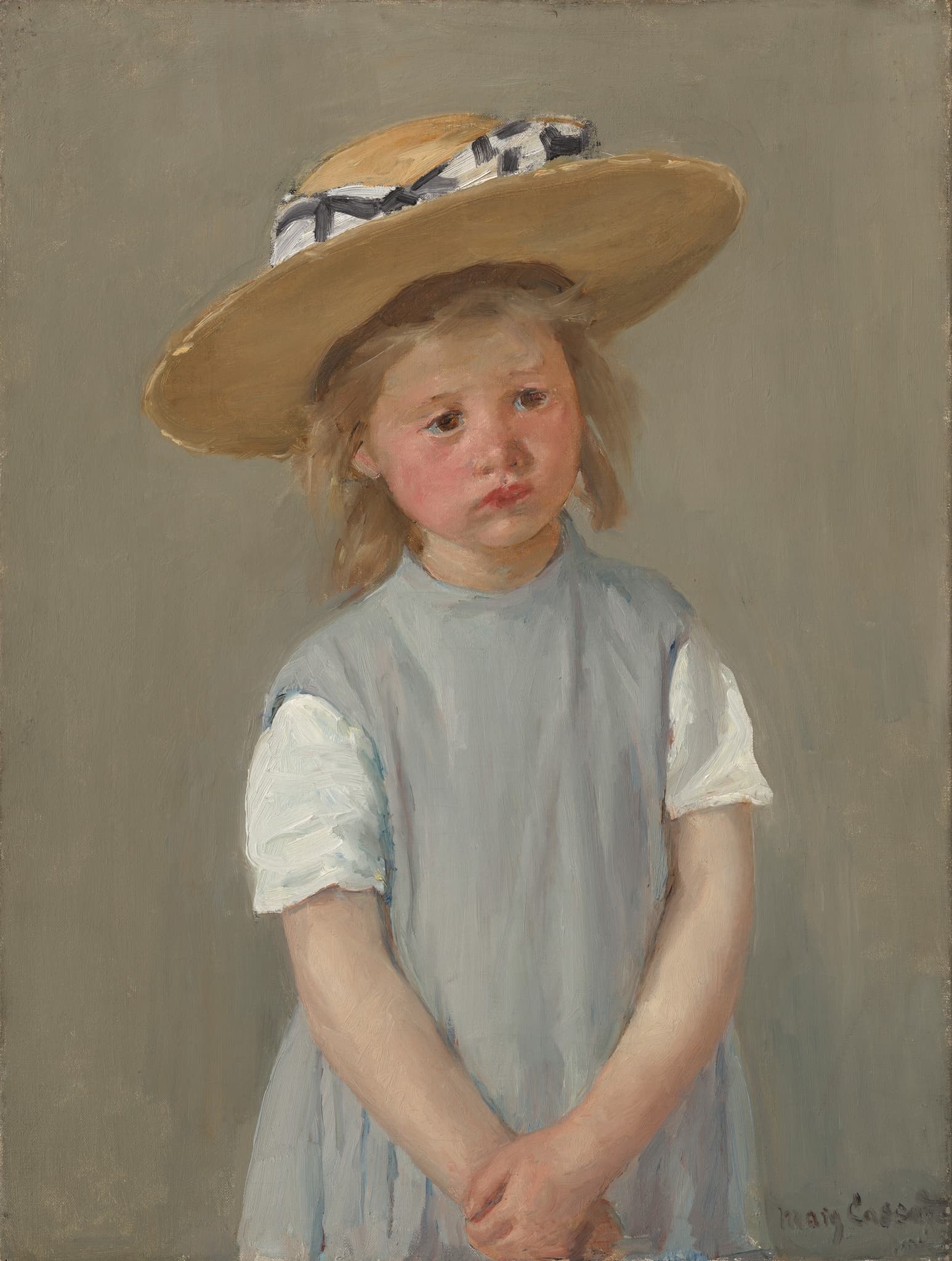
$5.5–9.0 million
Prime‑period child portrait with Mellon→NGA provenance, its replacement value is prudently set at $8–12M reflecting institutional caliber and rarity.
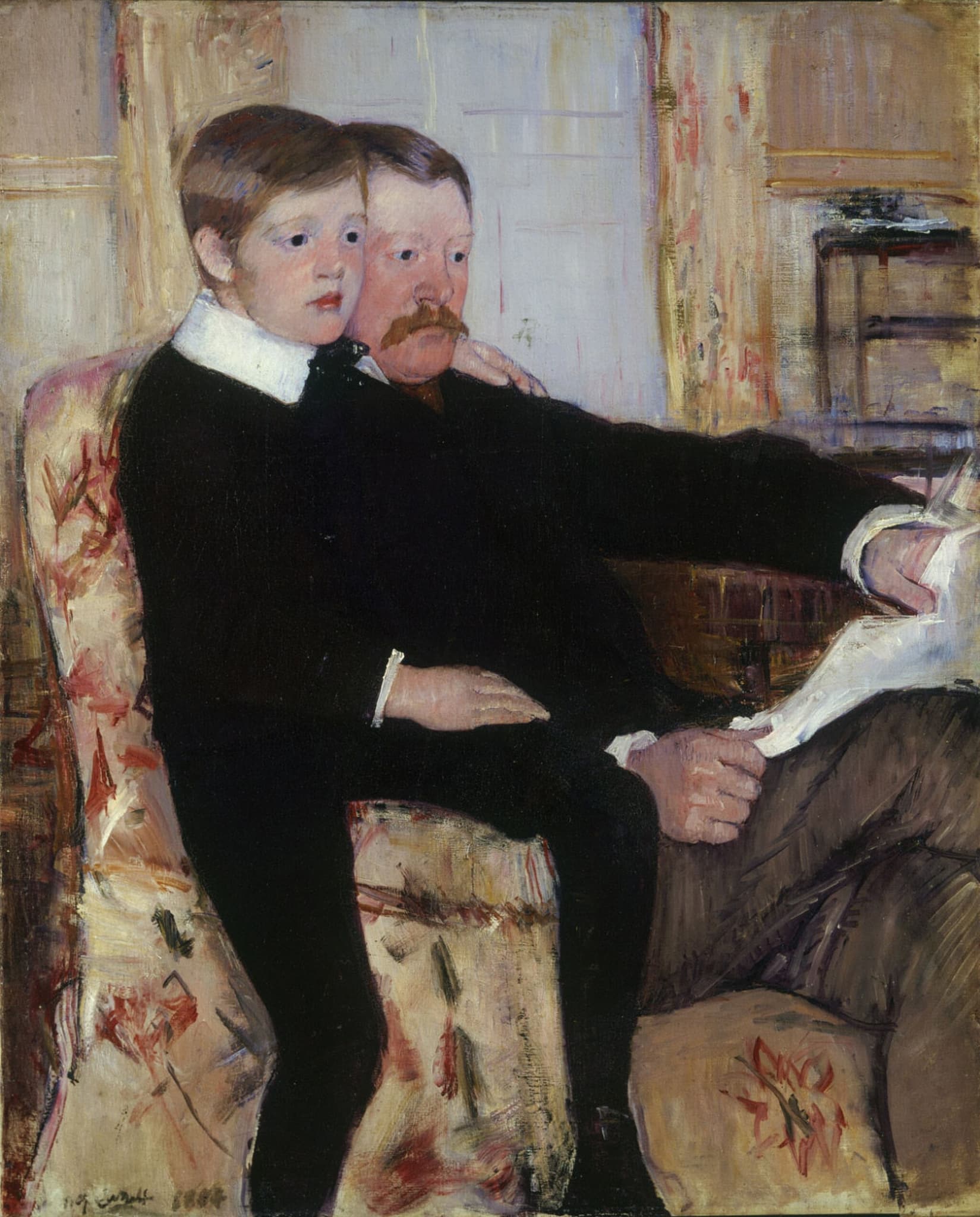
$5.5-7.5 million
A substantial family portrait in oil, its valuation is deliberately capped below Cassatt’s 2022 $7.5M record for an iconic work on paper.
What Drives Value in Mary Cassatt's Work
Iconic Subjects: Mother-and-Child and Loge Scenes Lead Cassatt’s Curve
Cassatt’s price ceiling concentrates in two motifs: mother‑and‑child and the opera/loge. Canonical nursery bath and bedroom scenes—The Child’s Bath, Breakfast in Bed, Mother About to Wash Her Sleepy Child, Mother and Child (The Oval Mirror)—command sustained premiums. Equally, the 1878–79 theater series (In the Loge; Woman with a Pearl Necklace in a Loge; Woman in Black at the Opera) drives top demand, evidenced by the record pastel Young Lady in a Loge, Gazing to Right (2022). Male or formal portraits (e.g., Alexander J. Cassatt) trail these themes.
Prime Windows: 1878–81 Theater/Interior Breakthrough and 1890s Japonisme
Dating is unusually decisive for Cassatt. Works from 1878–81—her loge and bourgeois interiors (The Tea; Woman with a Pearl Necklace in a Loge; Reading Le Figaro)—sit at the market apex. A second premium window is the 1890s, when Japonisme reshaped her compositions: high‑angle, cropped, planar designs (The Child’s Bath; The Boating Party) are textbook icons and priced accordingly. Late or peripheral periods rarely match these peaks, even with strong subjects, making these date bands the core price escalators.
Medium & Scale in Cassatt: Scarce Large Oils vs. Abundant Works on Paper
Because Cassatt produced many pastels/prints, exhibition‑scale oils are intrinsically scarce and trade at multiples when subject/date align (The Boating Party; The Tea; A Woman and a Girl Driving; Summertime). Yet Cassatt‑specific nuance: masterpiece images on paper can rival oils—her auction record is a loge pastel at $7.489m. Net effect: large, finished oils with wall power dominate the upside, but exceptional iconography can compress the oil/paper gap, while smaller oils/pastels price materially lower.
U.S. Museum Capture & Degas/Havemeyer Lineage: Cassatt’s Scarcity Premium
Cassatt’s masterpieces were absorbed early by U.S. institutions and elite patrons, suppressing public oil benchmarks and forcing extrapolation when trophies surface. Icons at AIC (The Child’s Bath), NGA (The Boating Party; Little Girl in a Blue Armchair), The Met (The Cup of Tea; Young Mother Sewing; The Oval Mirror), PMA (A Woman and a Girl Driving), and MFA Boston (In the Loge; The Tea) create near‑absolute scarcity. Provenance ties to Degas (reworking/ownership) and Havemeyer/Mellon/Chester Dale further lift prices via canonization.
Market Context
Mary Cassatt remains a blue-chip Impressionist with particularly strong institutional and U.S. private demand, though the finest oils are largely in museums, limiting public supply. Her auction record is $7,489,000 (Christie’s, 2022) for a prime-period pastel from the Ann & Gordon Getty Collection. Market depth concentrates in late‑19th‑century oils and major pastels—especially mother‑and‑child and opera‑box subjects—while works on paper anchor an active mid‑market. After a pandemic‑era rebound, Impressionist/Post‑Impressionist totals softened in 2023–24 amid a shortage of trophy consignments even as lot counts rose; by 2025, bidding strengthened for best‑in‑class material. The market is two‑speed: mid‑tier works face disciplined pricing, but masterpieces with impeccable provenance and exhibition history draw concentrated competition, often from museums. With sustained curatorial focus on women artists and renewed scholarship, demand is firm to rising, and a museum‑grade Cassatt oil could plausibly reset her public record.