How Much Is The Tea Worth?
Last updated: February 22, 2026
Quick Facts
- Last Sale
- $6K (1942, Dikran Kelekian (dealer))
- Methodology
- comparable analysis
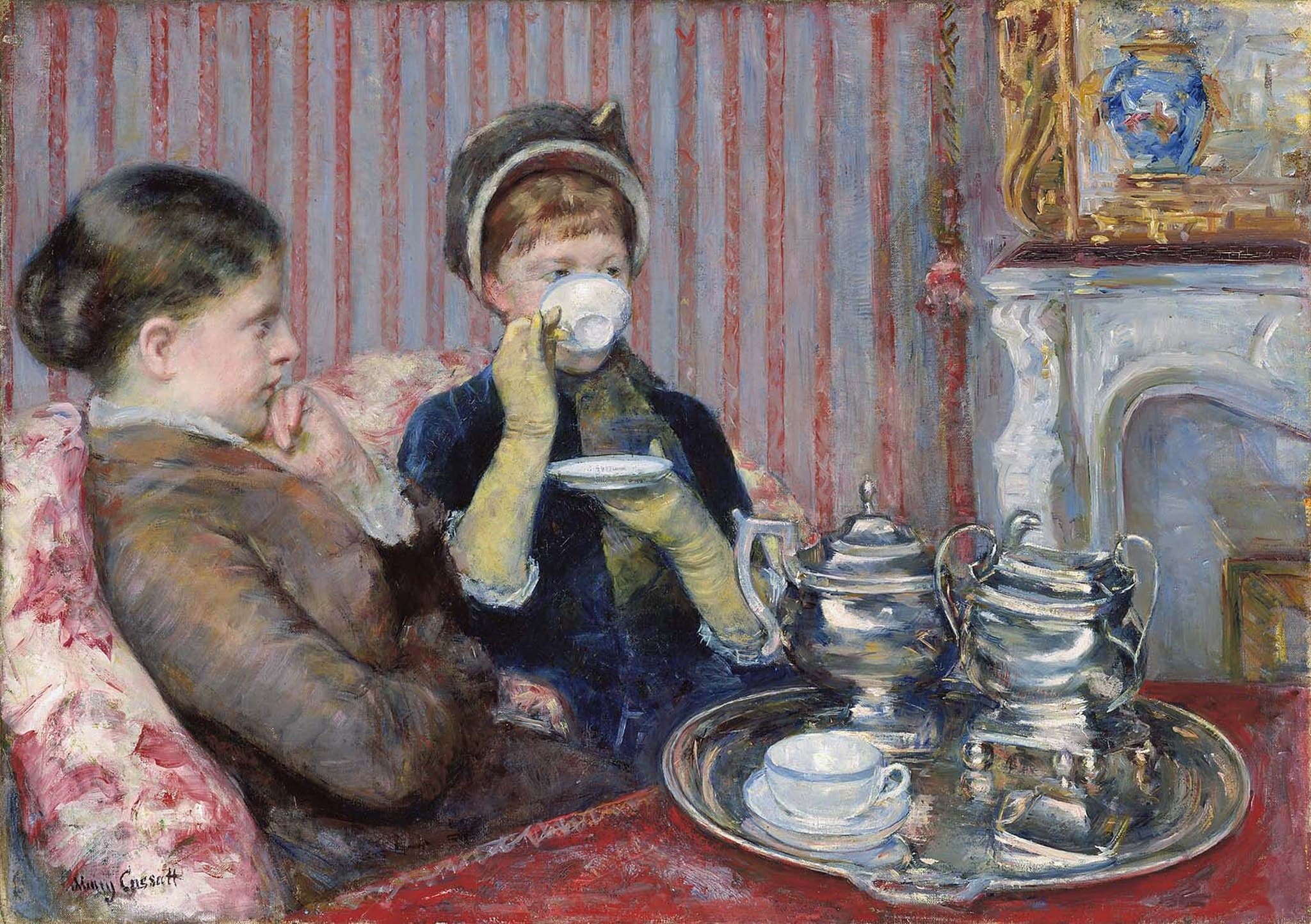
Hypothetical market value for Mary Cassatt’s The Tea (c. 1880, MFA Boston) is estimated at $17–25 million. This refines prior expectations by anchoring to Cassatt’s best auction benchmarks, prime‑period scarcity, and cross‑artist comps (e.g., Morisot), while applying premiums for museum‑grade provenance and canonical status.
Valuation Analysis
Conclusion: In a hypothetical market scenario (recognizing the work is not for sale), Mary Cassatt’s The Tea would likely command $17–25 million. The painting dates to c. 1880—Cassatt’s prime—and exemplifies her definitive subject of modern women in intimate interiors. It is widely reproduced, deeply cited, and long held by the Museum of Fine Arts, Boston, factors that collectively warrant a significant premium over standard Cassatt results [1].
Benchmarking and comps: Cassatt’s current auction record is $7.49 million, achieved in 2022 for a masterpiece‑quality loge scene on paper (Young Lady in a Loge, Gazing to Right) [2]. Among oils, a strong later work, Children Playing with a Dog (1907), realized about $4.8 million in 2018 (c. $6.0 million inflation‑adjusted) [3]. By comparison, The Tea is earlier, rarer, and art‑historically superior: a prime‑period interior of substantial scale with institution‑grade provenance. Cross‑artist evidence also supports eight‑figure potential for canonical domestic interiors by leading female Impressionists; for example, Berthe Morisot’s Après le déjeuner made £6.98 million ($10.98 million) in 2013 (higher today in real terms). These points justify a multiple of recent Cassatt oil benchmarks and a step‑change above her current headline price on paper.
Scarcity, provenance, and stature: Prime oils from Cassatt’s late‑1870s to early‑1880s peak are exceptionally scarce on the open market; many, like The Tea, reside in museums. The MFA Boston record confirms c. 1880 dating, substantial dimensions (25 1/2 × 36 1/4 in.), early collection by Henri Rouart, the 1912 Rouart sale, subsequent acquisition by dealer Dikran Kelekian, and the museum’s 1942 purchase—an unimpeachable chain that confers confidence and prestige [1]. The work’s frequent publication and exhibition history further underwrite its canonical status.
Market context and timing: The Impressionist category has remained comparatively steady, with high sell‑through and lower volatility than more speculative segments. Analysts note sustained demand and supply constraints; masterpiece‑level material continues to ignite strong bidding [4]. While global art sales softened in 2024, the top end rebounded in late 2025, especially for blue‑chip Modern and Impressionist consignments—an environment in which a museum‑caliber Cassatt could outperform estimates [5].
Key sensitivities: Condition (no public conservation issues are noted in the MFA record) and presentation can fine‑tune the result. Given the work’s status, depth of international bidding, guarantee terms, and competitive private interest would likely determine whether the price lands nearer $17 million (auction baseline) or pushes toward the mid‑$20 millions (private‑treaty outcome). Historically, major Cassatt oils have reset expectations when true masterpieces appear, a pattern that The Tea is positioned to repeat [2][3][6].
Key Valuation Factors
Art Historical Significance
High ImpactPainted c. 1880, The Tea epitomizes Cassatt’s breakthrough focus on modern women in bourgeois interiors during her prime Impressionist period. It is among her most frequently reproduced and discussed oils, bridging rigorous observation with the radical modernity of domestic life as a worthy subject. Its subject, composition, and handling place it just below her most universally iconic works (e.g., The Child’s Bath), yet clearly within the top tier of her oeuvre. Canonical status in scholarship and teaching makes it a bellwether example that collectors and institutions would prize—an essential driver of valuation at the masterpiece level.
Scarcity of Prime-Period Oils
High ImpactLarge, high‑quality Cassatt oils from 1879–1882 are exceptionally scarce in private hands; many are in major museums. This supply dynamic exerts a structural premium: collectors who want a definitive Cassatt interior have extremely limited options. The Tea’s date, scale, and subject sit squarely in the sweet spot of demand, with few, if any, closely comparable works likely to surface. Such scarcity allows a price that meaningfully exceeds recent Cassatt auction benchmarks, especially when competing bidders prize period, subject, and quality over medium alone.
Provenance, Exhibition, and Publication History
High ImpactThe painting’s early ownership by Henri Rouart, appearance in the landmark Rouart sale (1912), subsequent acquisition by eminent dealer Dikran Kelekian, and long tenure at the MFA Boston provide an uncommonly strong chain of custody. Extensive exhibition and publication histories amplify its profile and reduce perceived risk for buyers. Museum‑level validation is a significant value catalyst, increasing bidder confidence, broadening the pool of potential guarantors, and supporting a premium versus otherwise similar works lacking such pedigrees.
Condition, Scale, and Aesthetic Impact
Medium ImpactAt approximately 25 1/2 × 36 1/4 inches, The Tea offers a commanding yet domestic scale—large enough for wall power while remaining intimate. Its compositional clarity (tabletop tea service, social exchange, nuanced patterning) exemplifies Cassatt’s refined observation. While museums typically maintain works to a high standard, a current condition report and conservation history would be essential for a final price call. Absent material issues, the combination of scale and visual authority supports pricing above smaller or sketch‑like oils from adjacent periods.
Market Benchmarks and Peer Comparables
Medium ImpactCassatt’s standing record is $7.49 million for a prime pastel (2022), and a strong later oil realized ~$4.8 million in 2018 (c. $6.0 million today). By art‑historical rank and period, The Tea should surpass these oil benchmarks. Peer evidence from Berthe Morisot’s prime‑period interiors (reaching the low‑to‑mid eight figures) demonstrates headroom for canonical works by women Impressionists. Applying a quality, period, and scarcity premium to Cassatt’s top results supports a $17–25 million range in today’s market.
Sale History
The Tea has never been sold at public auction.
Mary Cassatt's Market
Mary Cassatt is a blue‑chip name within Impressionism, with consistent institutional demand and a stable, global collector base. Her market is bifurcated by medium: prints and pastels appear regularly with deep liquidity, while oils—especially from the late 1870s to early 1880s—are scarce and command significant premiums when they surface. Cassatt’s standing auction record is $7.49 million (a prime pastel from the Ann & Gordon Getty Collection, 2022), and strong oils typically trade in the low‑to‑mid single digits when available. Scholarship and high‑profile exhibitions in 2024–2025 have broadened attention to her practice, and interest in historic women artists continues to expand the bidder pool. A truly top‑tier, prime‑period oil could reset her auction record.
Comparable Sales
Young Lady in a Loge Gazing to Right
Mary Cassatt
Same artist; prime Paris social-interior subject from 1878–79; current auction record for Cassatt (work on paper). Establishes the top end of demand for masterpiece-quality Cassatt.
$7.5M
2022, Christie's New York
~$8.1M adjusted
Children Playing with a Dog
Mary Cassatt
Same artist; substantial oil on canvas and among the highest Cassatt oil results in the last decade. Useful benchmark for oils even though it is later (1907) and less canonical.
$4.8M
2018, Christie's New York
~$6.0M adjusted
Reading “Le Figaro”
Mary Cassatt
Same artist; prime-period domestic interior oil (1883). Historic Cassatt milestone at auction; closely aligned in subject and medium to The Tea.
$1.1M
1983, Christie's New York
~$3.5M adjusted
Mother Resting Her Cheek on Her Daughter’s Blond Head
Mary Cassatt
Same artist; oil with maternal/domestic subject. Indicates pricing for smaller, later and less iconic oils—useful as a floor reference rather than a top-tier comp.
$480K
2023, Guyette & Deeter, Portsmouth, NH
~$497K adjusted
Femme portant un bonnet noir et vert, cousant
Mary Cassatt
Same artist; late‑1880s domestic interior oil sold recently. Hammer price reported; shows current day‑sale level for modest oils with period subjects.
$650K
2025, Christie's New York
Après le déjeuner (After Lunch)
Berthe Morisot
Peer artist (female Impressionist), prime-period domestic interior oil of comparable art-historical rank. Demonstrates eight‑figure appetite for canonical Impressionist interiors by Cassatt’s closest cohort.
$11.0M
2013, Christie's London
~$14.9M adjusted
Current Market Trends
Impressionism remains a relative safe harbor: high sell‑through, lower volatility than ultra‑contemporary, and strong depth for masterpiece‑level consignments. After a softer 2024, late‑2025 marquee auctions showed renewed strength at the top end, with Modern/Impressionist trophies leading rebounds. Supply remains the chief limiter; works with canonical status, great provenance, and fresh‑to‑market appeal can outperform cautious estimates. Against this backdrop, a museum‑caliber Cassatt oil from her prime period would likely attract robust global bidding and could achieve a price materially above historical benchmarks if competitively pursued.
Study print
Study this painting as a print
Pair the full artwork with a museum-style study sheet focused on one meaningful detail.
Sources
- Museum of Fine Arts, Boston – Collections record for The Tea (42.178)
- Christie’s – Ann & Gordon Getty Collection: Young Lady in a Loge, Gazing to Right (record price, 2022)
- Christie’s – Mary Cassatt artist page (includes 2018 oil result, Children Playing with a Dog)
- Artnet News/Morgan Stanley – Impressionism market analysis (2014–2023)
- The Art Newspaper – Global art sales fell 12% in 2024 (Art Basel/UBS report, 2025)
- The Washington Post – Cassatt’s Reading “Le Figaro” sets 1983 record