How Much Is Portrait of Maerten (Maerten Soolmans) Worth?
Last updated: March 13, 2026
Quick Facts
- Last Sale
- $87.2M (2016, Private sale facilitated by Christie\'s; joint acquisition by the French and Dutch states (Musée du Louvre and Rijksmuseum))
- Methodology
- comparable analysis
Final market valuation for Rembrandt’s Portrait of Maerten Soolmans (1634), if offered singly, is estimated at USD $70–120 million, with a working single‑point near USD $85–95M. The range is anchored to the 2016 joint state purchase of the Maerten/Oopjen pendants (reported €160M for the pair, implying ~USD $87.2M per canvas) and adjusted for present market dynamics, liquidity differentials between private institutional deals and auctions, and legal/condition constraints.
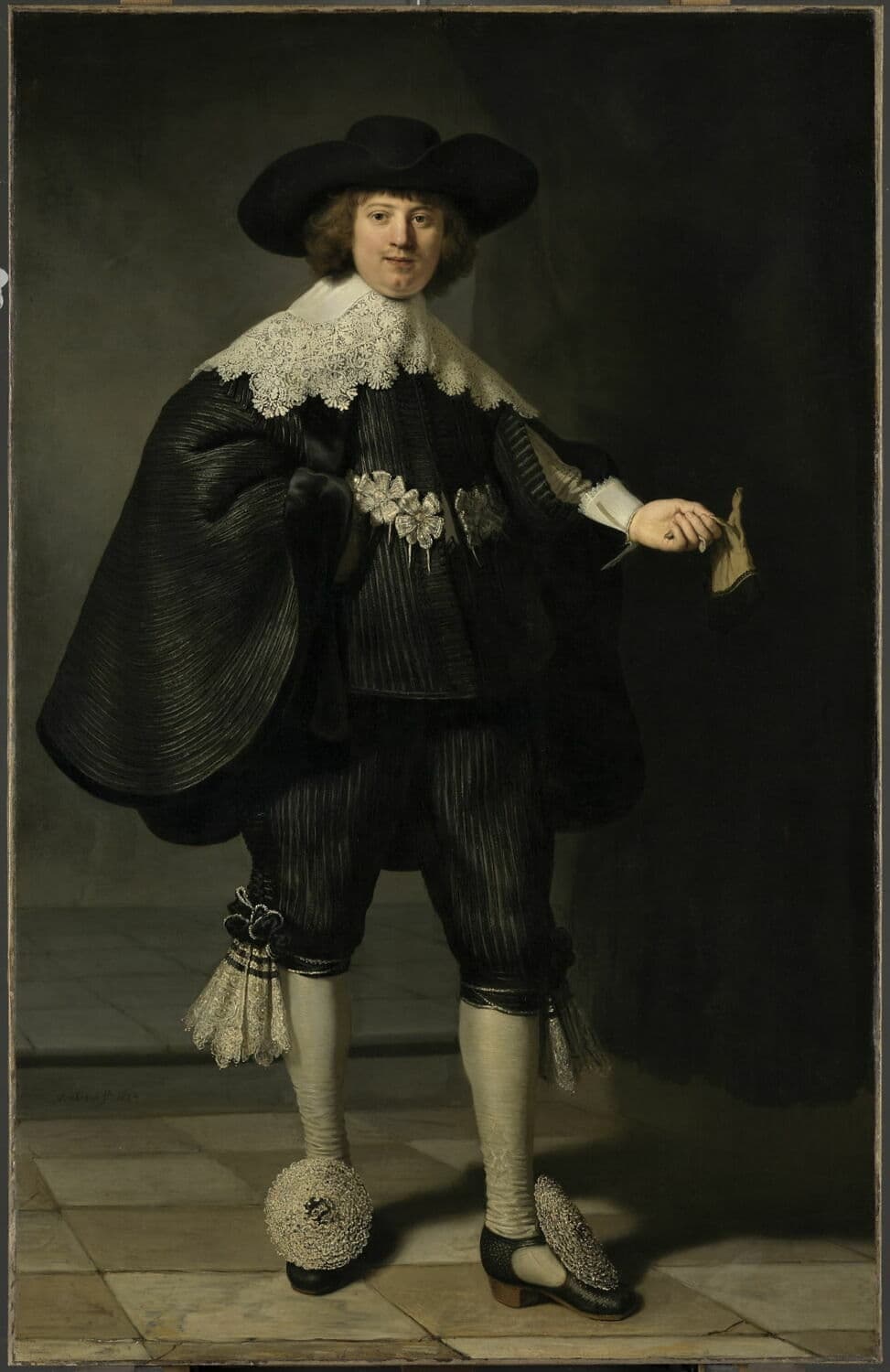
Portrait of Maerten (Maerten Soolmans)
Rembrandt van Rijn, 1634 • Oil on canvas
View more by Rembrandt van Rijn →Valuation Analysis
Valuation conclusion: Based on the most relevant private‑sale precedent and a comparative review of Rembrandt market activity, the hypothetical single‑painting market value of Portrait of Maerten Soolmans (1634) is assessed at USD $70–120 million, with a practical working estimate of approximately USD $85–95 million. The decisive benchmark is the 2016 joint acquisition of the Maerten and Oopjen pendants by the French and Dutch states for a reported €160 million (implying roughly USD $87.2M per canvas at the transaction date) [1][2].
Comparable and market logic: Institutional private purchases set the top of the Old Master market and are the most relevant comparables for this painting. The 2016 transaction establishes a clear institutional floor for an individual pendant under conditions where museums competed and prioritized retention of the pair. Conversely, public auction evidence for major Rembrandts is materially lower, reflecting the liquidity gap between auction and large off‑market institutional purchases. Exceptional single‑painting private purchases (institutional or state level) demonstrate that top Rembrandts can command prices above the 2016 implied per‑canvas figure under rare, competitive circumstances; however, those outcomes require concentrated funding and often hinge on national interest or donor commitments.
Key value sensitivities: Value would be depressed if the work were forced into an auction without institutional interest or if sold separately and buyers discount the separation of the pendants. Equally decisive are legal or policy constraints: since the pendants are now under state stewardship with long‑term exhibition commitments, practical marketability is constrained and hypothetical sale value is theoretical unless legal inalienability or export restrictions are resolved. Technical/condition issues and any provenance or title uncertainty would also move price materially downward.
Practical opinion and recommended next steps: For a transaction‑grade valuation, confirm legal saleability (any inalienability, export restrictions or covenants), obtain the latest full conservation and technical report from the holding institution, and verify whether the museum will consider separation of the pair. If marketable and in sound condition, the painting would most likely attract institutional or high‑net‑worth private bidders prepared to pay near the 2016 implied level; under exceptional buyer competition and absent legal restraints it could reach the upper part of the stated range. The valuation above reflects these cross‑pressures: strong institutional precedent sets a high floor while liquidity and legal constraints bound realizable price.
Key Valuation Factors
Art Historical Significance
High ImpactPortrait of Maerten Soolmans is a major, museum‑quality full‑length portrait from Rembrandt's mature period (1634) and forms one half of a famous wedding pendant pair. Full‑length, life‑sized Rembrandt portraits are rare on the market and command premium interest from museums and collectors for their technical mastery, iconographic content, and exhibition value. The pendant status magnifies scholarly interest and exhibition utility, making the painting particularly desirable to institutions seeking complete, canonical groupings. Its art historical stature supports a high valuation relative to more common or smaller works by the artist, but this significance also increases the market preference that the pair remain intact.
Provenance & Ownership
High ImpactThe painting benefits from a long, well documented provenance, including long‑term ownership by the Rothschild family and the high‑profile 2016 joint acquisition by the French and Dutch states. This provenance reduces title risk and supports museum‑grade valuation. At the same time, state stewardship and the acquisition agreement that locks the pendants into long‑term public display materially reduce practical marketability; legal or policy constraints can make a sale hypothetical, which influences realizable price. Well documented, prestigious provenance elevates value but can also limit liquidity if institutions resist separation or disposal.
Market Liquidity & Comparables
High ImpactTop‑end Rembrandt pricing is dominated by off‑market institutional purchases rather than auction outcomes. The 2016 €160M pair purchase sets the most direct comparable and implies roughly USD $87.2M per canvas, providing an institutional floor for a single pendant. Public auction results for paintings by Rembrandt are substantially lower, demonstrating a wide gap between auction realizations and private institutional ceilings. Marketability will therefore depend on whether the potential buyer is an institution prepared to pay a premium and on whether the pair can be sold together; absent strong institutional demand, auction liquidity would likely reduce price materially.
Condition & Conservation
Medium ImpactCondition and recent conservation history are material to value. The pendants underwent technical study and conservation attention around the time of the 2016 acquisition; any signs of overpainting, loss, or structural instability would reduce confidence and price. Conversely, a clean technical dossier with favourable imaging (X‑ray, infrared reflectography, pigment analysis) and a documented conservation history will reinforce top valuations. A transaction‑grade appraisal requires current, detailed condition and technical reports to confirm the painting\'s state and to identify any conservation work that could affect insurability or saleability.
Sale History
Commission / atelier
Private acquisition (archival provenance records)
Private sale facilitated by Christie\'s; Louvre and Rijksmuseum (joint stewardship)
Rembrandt van Rijn's Market
Rembrandt van Rijn is one of the most important and sought‑after Old Masters; his market is characterized by extreme scarcity of museum‑quality paintings and a strong institutional buyer base. When major paintings appear, private/state acquisitions have set the highest prices, often well above public auction ceilings. Auction results for Rembrandt paintings are meaningful but typically sit well below private institutional transactions. Demand is strongest for securely attributed, technically verified works with excellent provenance and exhibition potential, and the market rewards rarity and canonical status.
Comparable Sales
Portrait of Maerten Soolmans (implied per-painting from 2016 joint purchase)
Rembrandt van Rijn
Directly the same work — 2016 joint institutional purchase of the two pendants. Implied per-painting price is the most relevant modern private-sale benchmark for valuing a single pendant.
$87.2M
2016, Private sale facilitated by Christie's (French and Dutch states)
~$107.4M adjusted
The Standard Bearer
Rembrandt van Rijn
Recent top-of-market single-painting private sale for Rembrandt; demonstrates the ceiling institutions may pay for exceptionally important single works.
$198.4M
2022, Private sale (reported acquisition by Dutch State / Rijksmuseum)
~$222.2M adjusted
Portrait of a Man with Arms Akimbo
Rembrandt van Rijn
Highest public auction result for a Rembrandt painting to date — useful as a public-market ceiling and to show the gap between auction and private/institutional prices.
$33.2M
2009, Christie's London (public auction)
~$44.5M adjusted
Adoration of the Kings
Rembrandt van Rijn
Recent rediscovery/reattribution sold at auction — indicates demonstrated market demand for reattributed Rembrandts but at far lower levels than top private institutional purchases.
$13.8M
2023, Sotheby's London (public auction)
~$14.2M adjusted
Current Market Trends
The Old Masters segment has shown renewed institutional and collector interest in recent years, with strong performances for rare drawings, prints, and selectively offered paintings. Supply remains constrained, which amplifies prices for top works, while auction activity continues to lag institutional private sale ceilings. Macro conditions and legal protections for national heritage can strongly influence realizable value for museum‑held works.
Sources
- Musée du Louvre / French Ministry press release: Les portraits de Maerten Soolmans et Oopjen Coppit par Rembrandt
- Rijksmuseum Bulletin: provenance and technical dossier for Maerten Soolmans and Oopjen Coppit
- Press coverage / record benchmark: The Standard Bearer (reported 2022 private acquisition ceiling)