How Much Is The Anatomy Lesson of Dr. Nicolaes Tulp Worth?
Last updated: February 21, 2026
Quick Facts
- Current Location
- Mauritshuis
- Methodology
- extrapolation
Hypothetical open‑market value: $200–350 million. The Anatomy Lesson of Dr. Nicolaes Tulp is a state‑owned, museum‑enshrined masterpiece with no modern sale history; the estimate extrapolates above all known Rembrandt transactions, anchored by the 2016 €160m joint state acquisition of the Soolmans/Coppit pair and the demonstrated capacity for nine‑figure Old Master trophies.
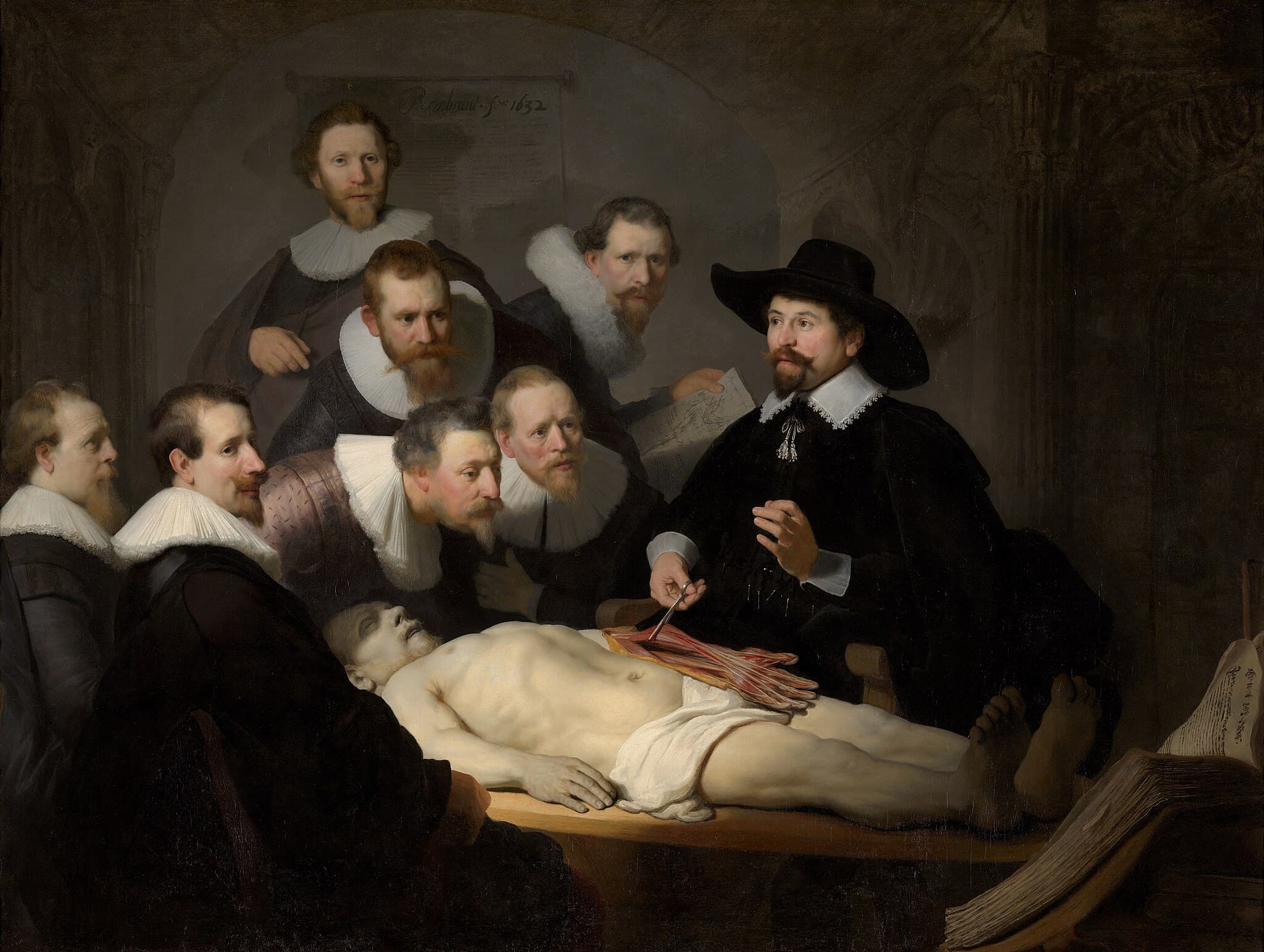
The Anatomy Lesson of Dr. Nicolaes Tulp
Rembrandt van Rijn, 1632 • Oil on canvas
Read full analysis of The Anatomy Lesson of Dr. Nicolaes Tulp →Valuation Analysis
Conclusion: In an unconstrained global sale scenario, Rembrandt’s The Anatomy Lesson of Dr. Nicolaes Tulp would warrant an estimated $200–350 million. The painting is a canonical work of Dutch Golden Age art, owned by the Dutch State and held at the Mauritshuis, with no modern auction record and effectively no marketability under current heritage regimes [1].
Core benchmarks and extrapolation: The strongest modern price signal for apex Rembrandt paintings is the 2016 intergovernmental purchase of the full‑length portraits of Maerten Soolmans and Oopjen Coppit for €160 million (≈$174m at the time), jointly by the Rijksmuseum and the Louvre—about €80m per painting [2]. Anatomy Lesson is more globally iconic and singular than either of those portraits, and occupies a central place in both Rembrandt’s oeuvre and the history of science. On that basis, a premium to the Soolmans/Coppit per‑painting benchmark is warranted.
Category context: The Old Masters market has capacity for nine‑figure outcomes when supply, quality, and profile align. Botticelli’s Young Man Holding a Roundel achieved $92.2m at auction in 2021, illustrating deep trophy demand beyond Leonardo [3]. Leonardo’s Salvator Mundi ($450.3m) is a category outlier but demonstrates the upper bounds of capital available for singular works [6]. Public auction prices for autograph Rembrandt paintings are much lower—his auction record stands near $33.2m (2009) and recent authenticated works have realized ~$14m (2023)—but those results reflect smaller scale, subject, and the dearth of world‑class masterpieces at open auction [4][5]. For a museum‑level icon like Anatomy Lesson, pricing must be extrapolated materially above these public comps.
Scarcity, demand, and process effects: Works of this rank almost never reach the market, and state pre‑emption or negotiated museum solutions typically compress price discovery versus unconstrained bidding. Our range assumes the rare, hypothetical case of an open, internationally competitive sale with clear title, exportability, and institutional participation. Within that frame, the painting’s renown, authorship certainty, and foundational status justify a level competitive with the very top of the Old Masters market, while remaining below the unique Leonardo outlier.
What could refine the range: A current conservation report, any confidential indemnity/insurance values, and clarity on legal/export pathways would narrow this estimate. None of those caveats alter the central point: this is a non‑market, state‑owned masterpiece that, if freely tradable, would command a price in the low–to–mid nine figures on par with the most coveted Old Master trophies [1][2][3].
Key Valuation Factors
Art Historical Significance
High ImpactPainted in 1632, The Anatomy Lesson of Dr. Nicolaes Tulp is a landmark early masterpiece that helped establish Rembrandt’s reputation after his move to Amsterdam. It fuses portraiture, narrative drama, and scientific inquiry into a single, rigorously structured composition, making it a touchstone in both art history and the history of medicine. Its visibility in scholarship, textbooks, and exhibitions elevates it alongside The Night Watch and The Syndics. This centrality within the oeuvre and within cultural discourse supports a value at the pinnacle of the artist’s market, materially above standard portrait or biblical subjects and befitting a work recognized globally as a core image of the Dutch Golden Age.
Rarity and Market Scarcity
High ImpactComparably important Rembrandt paintings are effectively unobtainable: most reside in museums or national collections. Public auctions for autograph Rembrandt oils over the last two decades have featured smaller, specialized, or condition‑sensitive works, typically trading well below $50 million. The 2016 private, state‑level acquisition of the Soolmans/Coppit pair (~€160m for two) is the closest modern benchmark for apex material, yet Anatomy Lesson is arguably more iconic. This extreme scarcity of like‑for‑like comparables, coupled with demonstrated institutional demand and a deep global trophy buyer pool, supports an extrapolated nine‑figure valuation that comfortably exceeds routine Old Master price bands.
Iconicity and Public Recognition
High ImpactAnatomy Lesson is one of the most widely reproduced and recognized images of the 17th century. Its subject—an anatomy demonstration—bridges art, science, and civic identity, ensuring relevance across audiences and institutions. This broad ‘brand value’ amplifies demand beyond traditional Old Master collectors to include cross‑category trophy buyers and science‑oriented philanthropists. Works with this level of fame command significant premiums because they deliver cultural capital, institutional loan desirability, and immediate name recognition. In valuation terms, this icon‑status premium is a primary driver for setting a range that surpasses ordinary category records and aligns with the very top echelon of Old Master trophies.
Legal/Heritage Constraints
High ImpactThe painting is owned by the Dutch State and housed at the Mauritshuis, making any disposal extraordinarily unlikely. Heritage laws, export controls, and institutional ethics would typically force any transfer into a negotiated, state‑backed context. Such mechanisms often cap or compress prices relative to an unconstrained global auction because state pre‑emption, indemnity frameworks, or conditions of sale narrow the buyer pool. Our estimate explicitly assumes an atypical, fully open sale to reveal pure market demand; in real‑world scenarios, these constraints would shape both process and pricing. The legal status, therefore, is a critical factor in distinguishing hypothetical open‑market value from practical transaction outcomes.
Condition, Scale, and Medium
Medium ImpactAs a large, oil‑on‑canvas group portrait displayed continuously by the Mauritshuis, the work presents as exhibition‑ready. For masterpieces of this age, condition variances (old linings, varnish, retouching) can materially affect pricing. While no adverse condition has been publicly reported, a current, authoritative conservation assessment would refine valuation granularity and could shift the range by tens of millions at this level. The painting’s impressive scale and highly legible composition, however, are inherently positive value drivers, enhancing wall power and institutional loan desirability relative to smaller panels or works on paper—supporting the high estimate band within the proposed range.
Sale History
Dutch State (acquired for placement in the Royal Picture Gallery, Mauritshuis)
State purchase in 1828 for 32,000 guilders after a Royal Decree (19 July 1828) blocked a planned 4 Aug 1828 auction (Lugt 11819). Historical currency not converted to USD.
Rembrandt van Rijn's Market
Rembrandt’s market is among the deepest in the Old Masters, but true masterpieces are exceptionally scarce and largely museum‑held. His auction record for a painting is about $33.2 million (2009), with strong recent results for early works and rediscoveries (e.g., The Adoration of the Kings at roughly $13.8 million in 2023). The most telling modern benchmark is the 2016 private, intergovernmental acquisition of the full‑length portraits of Maerten Soolmans and Oopjen Coppit for €160 million—about €80 million per painting—by the Rijksmuseum and the Louvre. Drawings and prints also perform robustly, underscoring broad collector confidence. Overall, liquidity is reliable, but the supply of apex, museum‑grade paintings is essentially absent from public auction.
Comparable Sales
Portraits of Maerten Soolmans and Oopjen Coppit (pair)
Rembrandt van Rijn
Same artist; early 1630s apex works of comparable stature and scale; clearest modern benchmark for top-tier Rembrandt paintings transacted by state-level buyers.
$174.0M
2016, Private treaty (Rijksmuseum and Louvre joint acquisition)
~$235.0M adjusted
Portrait of a Man, Half-Length, with His Arms Akimbo
Rembrandt van Rijn
Same artist; major portrait and current auction record for a Rembrandt painting; demonstrates depth of bidding for high-quality Rembrandt oils.
$33.2M
2009, Christie's London
~$49.8M adjusted
Self-portrait, wearing a ruff and black hat
Rembrandt van Rijn
Same artist; same year (1632) as Anatomy Lesson; confirms market appetite for early Rembrandt, albeit at smaller scale.
$18.8M
2020, Sotheby's London
~$23.5M adjusted
The Adoration of the Kings
Rembrandt van Rijn
Same artist; early-career panel (c.1628) with fresh scholarship; shows recent pricing for authenticated early Rembrandt paintings.
$13.8M
2023, Sotheby's London
~$14.8M adjusted
Young Man Holding a Roundel
Sandro Botticelli
Top-of-category Old Master trophy at public auction (non-Leonardo); establishes market’s capacity for nine-figure Old Masters when quality/profile align.
$92.2M
2021, Sotheby's New York
~$110.0M adjusted
Salvator Mundi
Leonardo da Vinci
Cross-artist trophy outlier; demonstrates absolute upper bound of Old Masters pricing under unconstrained, global auction conditions.
$450.3M
2017, Christie's New York
~$594.4M adjusted
Current Market Trends
At the top end, the Old Masters market remains highly selective but capable of nine‑figure prices when iconic works with impeccable attribution and profile appear. Botticelli’s $92.2 million result in 2021 affirmed deep trophy capital beyond the singular Leonardo outlier. Recent seasons show resilient demand for best‑in‑class material across media, with institutions and cross‑category collectors competing for rediscoveries and fresh‑to‑market works. Supply scarcity remains the swing factor: category totals are constrained more by the rarity of offerings than by demand. Heritage protections and state pre‑emption frequently shape processes and outcomes, but when unrestricted, global bidding engages, pricing for canonical works can break historic category norms.
Study print
Study this painting as a print
Pair the full artwork with a museum-style study sheet focused on one meaningful detail.
Sources
- Mauritshuis Collection Entry: The Anatomy Lesson of Dr. Nicolaes Tulp
- The Art Newspaper: France and Netherlands finalise €160m Rembrandt treaty (2016)
- Sotheby’s: Botticelli’s Young Man Holding a Roundel sells for $92.2m (2021)
- The Guardian: Rembrandt sale sets artist record at Christie’s London (2009)
- Artnet News: Old Masters Week London 2023 results; Rembrandt reattribution sells
- Christie’s Press: Leonardo da Vinci’s Salvator Mundi sells for $450.3m (2017)