The Anatomy Lesson of Dr. Nicolaes Tulp
Study Print Studio
Create a personal study print
Build a companion study sheet around the part of this painting that speaks to you most. Choose a detail, shape an interpretation, and walk away with something personal and display-worthy.
Fast Facts
- Year
- 1632
- Medium
- Oil on canvas
- Dimensions
- 169.5 × 216.5 cm
- Location
- Mauritshuis, The Hague
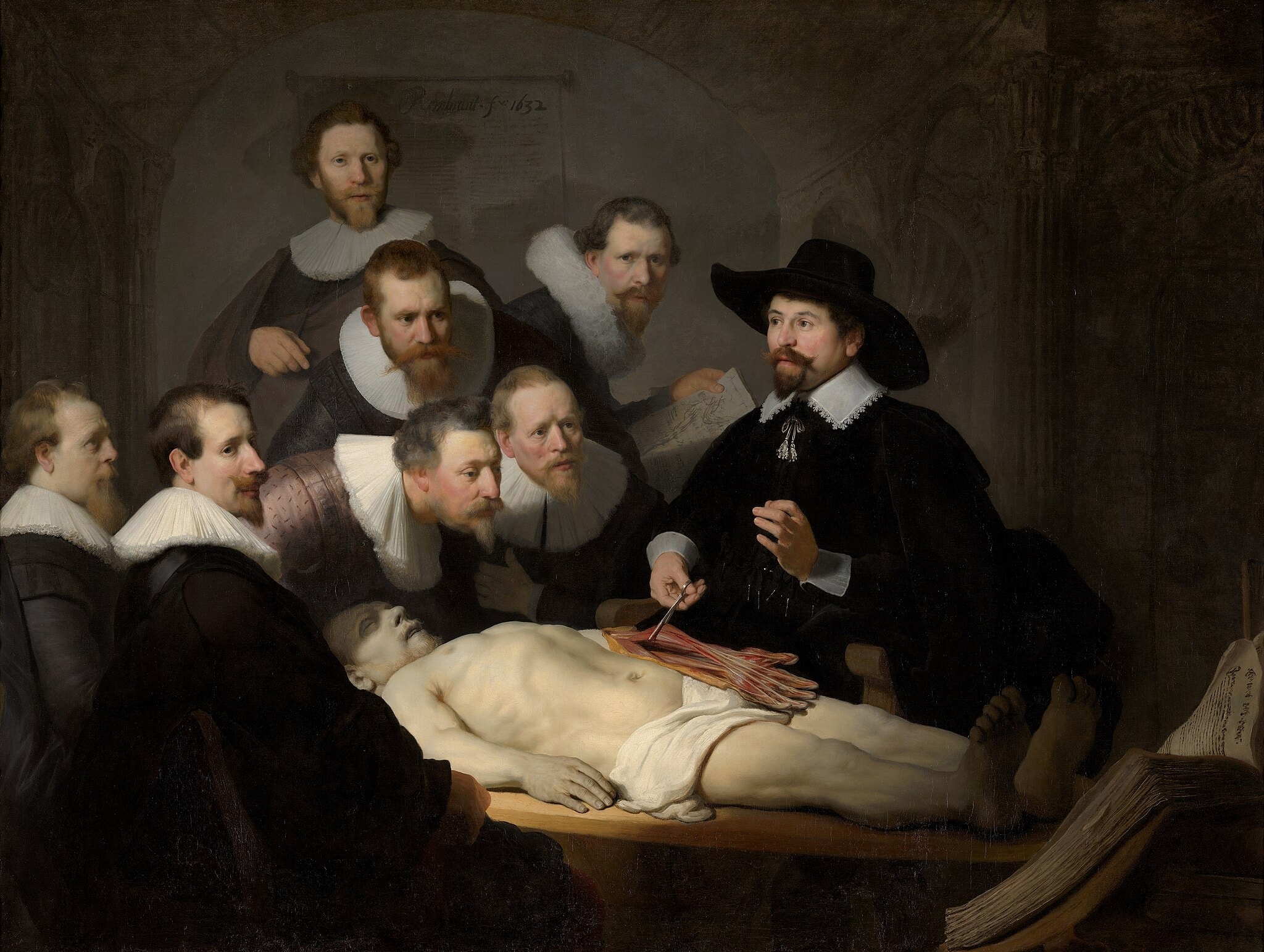
Click on any numbered symbol to learn more about its meaning
Meaning & Symbolism
Explore Deeper with AI
Ask questions about The Anatomy Lesson of Dr. Nicolaes Tulp
Popular questions:
Powered by AI • Get instant insights about this artwork
Interpretations
Historiography & Moral Emblems
Source: History of European Ideas (2010)
Guild Branding & Public Theater
Source: Mauritshuis; British Museum
Functional Anatomy, Not Just Description
Source: J Hand Surg Br (Masquelet, 2005); Mauritshuis; Br J Surg
Process, Pentimenti, and the Work as Evidence
Source: Mauritshuis (collection entry and conservation notes)
Book–Body Lineage: Vesalius Echoes
Source: Mauritshuis; Smarthistory; ACS Bulletin on Vesalius
Seen in Comparisons
Related Themes
About Rembrandt van Rijn
More by Rembrandt van Rijn
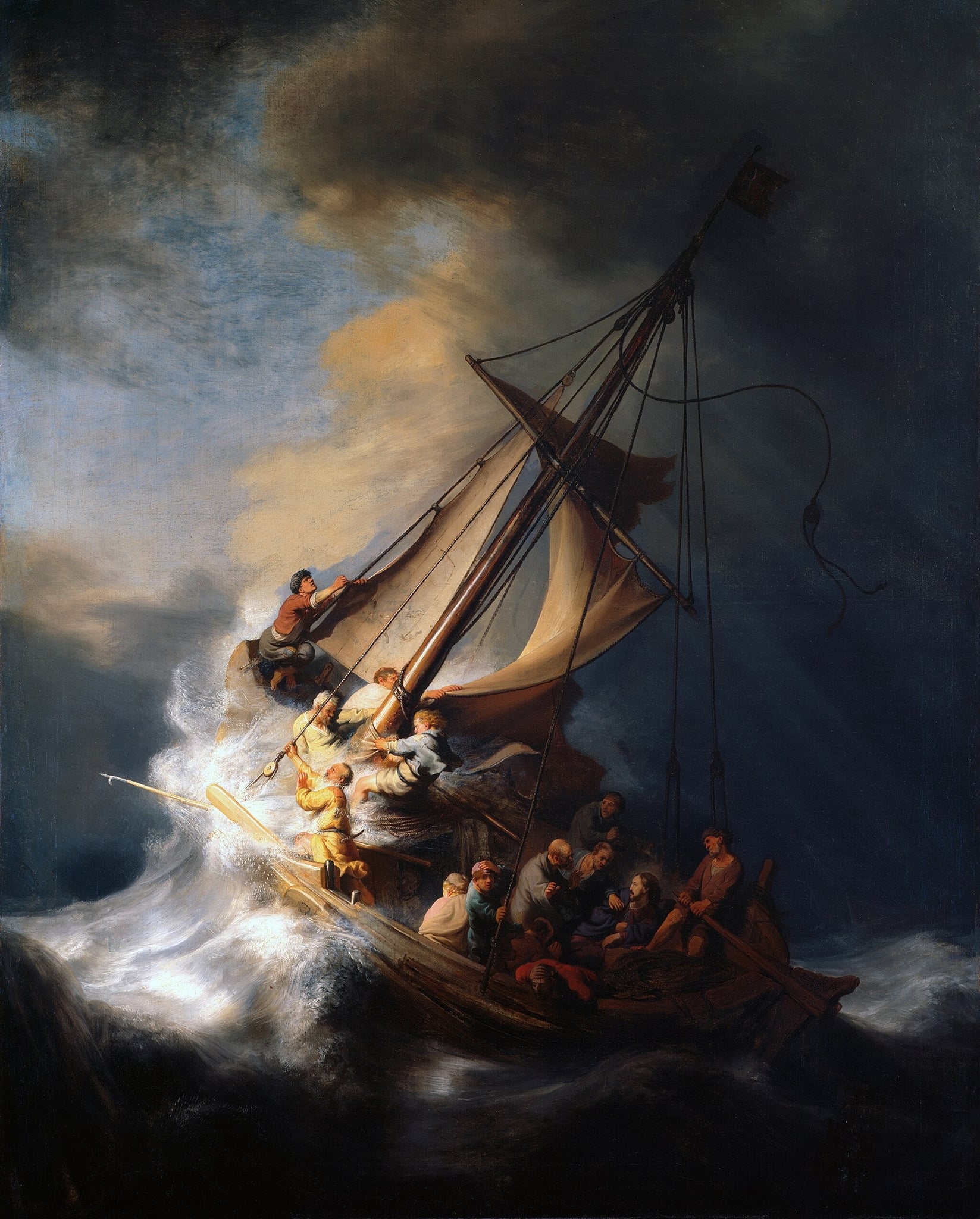
The Storm on the Sea of Galilee
Rembrandt van Rijn (1633)
Rembrandt van Rijn’s The Storm on the Sea of Galilee stages a clash of <strong>human panic</strong> and <strong>divine composure</strong> at the instant before the miracle. A torn mainsail whips across a steeply tilted boat as terrified disciples scramble, while a <strong>serenely lit Christ</strong> anchors a pocket of calm—an image of faith holding within chaos <sup>[1]</sup><sup>[3]</sup>. It is Rembrandt’s only painted seascape, intensifying its dramatic singularity in his oeuvre <sup>[2]</sup>.
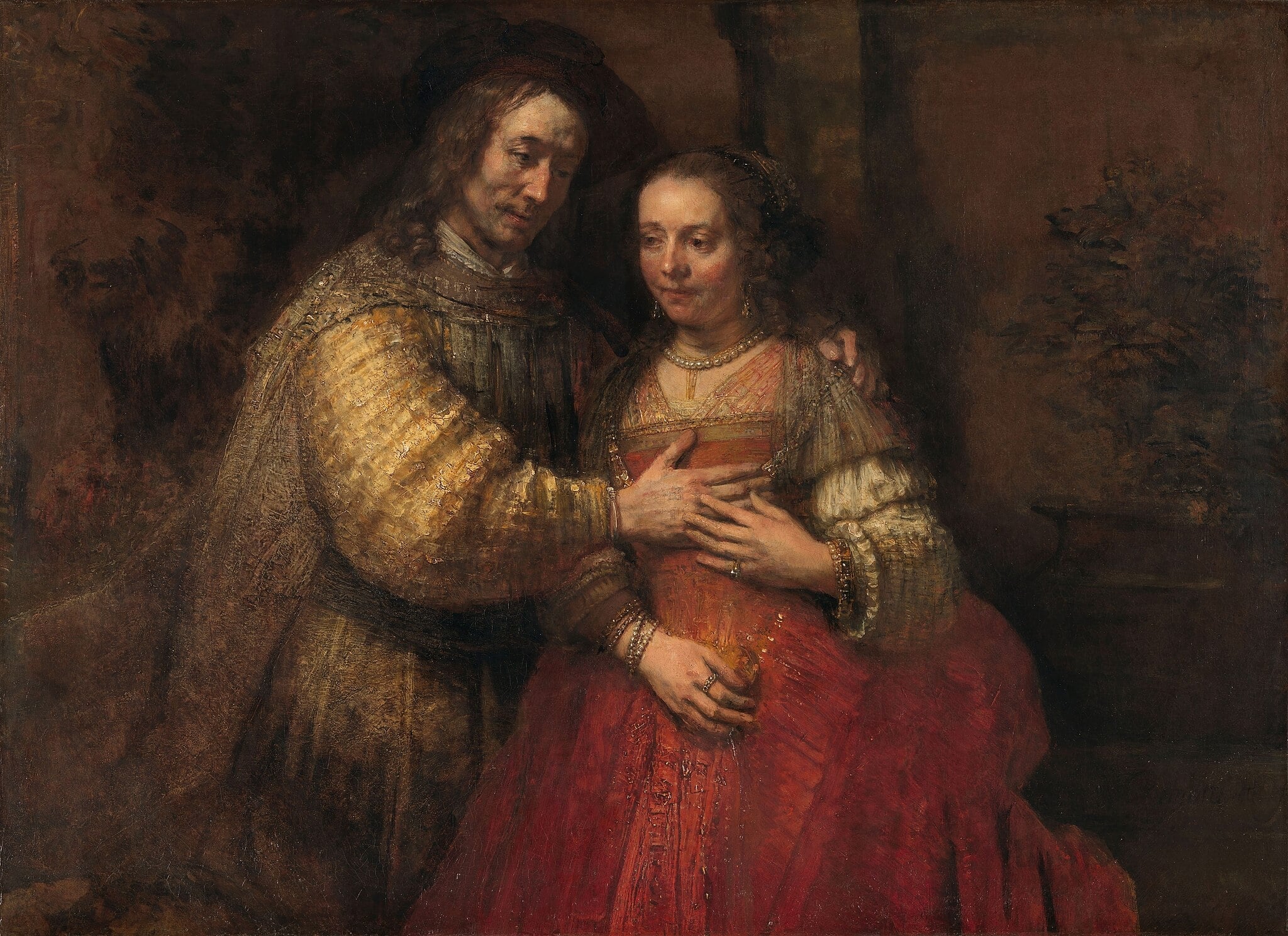
The Jewish Bride
Rembrandt van Rijn (c. 1665–1669)
The Jewish Bride by Rembrandt van Rijn stages an intimate covenant: two figures, read today as <strong>Isaac and Rebecca</strong>, seal their union through touch rather than spectacle. Light concentrates on faces and hands, while the man’s glittering <strong>gold sleeve</strong> and the woman’s <strong>coral-red gown</strong> turn paint itself into a metaphor for fidelity and tenderness <sup>[1]</sup><sup>[3]</sup>. This late masterpiece embodies Rembrandt’s <strong>material eloquence</strong>—impasto as feeling—within a hushed, dark setting <sup>[1]</sup><sup>[2]</sup>.
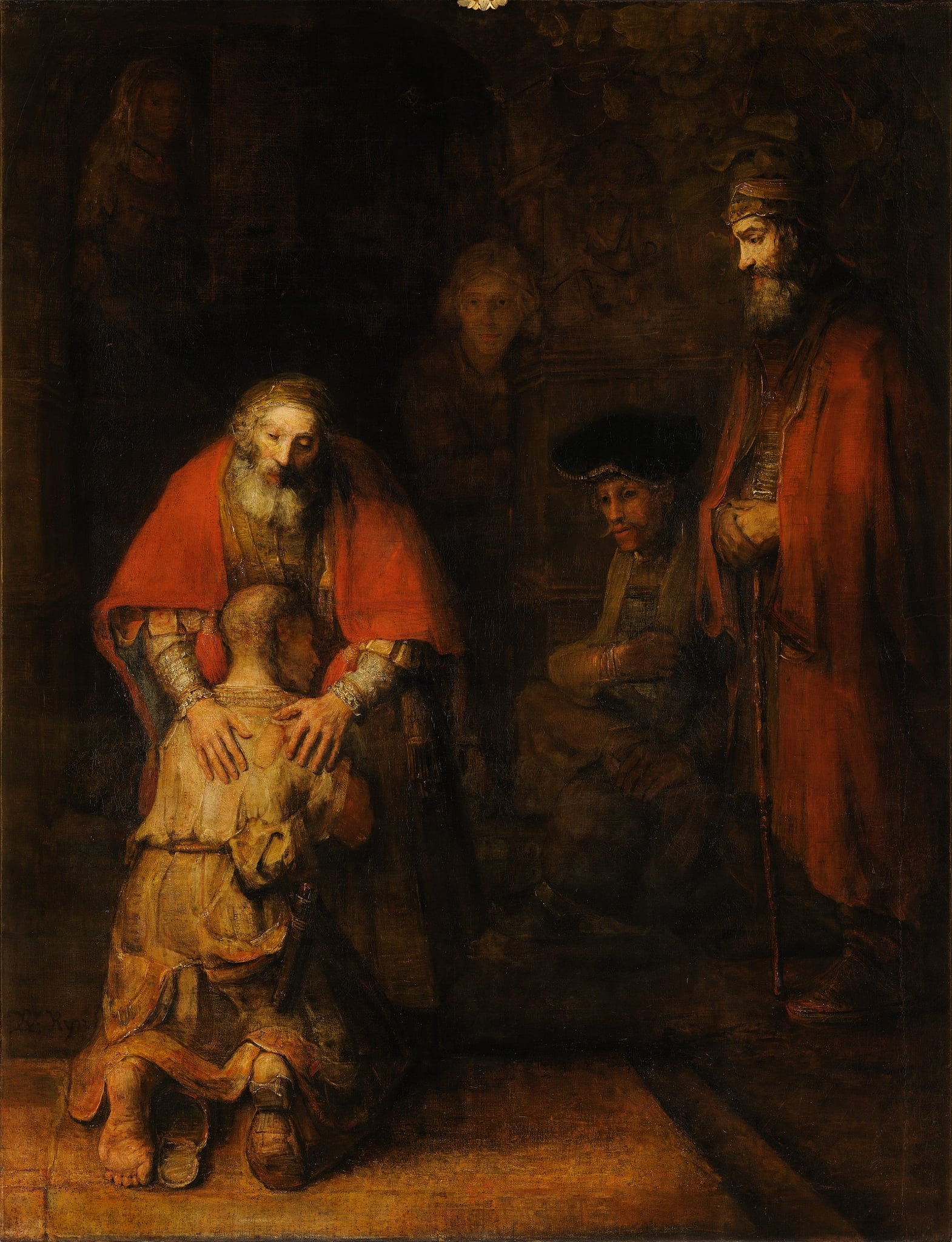
The Return of the Prodigal Son
Rembrandt van Rijn (c. 1661–1669 (probably completed by 1669))
Rembrandt van Rijn’s The Return of the Prodigal Son is a late-life meditation on <strong>mercy</strong>, <strong>homecoming</strong>, and <strong>restored dignity</strong>. In a hush of dusk-like light, a ragged son kneels into his father’s <strong>embrace</strong>, while an upright elder brother holds back in shadow. The image concentrates meaning in illuminated <strong>faces, hands, and feet</strong>, turning a parable into a timeless human reckoning. <sup>[1]</sup><sup>[2]</sup>
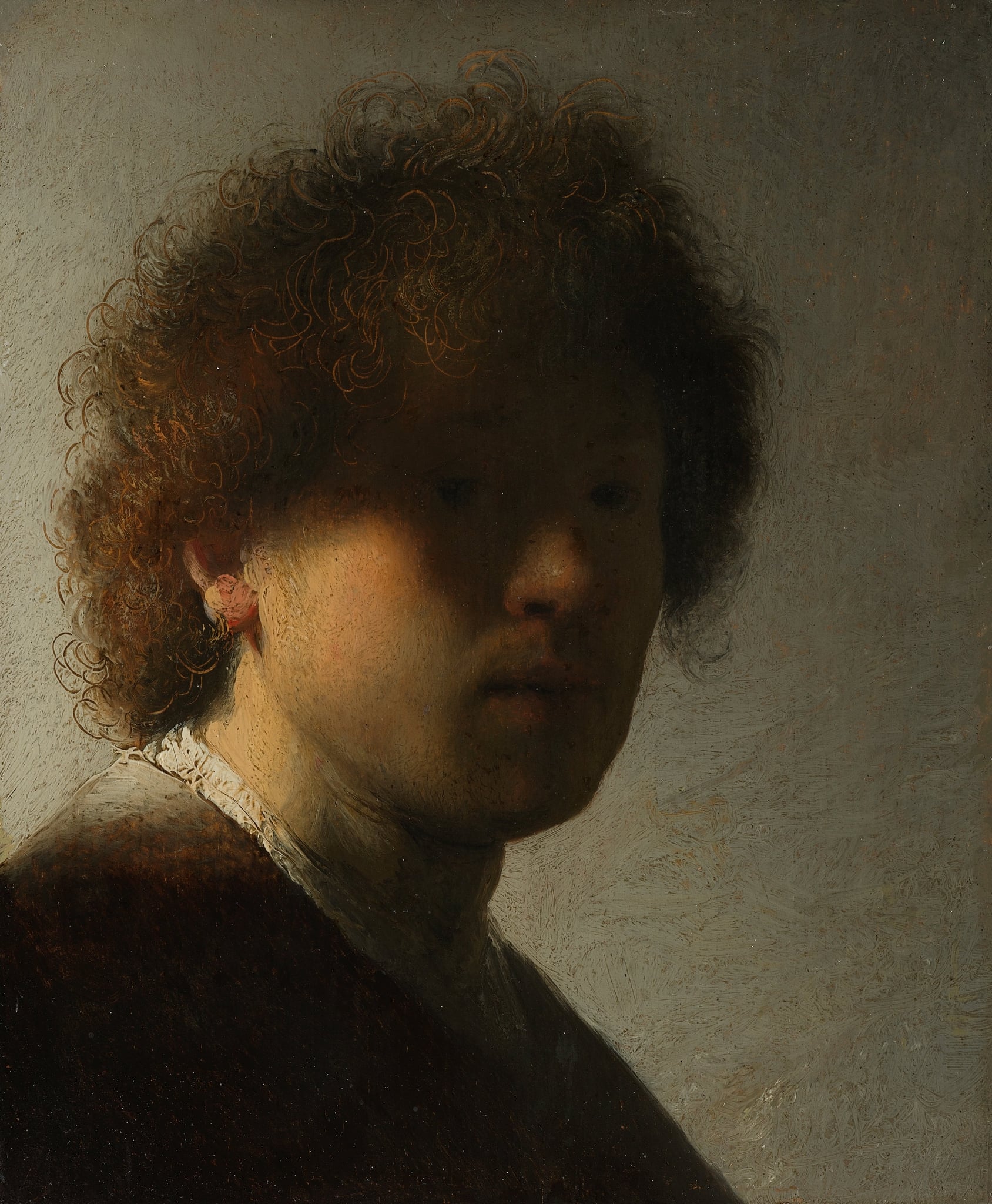
Self-portrait (with tousled hair)
Rembrandt van Rijn (c. 1628)
A young Rembrandt van Rijn tests how <strong>light both reveals and withholds</strong> by letting his face emerge from darkness while his <strong>scratched, backlit curls</strong> flare like a rough halo. The small oak panel makes <strong>process itself the subject</strong>, turning hair, stubble, and a raking highlight into a statement of identity-in-formation <sup>[1]</sup><sup>[5]</sup>.
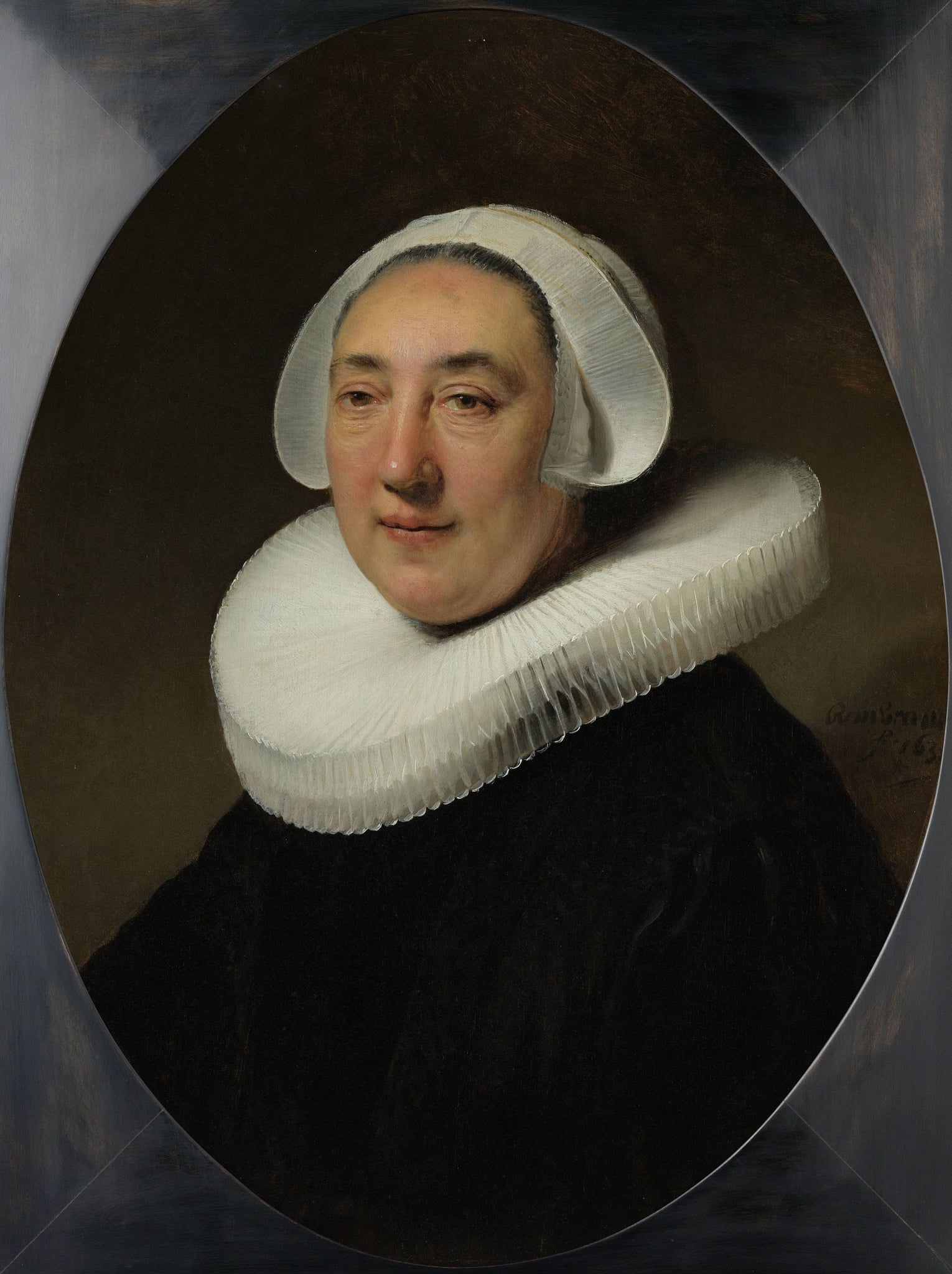
Portrait of Haesje Jacobsdr van Cleyburg
Rembrandt van Rijn (1634)
Rembrandt’s 1634 Portrait of Haesje Jacobsdr van Cleyburg stages a Dutch burgher within a feigned <strong>oval</strong> opening, illuminated by selective <strong>chiaroscuro</strong> that models warm skin against brilliant <strong>millstone ruff</strong> and sober black dress. The painting balances <strong>modesty and status</strong>, making virtue visible while quietly declaring prosperity through immaculate linen and craft <sup>[1]</sup><sup>[4]</sup>.
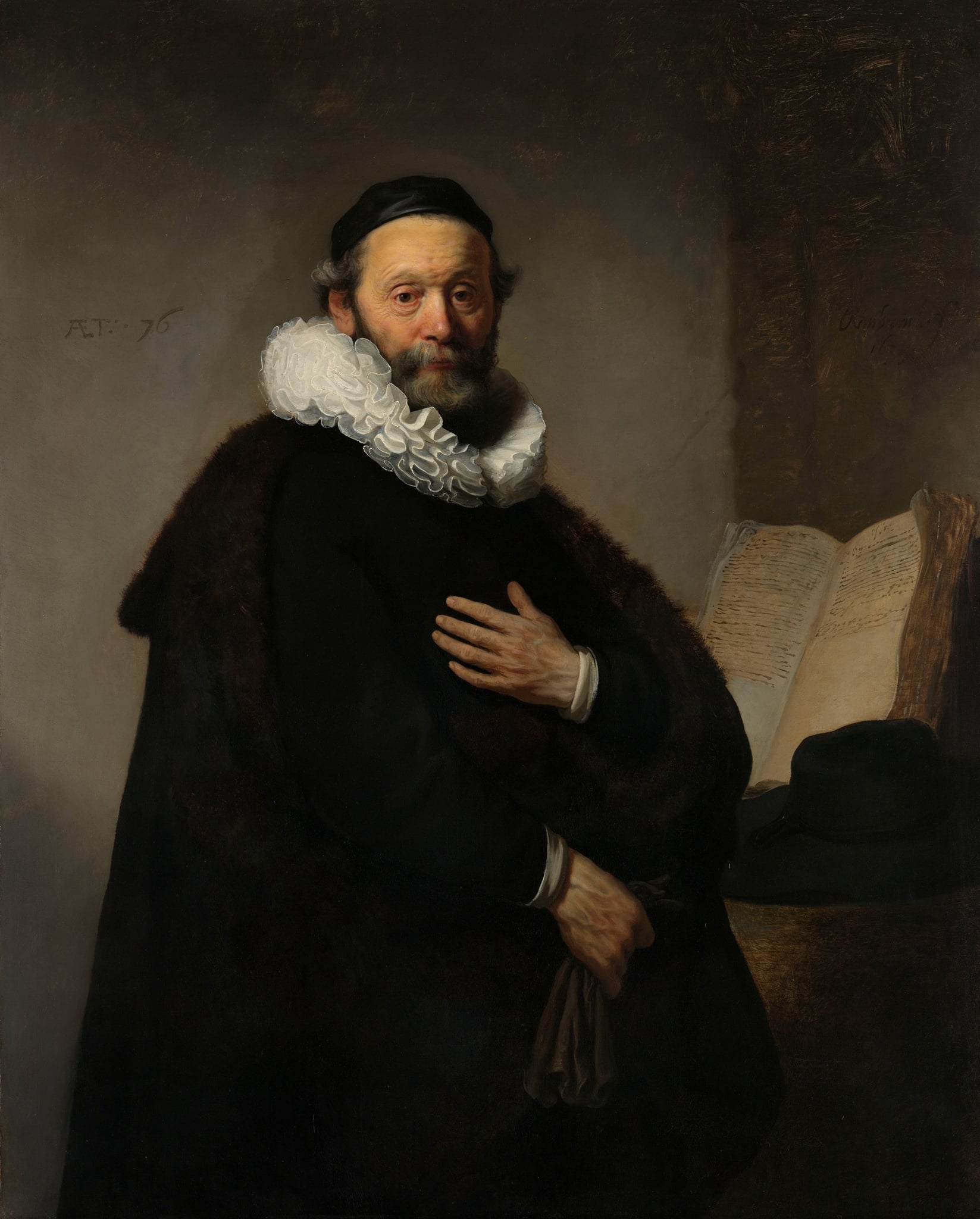
Johannes Wtenbogaert
Rembrandt van Rijn (1633)
Rembrandt van Rijn casts the Remonstrant minister as a study in <strong>moral authority</strong> and <strong>conscience</strong>. A raking light isolates the creased face, cloudlike ruff, and pale hands against the weight of a dark fur-lined cloak, while an open book and a plain hat anchor the scene in <strong>learning</strong> and <strong>humility</strong> <sup>[1]</sup>. The held glove acknowledges worldly status even as the hand to the chest declares inner conviction <sup>[1]</sup><sup>[3]</sup>.