How Much Is The Storm on the Sea of Galilee Worth?
Last updated: February 20, 2026
Quick Facts
- Methodology
- comparable analysis
Hypothetical fair‑market/insurance‑style value for Rembrandt’s The Storm on the Sea of Galilee is $100–150 million, assuming recovery, sound condition, and clear title. This range reflects the work’s masterpiece status (Rembrandt’s only seascape), its extreme rarity, and top‑of‑market private benchmarks for prime Rembrandts, tempered by condition uncertainty after the 1990 theft.
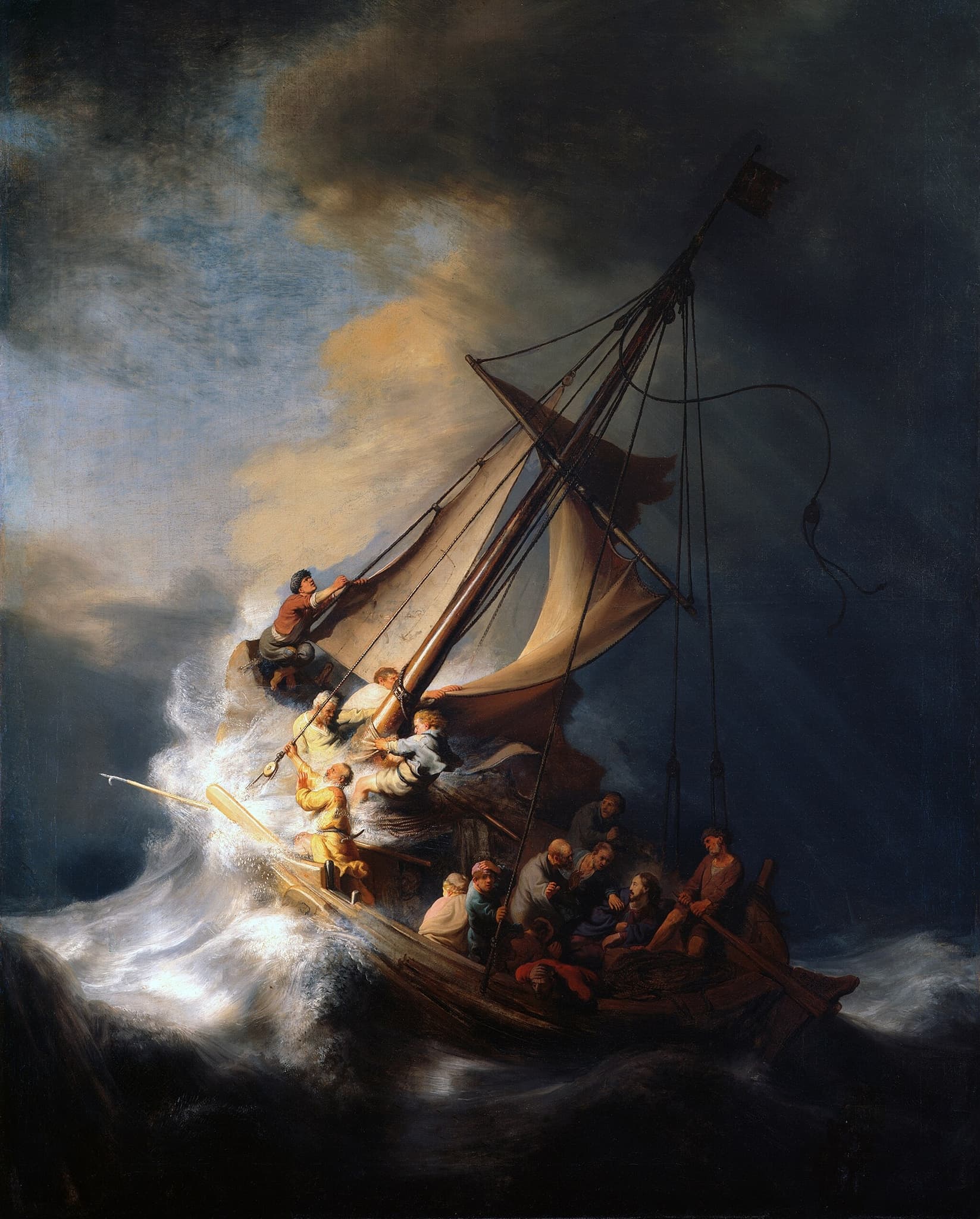
The Storm on the Sea of Galilee
Rembrandt van Rijn, 1633 • Oil on canvas
Read full analysis of The Storm on the Sea of Galilee →Valuation Analysis
Scope and premise. This valuation is a hypothetical fair‑market/insurance‑style estimate for Rembrandt’s The Storm on the Sea of Galilee (1633) if recovered, found in sound condition, and marketable with clear title. The painting remains stolen from the Isabella Stewart Gardner Museum, which retains ownership and displays the work’s absence in situ [1][2].
Comparable anchors. The upper tier of Rembrandt pricing is set not by auction but by private transactions. The Louvre/Rijksmuseum’s joint 2016 acquisition of the pendant portraits Marten Soolmans and Oopjen Coppit at about €160 million (~$174 million then) demonstrates masterpiece‑level demand well above the public auction record [3]. By contrast, the still‑standing auction record for a single Rembrandt painting is roughly $33 million (Christie’s London, 2009), underscoring the thin supply of true trophies in public rooms and the premium achieved privately for canonical works [4]. Recent sales of authenticated early Rembrandt paintings—such as The Adoration of the Kings at ~$13.8 million in 2023—confirm solid depth for recognized works but also highlight the gulf between strong, smaller panels and once‑in‑a‑generation masterpieces [5].
Positioning of Storm. Storm is a celebrated early masterwork, large in scale, and uniquely the only painted seascape in Rembrandt’s oeuvre—attributes that put it at the very top of his market. Its cultural profile has been amplified for decades by the Gardner theft, making it one of the most recognized images by the artist worldwide [1][2]. In a competitive, privately brokered scenario with clear title, these qualities would drive intense cross‑category interest from UHNW collectors and institutions.
Deriving the $100–150 million range. The range triangulates: (i) a significant upward extrapolation from the public auction ceiling (~$33m) appropriate for a masterpiece of unique type; (ii) proximity to the private benchmark established by Marten & Oopjen (valued at roughly half to two‑thirds of that pair on a per‑work basis, given Storm’s singularity but absence of pendant status) [3][4]; and (iii) current Old Masters dynamics showing strong but selective demand. The lower bound ($100m) reflects prudence around unknown post‑theft condition; the upper bound ($150m) allows for pristine condition and competitive tension in a private sale.
Key sensitivities. Condition is the largest swing factor; undisclosed damage or losses would push value materially lower. Legal/ethical constraints on museum deaccession do not alter intrinsic fair‑market value but preclude any real‑world sale by the current owner. Within these assumptions, $100–150 million is a defensible benchmark today for insurance scheduling or recovery‑planning purposes [1][2][3][4][5].
Key Valuation Factors
Art Historical Significance
High ImpactThe Storm on the Sea of Galilee is a cornerstone of Rembrandt’s early maturity and his only painted seascape, making it singular within the artist’s oeuvre. Its dramatic narrative—Christ calming the waters—showcases Rembrandt’s hallmark chiaroscuro and psychological intensity at ambitious scale. This combination of subject, quality, and rarity places the work at the absolute apex of Old Master collecting. Beyond connoisseurship, Storm has become a touchstone image in art history curricula and museum culture, reinforcing its canonical status. In valuation terms, canonical, widely reproduced masterpieces with unique status inside an artist’s body of work command a pronounced premium over otherwise excellent, but non‑unique, compositions by the same hand.
Rarity and Market Supply
High ImpactMasterpiece‑level Rembrandt paintings almost never reach the public market; most reside in museums with no intention to sell. When they do transact, they often do so privately and at valuations that leap well beyond public auction benchmarks. This supply scarcity intensifies competition among a small circle of capable buyers—major museums, sovereign collections, and UHNW individuals—driving trophy pricing. Storm’s uniqueness as the only seascape amplifies the scarcity effect: there is no direct substitute within Rembrandt’s oeuvre. The paucity of comparable, tradeable works provides firm structural support for a nine‑figure valuation and explains why private benchmarks, not auctions, are the principal guide for a work of this stature.
Condition and Conservation Risk
High ImpactThe painting’s post‑theft condition is unknown, and that uncertainty is the single most material valuation variable. A clean recovery with limited structural or surface compromise would support the high end of the range; evidence of rolling, puncture, paint loss, overcleaning, or improper storage could depress value dramatically. Large 17th‑century canvases are particularly sensitive to handling and environment. Technical examination—X‑rays, IRR, paint cross‑sections—and a full conservation report would be essential to finalize pricing. The present range explicitly bakes in a condition discount at the low end and a condition‑clear upside at the high end, recognizing that even masterpieces are not immune to market penalties for restoration risk.
Fame, Provenance, and Narrative
Medium ImpactStorm’s long residence at the Isabella Stewart Gardner Museum and its central role in the infamous 1990 theft have made it one of the most recognizable Rembrandts globally. High public awareness can heighten competitive tension in a private sale, creating a “trophy premium” for collectors seeking cultural impact as well as quality. Provenance from a storied U.S. museum is itself a value enhancer. That said, the theft also introduces legal and ethical complexity: title rests with the Gardner, and there is no lawful marketability until recovery and clear title are established. In a hypothetical sale with those hurdles removed, the fame and provenance significantly support the upper half of the estimate.
Sale History
The Storm on the Sea of Galilee has never been sold at public auction.
Rembrandt van Rijn's Market
Rembrandt sits at the pinnacle of the Old Masters market, with top‑quality paintings exceptionally scarce and often traded privately rather than at auction. The world auction record for a Rembrandt painting remains around $33 million (2009), a figure that understates what the very best works command privately. A modern benchmark is the 2016 joint acquisition of Marten Soolmans and Oopjen Coppit by the Rijksmuseum and the Louvre at about €160 million for the pair, signaling robust, cross‑category demand for masterpiece‑level works. Recent results—such as a reattributed early panel at ~$13.8 million in 2023 and a 2026 drawing record near $18 million—confirm sustained depth for authenticated works and a widening buyer base. Overall, pricing is highly bifurcated: ordinary material is estimate‑sensitive, while trophies attract aggressive, global competition.
Comparable Sales
Marten Soolmans and Oopjen Coppit (pendant portraits)
Rembrandt van Rijn
Same artist; early 1630s masterpiece status like Storm (1633); museum-caliber, headline private transaction that anchors top-of-market pricing for prime Rembrandt paintings.
$174.0M
2016, Christie’s Private Sales (joint acquisition by Rijksmuseum & Louvre)
~$237.1M adjusted
Portrait of a Man, Half-Length, With His Arms Akimbo
Rembrandt van Rijn
Same artist; world auction record for a Rembrandt painting; public-market ceiling for a single Rembrandt work (later period than Storm).
$33.2M
2009, Christie’s London
~$50.6M adjusted
Saint James the Greater
Rembrandt van Rijn
Same artist; major single-figure religious painting with strong market performance; useful auction benchmark for autograph Rembrandt paintings.
$25.8M
2007, Sotheby’s New York
~$40.7M adjusted
The Adoration of the Kings
Rembrandt van Rijn
Same artist; early narrative biblical panel (close in era to Storm); shows current pricing for rediscovered/reattributed early Rembrandt storytelling works.
$13.8M
2023, Sotheby’s London
~$14.8M adjusted
Portraits of Jan Willemsz. van der Pluym and Jaapgen Carels (pendant pair)
Rembrandt van Rijn
Same artist; early 1630s pendants providing a fresh, recent market datapoint for authenticated Rembrandt paintings; smaller/intimate in scale vs. Storm.
$14.3M
2023, Christie’s London
~$15.3M adjusted
Saint John on Patmos
Rembrandt van Rijn
Same artist; recent reattributed painting confirming demand and pricing depth for authenticated Rembrandts in today’s market.
$8.9M
2025, Sotheby’s London
Current Market Trends
Old Masters experienced a softer 2024 but rebounded in 2025 on improved consignments, realistic estimates, and strategic use of guarantees. The category remains supply‑constrained, with fresh, high‑quality works performing best and rediscoveries/reattributions drawing outsized attention. Prints and drawings set new records, signaling broader collector engagement, while cross‑category buyers continue to enter for iconic images. For Rembrandt, the public auction ceiling lags private valuations, underscoring that the true clearing price for masterpieces is typically achieved off‑rostrum. Estimate discipline, provenance clarity, and condition disclosure remain decisive; when those align, top works can command nine figures even in mixed macro environments.
Study print
Study this painting as a print
Pair the full artwork with a museum-style study sheet focused on one meaningful detail.
Sources
- Isabella Stewart Gardner Museum – Object page: Christ in the Storm on the Sea of Galilee
- FBI – Stolen Isabella Stewart Gardner Museum Artwork (aggregate value and reward)
- DW – France and the Netherlands buy two Rembrandts together (Marten & Oopjen, €160m)
- The Guardian – Rembrandt self-portrait sets new record at auction (2009 record price)
- The Art Newspaper – Rediscovered Rembrandt sells at Sotheby’s London (Dec 2023)