How Much Is Portrait of Oopjen Coppit Worth?
Last updated: March 13, 2026
Quick Facts
- Methodology
- comparable analysis
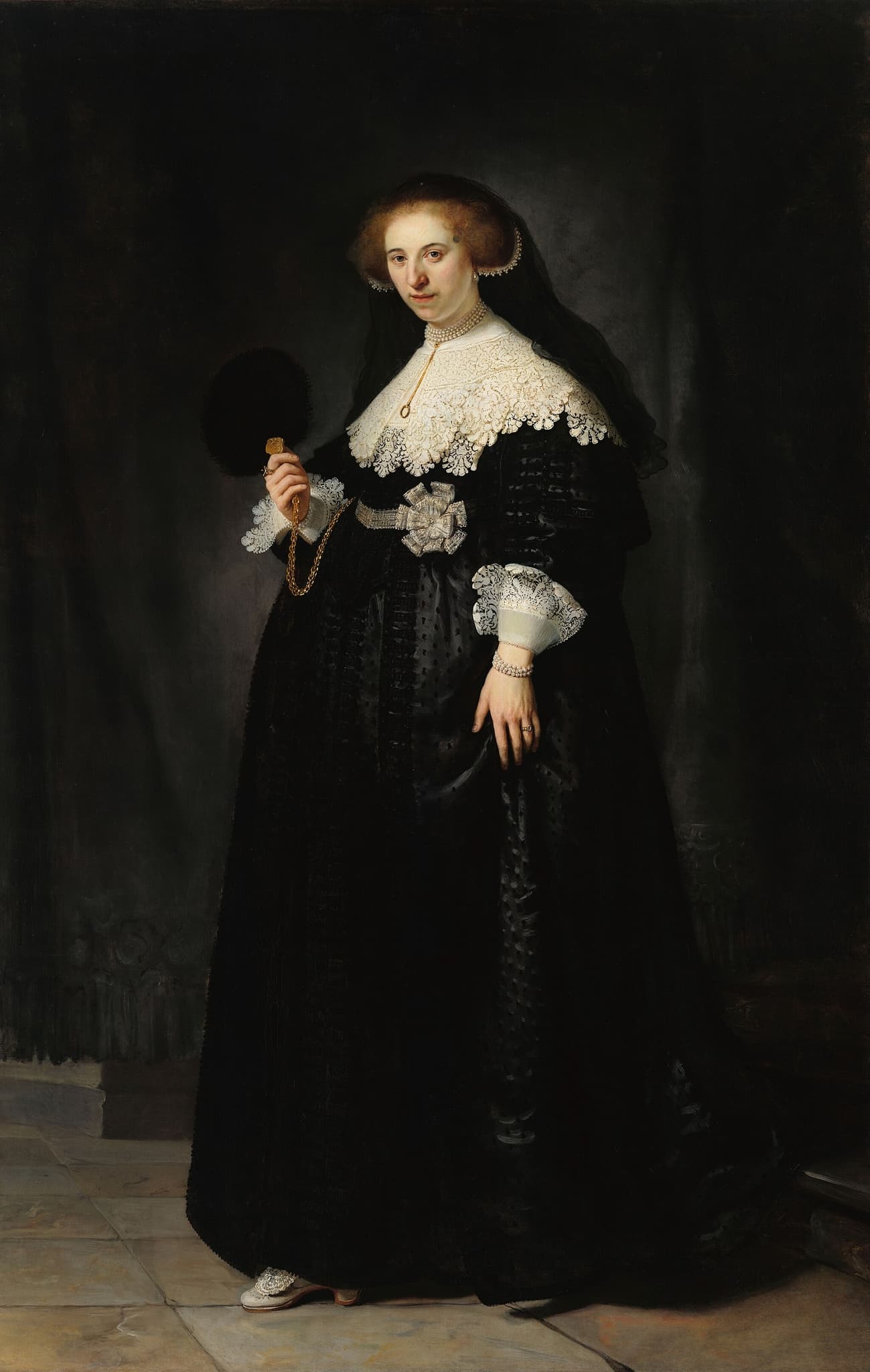
Using the 2016 joint institutional purchase of the pendant pair (reported €160M) as the primary market benchmark and adjusting for inflation and art‑market movement, I estimate Portrait of Oopjen Coppit at USD 100–150 million. The low end reflects a conservative, even‑split, inflation‑adjusted floor; the high end reflects a competitive institutional acquisition scenario with a scarcity premium.
Valuation Analysis
Final estimated market value (working range): USD 100,000,000 – 150,000,000. This valuation is anchored to the documented €160M institutional acquisition of the pendant pair in 2016 and adjusted upward to reflect inflation and current market conditions. The estimate assumes a hypothetical standalone market sale of Portrait of Oopjen Coppit in a context where separation from its pendant is permitted and legal/cultural constraints can be addressed [1][2]. In practice the paintings’ joint ownership and policy to exhibit them together both support value and limit marketability, so any realized price would likely reflect negotiation dynamics among institutions rather than an open‑market hammer price.
The principal market datum is the pair buy: the Louvre and Rijksmuseum jointly acquired the two 1634 full‑length marriage portraits from the Rothschilds for €160,000,000 (pair) in early 2016; an even split implies ≈€80M per painting (~USD 87M at 2016 rates) [1][2]. Adjusting that per‑painting benchmark for cumulative inflation and modest art‑market appreciation since 2016 supports a pragmatic midpoint near USD 110–120M; the low end of the range ($100M) reflects a conservative, even‑split, inflation‑adjusted floor while the high end ($150M) reflects a competitive institutional acquisition scenario with a scarcity premium. These adjustments incorporate CPI and art‑market index considerations and reflect both nominal inflation and selective demand growth for museum‑quality Old Masters.
Public auction records for Rembrandt oils are significantly lower and therefore a poor ceiling for this work: the highest public auction result for a Rembrandt oil remains substantially below the institutional benchmark, highlighting how museum‑level transactions (private/state purchases, targeted de‑accessions, or intergovernmental agreements) set the true top‑end comparables for masterpieces [3]. Recent category‑specific results (high prices for drawings and rediscovered works) confirm demand among institutions and well‑funded collectors for secure attributions and exhibition‑ready material [4]. In short, auction comparables understate what an institution will pay for a canonical, well‑provenanced Rembrandt.
Value drivers: exceptional art‑historical standing as a rare, life‑size Rembrandt portrait; pristine provenance (Rothschild ownership, comprehensive scholarship and exhibition history); and demonstrated institutional willingness to pay for canonical works all support a high valuation. The pendant relationship both raises the theoretical value of each painting and complicates their marketability because institutions generally resist separation. Technical quality, size and visibility in scholarship/exhibitions multiply the painting’s cultural and market value, making it far more valuable than comparably attributed smaller oils.
Constraints and downside risks: joint museum ownership, national patrimony regulations and the political sensitivity of selling a national cultural asset materially limit the realistic buyer pool and make an open market sale unlikely. An intergovernmental acquisition framework and display agreement reduce the probability of sale and, where sale is contemplated, will impose conditions that can restrict export or require continued public access [1][2]. These constraints reduce liquidity and mean that realized prices will be driven by institutional budgets and strategic priorities rather than by anonymous auction competition.
Practical next steps: obtain the latest conservation and technical condition reports, confirm any legal encumbrances or export restrictions, and commission formal market appraisals from senior specialists at Christie’s and Sotheby’s to refine reserve/asking expectations. If a sale or valuation for insurance is required, adjust the 2016 per‑painting benchmark for CPI and an art‑market index, and model scenarios for institutional negotiation versus limited private sale. With those inputs the working range above can be narrowed, and a recommended single‑figure asking price or insurance value established.
Key Valuation Factors
Art Historical Significance
High ImpactPortrait of Oopjen Coppit is one of Rembrandt’s most important early full‑length portrait commissions and, together with its pendant Maerten Soolmans, represents perhaps the artist’s finest example of large‑scale marriage portraiture. The composition, technique, and preservation of original paint and surface detail place it at the top tier of the artist’s oeuvre; its scholarship, repeated inclusion in major exhibitions and citation in catalogues raisonnés further cement its canonical status. Works of this caliber operate in a different market stratum from small studio pieces or loosely attributed works, because museums and major collectors prize demonstrable art‑historical impact. That provenance and prominence materially support a high valuation: buyers value both rarity and demonstrable significance in assigning multi‑tens‑of‑millions prices.
Rarity & Format (full‑length pendant)
High ImpactAs a life‑size, full‑length pendant portrait, Oopjen Coppit occupies an unusually scarce category within Rembrandt’s output and the wider Old Masters market. Most Rembrandt oils that reach market are smaller portraits, studies, or works on paper; life‑size, full‑length compositions are rare and typically held by national collections. The paired nature amplifies scarcity: the two portraits were treated as a unit historically and institutions view separation as undesirable, which reduces the practical pool of buyers and raises the premium for a single painting if offered alone. This physical and curatorial rarity translates into a market premium: when such works do enter institutional negotiations they command prices that far exceed typical auction comparables for smaller Rembrandts.
Provenance & Exhibition History
High ImpactThe painting’s provenance — long held by the Rothschild family and publicly transferred in the high‑profile joint acquisition by the French and Dutch states — provides the clean title history and documentary trail that institutional buyers prize. Extended loans, major exhibitions and cataloguing in key publications have further reduced attribution risk and enhanced scholarly consensus. Museums, insurers and prospective bidders treat such provenance as de‑risking: it improves insurability, simplifies due diligence and often justifies higher insurance and acquisition budgets. The visibility and museum exhibition history also raise the work’s cultural capital, making it not only an asset but a public goods candidate for national collections — a factor that both increases its market value and diminishes the likelihood it will appear on the open market.
Market Liquidity & Legal/Institutional Constraints
Medium ImpactMarket liquidity for a work in this category is inherently limited. The paintings’ joint acquisition by national institutions and the stated intention to alternate display create legal and curatorial constraints that discourage secondary‑market transfers; export controls and national patrimony designation in France and the Netherlands would complicate any attempted sale to an overseas private buyer. Consequently, prospective purchasers are nearly always institutional, philanthropic or state actors prepared for complex negotiation rather than speculative auction bidders. While this constrained pool reduces the probability of frequent sales, it often elevates realized prices when museums compete, because institutions are willing to pay premiums to secure canonical works. The result is a market where realized prices can be high but liquidity is low.
Condition & Conservation
Medium ImpactCondition and documented conservation history materially affect value at the very highest levels. The published scholarship and museum stewardship for Oopjen Coppit suggest it is in museum‑worthy condition, but any sale would require full condition and technical reports — pigment analysis, varnish history, x‑rays and IR reflectography — to confirm authenticity and state of preservation. Conservational interventions (old restorations, relining, or overpainting) can be value‑reducing if they affect original paint or alter attribution confidence, whereas recently documented sympathetic conservation can be a positive signal. Before firm pricing or marketing strategies are adopted, obtaining up‑to‑date, independent conservation assessments is essential; they are frequently decisive in institutional negotiations and auction estimates.
Sale History
Portrait of Oopjen Coppit has never been sold at public auction.
Rembrandt van Rijn's Market
Rembrandt remains the single most consequential name in the Old Masters market, commanding exceptional institutional demand and top‑tier collector interest. Because major studio‑quality Rembrandt oils rarely reach the open market, auction records understate the artist’s true market power; many headline transactions are private or state‑led acquisitions rather than public auction tests. Works with impeccable provenance, exhibition history and scholarly consensus attract the strongest bids — often from museums or state actors — and can trade at prices well above public‑auction comparables. Recent years have seen strong results for Rembrandt drawings and rediscovered paintings, underscoring continued appetite among connoisseurs and institutions. Overall, Rembrandt’s market is deep at the highest quality levels but narrow and selective.
Comparable Sales
Portrait of Oopjen Coppit (implied per‑painting value from 2016 joint purchase)
Rembrandt van Rijn
Primary market benchmark and the most direct evidence: the pendant pair was acquired for €160,000,000 (1 Feb 2016); an even split implies ~€80M (≈ USD 87.1M at the 2016 rate) per painting — best institutional willingness‑to‑pay signal for Oopjen.
$87.1M
2016, Joint state/museum purchase (Louvre & Rijksmuseum) — arranged via Christie’s
~$116.5M adjusted
Portrait of a Man with Arms Akimbo
Rembrandt van Rijn
Highest public auction record for a Rembrandt oil — useful as a public‑auction ceiling and to illustrate the gap between museum/private strategic purchases and auction results.
$33.2M
2009, Christie's London (evening sale, Old Masters)
~$49.7M adjusted
The Adoration of the Kings (attributed to Rembrandt)
Rembrandt van Rijn
Recent re‑attribution sale showing market appetite for works newly confirmed/marketed as by Rembrandt; sale size (low‑to‑mid teens of millions) is well below museum‑quality full‑length oils.
$13.8M
2023, Sotheby's London (Old Masters evening sale)
~$14.5M adjusted
Rediscovered small pair of Rembrandt portraits (sold as a lot)
Rembrandt van Rijn
Example of market for small/rediscovered Rembrandt portraits in 2023; helpful for lower‑tier price context and for understanding realized prices for less monumental works.
$14.3M
2023, Christie's London (Old Masters / specialist sale)
~$15.0M adjusted
Current Market Trends
High‑quality Old Masters — especially securely attributed Rembrandts — have shown renewed institutional demand and selective strength in recent years. Scarcity of top examples, intensified scholarship and targeted auction programming have concentrated sales into fewer lots that often achieve strong realizations. Works on paper and rediscovered paintings have set category records, while museum acquisitions and state‑level purchases remain the principal mechanism for moving premium oils. At the same time, tighter scholarly standards, national patrimony rules and a small buyer universe constrain liquidity. Inflation and art‑market indices have raised nominal benchmarks since major prior transactions, so historical prices should be adjusted when forming current estimates.
Sources
- Musée du Louvre press release: Portraits of Maerten Soolmans and Oopjen Coppit by Rembrandt (Mar 2016)
- The Art Newspaper: 'France and Netherlands finalise €160m Rembrandt treaty' (3 Feb 2016)
- Christie’s — overview of Rembrandt auction records and market context (reference to major public auction comparables)
- Artnet News: 'Reattributed Rembrandt masterpiece sells for almost $14 million' (Dec 2023) — example of recent reattribution sale dynamics