How Much Is The Night Watch Worth?
Last updated: March 13, 2026
Quick Facts
- Methodology
- extrapolation
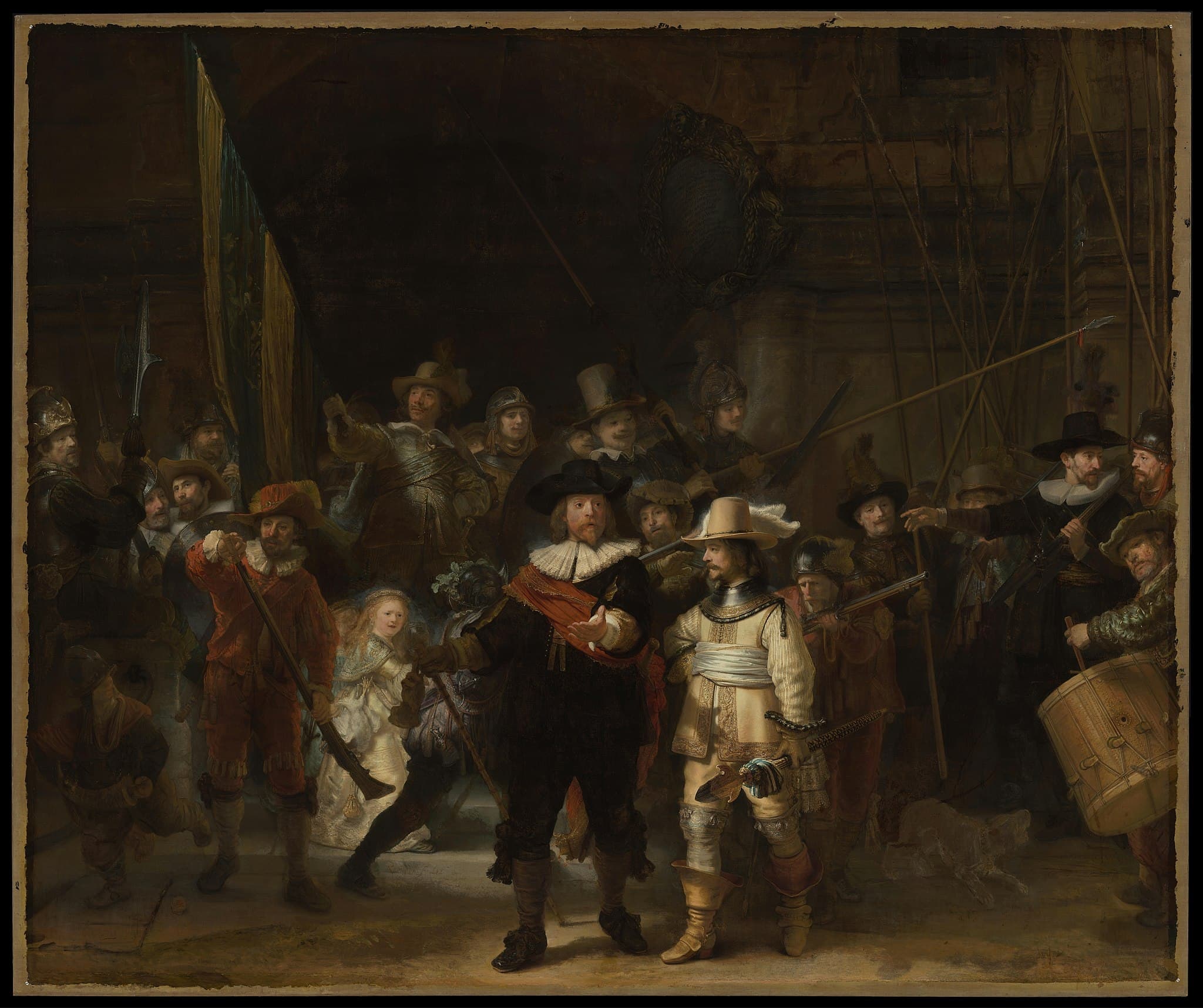
The Night Watch is a non‑market, civic masterpiece in public trust and therefore effectively priceless. For hypothetical open‑market purposes only, a cautious extrapolated range is USD 500 million to USD 2 billion — a speculative envelope based on the market ceiling for singular masterpieces, comparable headline sales and The Night Watch’s unique national premium.
Valuation Analysis
The Night Watch (Rembrandt, 1642) is not a market lot: it is on long‑term loan to the Rijksmuseum and treated as a civic/national treasure with no modern open‑market sale history. Because there is no transactional anchor, any dollar figure is a theoretical construct rather than an observable market price. The Rijksmuseum record and the museum’s Operation Night Watch conservation programme confirm the painting’s public ownership and high visibility, which are central to valuation assumptions [1].
With no sale to reference, the valuation methodology is extrapolation from market ceilings for single masterpieces, adjusted by artist scarcity, rarity of comparable canvases, conservation constraints and legal/political marketability. The 2017 sale that set the modern headline ceiling for a single painting (the work sold as Leonardo’s Salvator Mundi) demonstrates the market can reach the high hundreds of millions and establishes an order‑of‑magnitude upper envelope for iconic works [2]. Recent record results for Rembrandt works on paper and limited oil‑painting sales show renewed top‑end demand for museum‑quality Old Masters, but they do not provide a direct analogue for a monumental civic canvas such as The Night Watch [3][4].
Value drivers include the painting’s singular art‑historical importance, global recognisability, and the premium collectors place on owning a work that is central to a nation’s cultural identity. Offset factors are substantial: legal patrimony and municipal restrictions which make disposal politically and legally fraught; extremely limited buyer liquidity for comparable Rembrandt canvases; significant logistical, insurance and conservation costs for a very large, historic canvas that has been trimmed and extensively restored. Those constraints reduce practical marketability even as they increase symbolic scarcity.
Balancing these factors yields a cautious hypothetical open‑market envelope of USD 500 million to USD 2 billion. The lower bound reflects the demonstrated capacity of the market for nine‑figure prices for single masterpieces and assumes one or more exceptionally deep‑pocket buyers prepared to overcome legal, ethical and logistical obstacles. The upper bound recognises the exceptionally high cultural premium The Night Watch commands — in a theoretical scenario with no legal/export impediments and intense competitive bidding, prices could move into low‑billions. Importantly, if any of the sale‑enabling assumptions fail (no willing seller, inalienability, export prohibition), the practical transactional value is effectively nil.
Conclusion and recommended next steps: Treat this USD 500M–2B range as a well‑caveated hypothetical envelope. To refine a defensible opinion, obtain any Rijksmuseum/City of Amsterdam insurance/appraisal memoranda, legal counsel on disposability and export, and confidential market‑test appraisals from major houses and Old‑Master specialists. Until then, price statements are speculative and should be framed accordingly [1][2][3][4].
Key Valuation Factors
Art Historical Significance
High ImpactThe Night Watch is among Rembrandt’s most important paintings and a cornerstone of Dutch national identity. Commissioned as a civic militia group portrait and displayed publicly for centuries, it functions as both an artistic masterpiece and a cultural symbol. That double status creates a powerful collectible premium in any hypothetical market: purchasers do not simply buy pigment and canvas but global recognition, media attention, and a historically unique provenance. The painting’s role in art history, pedagogy, tourism and national branding amplifies perceived value far beyond intrinsic material or artistic quality, making significance one of the dominant determinants of a hypothetical price.
Ownership & Legal Constraints
High ImpactThe painting’s legal status (long‑term loan to the Rijksmuseum; civic ownership) and Dutch patrimony norms make disposal highly unlikely and practically constrained. Municipal covenants, cultural property protections and political opposition to selling a national icon materially reduce marketability — a decisive negative for transactional value. Even if a private buyer existed at a theoretical price point, export controls, public backlash and government refusal to authorize sale or export would likely prevent consummation. These constraints lower realistic market liquidity and mean that the hypothetical valuation must be framed as conditional on improbable legal and political permissions.
Comparables & Market Ceiling
High ImpactThere is no direct sale precedent for The Night Watch; comparables are therefore indirect: headline blockbuster sales (e.g., the 2017 Salvator Mundi outcome) show the market ceiling for singular masterpieces, while recorded Rembrandt sales are generally orders of magnitude lower. The paucity of comparable canonical Rembrandt canvases in private hands means price discovery would rely on cross‑genre precedent, buyer psychology and competitive bidding among sovereign, institutional or ultra‑high‑net‑worth actors. The lack of direct comparables increases uncertainty but also justifies a premium range because symbolic scarcity can push prices above ordinary Old‑Master records.
Condition, Scale & Conservation
Medium ImpactThe Night Watch is large, has been trimmed historically and has undergone multiple conservation campaigns. Those attributes increase shipping, installation, insurance and restoration risk for any buyer and complicate sale logistics. Conservation records (including the recent Operation Night Watch research) inform insurance underwriters and buyer due diligence and can both suppress bids (because of added risk/cost) and reassure top bidders (if condition is well‑documented). Practically, condition and size are important transactional modifiers but do not override the work’s cultural premium.
Buyer Universe & Marketability
High ImpactPotential purchasers for a work of this profile are extremely limited: sovereign wealth funds, nation states, consortiums of major museums or extremely wealthy private collectors with appetite for headline purchases. Each potential buyer faces reputational and legal constraints; museums are unlikely to purchase at private price without public justification, and private buyers risk political backlash. The compressed buyer universe increases price volatility in theory (a single determined buyer can set a high price) but reduces probability of a clean, marketable sale, so marketability is a key limiter on realizable value.
Sale History
The Night Watch has never been sold at public auction.
Rembrandt van Rijn's Market
Rembrandt van Rijn sits at the pinnacle of Old Master stature: canonically revered, extensively studied and held by major institutions worldwide. Market liquidity for Rembrandt oil paintings is very thin because museum holdings dominate the supply and few canonical canvases enter private hands. Auction records for Rembrandt paintings are substantially lower than modern/contemporary blue‑chip highs (historic high‑teens to low‑tens of millions in public auction), while works on paper and drawings have recently produced headline results, indicating renewed top‑end interest. Overall, Rembrandt commands enduring scholarly and institutional demand but limited commercial supply, which supports very high hypothetical valuations for museum‑quality, iconic works.
Comparable Sales
Portrait of a Man with Arms Akimbo
Rembrandt van Rijn
Modern public auction high for a Rembrandt oil painting — same artist and period; shows what a canonical Rembrandt painting realised at auction (2009).
$33.2M
2009, Christie's London
~$49.1M adjusted
Young Lion Resting (drawing)
Rembrandt van Rijn
Record auction price for a Rembrandt drawing (Feb 2026) — evidence of renewed top‑end demand for museum‑quality Rembrandt material; less directly comparable (drawing vs large group portrait).
$17.9M
2026, Sotheby's New York
~$17.7M adjusted
Adoration of the Kings (attributed / reattributed matters)
Rembrandt van Rijn (attribution issues)
Recent Old Masters evening sale involving a (re)attributed Rembrandt panel — useful for pricing contentious or secondary‑market Rembrandt canvases in the 2020s.
$13.7M
2023, Sotheby's London
~$14.4M adjusted
Salvator Mundi
Leonardo da Vinci
World‑record public sale for a single painting (2017) — not the same artist or legal context but establishes the modern market ceiling for a single masterpiece at auction.
$450.3M
2017, Christie's New York
~$549.4M adjusted
Portrait of Dr. Gachet
Vincent van Gogh
High‑profile sale of a canonical masterpiece by a major artist (1990) — useful cross‑genre comparator for how museum‑quality, globally recognised works have been priced at the high end.
$82.5M
1990, Christie's New York
~$190.0M adjusted
Current Market Trends
Top‑end Old Masters activity has shown renewed strength (late‑2025/early‑2026), with record results for prints and drawings and selective buyer appetite for museum‑quality examples. The market is selective: museum‑quality, well‑provenanced pieces attract intense interest, while broader segments remain price‑sensitive. Single‑owner dispersals and curated presentations are successfully stimulating demand. Supply constraints, rigorous scholarship/attribution work and geopolitical/legal considerations remain significant determinants of realizable value.
Sources
- Rijksmuseum — The Night Watch (SK‑C‑5)
- The New York Times — At Christie's, Leonardo's 'Salvator Mundi' Sells for $450 Million
- Sotheby's — Young Lion Resting (Rembrandt) / related sale material (Sotheby's press/video)
- Christie's press — Rembrandt auction record (Portrait of a Man with Arms Akimbo, 2009)