How Much Is The Standard Bearer Worth?
Last updated: July 14, 2026
Quick Facts
- Last Sale
- $198.9M (2022, Private treaty (Rothschild family to Dutch State for the Rijksmuseum))
- Methodology
- recent sale
Anchored to the verified €175 million private sale in January 2022 to the Dutch State, Rembrandt’s The Standard Bearer is now valued at $190–240 million. The range reflects modest appreciation since acquisition, extreme rarity of full-length Rembrandts, and its heightened prominence following national tour and installation at the Rijksmuseum.
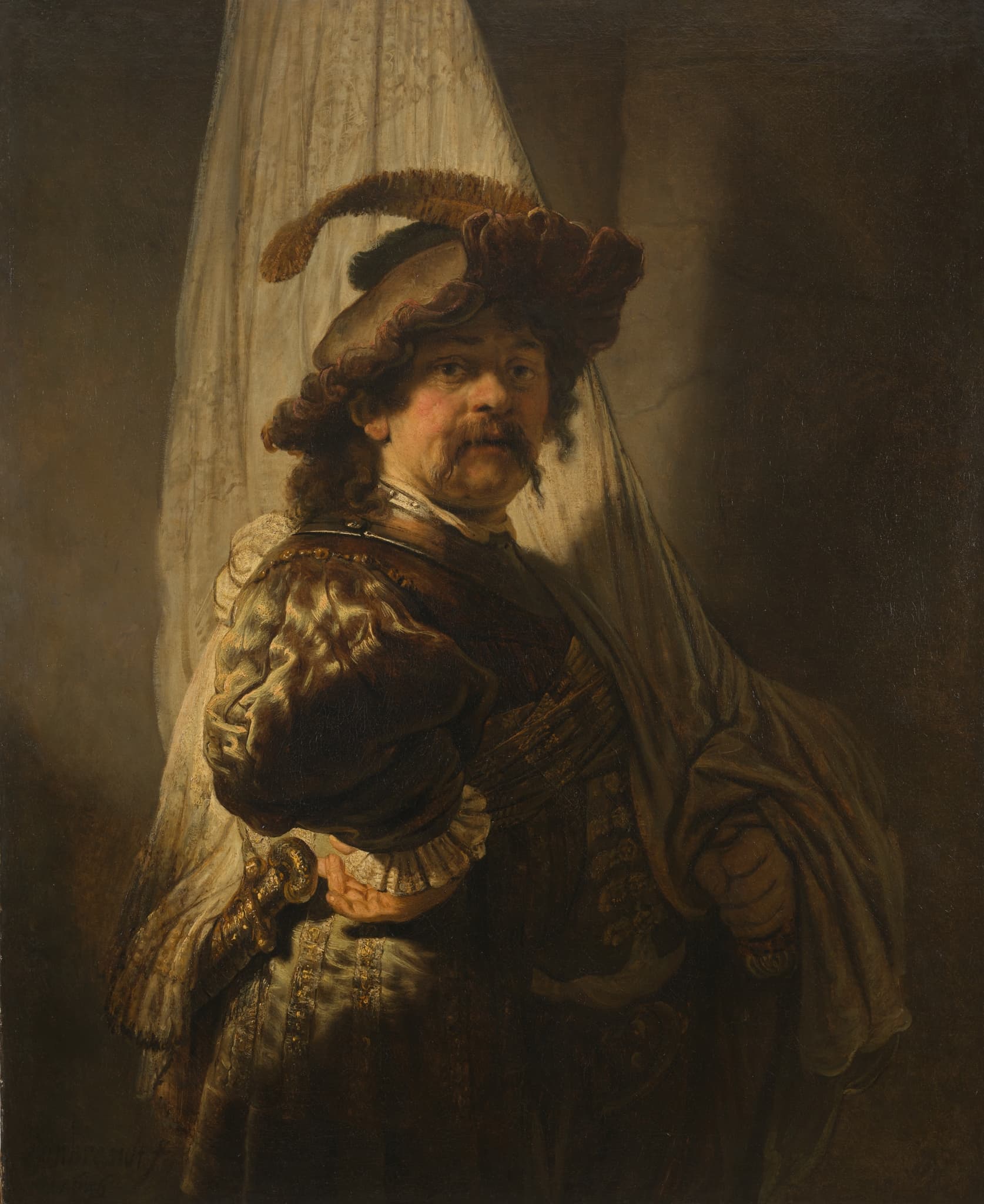
The Standard Bearer
Rembrandt van Rijn, 1636 • Oil on canvas
Read full analysis of The Standard Bearer →Valuation Analysis
Conclusion: A prudent present-day fair-market/insurance indication for Rembrandt’s The Standard Bearer (1636) is $190–240 million. This synthesis is anchored to the painting’s widely reported €175,000,000 private treaty sale to the Dutch State in January 2022—about $199 million at the time—and adjusts for modest appreciation, inflation, and the work’s amplified profile following a national tour and installation at the Rijksmuseum [1][2].
Methodology and anchors: The core benchmark is the last transaction: the 2022 Dutch State acquisition from the Rothschild family at €175 million [2]. This sits in line with, and slightly above, the 2016 private-purchase benchmark for Rembrandt’s full-length pendants of Marten Soolmans and Oopjen Coppit (€160 million for the pair), the closest true comparable for ambition and scale [3]. Given the extraordinary scarcity of full-length single-figure Rembrandts and the painting’s exceptional quality, an uplift into the $190–240 million band today is justified.
Significance and rarity: The Standard Bearer is a bravura, near full-length self-portrait-in-costume from Rembrandt’s pivotal mid-1630s Amsterdam moment—precisely the period that produced his most coveted society portraits. Full-length single-figure works of this calibre are vanishingly rare in private hands, and this example’s technical bravura and commanding presence place it among the most desirable single-figure Rembrandts. Its subsequent national-icon status is underscored by France’s 2019 “trésor national” designation (which temporarily barred export) and by the Netherlands’ state-backed purchase [4].
Market positioning: Public auction records for Rembrandt paintings substantially trail private-treaty prices due to supply constraints and institutional competition. The artist’s standing auction record for a painting (Portrait of a Man with Arms Akimbo, Christie’s London, 2009) is about $33.2 million, emphasizing how seldom museum-calibre pictures test public markets—and why private benchmarks are more probative at the top end [5]. Against that backdrop, the 2016 Marten & Oopjen acquisition and the 2022 Standard Bearer purchase are the most relevant markers for present value formation [2][3].
Ownership and insurability: Now owned by the Dutch State and on view at the Rijksmuseum, the painting is effectively off-market; any valuation therefore reflects hypothetical fair-market/insurance replacement rather than a realizable auction outcome [1]. While specific insured figures are not public, top-tier museum assets of this type are typically insured at or above purchase, which coheres with the proposed range.
Key sensitivities: Condition (no public red flags at the time of acquisition or subsequent tour), continued scholarly consensus, and macro market tone for blue-chip Old Masters remain the principal variables. Even allowing for cyclical market softness, the combination of rarity, stature, and recent price history supports a confident $190–240 million indication today.
Key Valuation Factors
Art Historical Significance
High ImpactPainted in 1636 at the threshold of Rembrandt’s Amsterdam career, The Standard Bearer is a bravura, near full-length self-portrait-in-costume that showcases the artist’s psychological acuity and painterly command. This period is among Rembrandt’s most coveted, coinciding with his emergence as the leading portraitist of his age. The painting’s theatricality, rich impasto, and masterful light effects elevate it beyond a tronie: it is a statement of artistic ambition. Few single-figure images by Rembrandt combine this scale, finish, and presence, placing the work among the most important non-narrative, single-figure canvases in his oeuvre. Its art-historical standing alone would command a premium in any market environment.
Rarity and Scale
High ImpactFull-length or near full-length single-figure Rembrandts in private hands are exceptionally scarce; museum-caliber examples almost never come to public auction. This rarity drives a structural scarcity premium that separates The Standard Bearer from smaller, more typical autograph works that appear at auction. The closest market proxies are the 2016 private sale of the full-length Marten & Oopjen pendants and the painting’s own 2022 private sale—both negotiated at price levels far above public auction benchmarks for the artist. The confluence of autograph status, scale, and mid-1630s date places this work at the very top of Rembrandt’s market, where competition is primarily institutional or among a handful of global collectors.
Provenance and Ownership
High ImpactThe painting’s 19th- to 21st-century Rothschild provenance confers impeccable collecting pedigree, while France’s 2019 designation as a “trésor national” and the Netherlands’ state-backed acquisition in 2022 underscore its national-heritage stature. Today the work is owned by the Dutch State and installed at the Rijksmuseum, reinforcing its cultural prominence and ensuring best-practice conservation and scholarly attention. Although state ownership removes it from tradable supply, such institutionalization typically strengthens hypothetical replacement values, as it telegraphs unimpeachable authenticity, preeminence within the artist’s corpus, and enduring public visibility—all crucial drivers of long-run valuation for blue-chip Old Masters.
Market Comparables and Liquidity
High ImpactAt the apex of the Rembrandt market, private-treaty prices provide the most reliable signals: the €160m Marten & Oopjen pendants (2016) and the €175m Standard Bearer (2022) define the current ceiling for museum-caliber 1630s portraits. In contrast, the artist’s auction record for a painting (~$33.2m, 2009) reflects the near-absence of masterpieces at auction, not demand weakness. The Standard Bearer’s category-leading attributes align it with the private-treaty cohort rather than routine auction comparables. Liquidity at this level is highly selective but deep when institutional or sovereign buyers are engaged; pricing resilience at the top end supports an updated valuation comfortably above the 2022 anchor.
Condition and Scholarship
Medium ImpactWhile object-level conservation details are not publicly enumerated, the painting’s acceptance into the Rijksmuseum collection, its national tour, and its rapid integration into public display imply robust condition and confidence from top curators and conservators. The work is firmly established in Rembrandt scholarship, with authorship and dating widely accepted. For Old Masters, even minor condition issues can materially affect value, but no public red flags accompanied the 2022 acquisition and tour. Continued technical study only strengthens confidence in the work’s status. We treat condition/scholarship as a neutral-to-positive factor, with the caveat that any newly emergent issues would require a valuation revisit.
Sale History
Private treaty (Rothschild family to Dutch State; for the Rijksmuseum)
Private sale at €175,000,000; followed by a national tour and installation at the Rijksmuseum.
Rembrandt van Rijn's Market
Rembrandt sits at the summit of the Old Masters market. Public auction prices for his autograph paintings are constrained by extreme scarcity of top works; the standing auction record for a painting is Portrait of a Man with Arms Akimbo at about $33.2 million (Christie’s London, 2009). The most relevant price signals at the top are private: the Rijksmuseum/Louvre’s joint purchase of the full-length Marten & Oopjen pendants at €160 million (2016) and the Dutch State’s acquisition of The Standard Bearer at €175 million (2022). Demand is led by institutions and a very small circle of global collectors, with intense competition for museum-caliber 1630s portraits and single-figure works.
Comparable Sales
Portraits of Marten Soolmans and Oopjen Coppit (pendant portraits)
Rembrandt van Rijn
Closest market proxy: top‑tier, full‑length Rembrandt portraits from the same early Amsterdam period (mid‑1630s), museum‑caliber, and directly comparable in scale, ambition, and rarity to a near full‑length single figure like The Standard Bearer.
$176.0M
2016, Christie's Private Sales (private treaty)
~$230.6M adjusted
Portrait of a Man with Arms Akimbo
Rembrandt van Rijn
Artist’s standing auction record for a painting; a strong male portrait that benchmarks public‑auction appetite for major Rembrandt oils (though not full‑length).
$33.2M
2009, Christie's London
~$49.1M adjusted
Portraits of Jan Willemsz. van der Pluym and Jaapgen Carels (pair)
Rembrandt van Rijn
Rare portrait pair by Rembrandt from 1635—very close in date to The Standard Bearer—providing a recent public‑auction benchmark for 1630s portraiture (albeit smaller and not full‑length).
$14.3M
2023, Christie's London (Old Masters Part I)
~$14.8M adjusted
The Adoration of the Kings
Rembrandt van Rijn
Autograph Rembrandt painting re‑established by recent scholarship; shows current market pricing for a smaller, early (c.1628) work with strong research momentum.
$13.7M
2023, Sotheby's London (Old Master & 19th Century Paintings Evening)
~$14.2M adjusted
Saint John on Patmos
Rembrandt van Rijn
Recent autograph painting sale providing a fresh, public benchmark for Rembrandt oils; later and more modest in scale and subject than The Standard Bearer.
$9.0M
2025, Sotheby's London
Current Market Trends
The Old Masters market remains highly selective, with bifurcation between routine autograph works and museum-caliber pictures. Masterpieces supported by strong provenance and scholarship command premiums and often sell in private treaty transactions that outstrip public auction benchmarks. For Rembrandt specifically, full-length and early Amsterdam-period works are the most hotly contested, while smaller or less finished paintings can sell at an order of magnitude lower. Institutions continue to be decisive buyers at the top end, limiting supply and reinforcing replacement values. Against steady macro demand for canonical names, the most significant constraint on price discovery is availability, not appetite.
Study print
Study this painting as a print
Pair the full artwork with a museum-style study sheet focused on one meaningful detail.
Sources
- Rijksmuseum press release: Rembrandt’s The Standard Bearer to enter the Rijksmuseum collection
- The Art Newspaper: Dutch government agrees to buy Rembrandt painting for €175m
- Christie’s: Two Rembrandt masterpieces acquired by the Rijksmuseum and the Louvre
- French Ministry of Culture: Le Porte-étendard classé trésor national
- Christie’s press release: Old Masters and 19th Century Art, 8 December 2009