How Much Is The Supper at Emmaus (1648) Worth?
Last updated: April 28, 2026
Quick Facts
- Methodology
- comparable analysis
Hypothetical valuation for Rembrandt’s The Supper at Emmaus (1648), Louvre, is $150–250 million. This range is anchored to sovereign-level private purchases of top-tier Rembrandts and the painting’s canonical status within the artist’s mature religious oeuvre.
Valuation Analysis
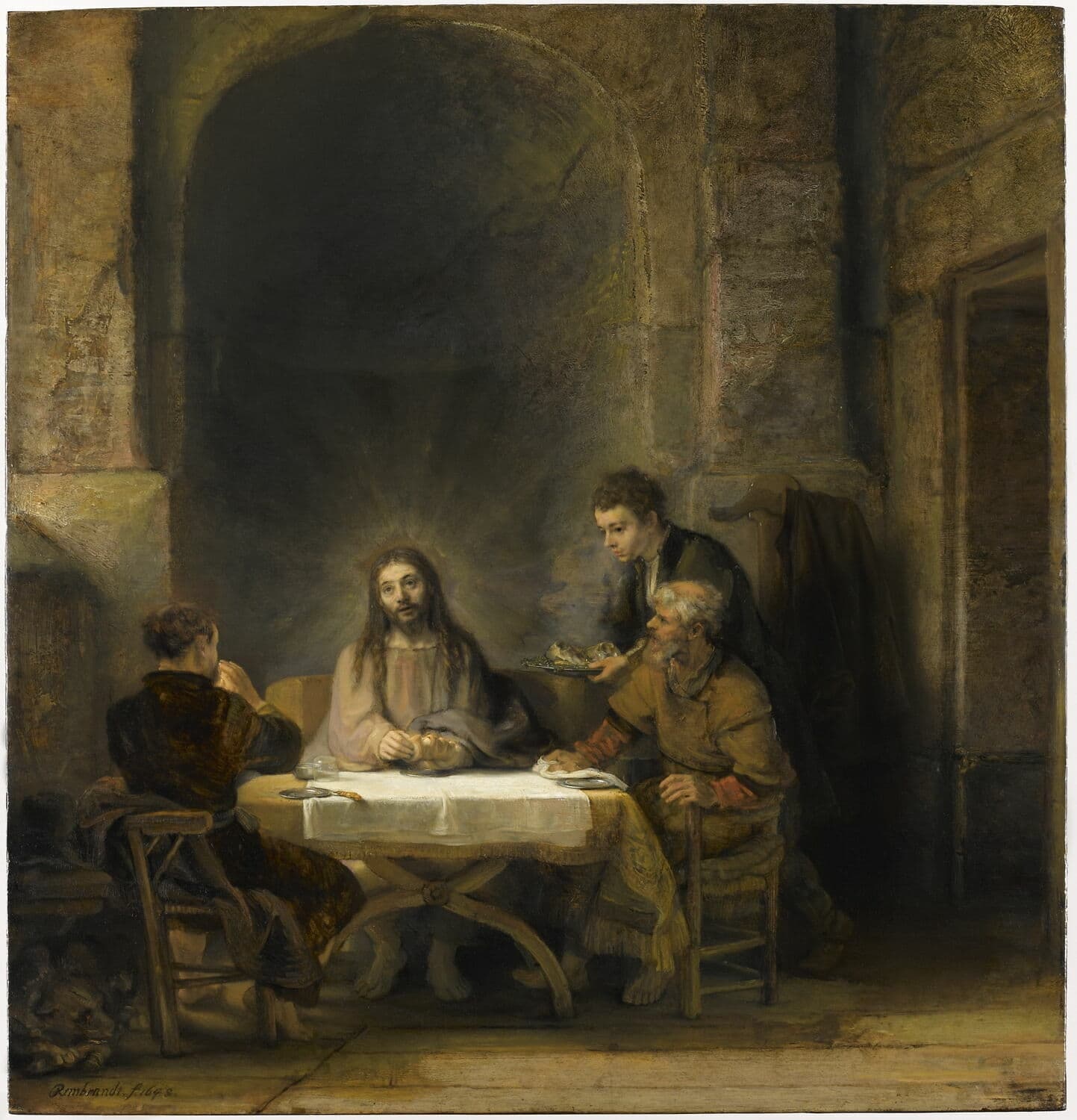
Work and status. The Supper at Emmaus (1648) is a signed, mature-period oil on panel by Rembrandt van Rijn (68 × 65 cm; Louvre inv. INV 1739/MR 944). It belongs to the French State and is held by the Musée du Louvre, where national‑collection works are inalienable and ordinarily non‑tradable. Any dollar figure is therefore a hypothetical valuation (e.g., for state indemnity) rather than a realizable market price [1][2].
Method and benchmarks. This estimate is derived by comparable analysis against recent, sovereign‑level transactions for canonical Rembrandt paintings. Two touchstone benchmarks establish the current nine‑figure price environment for best‑in‑class works: the joint acquisition of the full‑length pendant portraits of Maerten Soolmans and Oopjen Coppit for about €160 million (2016), and the Dutch State/Rijksmuseum’s 2021–22 acquisition of The Standard Bearer at €175 million. These private‑treaty prices demonstrate institutional willingness to pay in the high nine figures for masterpiece‑caliber Rembrandts [3][4].
Auction context. Public auction results for autograph Rembrandt paintings remain far below nine figures, reflecting the fact that works offered are typically smaller, earlier, or less pivotal. Even so, recent sales confirm deep demand across the category—for example, the reattributed early panel The Adoration of the Kings achieved roughly $13.7 million at Sotheby’s London in 2023—underscoring a solid eight‑figure floor for lesser works relative to Emmaus [5]. This gap reinforces that a centrally important, museum‑defining painting would transact via private or sovereign channels at a materially higher level.
Positioning of the 1648 Emmaus. The Louvre Emmaus is a canonical religious image—widely reproduced and central to Rembrandt’s mature exploration of revelation and light—placing it at the very top of the artist’s narrative paintings. Its royal/state provenance since the 18th century and residence in the Louvre further enhance prestige and market confidence in a hypothetical scenario [1]. While religious narratives can engage a narrower private‑collector base than society portraits, Emmaus’s art‑historical weight and rarity more than offset this, aligning it with the sovereign‑acquisition tier of Rembrandt pricing.
Conclusion and range. Assuming autograph status, excellent condition, clean title, and exportability, competitive interest from institutions and sovereign buyers would support a valuation comfortably in the nine figures. We therefore assess a hypothetical fair‑market/indemnity range of $150–250 million, bracketed by the Soolmans/Coppit and Standard Bearer precedents and reflecting Emmaus’s singular importance within Rembrandt’s religious oeuvre [3][4]. Legal inalienability in France means this figure is not a realizable sale price but a robust benchmark for notional valuation purposes [2].
Key Valuation Factors
Art Historical Significance
High ImpactPainted in 1648 at the height of Rembrandt’s powers, The Supper at Emmaus is a touchstone of the artist’s religious narrative painting. It exemplifies Rembrandt’s mastery of chiaroscuro and psychological revelation, depicting Christ’s recognition at the moment of breaking bread—an image central to his exploration of spiritual presence. The work is frequently reproduced in scholarship and museum literature and occupies a privileged place in discussions of Rembrandt’s sacred subjects. Its mature date, signed status, and consistent recognition as a canonical composition elevate it above the great majority of Rembrandt paintings, making it directly comparable to the small subset of works that command sovereign‑level attention.
Rarity and Scarcity of Autograph Rembrandts
High ImpactAutograph Rembrandt paintings of undisputed quality and importance are exceptionally scarce and rarely available. Over the past decade, the most prized examples have transacted via private or sovereign arrangements at nine‑figure levels, reflecting intense competition for truly masterpiece‑grade works. Emmaus sits within this rarefied tier: a mature, signed panel with a subject central to Rembrandt’s religious iconography. The scarcity of like‑for‑like comparables, and the near‑absence of museum‑caliber Rembrandts entering the open market, exerts strong upward pressure on hypothetical pricing and anchors valuation to sovereign benchmarks rather than to public‑auction results for lesser works.
Provenance, Prestige, and Legal Status
High ImpactThe painting’s 18th‑century royal acquisition and continuous presence in France’s national collection confer exceptional prestige and unimpeachable provenance—qualities that carry a premium in any hypothetical market context. Its residence in the Louvre enhances brand equity and global recognition. While French law renders such works inalienable, precluding normal marketability, in a thought experiment where legal transfer were possible, this very provenance would be a powerful value driver. Institutional and sovereign buyers typically prioritize works with royal or state collection histories, and Emmaus’s documented chain of ownership since the 1777 Randon de Boisset sale would rank among the most compelling in the category.
Condition, Medium, and Scale
Medium ImpactAt 68 × 65 cm on panel, Emmaus is intimate yet visually commanding—an ideal museum format. Oil on panel can present technical sensitivities (joins, planar stability, historical cradling), but Louvre‑held masterworks are typically maintained to the highest standards. While a current, detailed condition report would be essential to refine price within the range, the work’s longstanding display and frequent scholarly reproduction suggest stable presentation value. In a nine‑figure context, minor conservation history is expected and does not materially impair desirability if structural integrity and surface quality are strong. The format and finish suit both institutional display and high‑end private settings.
Sale History
The Supper at Emmaus (1648) has never been sold at public auction.
Rembrandt van Rijn's Market
Rembrandt van Rijn sits at the apex of the Old Masters market. Autograph paintings are exceptionally scarce and, when of high quality, transact privately or via sovereign buyers. The strongest recent benchmarks are the Louvre/Rijksmuseum’s joint purchase of the pendant portraits of Maerten Soolmans and Oopjen Coppit for approximately $175 million (2016) and the Dutch State/Rijksmuseum’s acquisition of The Standard Bearer for about $199 million (2021–22). At auction, supply skews to smaller or less pivotal works, which achieve solid eight‑figure prices. Demand is global, with institutions, foundations, and top private collectors competing for best‑in‑class material across paintings, drawings, and rare prints.
Comparable Sales
The Standard Bearer (1636)
Rembrandt van Rijn
Same artist; museum‑grade, sovereign acquisition establishing a recent nine‑figure private price for a canonical Rembrandt painting. Strong benchmark for top‑tier, institutionally coveted works.
$199.0M
2022, Private sale to the Dutch State/Rijksmuseum
~$219.0M adjusted
Pendant portraits of Marten Soolmans and Oopjen Coppit (pair, 1634)
Rembrandt van Rijn
Same artist; sovereign, private‑treaty purchase of two museum‑grade masterpieces. Demonstrates established nine‑figure pricing for the rarest Rembrandt paintings.
$175.0M
2016, Christie’s Private Sales (joint acquisition by the Louvre and Rijksmuseum)
~$227.0M adjusted
Portrait of a Man with Arms Akimbo (1658)
Rembrandt van Rijn
Same artist; current auction record for a Rembrandt painting. Public‑auction benchmark for high‑quality mature‑period works, though not of the same canonical status as Emmaus.
$33.2M
2009, Christie’s London
~$49.0M adjusted
The Adoration of the Kings (c. 1628)
Rembrandt van Rijn
Same artist and religious subject; recent eight‑figure auction sale for a smaller early biblical panel, confirming depth of demand for Rembrandt’s religious imagery.
$13.7M
2023, Sotheby’s London
~$14.7M adjusted
Saint John on Patmos
Rembrandt van Rijn
Same artist and religious subject; late Rembrandt painting with distinguished provenance, showing recent market level for smaller, devotional works at auction.
$8.9M
2025, Sotheby’s London
Current Market Trends
The Old Masters segment has consolidated around rarity, quality, and brand‑name artists. While routine works can face selective demand, best‑in‑class paintings—especially those with museum‑level quality and unimpeachable provenance—attract intense competition. Public auction prices for autograph Rembrandt paintings remain in the eight‑figure range for smaller or rediscovered works, but the very top end has shifted decisively to private and sovereign acquisitions at nine figures. This bifurcation favors canonical masterpieces like The Supper at Emmaus in any hypothetical sale scenario, with institutions and state actors anchoring pricing. Overall, scarcity and connoisseur demand continue to support resilient, trophy‑level valuations for Dutch Golden Age icons.
Sources
- Musée du Louvre collection record: Rembrandt, The Supper at Emmaus (1648), INV 1739
- Code du patrimoine (France) – Museums of France; inalienability of public collections
- Christie’s: Two Rembrandt masterpieces acquired jointly by the Louvre and Rijksmuseum (2016)
- Guinness World Records: Most expensive Rembrandt painting in a private sale (The Standard Bearer)
- Artnet News: Reattributed Rembrandt ‘Adoration of the Kings’ sells for almost $14 million (2023)