How Much Is Daubigny's Garden Worth?
Last updated: June 3, 2026
Quick Facts
- Methodology
- comparable analysis
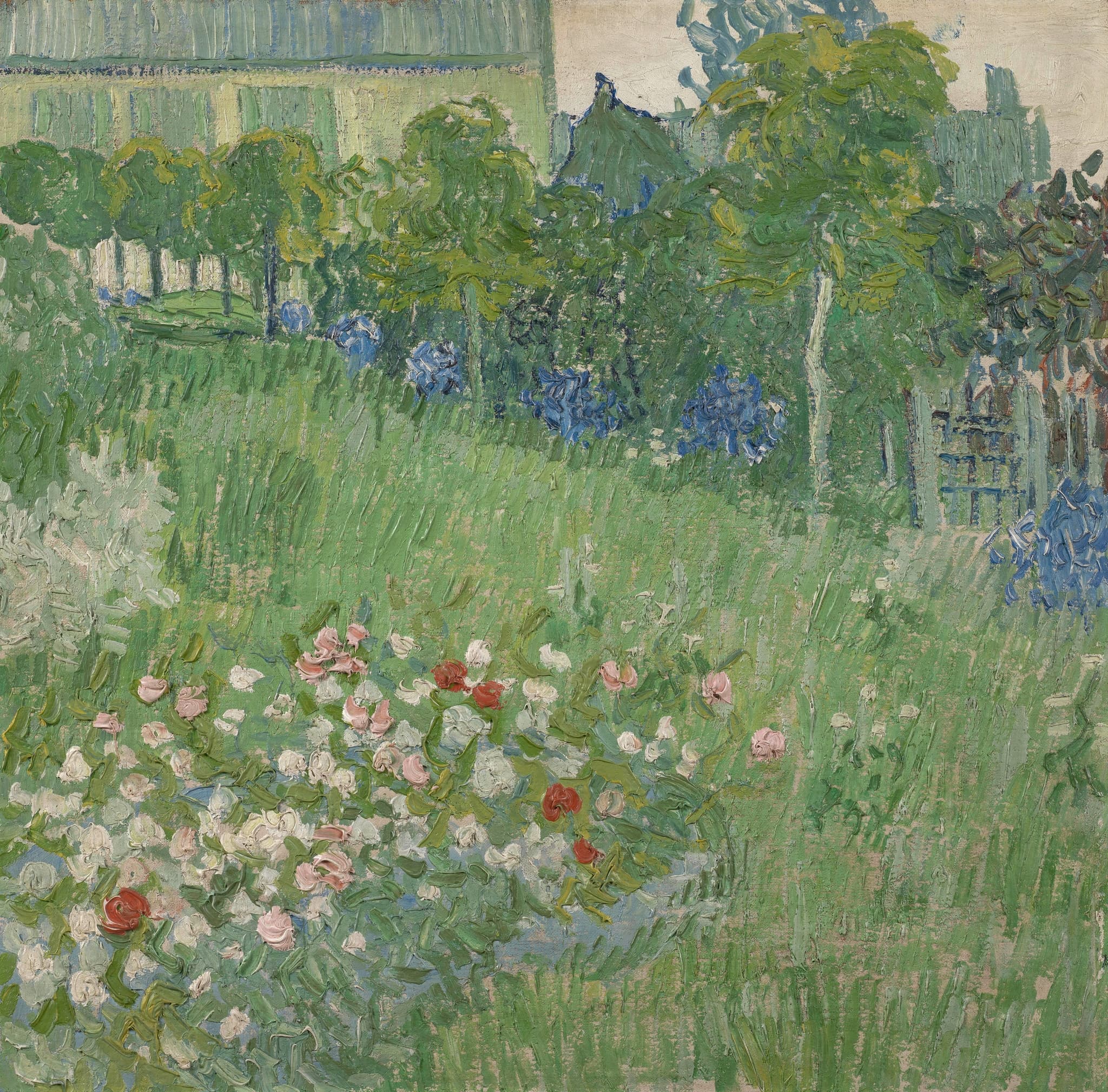
Fair market value for Vincent van Gogh’s Daubigny’s Garden (the small 1890 Auvers study at the Van Gogh Museum) is estimated at $90–130 million, assuming a marquee, fully marketed sale today. This reflects its late-period significance and impeccable provenance, balanced against its smaller scale, tea-towel support, and noted color fading.
Valuation Analysis
Subject work: Daubigny’s Garden (small study), Auvers-sur-Oise, June 1890, oil on canvas (painted on a red-and-white tea towel), approx. 51 × 51 cm. The painting is owned by the Vincent van Gogh Foundation and housed at the Van Gogh Museum, Amsterdam. It has not been publicly sold in the modern era; the museum notes both the exceptional context of the Auvers period and some color fading in the work’s present state [1].
Conclusion: A synthesized fair market value of $90–130 million is appropriate were the Museum’s version hypothetically offered in today’s top-tier evening-sale environment. This bracket places the work comfortably within nine-figure territory given its late Auvers date, subject import, and unassailable provenance, while calibrating for the smaller, preliminary nature of this study versus Van Gogh’s grand, late “double-square” panoramas.
Market anchors and comparables: Van Gogh’s market remains among the deepest in art, with the artist’s auction record set by Orchard with Cypresses (1888) at $117.18 million (Christie’s, 2022) [2]. Other late, highly desired landscapes include Laboureur dans un champ (1889) at $81.31 million (2017) [3] and Cabanes de bois parmi les oliviers et cyprès (1889) at $71.35 million (2021) [4]. Garden-themed but earlier/smaller works have traded far lower—for example, Coin de jardin avec papillons (1887) at $33.2 million (2024) [5]. Triangulated against these benchmarks, the Amsterdam study warrants valuation below the largest late canvases yet well above earlier, small garden pictures.
Key drivers: The Auvers months constitute a capstone to Van Gogh’s oeuvre; Daubigny’s Garden is an explicit homage to a revered predecessor and sits within a tight cluster of late landscapes that collectors prize. The work’s continuous family-to-Foundation custodianship and dense exhibition/literature footprint provide institutional-grade assurance—attributes that consistently command premiums at the top of the market [1].
Adjustments: Two elements temper ceiling price potential relative to the absolute headline trophies: (1) scale/format—this is the intimate study rather than a “double-square” panoramic canvas; and (2) materials/condition—the tea-towel support and museum-noted fading modestly constrain competitive bidding above record levels [1]. These factors help define the $90–130 million range for this specific version. By contrast, a late Auvers double-square of prime condition would reasonably align with a $150–250 million bracket in today’s market.
Positioning: In the current quality-first, blue-chip-led environment, a fresh, A‑period Van Gogh of this significance would attract multiple global principals and likely sell within the proposed range, with top-of-band pricing achievable under strong competition and guarantee-backed placement.
Key Valuation Factors
Art Historical Significance
High ImpactDaubigny’s Garden belongs to Van Gogh’s valedictory Auvers period (May–July 1890), a moment of concentrated, innovative landscape production that is both critically and culturally pivotal. The subject is an explicit homage to Charles‑François Daubigny, linking Van Gogh’s late synthesis to the Barbizon tradition while showcasing his signature, high-key color and animated brush. The painting is widely reproduced, frequently exhibited, and deeply studied in the literature—traits that amplify demand and collector confidence. Works from this narrow window embody the emotional and formal crescendo of Van Gogh’s career, and garden/landscape motifs from this period align closely with buyer taste. This significance is a primary driver of the nine‑figure valuation.
Period Rarity and Supply
High ImpactInstitutional holdings and private long-term ownership make late Van Goghs acutely scarce on the open market. Auvers-period oils—especially pivotal subjects and well-documented works—surface extremely rarely. That scarcity has historically translated into persistent bidding depth and record prices when comparable material appears. The small study of Daubigny’s Garden is further strengthened by its direct relationship to Van Gogh’s coveted late “double‑square” landscapes, anchoring it within a subset that collectors actively target. Against this constrained supply backdrop, a museum-caliber, late-period Van Gogh commands a pronounced scarcity premium that undergirds the $90–130 million estimate.
Scale and Format vs. Market Preference
Medium ImpactWhile connoisseurs appreciate the immediacy of Van Gogh’s studies, the broader market consistently awards premiums to large, panoramic late canvases for their visual impact and wall power. This work is the intimate c. 51 × 51 cm study, not a double‑square. The smaller format and preparatory function typically imply a valuation discount relative to full-scale Auvers panoramas. Even so, the square format’s compositional completeness, powerful late palette, and critical positioning within the Daubigny’s Garden sequence sustain robust demand. Net effect: a moderate adjustment that places the work below record‑level trophies but firmly in nine‑figure territory.
Provenance, Exhibition, and Literature
High ImpactThe painting descends from Theo van Gogh and Jo van Gogh‑Bonger to Vincent Willem van Gogh and entered the Vincent van Gogh Foundation (1962), with long-term placement at the Van Gogh Museum. This bulletproof, single‑lineage provenance, combined with extensive exhibition and literature history, removes typical buyer concerns over title, authenticity, or scholarly acceptance. Such clarity materially enhances liquidity at the top of the market, enabling competitive guarantees and broad international underwriting. This factor is additive across estimate and sale probability, supporting confidence at the $90–130 million level should the work ever be offered.
Condition and Materials
Medium ImpactExecuted on a red‑and‑white tea towel, the study carries inherent material idiosyncrasies. The Van Gogh Museum notes some color fading, a consideration that sophisticated buyers weigh carefully for late works where chromatic intensity is prized. While the overall condition remains museum‑presentable, this factor can cap the very highest outcomes relative to pristine, large‑scale Auvers oils on standard canvas. The impact is not disqualifying—indeed, nine‑figure appetite persists—but it justifies a measured ceiling within the proposed range, keeping expectations below the peak established by the most monumental, best‑preserved late landscapes.
Sale History
Daubigny's Garden has never been sold at public auction.
Vincent van Gogh's Market
Vincent van Gogh is a perennial, top‑tier ‘trophy’ artist with an exceptionally deep global buyer base and extremely limited supply of major paintings. The artist’s auction record stands at $117.18 million for Orchard with Cypresses (Christie’s, 2022), with other late landmarks such as Laboureur dans un champ ($81.31m, 2017) and Cabanes de bois parmi les oliviers et cyprès ($71.35m, 2021) confirming sustained demand near and above the nine‑figure threshold. High‑quality garden and landscape subjects from the late 1880s perform best, and works on paper tied to prime periods have recently reached $30m+. Scarcity, cross‑category prestige, and institutional validation keep Van Gogh among the most liquid and resilient blue chips in the market.
Comparable Sales
Orchard with Cypresses (Verger avec cyprès)
Vincent van Gogh
Same artist; prime late-1880s landscape closely related in feel/market demand to Auvers works; large, exhibition-level trophy establishing the current Van Gogh auction record.
$117.2M
2022, Christie's New York
~$129.3M adjusted
Laboureur dans un champ (Ploughman in the Field)
Vincent van Gogh
Same artist; late 1889 Saint-Rémy landscape from the core A‑period right before Auvers; strong size and market appeal comparable to late landscapes.
$81.3M
2017, Christie's New York
~$107.2M adjusted
Cabanes de bois parmi les oliviers et cyprès
Vincent van Gogh
Same artist; late 1889 landscape with cypresses, a closely watched benchmark for medium‑scale late Van Gogh oils.
$71.3M
2021, Christie's New York
~$85.0M adjusted
Coin de jardin avec papillons
Vincent van Gogh
Same artist; garden subject (direct thematic link) though earlier Paris period (1887) and smaller scale—useful as a subject‑driven floor marker.
$33.2M
2024, Christie's New York
~$34.0M adjusted
Nature morte, Vase aux marguerites et coquelicots
Vincent van Gogh
Same artist; painted in Auvers in 1890 (same period as Daubigny's Garden). Though a still life, it is a critical market benchmark for the Auvers months.
$61.8M
2014, Sotheby's New York
~$84.3M adjusted
L’Allée des Alyscamps
Vincent van Gogh
Same artist; 1888 Arles garden/avenue subject of major scale and desirability—an anchor comp for late 1880s outdoor motifs.
$66.3M
2015, Sotheby's New York
~$90.5M adjusted
Current Market Trends
The Impressionist/Post‑Impressionist segment rebounded in 2025–2026 after a softer 2024, with performance concentrating at the top end for museum‑quality, fresh‑to‑market works. Guarantees and third‑party bids remain common, underpinning marquee results. Buyers are selective, rewarding A‑period, exhibition‑provenanced material and discounting secondary examples. Within this context, prime late Van Goghs continue to command robust bidding and headline prices, supported by a diversified global collector base (including strong interest from the U.S., Europe, and Asia). Supply of major Van Gogh paintings remains exceptionally tight, reinforcing price stability and making nine‑figure outcomes credible for best‑in‑class works.
Study print
Study this painting as a print
Pair the full artwork with a museum-style study sheet focused on one meaningful detail.
Sources
- Van Gogh Museum – Daubigny’s Garden (small version), collection entry
- The Art Newspaper – Van Gogh record: Orchard with Cypresses sells for $117m (2022)
- Christie’s – Feature on Laboureur dans un champ (price $81.31m, 2017)
- Christie’s Press – The Cox Collection and 20th Century Evening Sales achieve $751.9m (2021)
- Christie’s Press – 20th Century Evening Sale totals $413,324,500 (2024)