How Much Is Landscape with Ploughman Worth?
Last updated: June 27, 2026
Quick Facts
- Insurance Value
- $130.0M (Appraisal estimate (FMV + ~20% uplift))
- Methodology
- comparable analysis
Indicative fair‑market value for Van Gogh’s Landscape with Ploughman (Valley with Ploughman Seen from Above, 1889; F 727) is $80–110 million, with replacement value around $130 million. The range is anchored to near‑twin Saint‑Rémy comparables—most notably Laboureur dans un champ at $81.31m (2017) and benchmark late‑1880s landscapes ranging to the $117.2m record (2022). As a Hermitage holding and WWII ‘trophy art,’ this valuation is hypothetical for insurance/benchmarking only.
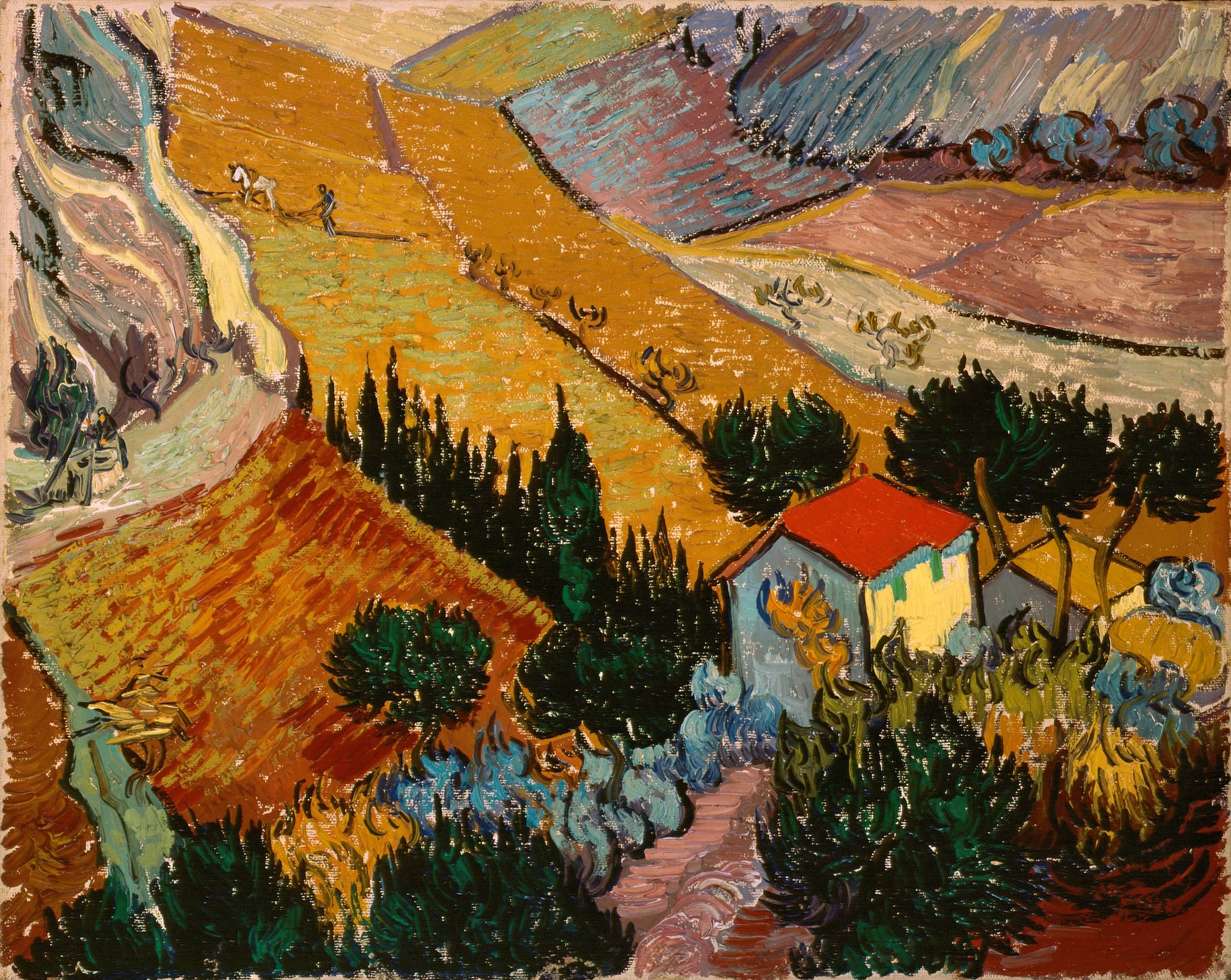
Landscape with Ploughman
Vincent van Gogh, 1889 • Oil on canvas
Read full analysis of Landscape with Ploughman →Valuation Analysis
Conclusion. We estimate the fair‑market value of Vincent van Gogh’s Landscape with Ploughman (also catalogued as Valley with Ploughman Seen from Above, 1889; F 727) at $80–110 million, with an indicative insurance/replacement value around $130 million. This is a notional appraisal for benchmarking and insurance purposes; the painting resides in the State Hermitage Museum and is widely considered non‑marketable in practice.
Method and anchors. The estimate is derived through direct comparable analysis against late‑1880s Van Gogh landscapes with closely aligned date, subject, and quality. The key anchor is Laboureur dans un champ (Saint‑Rémy, Sept. 1889), which sold for $81.31 million in 2017; it is a near‑twin in theme and period but on a larger canvas (50.3 × 64.9 cm) and thus a powerful benchmark for a ploughman subject from the same month and year [2]. We also reference the $71.35 million price for Cabanes de bois parmi les oliviers et cyprès (Saint‑Rémy, 1889) as a strong, proximate landscape comparable [3]. The upper boundary is informed by Van Gogh’s standing auction record, Orchard with Cypresses (1888), at $117.18 million (Christie’s, 2022), which frames the current ceiling for exceptional late‑1880s landscapes [1].
Adjustments. We apply a downward adjustment for scale: the Hermitage painting (approx. 33 × 41.4 cm) is materially smaller than the 2017 ploughman comp, which typically moderates price. Offsetting this are positive qualitative factors: the prime Saint‑Rémy year (1889), a highly resonant rural labor motif tied to Van Gogh’s dialogue with Millet, and a dynamic aerial viewpoint that collectors prize. Together, these attributes position the work firmly among significant—if not “iconic‑tier”—Saint‑Rémy landscapes. Assuming sound condition and normal marketability, these comparables support a mid‑eight to low‑nine‑figure range.
Provenance and marketability caveat. The painting is in the State Hermitage Museum, St. Petersburg, identified with Otto Krebs’s collection and publicly revealed in 1995 among the museum’s post‑war “trophy art.” It has no public sale history and is effectively not for sale [4]. The valuation here assumes, hypothetically, clear title, exportability, and a standard international sales context. In reality, legal and political constraints would make any transaction highly improbable; if impediments persisted, they could suppress pricing, while a fully regularized title could catalyze robust competition.
Positioning. Within Van Gogh’s market, late‑1880s landscapes exhibit sustained depth of demand and tight supply. Against the $81.31m 2017 ploughman benchmark [2], the painting’s smaller scale suggests a modest discount, but its prime date/subject quality and the strength of Saint‑Rémy comparables through $71–117m [1][3] underpin our $80–110m range. The insurance indication at ~$130m reflects a customary uplift over fair‑market value for replacement scenarios.
Key Valuation Factors
Art Historical Significance
High ImpactPainted in 1889 at Saint‑Rémy—the same pivotal year as Starry Night and Wheatfield with Cypresses—this work belongs to Van Gogh’s most celebrated creative period. The ploughman motif connects directly to his sustained engagement with Jean‑François Millet and the dignity of rural labor. The aerial vantage point adds a distinctive compositional intelligence, allowing Van Gogh to compress figure, field, and architecture into a dynamic, patterned whole. While not as globally iconic as the Sunflowers or Starry Night series, the canvas sits squarely within a core cluster of late‑1880s landscapes that define his legacy. This confers strong art‑historical weight and long‑term institutional and collector appeal, underpinning durable demand and value.
Period and Subject Desirability
High ImpactCollector preference within Van Gogh’s market concentrates on the late‑1880s (Arles and Saint‑Rémy), especially expressive landscapes and figure‑in‑landscape compositions. Recent auction history confirms that prime‑period landscapes can reach into the high‑eight and low‑nine figures when color, composition, and condition align. The ploughman subject is particularly resonant because it merges Van Gogh’s modern painterly language with human presence and agrarian symbolism. That combination has repeatedly drawn deep bidding pools for Saint‑Rémy works, with standouts achieving $70–117 million in the last cycle. This alignment of period and subject places the Hermitage picture in a high‑demand segment of Van Gogh’s oeuvre.
Scale and Composition
Medium ImpactAt approximately 33 × 41.4 cm, the painting is smaller than the most expensive late‑1880s Van Gogh landscapes, which often exceed 50 cm on the long side. All else equal, scale is a meaningful pricing variable for this market: larger formats deliver greater wall presence and tend to command higher prices. That said, the composition’s elevated viewpoint, rhythmic brushwork, and inclusion of architecture and figure amplify its visual impact beyond its modest size. The net effect is a moderate downward adjustment relative to larger Saint‑Rémy comparables, partially offset by strong compositional dynamism and the desirability of the ploughman motif.
Provenance, Title, and Marketability
High ImpactThe work is in the State Hermitage Museum and associated with Otto Krebs’s pre‑war collection; it was revealed publicly in 1995 among post‑war ‘trophy art.’ In practical terms, deaccession is highly unlikely and title/export issues would preclude a normal market transaction. This valuation therefore assumes, hypothetically, clear and marketable title in a standard international sale. Under that assumption, the painting’s prime period, subject, and institutional cachet would likely attract multiple top‑tier bidders. If, however, unresolved legal or political constraints shadowed a sale, pricing could be materially affected. For insurance/replacement, a premium over FMV is warranted given uniqueness and scarcity.
Sale History
Landscape with Ploughman has never been sold at public auction.
Vincent van Gogh's Market
Vincent van Gogh remains an ultra–blue‑chip artist with extremely limited supply and global, cross‑category demand. The standing auction record is $117.18 million for Orchard with Cypresses (Christie’s, 2022), underscoring the capacity of prime late‑1880s paintings to achieve nine‑figure prices. Other major landmarks include $81.31 million for Laboureur dans un champ (2017) and $71.35 million for Cabanes de bois parmi les oliviers et cyprès (2021), confirming robust depth for top Saint‑Rémy works. While A‑tier canvases seldom appear, select still lifes and works on paper have also posted strong results, reflecting a flight to quality. Well‑documented provenance and prime period are critical determinants of price and liquidity.
Comparable Sales
Laboureur dans un champ (Ploughman in the Field)
Vincent van Gogh
Same artist and Saint-Rémy period (Sept 1889); near-twin subject of a peasant ploughing; benchmark late-1880s landscape; larger scale than the Hermitage work.
$81.3M
2017, Christie's New York
~$107.3M adjusted
Cabanes de bois parmi les oliviers et cyprès
Vincent van Gogh
Same artist and prime Saint-Rémy year (1889); landscape with cypresses from the same creative peak; strong market benchmark close in date and type.
$71.3M
2021, Christie's New York
~$84.9M adjusted
Orchard with Cypresses (Verger avec cyprès)
Vincent van Gogh
Same artist, late‑1880s landscape with cypresses; current Van Gogh auction record; serves as an upper‑bound benchmark for top‑tier late‑1880s landscapes.
$117.2M
2022, Christie's New York
~$130.1M adjusted
L’Allée des Alyscamps
Vincent van Gogh
Same artist, major Arles (1888) figure‑in‑landscape from immediately before Saint‑Rémy; trophy‑level late‑1880s canvas used regularly as a market anchor.
$66.3M
2015, Sotheby's New York
~$90.2M adjusted
Coin de jardin avec papillons
Vincent van Gogh
Same artist and late‑1880s window (1887); smaller‑scale oil with natural motif; useful for bracketing the lower end of late‑1880s Van Gogh painting prices in current market.
$33.2M
2024, Christie's New York
~$34.2M adjusted
Current Market Trends
After a softer 2024 marked by macro uncertainty and thinner trophy supply, the market stabilized in 2025 and showed measured strength into 2026. Within the Modern/Impressionist complex, buyers favored canonical names and period‑defining works, while mid‑tier or compromised examples met resistance. Guarantees and irrevocable bids continued to shape outcomes, but fresh, top‑quality consignments drew competitive bidding. For late‑19th‑century blue chips like Van Gogh, supply scarcity and global demand have kept top comparables resilient, with nine‑figure potential preserved for exceptional late‑1880s canvases. Pricing precision increasingly hinges on scale, condition, and freshness to market—factors that can swing outcomes by meaningful margins.
Study print
Study this painting as a print
Pair the full artwork with a museum-style study sheet focused on one meaningful detail.
Sources
- The Art Newspaper: A Van Gogh record—Orchard with Cypresses soars to $117m at Paul Allen auction (2022)
- The Art Newspaper: Christie's $479.3m Impressionist and Modern sale (includes Laboureur dans un champ at $81.31m, 2017)
- Christie’s: 20th Century Evening Sale results (includes Van Gogh, Cabanes de bois…, $71.35m, 2021)
- Wikipedia: Valley with Ploughman Seen from Above (F 727; JH 1877) — identification, dimensions, and Hermitage ownership