How Much Is Van Gogh's Chair Worth?
Last updated: June 26, 2026
Quick Facts
- Methodology
- comparable analysis
Van Gogh’s Chair (1888/89) is a canonical Arles-period painting and the conceptual pendant to Gauguin’s Chair, in the National Gallery, London. Anchored to recent nine-figure benchmarks for top Arles works and the piece’s outsized scholarly status, a fair‑market value today is estimated at $120–200 million in an optimally staged sale. This range edges above the artist’s standing auction record, reflecting extreme scarcity and trophy-level demand.
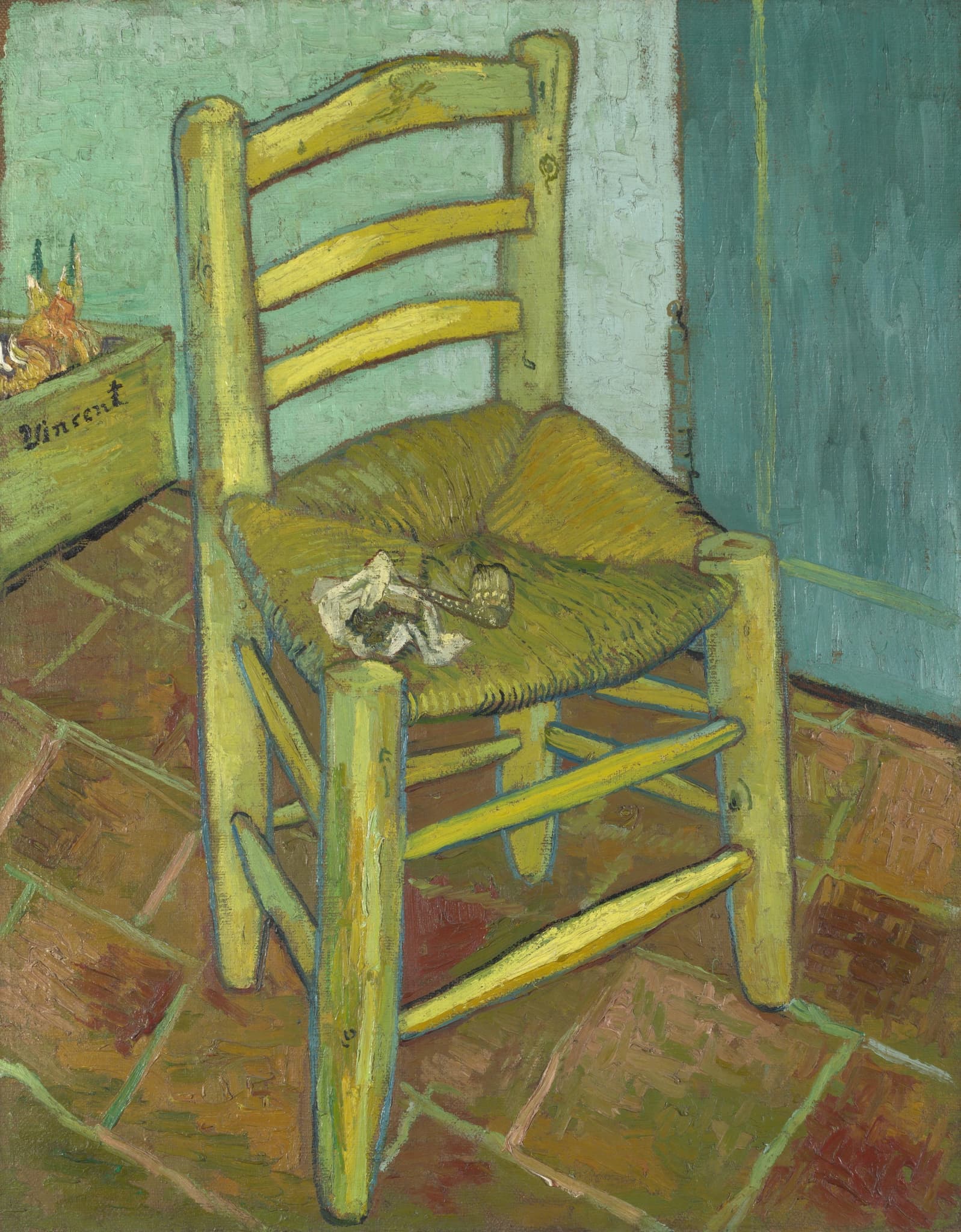
Van Gogh's Chair
Vincent van Gogh, 1888; reworked January 1889 • Oil on canvas
Read full analysis of Van Gogh's Chair →Valuation Analysis
Conclusion: If hypothetically offered for sale today in a marquee evening setting with robust third‑party backing, Vincent van Gogh’s Van Gogh’s Chair would plausibly realize $120–200 million. The painting is a canonical Arles-period icon (1888, reworked 1889), conceived as a deliberate pendant to Gauguin’s Chair and long recognized as a “self‑portrait by proxy.” It is held by the National Gallery, London, with no modern public auction history; the museum acquired it in 1924 via the Courtauld Fund after a 1920 New York offering at $11,000 failed to sell [1][4][5].
Market anchoring: The current Van Gogh auction record is Orchard with Cypresses (1888), which achieved $117.18 million at Christie’s (Paul G. Allen Collection, Nov 2022), demonstrating established nine‑figure demand for top Arles works [2]. A key prior benchmark is Laboureur dans un champ (1889), sold for $81.31 million at Christie’s in 2017, with multiple mature‑period works clustering between roughly $60–80+ million over the last decade, underscoring depth at the top end of the market [3]. Against these comparables, Van Gogh’s Chair occupies a singular art‑historical position within the oeuvre: beyond a still life, it is a symbol-laden, widely reproduced image central to scholarship and display narratives of the Arles studio project [1][4].
Why this work could exceed the record: The estimate brackets above the standing record because Van Gogh’s Chair is an emblematic interior of exceptional conceptual weight, not merely a visually attractive subject. Arles-period, museum‑grade Van Goghs are extraordinarily scarce on the market; when comparably important works surface, they can reset price levels. The pendant relationship to Gauguin’s Chair, its status as a portrait‑by‑proxy, and its frequent inclusion in textbooks and exhibitions position it among the artist’s most discussed images. This combination—blue‑chip name, best‑period work, and iconic status—attracts trophy‑hunting collectors and institutions capable of nine‑figure bids, particularly when a compelling sale narrative is crafted around the painting’s symbolism and historic exhibition pedigree [1][2][4].
Provenance and historical pricing: The work bears pristine title and institutional provenance. Historically, it was shown by Jo van Gogh‑Bonger, offered retail in 1920 in New York at $11,000 without selling, and acquired by the National Gallery in 1924 for “just under £800” through Leicester Galleries—figures that are historically interesting but not indicative of contemporary value [4][5].
Sensitivities and assumptions: The range assumes sound condition appropriate to a museum masterpiece, optimal sale staging, and broad third‑party interest. Upside toward or above the top of the band would be supported by a strong guarantee, cross‑category positioning, and intensified bidding from new‑money geographies; downside would stem from adverse macro conditions, any material condition concerns, or logistical constraints affecting marketing and access. Within today’s market, which rewards proven, best‑in‑class Modern masters, Van Gogh’s Chair squarely fits the profile of a work that could command a low‑to‑mid nine‑figure result [2][3].
Key Valuation Factors
Art Historical Significance
High ImpactVan Gogh’s Chair is a canonical Arles-period painting, intentionally conceived as a pendant to Gauguin’s Chair. It functions as a symbol-laden portrait-by-proxy and distills Van Gogh’s ambitions for the Arles studio, themes of presence/absence, and the poetics of everyday objects. The image is deeply embedded in scholarship, widely reproduced, and consistently featured in museum narratives of the artist’s most fertile period. That combination of conceptual depth and textbook prominence elevates it above decorative still lifes, justifying an estimate that sits above standard top-period comparables.
Rarity and Market Scarcity
High ImpactMuseum-grade Arles works by Van Gogh very rarely come to market, and when they do, results can reset price levels. Supply is structurally constrained: many of the finest works are in public institutions and long‑term private holdings. Van Gogh’s Chair is in a UK national collection, which underscores its rarity on the open market and heightens hypothetical scarcity value. In an actual sale scenario, the extreme paucity of like-for-like substitutes would likely intensify competition among top collectors seeking a once-in-a-generation acquisition.
Comparable Benchmarks
High ImpactThe standing Van Gogh auction record—Orchard with Cypresses (Arles, 1888) at $117.18 million—demonstrates reliable nine‑figure demand for best‑period works. Additional mature‑period sales, including Laboureur dans un champ at $81.31 million, confirm sustained depth at the top end. Against these markers, Van Gogh’s Chair warrants an upward adjustment for its iconic status in the oeuvre, its pendant relationship to Gauguin’s Chair, and its distinctive “portrait” reading—factors that meaningfully enhance its market positioning beyond typical landscapes or still lifes.
Image Appeal and Narrative
Medium ImpactWhile not as outwardly decorative as Sunflowers or The Bedroom, the painting’s stark, instantly recognizable composition and rich narrative—artist’s presence through absence—give it exceptional museum and scholarly appeal. For trophy buyers, the strength of the story can be as decisive as chromatic allure. The work’s frequent inclusion in exhibitions and literature creates a powerful platform for sale storytelling, helping to attract cross‑category bidders and raise pricing above purely aesthetic comparables, albeit with a slightly narrower buyer pool than the most decorative icons.
Sale History
Leicester Galleries, London (dealer sale)
Acquired by the National Gallery via the Courtauld Fund; historical reports cite a price just under £800 (≈$2,700 at the time). Not a public auction; exact day/month unknown.
Vincent van Gogh's Market
Vincent van Gogh occupies the top echelon of blue‑chip artists, with deep, global demand and limited supply of best‑period works. The artist’s standing auction record is $117.18 million for Orchard with Cypresses (Christie’s, 2022), and multiple mature‑period paintings have achieved $60–80+ million since 2014–2017, confirming robust liquidity at the high end. Freshness, subject, and period drive pricing: Arles and Saint‑Rémy oils consistently command premium interest, followed by strong Paris still lifes. Broad institutional visibility, widely reproduced images, and bulletproof provenance further reinforce competition among trophy‑level private collectors and museums—factors that set the stage for nine‑figure outcomes when a canonical work emerges.
Comparable Sales
Orchard with Cypresses (Verger avec cyprès)
Vincent van Gogh
Same artist and year (Arles, 1888); museum‑grade quality; establishes current nine‑figure demand for top‑tier Arles oils.
$117.2M
2022, Christie's New York
~$130.2M adjusted
Laboureur dans un champ (Ploughman in the Field)
Vincent van Gogh
Blue‑chip, late 1880s (Saint‑Rémy) oil with strong exhibition history; a key modern benchmark for mature Van Gogh oils.
$81.3M
2017, Christie's New York
~$107.8M adjusted
Cabanes de bois parmi les oliviers et cyprès
Vincent van Gogh
Late 1880s landscape (1889) capturing Van Gogh’s high‑chroma, emblematic motifs; close in period and market tier.
$71.3M
2021, Christie's New York
~$85.5M adjusted
L’Allée des Alyscamps
Vincent van Gogh
Arles, 1888—same golden period as Van Gogh’s Chair; trophy‑level result showing depth of demand for iconic Arles subjects.
$66.3M
2015, Sotheby's New York
~$90.8M adjusted
Nature morte, Vase aux marguerites et coquelicots
Vincent van Gogh
Late still life (Auvers, 1890) testing price levels for non‑landscape Van Gogh subjects; useful for interior/‘proxy portrait’ context.
$61.8M
2014, Sotheby's New York
~$84.9M adjusted
Piles de romans parisiens et roses dans un verre (Romans parisiens)
Vincent van Gogh
High‑profile still life (Paris, 1887) demonstrating recent top‑tier pricing for non‑landscape Van Goghs, proximate to 2025 market tone.
$62.7M
2025, Sotheby's New York
Current Market Trends
After a selective 2024, high‑end demand for blue‑chip Modern masters rebounded into late‑2025 and spring 2026, with marquee evening sales demonstrating renewed depth for best‑in‑class consignments. Results are highly quality‑driven and often supported by third‑party guarantees; iconic, historically significant works continue to outperform broader category indices. Collecting geographies remain diverse, with seasoned Western buyers joined by expanding interest from Asia and the Middle East. In this environment, canonical, museum‑grade Post‑Impressionist works—particularly from core periods—command strong competition, while secondary subjects or works with condition concerns exhibit greater price sensitivity.
Study print
Study this painting as a print
Pair the full artwork with a museum-style study sheet focused on one meaningful detail.
Sources
- National Gallery, London — Vincent van Gogh, Van Gogh’s Chair (NG3862)
- The Art Newspaper — A Van Gogh record: Orchard with Cypresses soars to $117m at Paul Allen auction
- Christie’s — Laboureur dans un champ by Vincent van Gogh (2017 sale feature)
- The Art Newspaper — New research on Van Gogh’s and Gauguin’s ‘chairs’; NG 1924 price ‘just under £800’
- The Art Newspaper — First details on the largest US exhibition of Van Gogh paintings for a generation (1920 $11,000 ask)