Permeable attention vs edited modernity
Close collaborators who looked at the same city, Morisot and Manet both made modern attention their subject. Each used quick, economical brushwork to keep time, contingency, and selection visible. Where they diverge is first principle: Morisot opens vision into a porous ethic of care; Manet tightens vision into deliberate edits that announce construction.
Comparison frame: How do Morisot’s permeable scenes of attention and Manet’s edited constructions of modern life ask us to see—and mind—what looking permits?
Quick Comparison
| Topic | Berthe Morisot | Édouard Manet |
|---|---|---|
| Core idea of seeing | Perception as care; porous attention that protects interiority | Perception as construction; assertive edits that make artifice legible |
| Typical site and setup | Thresholds—balconies, boats, bedrooms; plein‑air or lived interiors | Studio‑staged “modern life”; café props, floral backdrops, edited “outdoors” |
| Figure–ground relation | Edges dissolve; figure and environment co‑constitute | Silhouette and planar fields carve figure from ground |
| Brushwork and color | Feathery touch; high‑key violets, blues, greens; open contours | Strategic blacks; tight value contrasts; clipped, declarative strokes |
| Screens and devices | Veils, parasols, mirrors as ethical membranes | Marble tables, journals, backdrops as staging tools and crops |
| Sense of time | Ongoing duration; absorption unfolding | Decisive instant; the cut as event |
| Public address | Anchor of the Impressionist exhibitions (7 of 8) | Salon path; adjacent to Impressionism without joining |
| Politics of looking | Withholds access to guard privacy | Implicates us in selection; cools drama into procedure |
Shared Ground
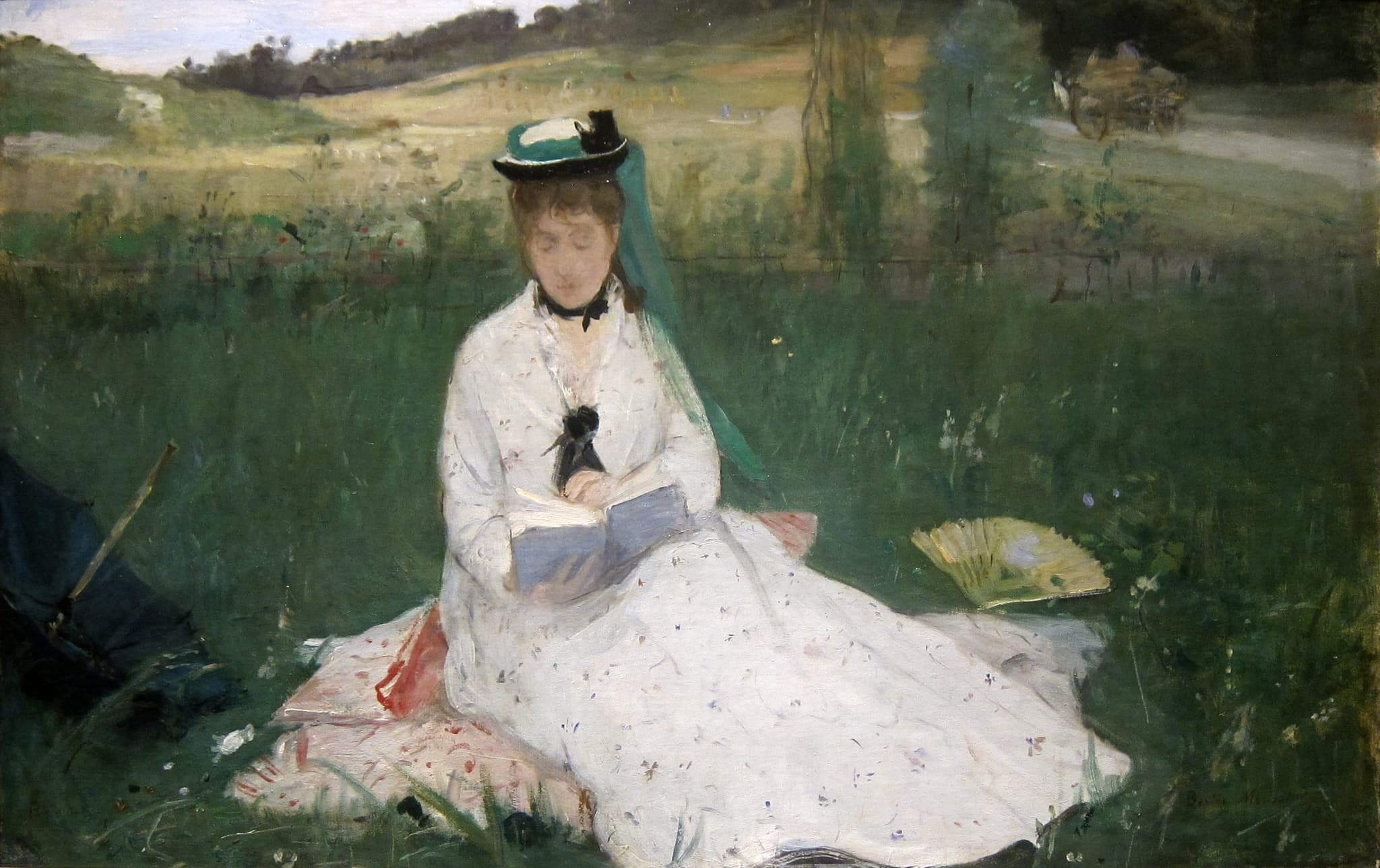
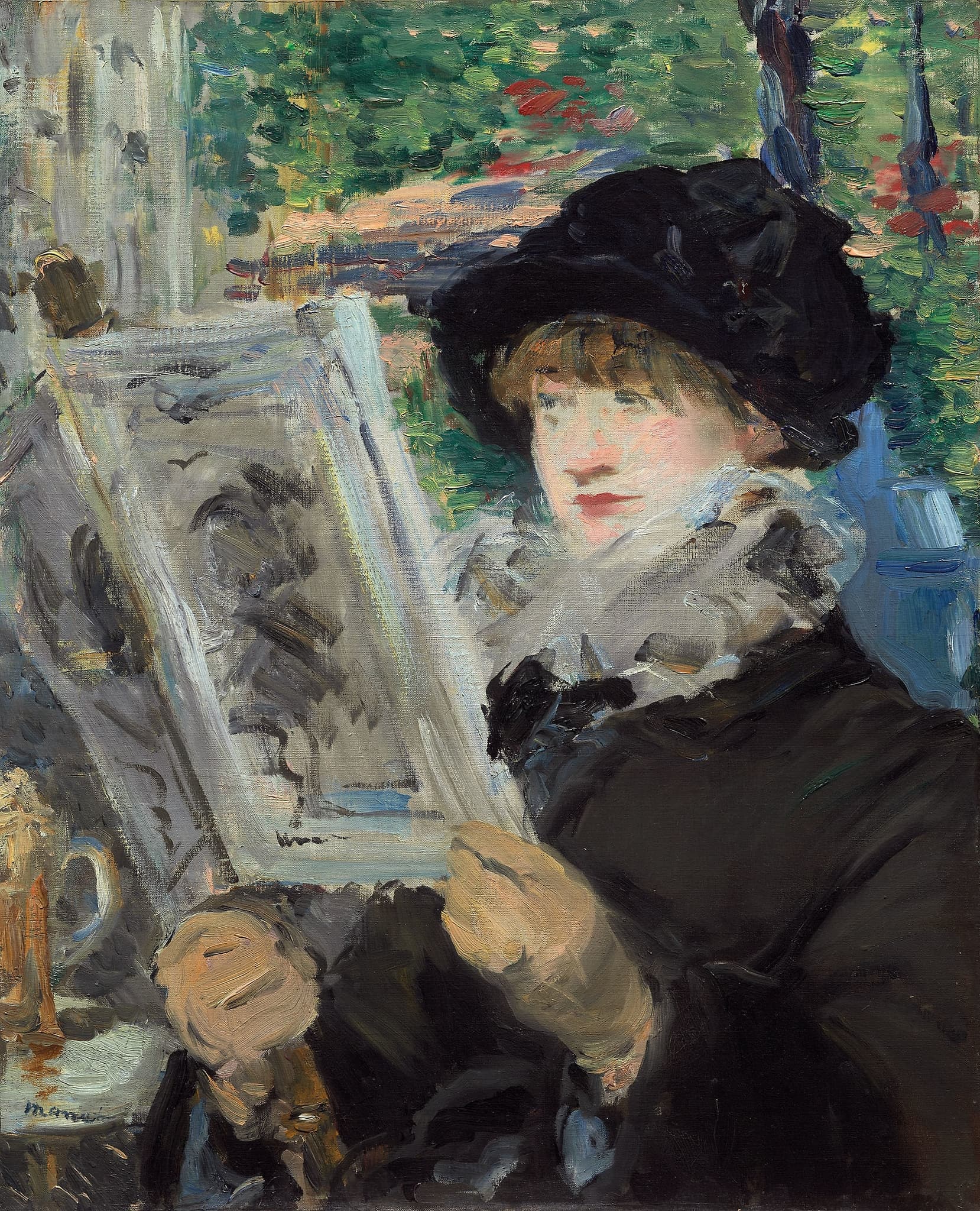
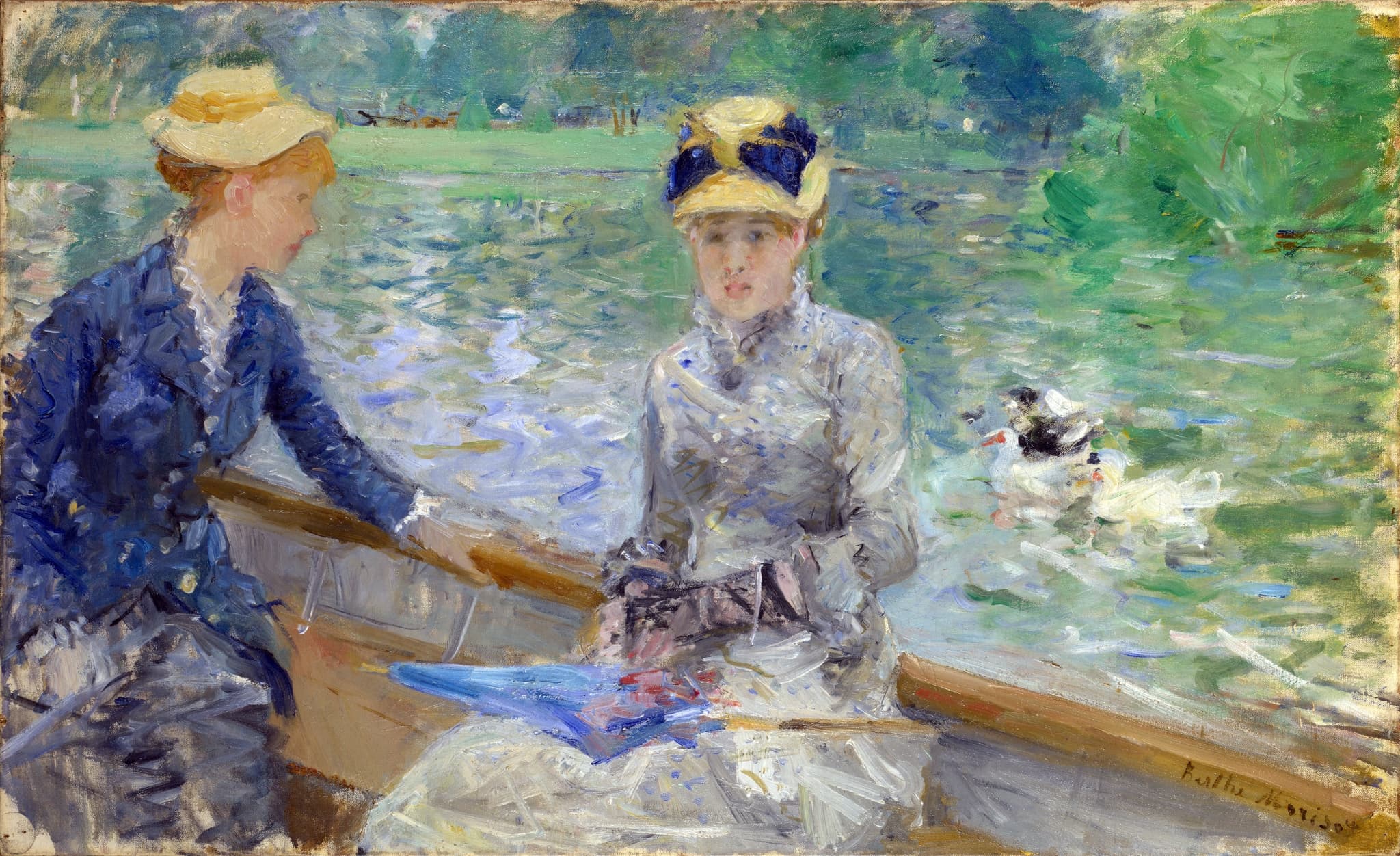
Both artists turn modern seeing into the subject of painting. Taking up Baudelaire’s call for a painter of modern life, they relocate high art to parks, cafés, verandas, bedrooms, and beaches—places where attention, not anecdote, generates meaning. In each, the core scene is absorption: a woman reading, thinking, adjusting a hat. Morisot’s Reading and Manet’s Woman Reading make the image’s drama the reader’s inward focus, not the surrounding bustle. Their facture is purposefully exposed. Brisk, abbreviated brushwork keeps the moment’s contingency visible rather than polished away: Morisot’s Summer’s Day and Manet’s Music in the Tuileries both ask the eye to assemble a scene from quick notations.
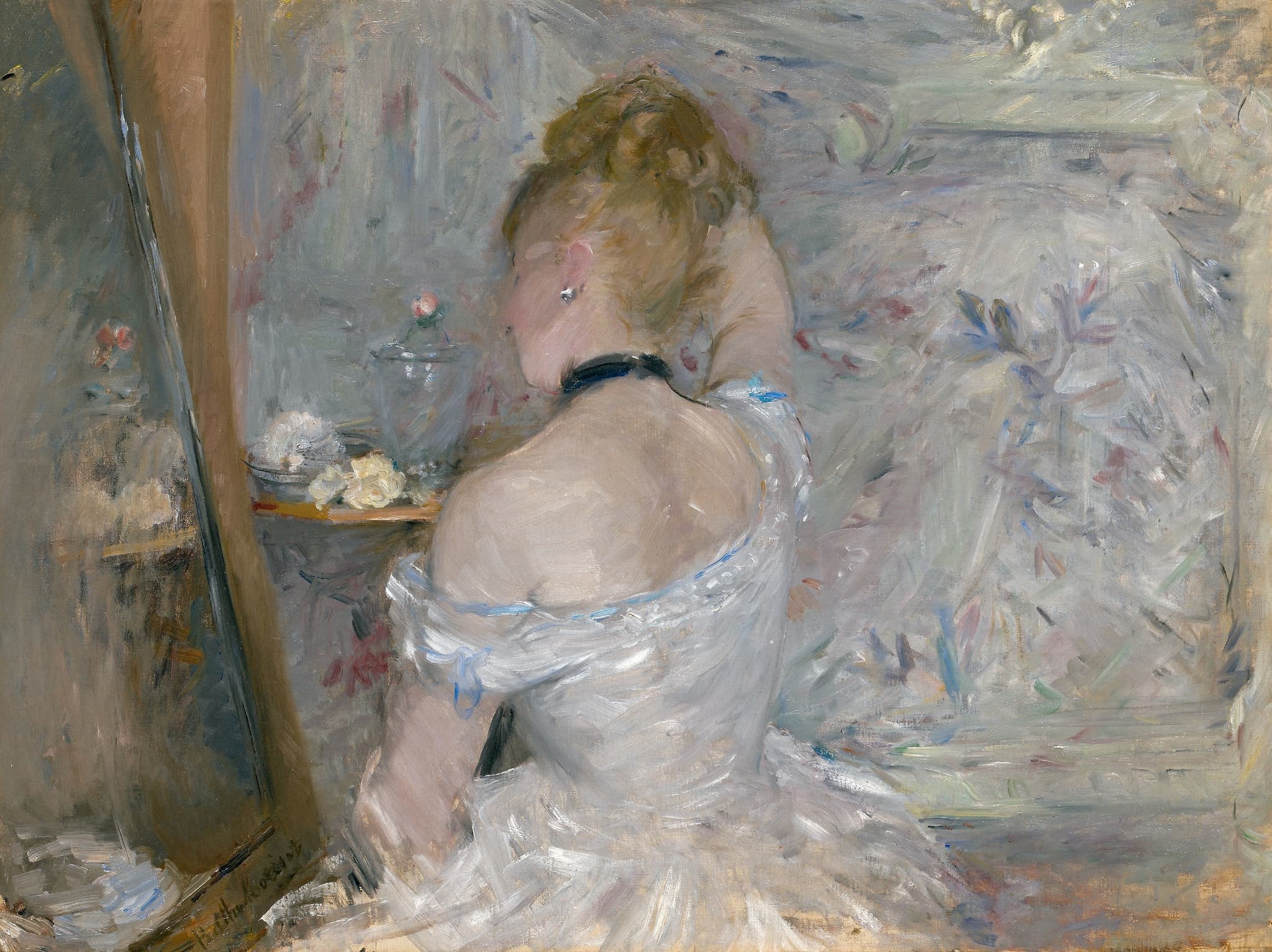
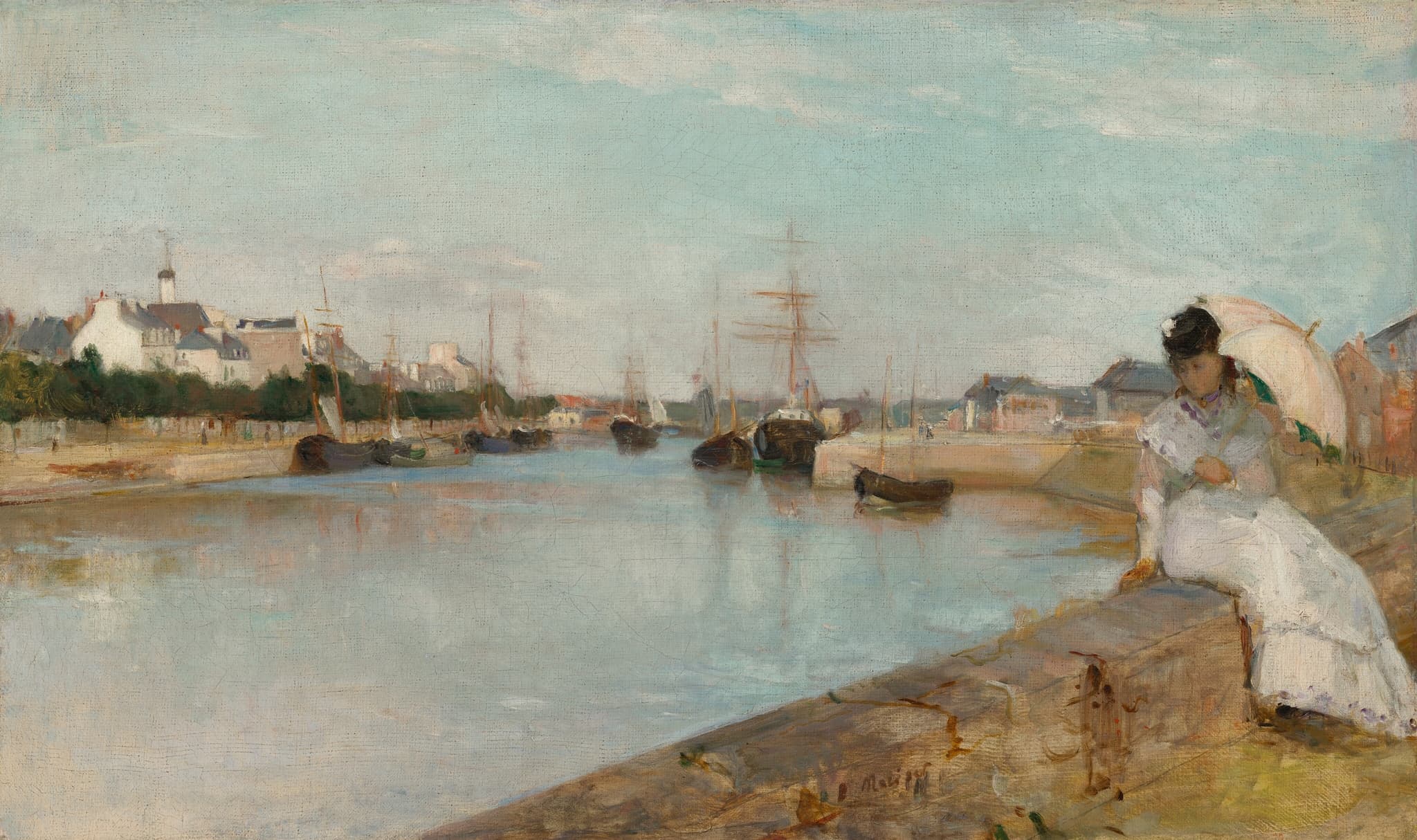
Equally shared is a fascination with thresholds and optical screens. Veils, parasols, tabletops, mirrors, clipped edges—these mediate access and signal that visibility is negotiated in modern life. Morisot’s The Cradle and Woman at Her Toilette modulate privacy through fabric and glass; Manet’s café pictures and beach scenes use marble, foliage backdrops, and assertive cropping to declare what the picture grants and withholds. Their practices were entangled in life and work: they shared models and subjects, Morisot gave The Harbour at Lorient to Manet, and she married his brother Eugène. Morisot helped launch the Impressionist exhibitions in 1874; Manet stayed with the Salon while exchanging techniques and arguments with the group. The shared ground, then, is a joint program: modern attention staged through economies of touch, edited access, and everyday sites where looking itself becomes the event.
Decisive Difference
Morisot treats perception as care and permeability. Her figures inhabit atmospheres that co‑make them—white dresses catching garden greens and violets; faces left lightly resolved so attention, not display, holds the scene. Screens do ethical work: the veil in The Cradle defines a boundary the viewer should not cross; the haze of Woman at Her Toilette refuses the clarifying mirror, guarding a self in flux; Summer’s Day fuses companions and lake so thoroughly that relation, not outline, does the pictorial labor. Even in public, as in Reading, Morisot paints a pocket of autonomy protected by light and brushwork, a modern privacy that remains visible without being surrendered.
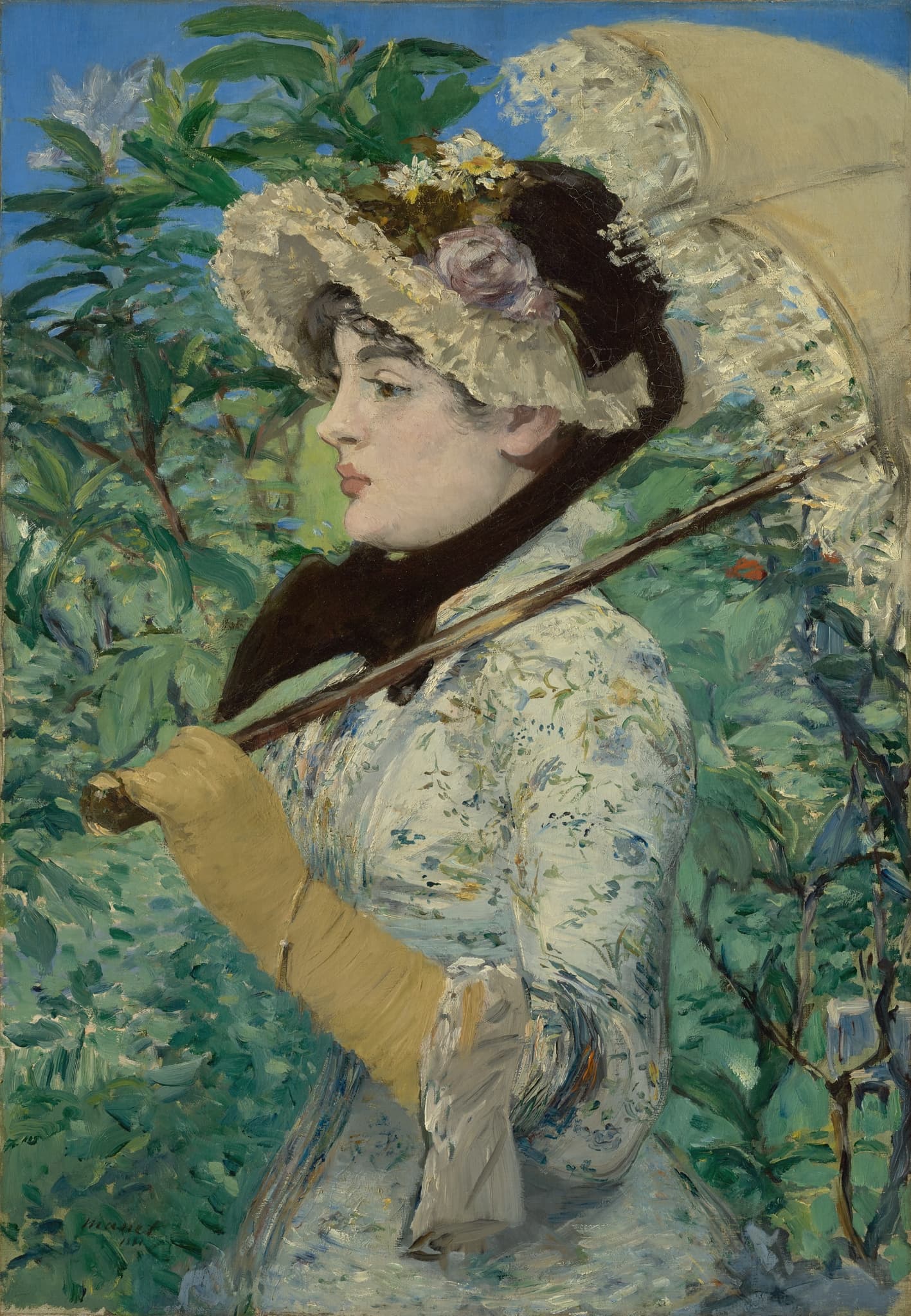
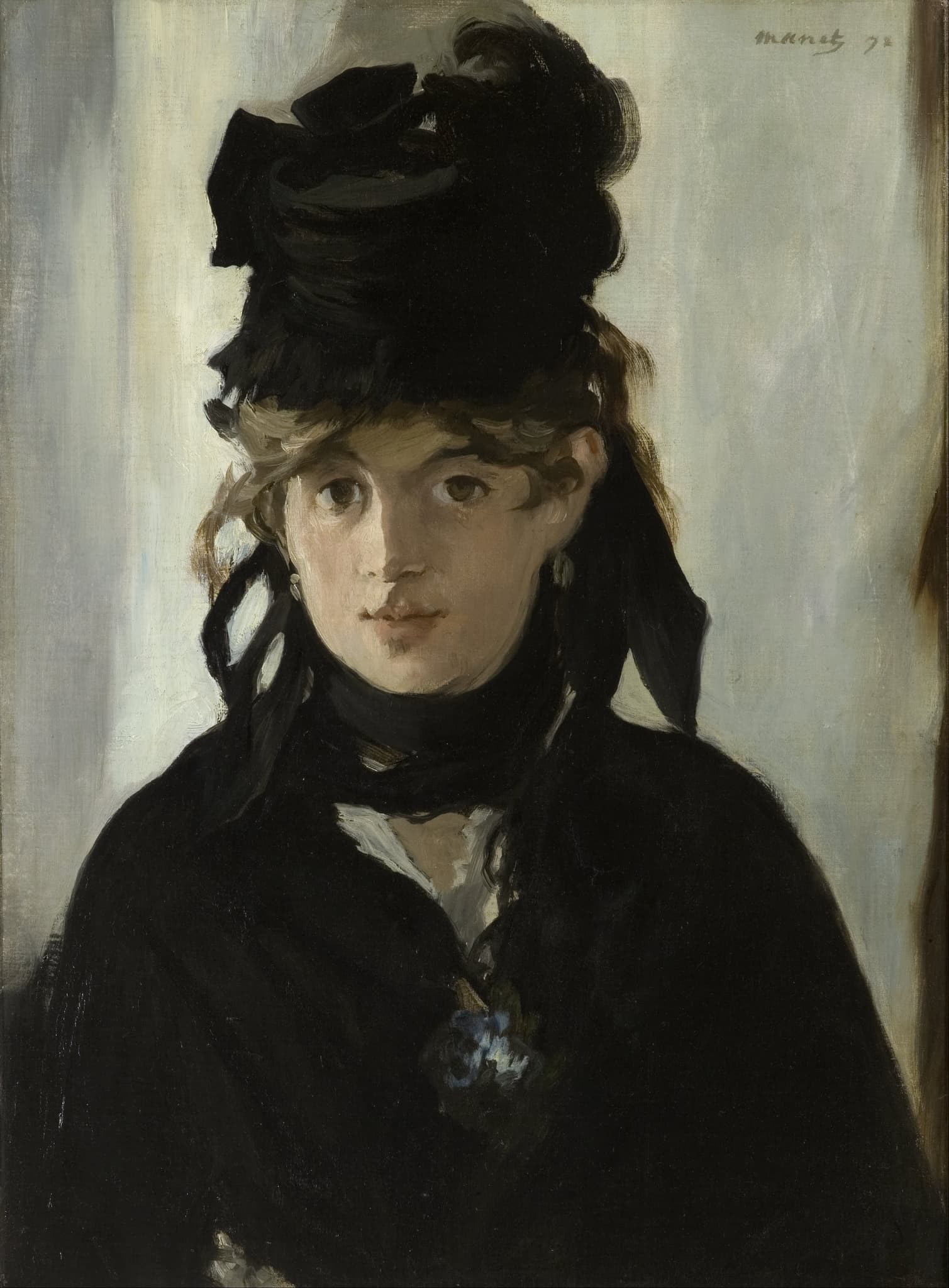
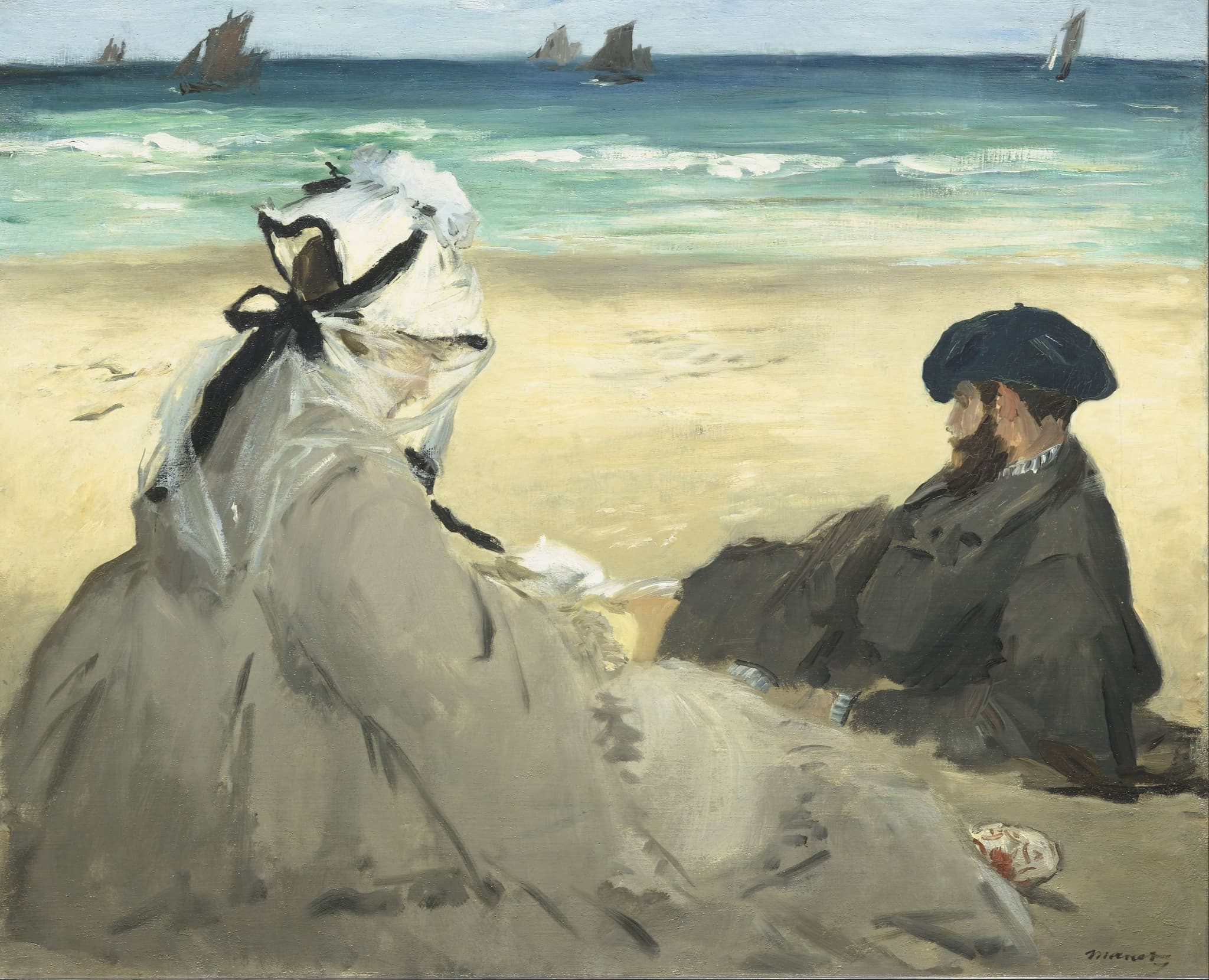
Manet, by contrast, makes vision a matter of construction and editing. He states the picture’s choices—planes, silhouettes, blacks, abrupt croppings—so the image reads as a set of decisive cuts. Music in the Tuileries disperses focus to show looking under urban conditions; The Fifer and Jeanne (Spring) monumentalize types against flat fields; Woman Reading compresses a studio‑staged café instant with a journal‑on‑a‑stick and a clipped beer glass; On the Beach stacks horizon bands to flatten space; Dead Toreador and Execution of Maximilian recast spectacle and history through ruthless cropping and reportorial cool. Where Morisot opens surfaces to time, Manet tightens them into arguments. In short: Morisot’s pictures model an ethics of attentiveness that respects interiority; Manet’s broadcast the modern editor’s hand, turning selection itself into content.
Paired Works
Reading vs Woman Reading
Focus question: How does each artist build a reader’s autonomy—by dissolving the world around her, or by declaring the frame that isolates her?
Summer’s Day vs Jeanne (Spring)
Focus question: When fashion meets outdoor light, does modern femininity blur into environment or stand as a sculpted sign?
Summer's Day vs Jeanne (Spring)
Woman at Her Toilette vs Berthe Morisot with a Bouquet of Violets
Focus question: What are the terms of looking at a modern woman—negotiated haze or concentrated edit?
Woman at Her Toilette vs Berthe Morisot with a Bouquet of Violets
The Harbour at Lorient vs On the Beach
Focus question: At the coast, is leisure a threshold for reverie or a stage for modern planar design?
The Harbour at Lorient vs On the Beach
Why This Comparison Matters
Seeing the pair together clarifies what “painting modern life” could mean. Morisot shows how art can dignify the private sphere and protect interiority without retreating from public space; her veils, mirrors, and high‑key palettes make care a visual method. Manet advances a complementary but distinct modernity: images that state their edits—blacks, silhouettes, crops, studio props—and hold viewers responsible for how pictures frame the world. Understanding this split reshapes how we read Impressionism and its margins: not as a single style of light, but as rival answers to what looking should permit. It also rewires close looking. In Morisot, attend to permeable edges and negotiated access; in Manet, track where the cut falls and what it leaves out. Those habits matter far beyond the nineteenth century, because today’s images still pivot between protection and exposure, permeability and edit.
Related Links
Sources
- Musée d’Orsay – Morisot, The Cradle (object record)
- National Gallery, London – Morisot, Summer’s Day
- Art Institute of Chicago – Morisot, Woman at Her Toilette
- Art Institute of Chicago – Manet, Woman Reading
- National Gallery, London – Manet, Music in the Tuileries Gardens
- Musée d’Orsay – Manet, Sur la plage (On the Beach)
- National Gallery, London – Manet, The Execution of Maximilian
- Encyclopedia.com – Morisot’s exhibitions and career overview
- Smarthistory – Painting modern life (Baudelaire and modernity)
- Musée d’Orsay – Manet, The Fifer
- National Gallery of Art (USA) – Manet, The Dead Toreador