Revelation vs Obstruction
Both Frida Kahlo and René Magritte paint with unusually plain, lucid precision. Kahlo uses that clarity to disclose injuries, bonds, and identities that are usually hidden. Magritte uses the same clarity to block faces, contradict captions, and make images doubt themselves. Together they model two uses of realism: to testify, and to test.
Comparison frame: How do Kahlo’s revelations and Magritte’s obstructions change what a painting lets us know—and what it refuses to tell?
Quick Comparison
| Topic | Frida Kahlo | Rene Magritte |
|---|---|---|
| Purpose of painting | Ethics of visibility; a first‑person witness to embodied reality | Inquiry into representation; how words, images, and things misalign |
| Image logic | Reveals interiors and causes (opened chest, clamp, corset) | Occludes faces, negates pictures with captions, inserts contradictions |
| The self | Singular “I,” frontal gaze, accountable and situated | An anonymized type (bowler‑hatted everyman); identity withheld |
| Objects as tools | Medical braces, corsets, hemostats drawn from lived treatment | Pipes, apples, curtains, inscriptions from mass culture |
| Format and finish | Retablo-like intimacy; symmetrical, centered staging | Ad‑like deadpan finish; shallow sets, parapet‑and‑horizon stages |
| Relation to Surrealism | Adjacent; “I never painted dreams. I painted my own reality.” | Programmatic participant; develops a words–images framework |
| Role for the viewer | Recognize and share felt experience | Doubt appearances; read propositions and puzzles |
Shared Ground
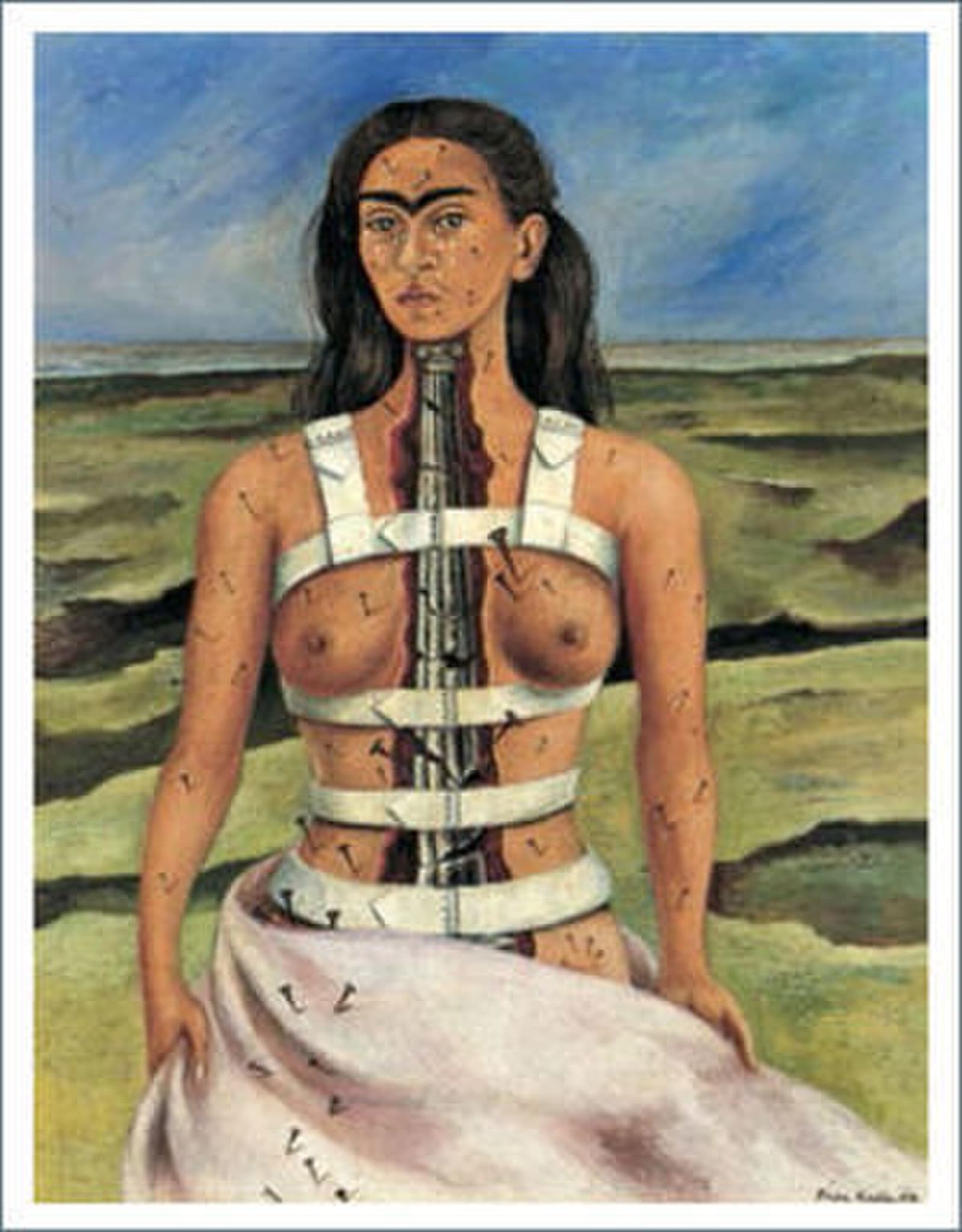
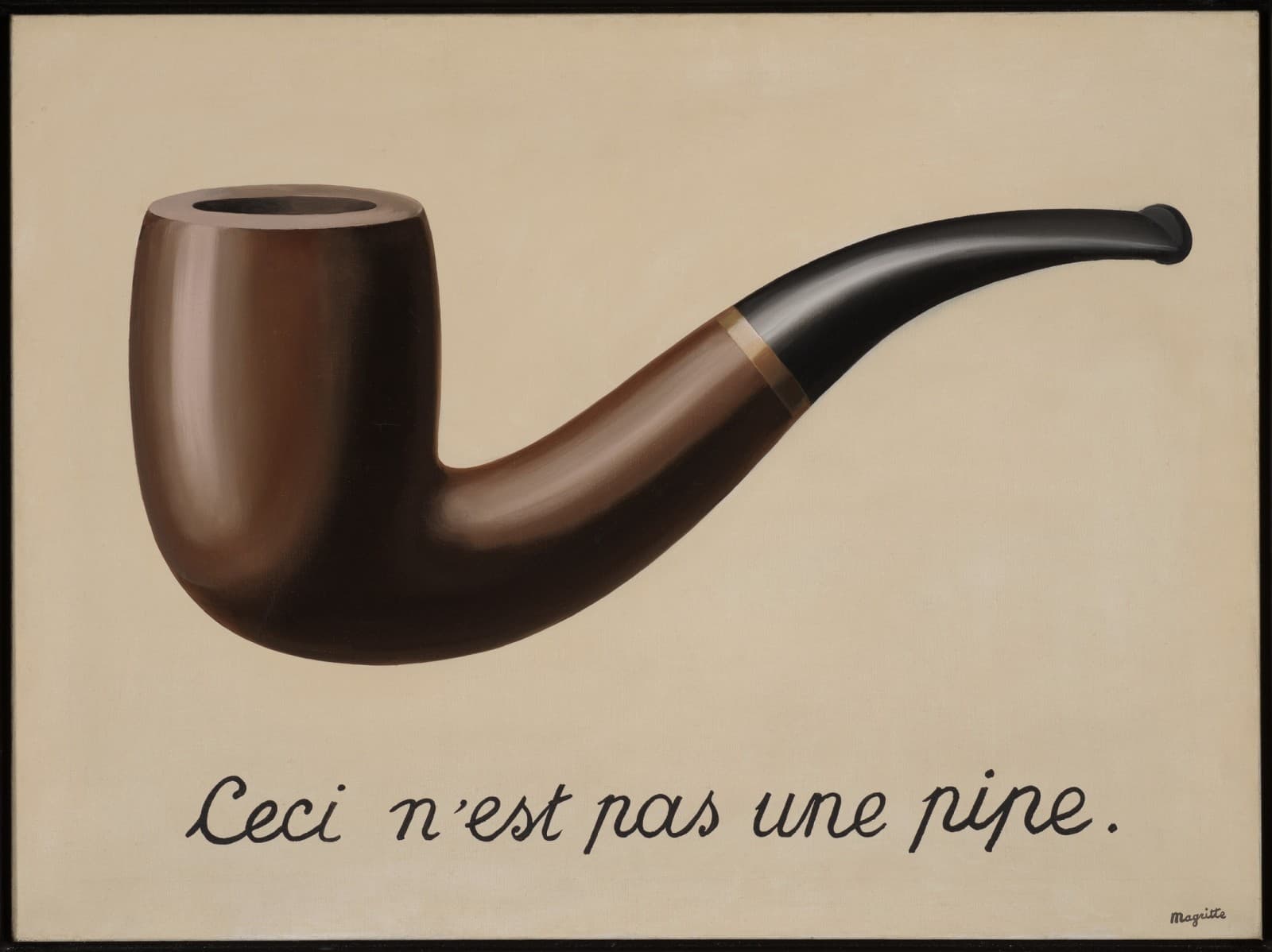
Both artists make precision do philosophical work. Kahlo’s exactitude is clinical and devotional at once: a corset is painted as a corset, a clamp as a clamp, an artery as a path that can be traced. In The Broken Column the body opens to show a fractured architectural spine; in The Two Fridas, a hemostat pinches a bleeding vessel between two exposed hearts. Magritte’s touch is equally crisp but deadpan: a pipe rendered like a classroom chart sits above the sentence that denies it; a green apple hovers with photographic calm to eclipse a face. The clarity is not ornamental—it is the apparatus of thought.
Ordinary things become rigorous instruments. Kahlo mobilizes the furniture of the clinic—braces, casts, sutures—to picture experiences that medicine records but rarely visualizes: distributed pain, endurance, fracture and repair. Magritte elevates vernacular props—pipes, apples, bowler hats—and the layout of ads and captions, then uses them to demonstrate how pictures lure belief and how captions can short‑circuit it. In both, the image is a device for testing how seeing produces meaning.
They stand near Surrealism but on distinct ground. Kahlo rejects dream as source and insists on lived reality sharpened by surgery, divorce, and nation. Magritte publishes a method for words and images, adopting Surrealist estrangement to analyze representation rather than to confess the self. Crucially, both confront the viewer’s desire to know. Kahlo meets the gaze and discloses interiors; Magritte withholds faces or cancels captions. Each makes the limits of looking legible.
Decisive Difference
The decisive difference lies in what painting is for. For Kahlo, painting is an ethics of visibility: a first‑person account that renders embodied reality shareable. “I never painted dreams. I painted my own reality.” The Broken Column names chronic pain with nails and a surgical brace; The Two Fridas exposes two anatomized hearts to stage cultural and biographical fracture with instruments you can identify. Causes are concrete—surgery, heartbreak, mestizaje—and the self is singular and accountable, facing the viewer as if on a witness stand.
For Magritte, painting is an inquiry into representation itself. Les mots et les images (1929) and The Treachery of Images make the case programmatically: a picture of a pipe is not a pipe, and a caption can undo what depiction promises. He extends that logic to the self. The bowler‑hatted figure in The Son of Man is an anonymized type, a stand‑in for anyone; the apple that blocks the face turns identity into a problem of sight. In The Lovers, cloths shroud a kiss to show that intimacy can be structured by opacity.
Put simply: Kahlo reveals in order to share the truth of a lived body; Magritte obstructs in order to demonstrate how vision and language fail to coincide. One turns realism into testimony. The other turns realism into a clean, repeatable paradox.
Paired Works
Revelation vs obstruction
Focus question: What do these paintings claim you learn by looking—through exposure (Kahlo) or through acknowledged limits (Magritte)?
The Broken Column vs The Lovers
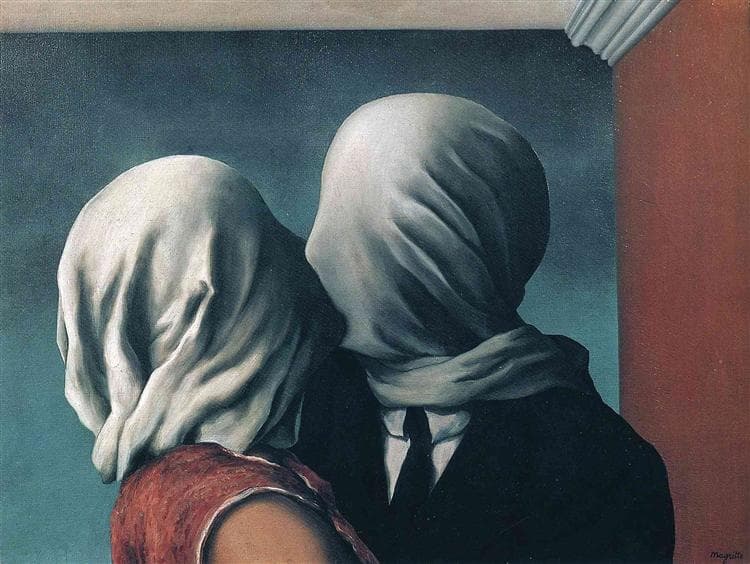
Portraiture’s promise and its refusal
Focus question: When a portrait names a self, what counts as identity—physiology and culture (Kahlo) or the conditions of seeing (Magritte)?
The Two Fridas vs The Son of Man
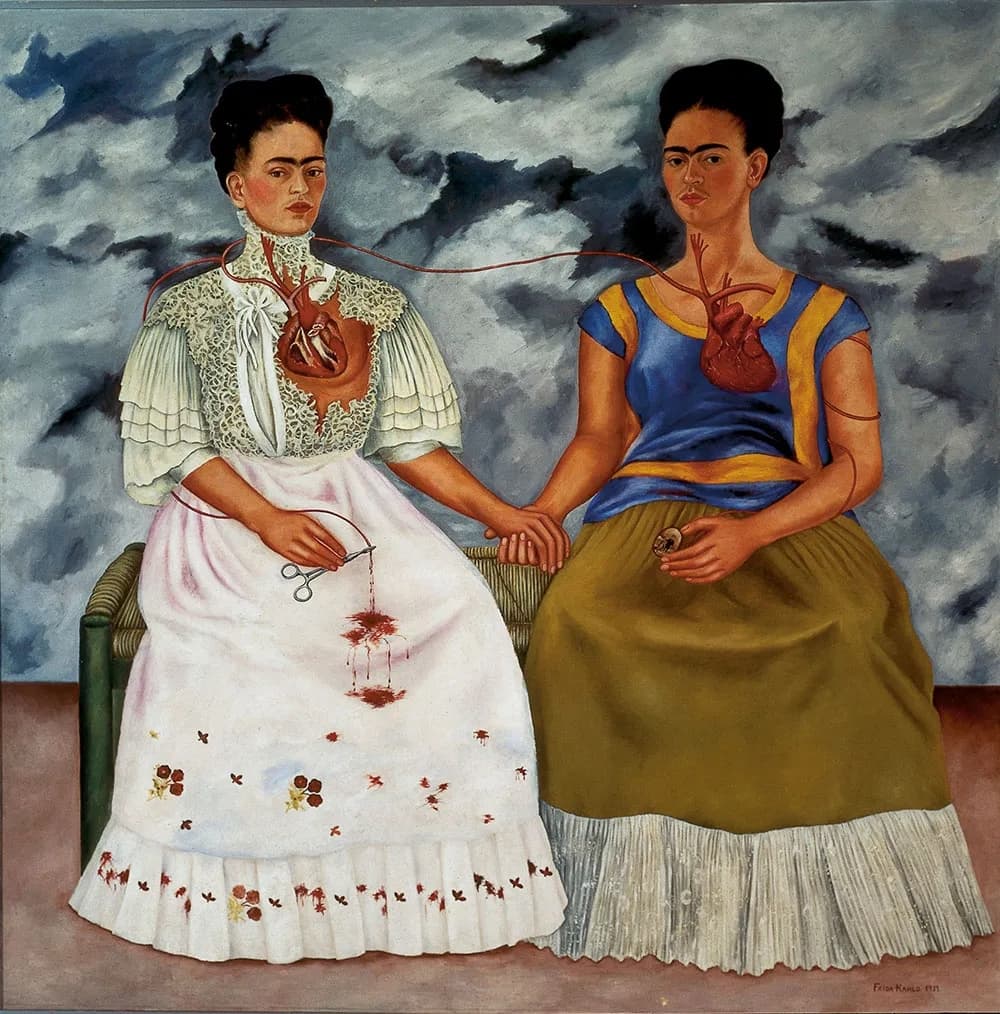
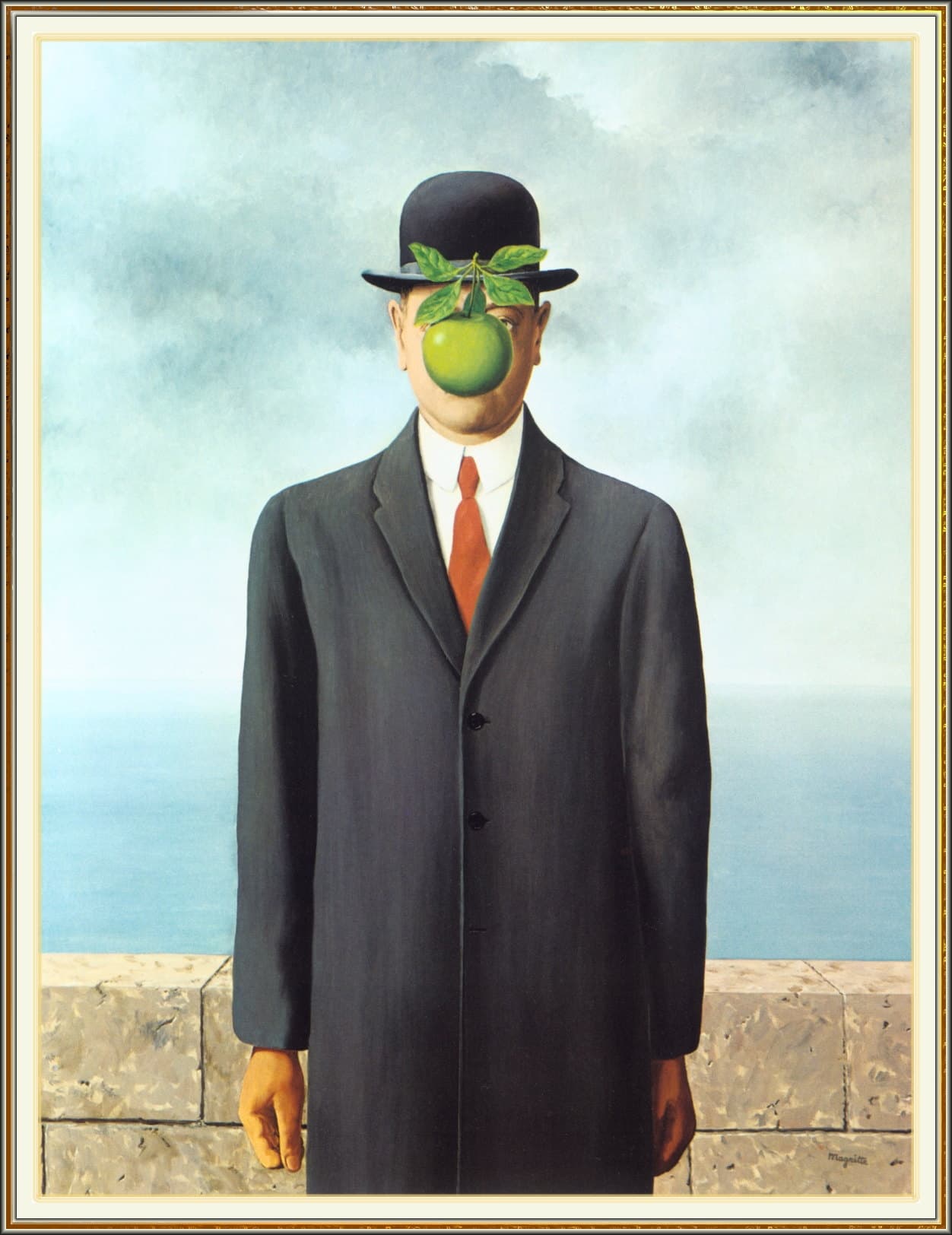
Image as witness vs image as proposition
Focus question: Is a painting a presence you face or a statement you read?
Self‑Portrait with Thorn Necklace and Hummingbird vs This is Not a Pipe
Why This Comparison Matters
Seeing Kahlo next to Magritte clarifies two powerful, durable uses of realism. Kahlo proves that exact depiction can carry moral weight: a brace, a clamp, a gaze can make private pain and plural identity public without melodrama. Her pictures model how art can render embodied knowledge shareable. Magritte proves that the same exactness can be used to question belief: a pipe with a sentence, a face with an apple, a kiss with a shroud train viewers to separate things from their images and names.
This split still shapes how we read pictures today, from medical imaging and activism’s testimonies to advertising’s captions and platform visuals that promise transparency while managing what can be seen. The comparison gives a reader a clear diagnostic: when a picture feels lucid, ask whether it is inviting you to witness, or inviting you to doubt. With Kahlo and Magritte, both answers are serious—and both change what painting is for.
Related Links
Sources
- MoMA: Frida Kahlo (artist page and statements)
- V&A: Inside the ‘Frida Kahlo: Making Her Self Up’ exhibition
- Wikipedia: The Broken Column
- Smarthistory: The Two Fridas (Las dos Fridas)
- LACMA: The Treachery of Images (This is Not a Pipe)
- La Révolution surréaliste, no. 12: Magritte, Les mots et les images (1929)
- MoMA: René Magritte, The Lovers
- LACMA: René Magritte Index (bowler‑hatted everyman, motifs)
- Smarthistory: Frida Kahlo, introduction (retablos, mestizaje)
- HRC, University of Texas: Self-Portrait with Thorn Necklace and Hummingbird
- Smithsonian Magazine: Frida Kahlo profile
- Museo Frida Kahlo (Casa Azul)