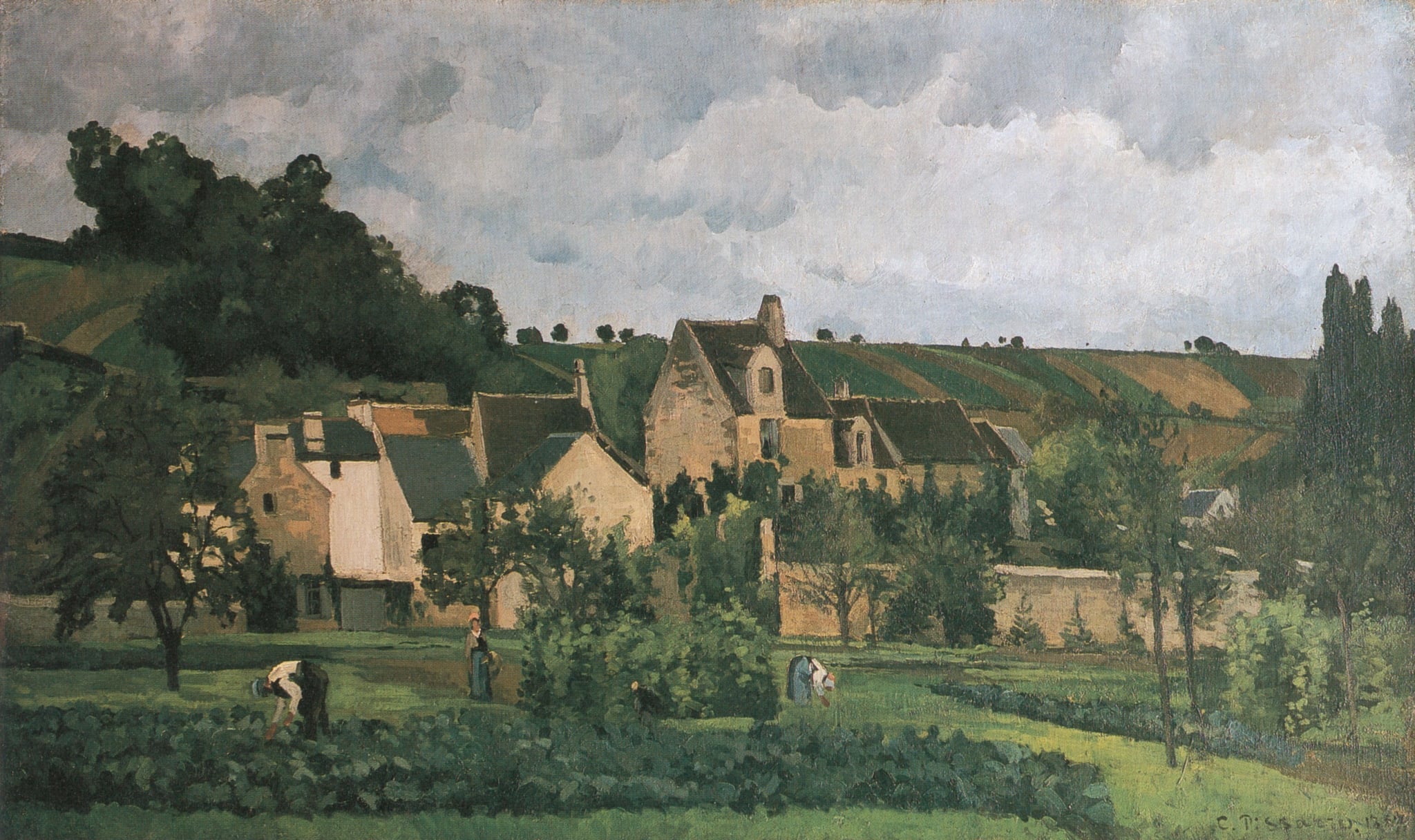
Bent field workers Symbolism
Bent field workers mark the enduring bond between human bodies and cultivated land, signifying the labor that sustains rural communities. In nineteenth-century European painting, the stooped posture often redirects attention from heroic narratives to routine agricultural tasks, aligning landscape with lived economy and seasonal rhythms. The lowered back and downward gaze compress the figure into the field, emphasizing effort, repetition, and time.
Bent field workers in The Hermitage at Pontoise
In Camille Pissarro’s The Hermitage at Pontoise (ca. 1867), kitchen gardens climb a hillside toward stone houses while workers bend to their tasks beneath a low, cloud-laden sky. Their stooped silhouettes articulate modest, continual work that sustains the village, setting a quiet counterpoint between durable architecture and the changing fields and weather. Pissarro uses the curvature and scale of these figures to fuse labor with place, so the landscape reads not as picturesque backdrop but as a record of ongoing human cultivation.