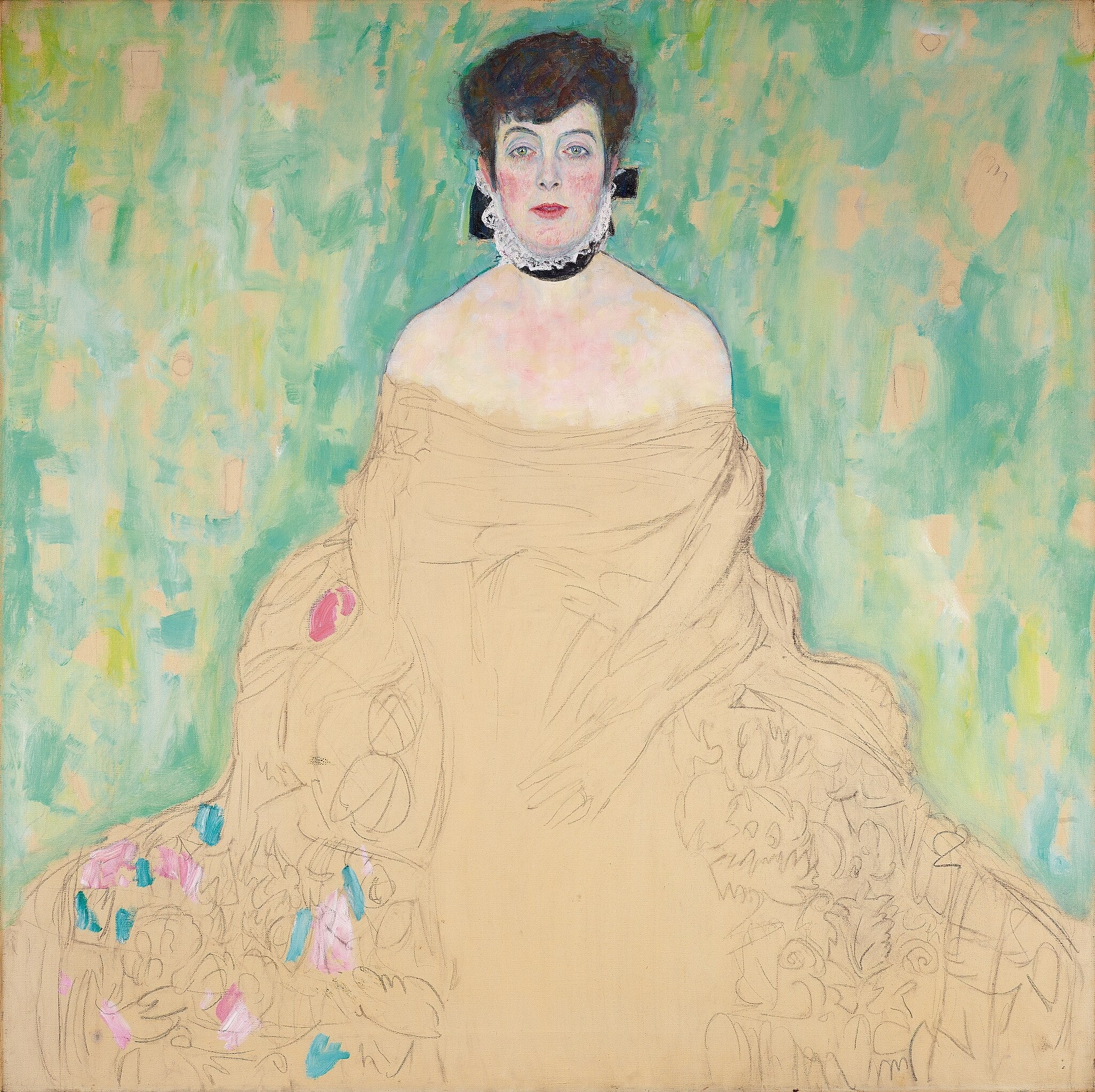
Black choker ribbon Symbolism
A black choker ribbon in portraiture often signals stylish restraint and control, encircling the neck to frame the face and focus the viewer’s attention. Its stark band creates a visual threshold between body and gaze, heightening sensuality while maintaining decorum. Artists use its contrast and precision to emphasize poise and self-presentation.
Black choker ribbon in Amalie Zuckerkandl
In Gustav Klimt’s Amalie Zuckerkandl (1917–1918), the black choker anchors the fully realized head and shoulders against a mottled, cool green ground. Paired with the crisp lace collar, the dark ribbon frames the sitter’s flushed face and direct gaze, staging a measured drama of poise, sensuality, and restraint. Its tight, declarative line reads as a controlled boundary at the throat, concentrating attention while tempering display. The contrast with the gown—left in skeletal graphite and washes—makes the choker one of the few resolved ornaments, so that vivid selfhood emerges even as further adornment remains in potential.