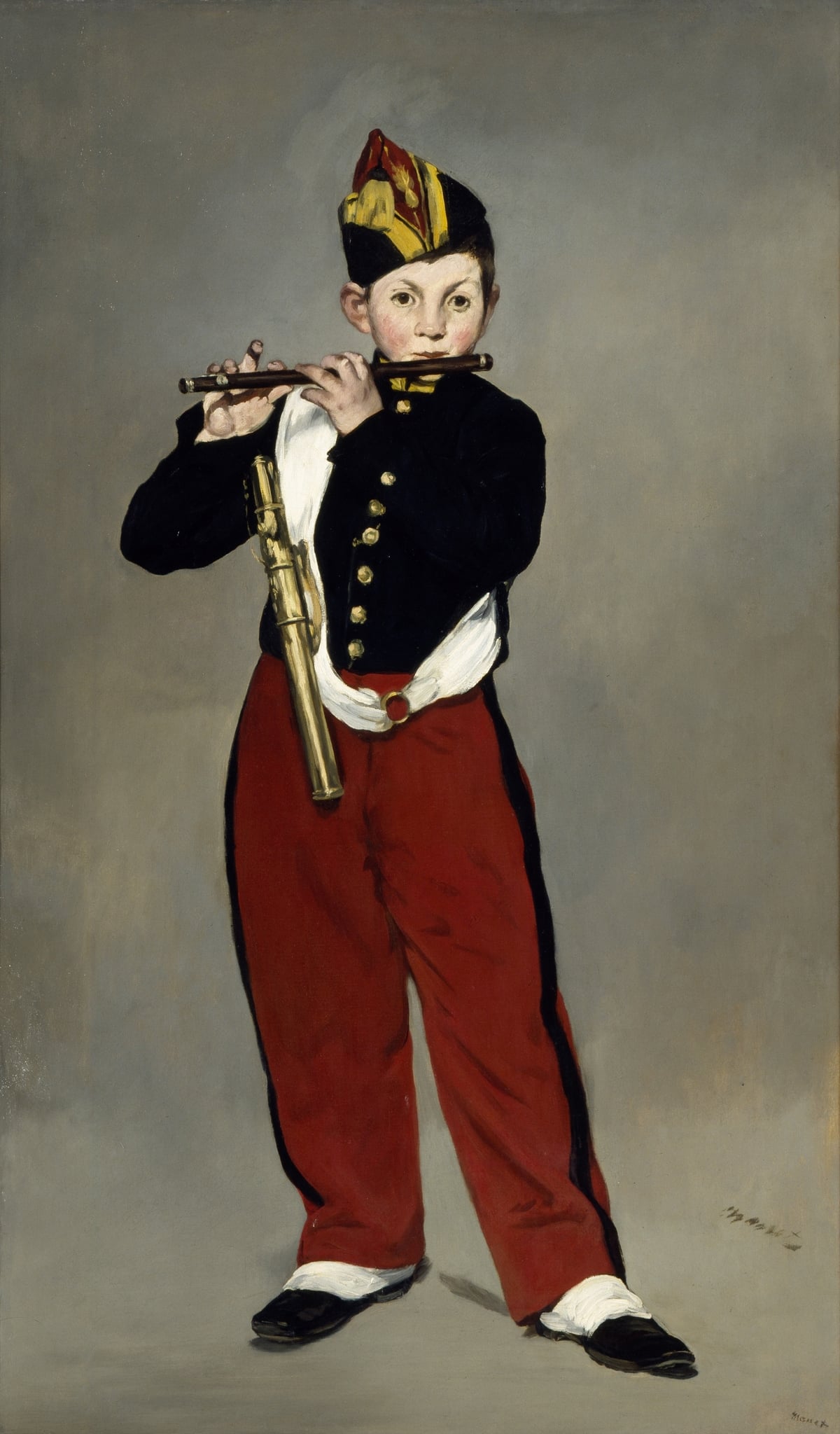
The Fifer
Édouard Manet (1866)
In The Fifer, <strong>Édouard Manet</strong> monumentalizes an anonymous military child by isolating him against a flat, gray field, converting everyday modern life into a subject of high pictorial dignity. The crisp <strong>silhouette</strong>, blocks of <strong>unmodulated color</strong> (black tunic, red trousers, white gaiters), and glints on the brass case make sound and discipline palpable without narrative scaffolding <sup>[1]</sup>. Drawing on <strong>Velázquez’s single-figure-in-air</strong> formula yet inflected by japonisme’s flatness, Manet forges a new modern image that the Salon rejected in 1866 <sup>[1]</sup><sup>[2]</sup><sup>[3]</sup>.