City grid/calligraphic network Symbolism
In art, the city grid or calligraphic network evokes how urban space is divided into blocks and corridors, and how movement is channeled through them. In modernist abstraction and gestural painting, lattices of line and sweeping marks often stand in for streets and flows, turning the surface into a diagram of circulation and control.
City grid/calligraphic network in Interchange
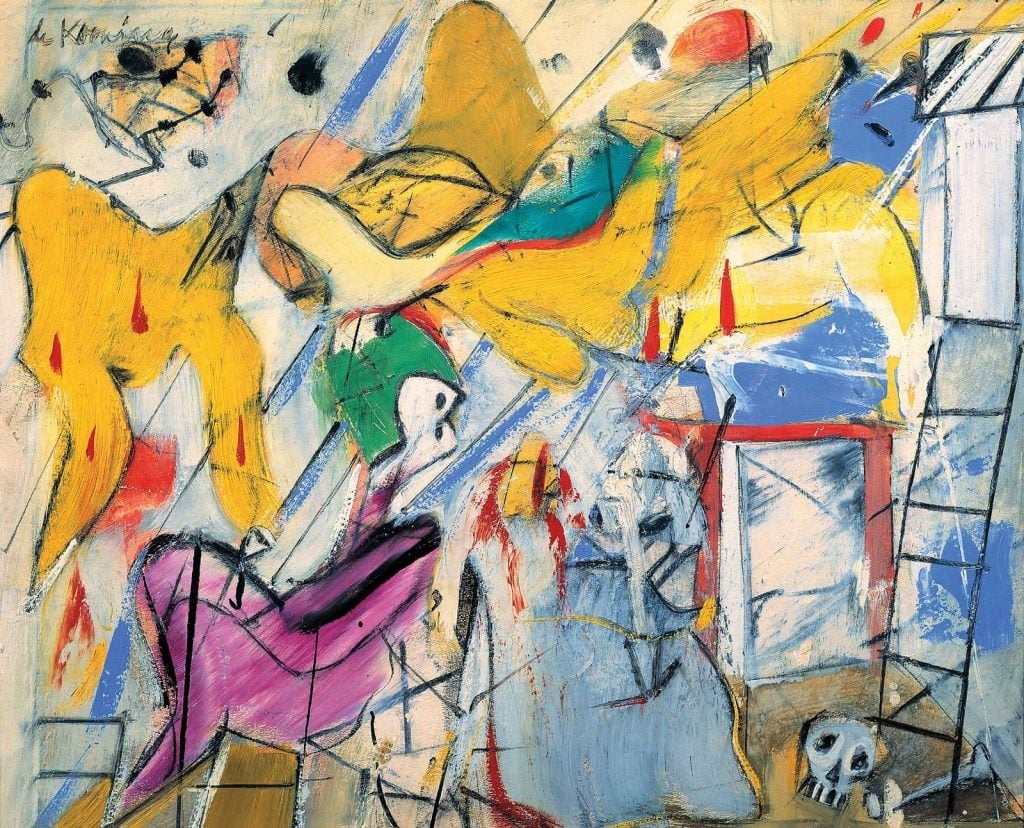
Willem de Kooning’s Interchange (1955) stages this symbol through a dense, animated field in which mustard yellows, lilac, and sea‑blue are pressed into unstable relations, then gathered and redirected by black, calligraphic lines. The lines operate like an organizing web: they parcel the canvas into shifting zones and steer the eye’s traffic, echoing urban partitioning and the rerouting of motion. De Kooning’s scraping, repainting, and slashing gestures heighten the sense of exchange between bodily impulse and built structure, so that the painting reads as a living map of circulation alternating between momentum and pause.