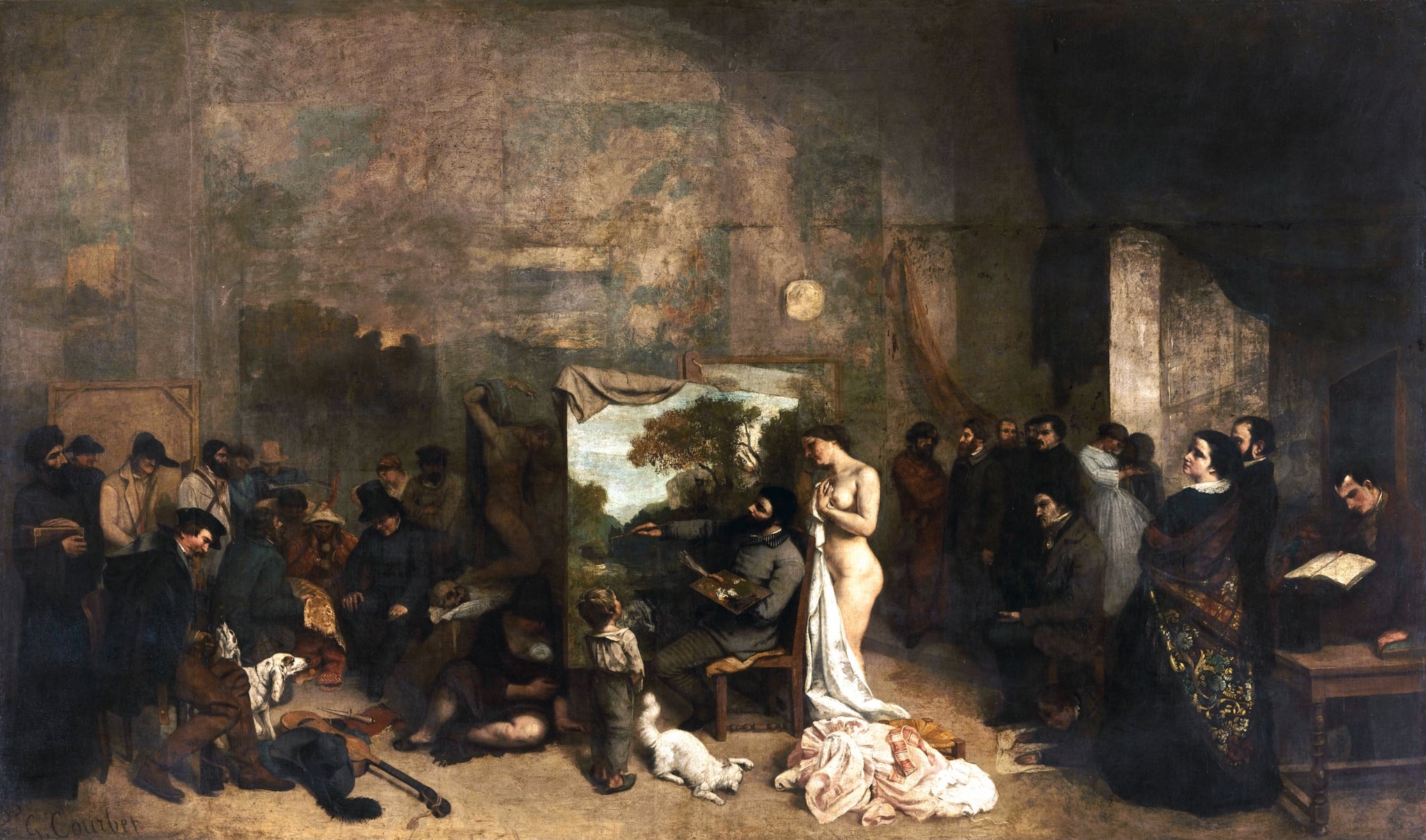
The Painter’s Studio
Gustave Courbet (1854–1855)
Gustave Courbet’s The Painter’s Studio stages a triptych-like drama: a radiant center where the artist paints a sunlit landscape before a child and a nude figure "naked like <strong>Truth</strong>," flanked by the "other world" of poverty and labor on the left and the "<strong>shareholders</strong>" of culture and patronage on the right <sup>[1]</sup>. The composition asserts <strong>Realism</strong> as a mediating force that translates lived experience into art without idealization.