Encroaching dark field (chiaroscuro void) Symbolism
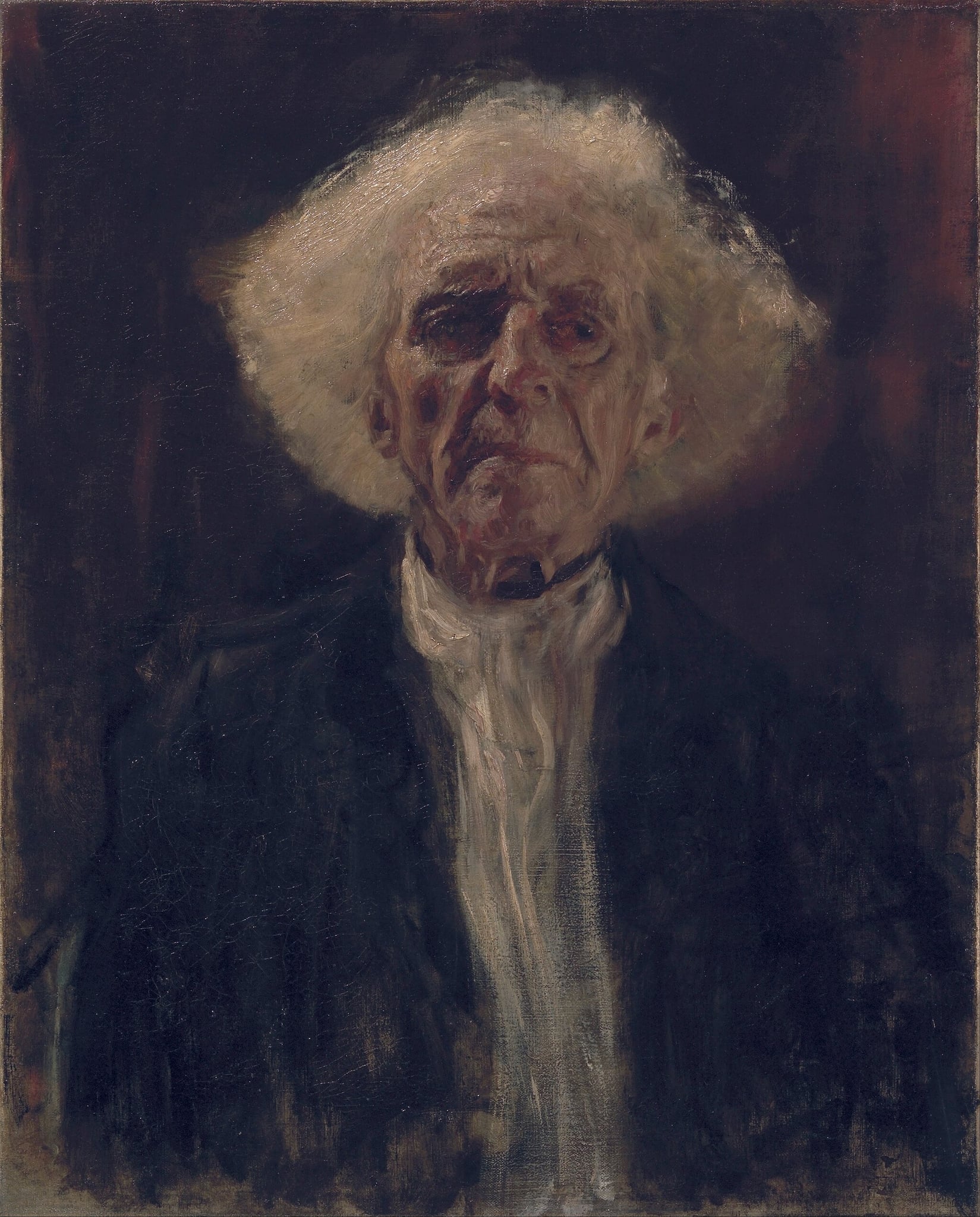
An encroaching dark field—shaped by dramatic chiaroscuro—surrounds a figure so that form seems to emerge from a void. In art history this device concentrates attention, stripping away context to heighten psychological presence and existential depth. The darkness operates as an active field, modeling volume and directing the viewer’s gaze.
Encroaching dark field (chiaroscuro void) in The Blind Man
In Gustav Klimt’s The Blind Man (c. 1896), a monumental head and torso rise from a near-black ground, the dissolving white collar and scumbled halo of hair making the figure feel carved out of darkness. Klimt’s chiaroscuro and tactile paint, together with the occluded gaze, shift emphasis from sight to touch and memory: the dark surround isolates the sitter, cancels setting, and turns solitude into an inward presence that asserts dignity without sentiment.