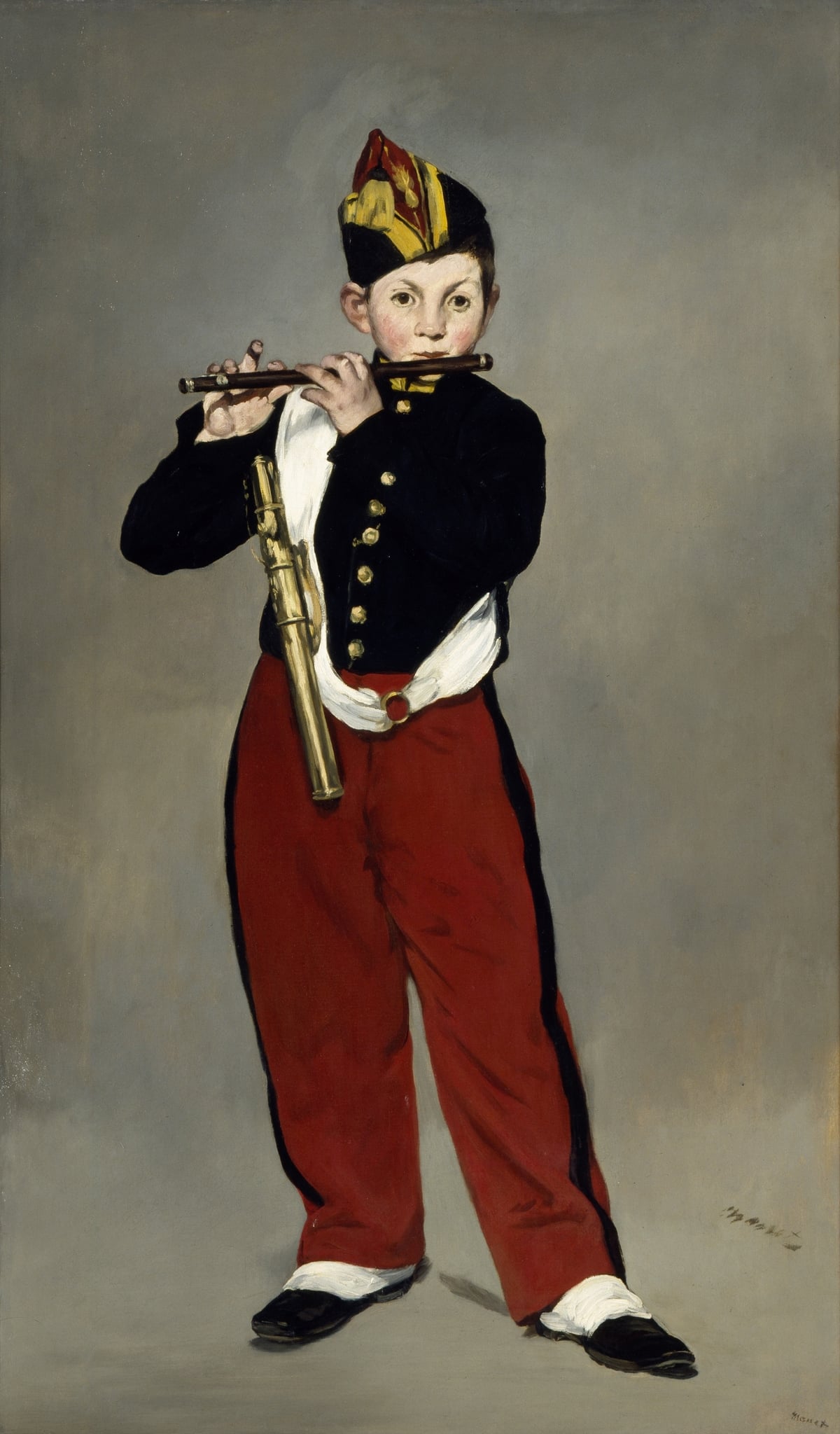
Fife (wooden flute) Symbolism
A fife is a small wooden flute strongly associated with military music; in art it often signals cadence, command, and the disciplining power of rhythm. By picturing the instrument rather than combat, artists can evoke order communicated through sound and the training that organizes bodies into a marching unit. As seen in modern painting, the fife can also monumentalize an otherwise anonymous figure, turning everyday military life into an emblem of collective discipline.
Fife (wooden flute) in The Fifer
In Édouard Manet’s The Fifer (1866), the instrument concentrates the meaning of military music and command. Manet isolates the young military player against a flat gray field; the crisp silhouette, blocks of unmodulated color (black tunic, red trousers, white gaiters), and glints on the brass case make sound and discipline palpable without narrative scaffolding. Drawing on Velázquez’s single-figure-in-air formula and japonisme’s flatness, Manet converts an anonymous military child into a figure of high pictorial dignity, so that the fife reads as the emblem of cadence and the army’s disciplining rhythm.