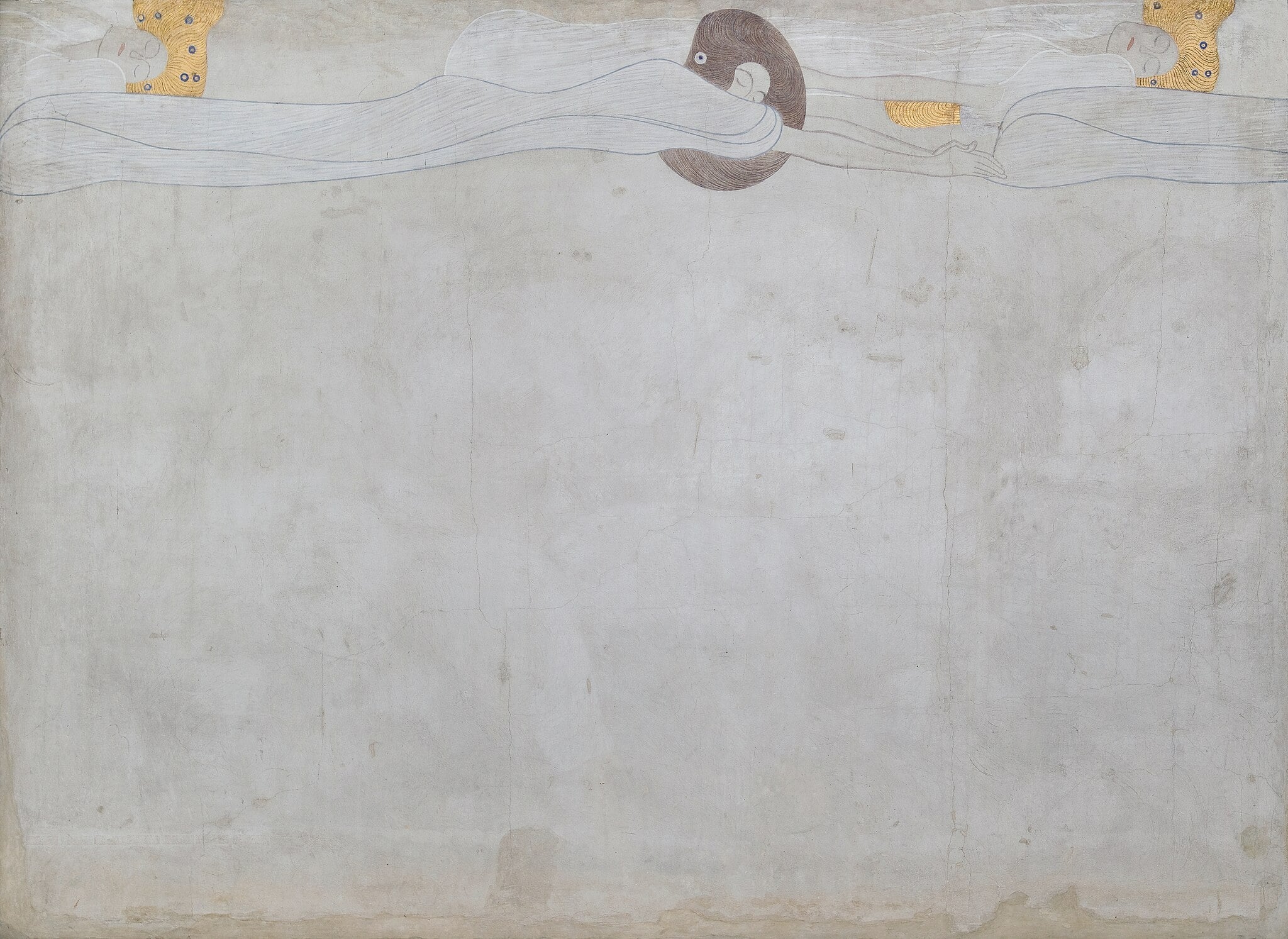
Floating genii (elongated figures) Symbolism
Floating genii—elongated, weightless human figures—belong to an allegorical tradition in which the genius or spirit personifies inspiration, desire, or fate. Shorn of gravity and conventional mass, they register movement of mind and aspiration rather than bodily action. Their stretched proportions and hovering trajectories place them in an ideal, immaterial realm where human longings are made visible.
Floating genii (elongated figures) in Beethoven Frieze
In Gustav Klimt’s Beethoven Frieze (1901–1902), weightless, ribbon-like genii traverse a vast, chalky field as the work visualizes Beethoven’s Ninth as a progression from suffering to joy. Their elongated bodies drift horizontally across the void, converting musical flow into a visual rhythm; islands of gold studded with eye-like jewels punctuate their passage like rests, while the fusion of line, flatness, and precious materials situates them beyond ordinary space. Within this narrative, the floating genii operate as spirit-bearers of impulse and aspiration, articulating the work’s movement toward transcendence through art.