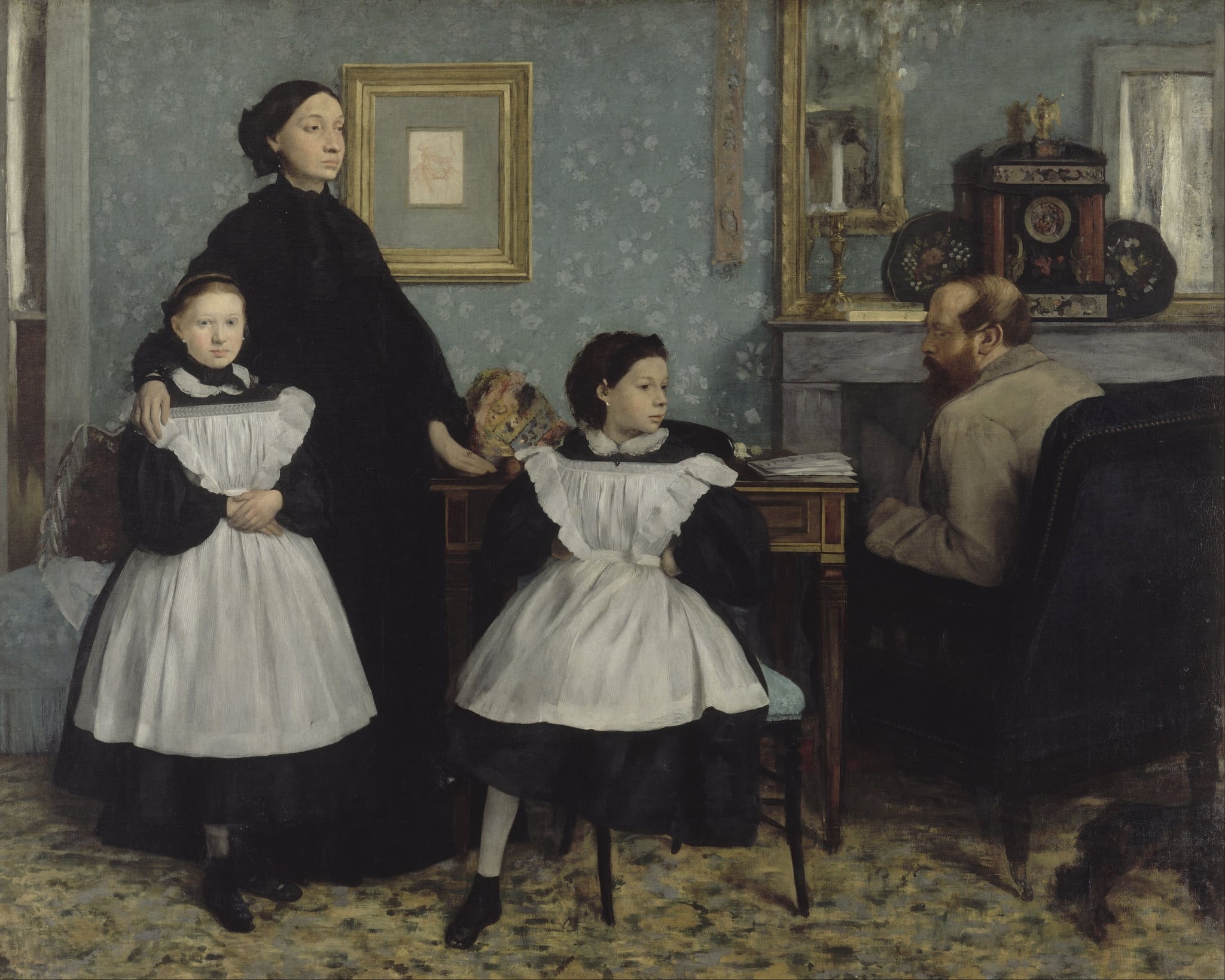
Gilt mantel clock Symbolism
In art, a gilt mantel clock signals the measured passage of time within the home and the discipline of daily routine. In nineteenth-century interiors, such ornate clocks also served as status markers: their gilded cases display refinement even as their dials regulate behavior. Artists use them to press themes of duty, inheritance, and social order into scenes of domestic life.
Gilt mantel clock in The Bellelli Family
In Edgar Degas’s The Bellelli Family (1858–1869), a gilt clock appears amid the rigid furniture lines and the ancestor’s red-chalk portrait, turning the interior into a stage where time, duty, and inheritance bear on the sitters. Set against the mother’s column of mourning black, the daughters’ mediating whiteness, and the father’s turned-away profile, the clock reads as a marker of domestic order and status, intensifying the painting’s poised standoff and uneasy equilibrium.