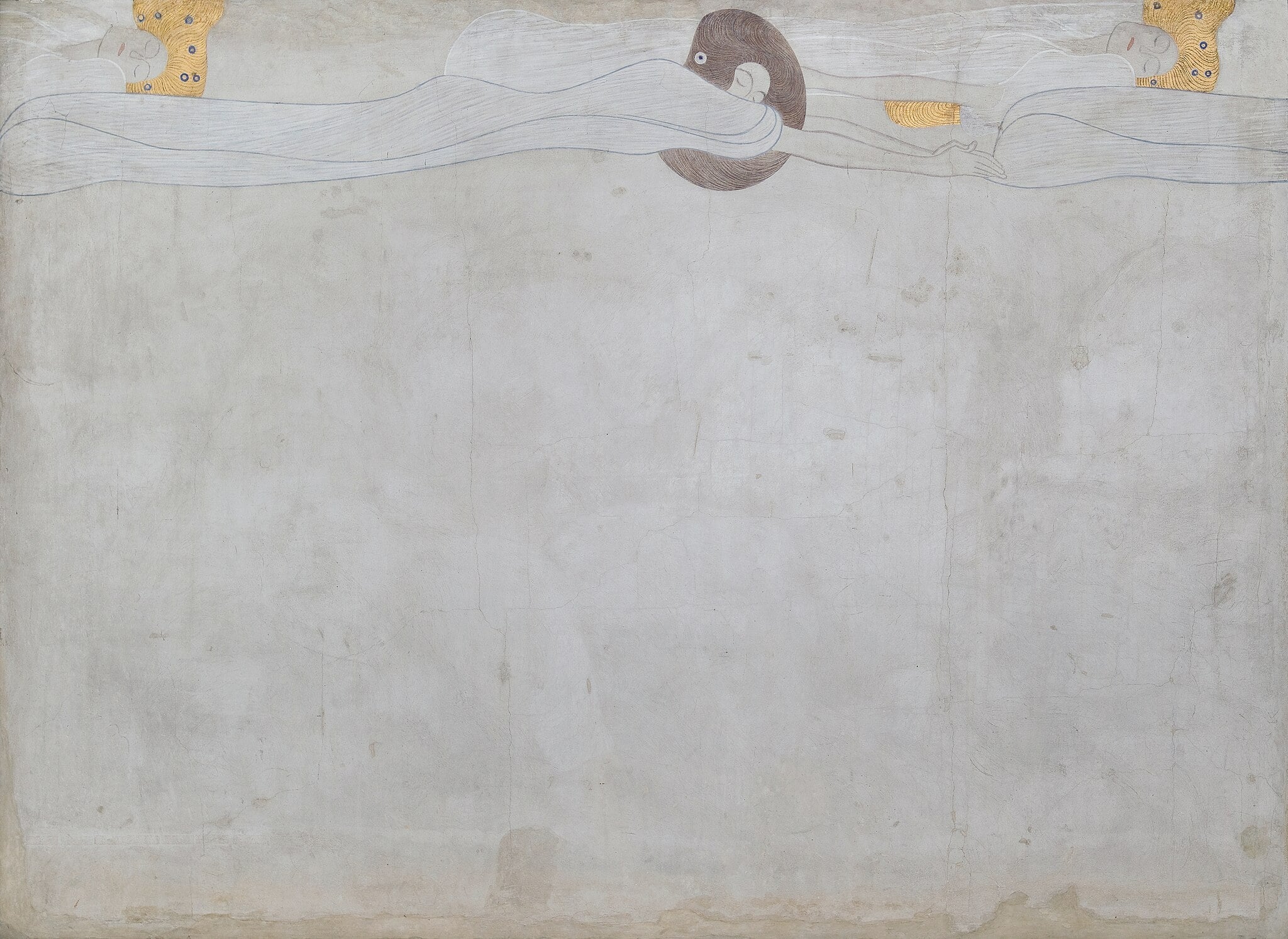
Gold islands with eye-like jewels Symbolism
Gold islands set with eye-like jewels transform ornament into a sign of vigilance and presence. Across art, eye motifs have carried associations of watchfulness and protection; embedded in gold, they radiate authority and an uncanny allure. Here the motif signals beauty that both adorns and attends, alert to the viewer.
Gold islands with eye-like jewels in Beethoven Frieze
In Gustav Klimt’s Beethoven Frieze (1901–1902), islands of gold studded with eye-like jewels punctuate a vast, chalky field as floating genii drift past. These gleaming clusters act as visual rests in the composition, suspending time like a long musical pause while translating Beethoven’s music into sight. Their watchful, jewel-like eyes lend the scene a protective, slightly uncanny charge, turning sheer ornament into active sentinels. By fusing flat line, gold, and precious surface, Klimt makes beauty feel alert and consequential, a radiant presence that helps carry the frieze’s quest from suffering toward joy.