Isolated silhouette Symbolism
An isolated silhouette is a lone, darkened figure set apart from its surroundings, used to visualize urban loneliness and psychic withdrawal. In modern art, especially images of the metropolis, separating a single figure from a crowd or built environment becomes a compact sign of estrangement. Artists often reinforce this distance through compressed space, tilted viewpoints, and dissonant color.
Isolated silhouette in Evening on Karl Johan
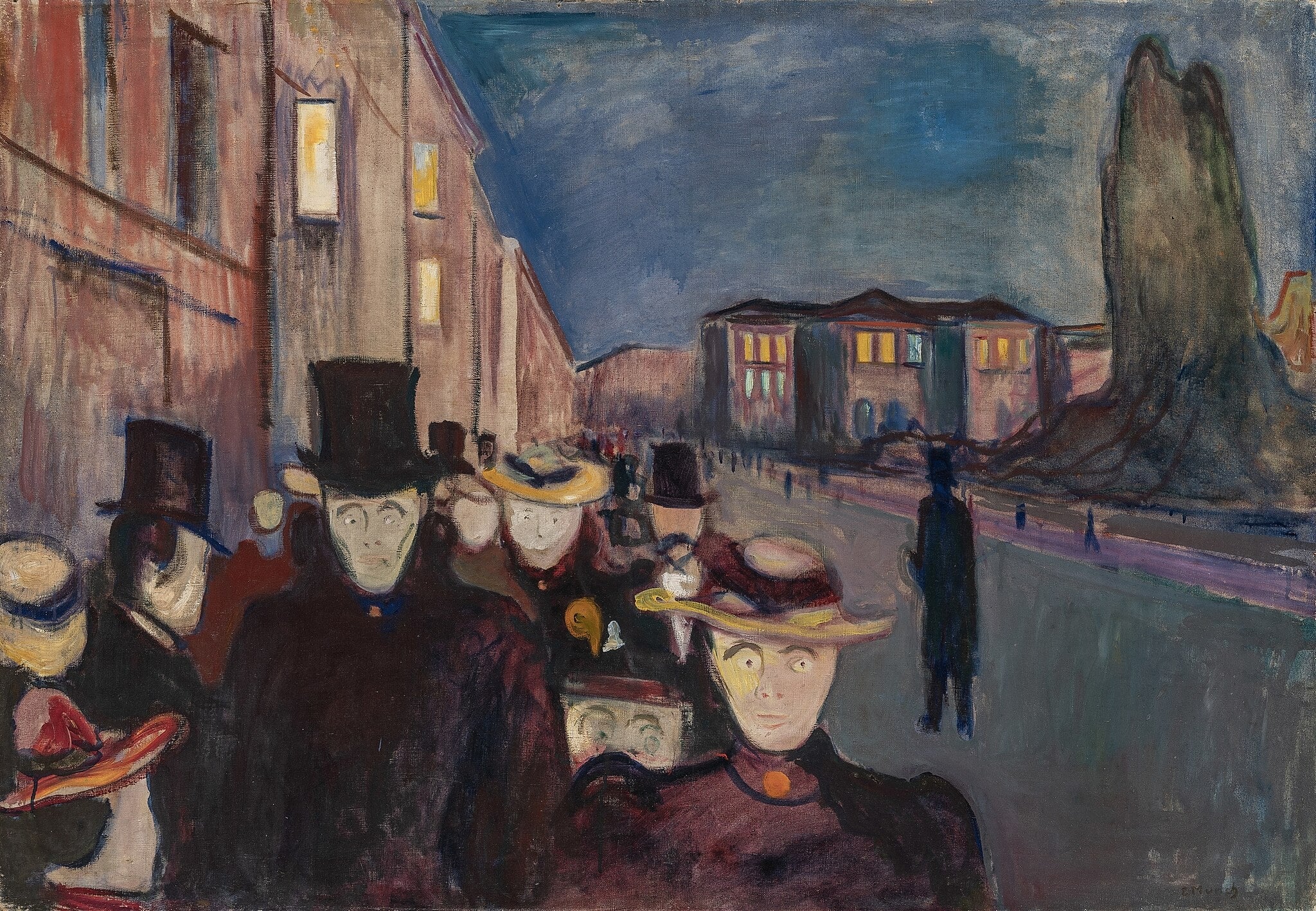
In Evening on Karl Johan (1892), Edvard Munch turns a fashionable Oslo boulevard into a study of alienation by anchoring the composition with an isolated silhouette that recedes at the right. Opposed to a mask-faced crowd in top hats surging toward the viewer, the lone figure is visually marooned by compressed space and the diagonal press of tilted buildings whose jaundiced windows glare under a cold blue sky.
Munch’s skewed color and nervous brushwork further sever the silhouette from the social flow, making the figure read as psychic withdrawal within a populous setting. Here the isolated silhouette functions as a concise emblem of urban dread, condensing crowd dynamics, architecture, and atmosphere into a single sign of estrangement.