Evening on Karl Johan
by Edvard Munch
Study Print Studio
Create a personal study print
Build a companion study sheet around the part of this painting that speaks to you most. Choose a detail, shape an interpretation, and walk away with something personal and display-worthy.
Fast Facts
- Year
- 1892
- Medium
- Oil on unprimed canvas
- Dimensions
- 84.5 × 121 cm
- Location
- KODE Art Museums and Composer Homes, Bergen (Rasmus Meyer Collection)
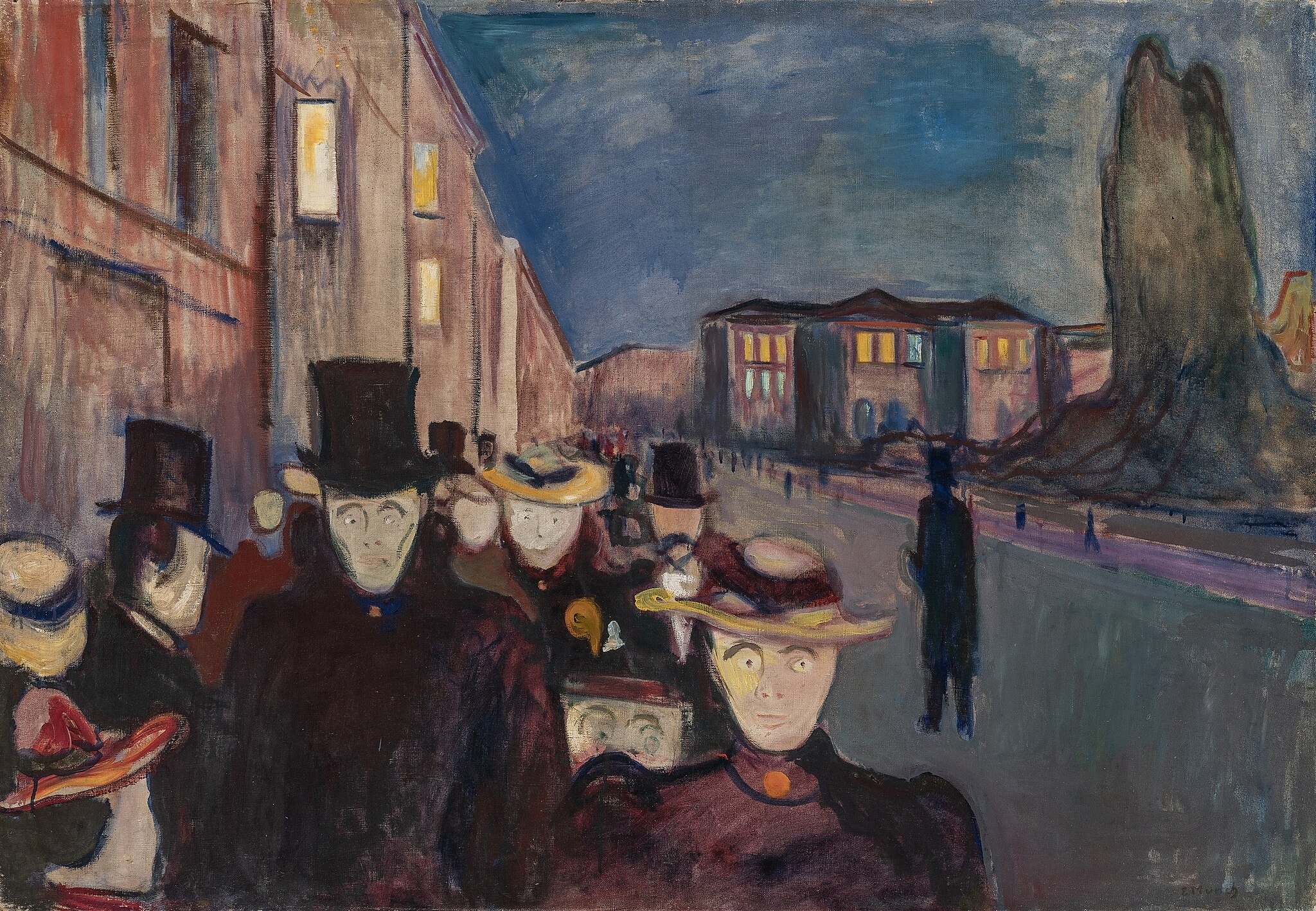
Click on any numbered symbol to learn more about its meaning
Meaning & Symbolism
Explore Deeper with AI
Ask questions about Evening on Karl Johan
Popular questions:
Powered by AI • Get instant insights about this artwork
Interpretations
Formal Analysis: Spatial Pathology
Source: Cambridge University Press; National Gallery of Art
Social Critique: Bourgeois Parade as Class Discipline
Source: Art Institute of Chicago; TheArtStory
Material Matters: Unprimed Canvas and Sickly Flesh
Source: Munch Museum (object entry); Cambridge University Press
Comparative Genealogy: From Boulevard to Scream
Source: Art Institute of Chicago; Wikipedia (Anxiety) synthesizing standard scholarship
Spectatorship & Urban Psychosis: The Gaze that Gazes Back
Source: National Gallery of Art; Cambridge University Press; Art Institute of Chicago
Related Themes
About Edvard Munch
More by Edvard Munch
The Sick Child
Edvard Munch (1885–86)
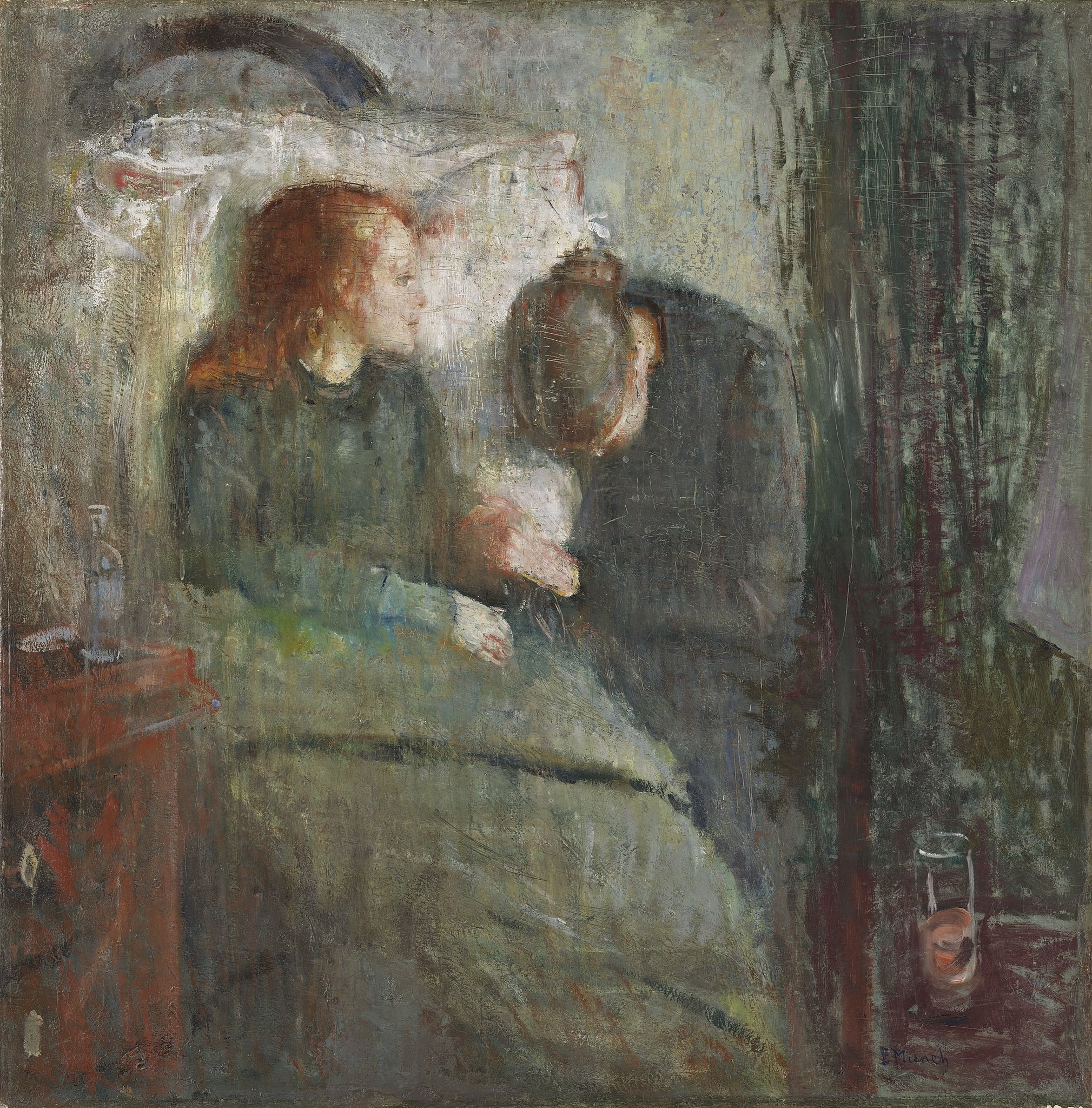
The Sick Child condenses a bedside vigil into a stark drama of <strong>love and helplessness</strong>. A pale, copper-haired girl glows against a chalky pillow while a bowed caregiver clasps her hand; the scraped, striated paint makes grief feel <strong>present and eroding</strong> at once <sup>[1]</sup><sup>[2]</sup>. Sparse props—a bottle, a glass, a thin red line—stand as mute emblems of medicine’s limits.
The Dance of Life
Edvard Munch (1899–1900)
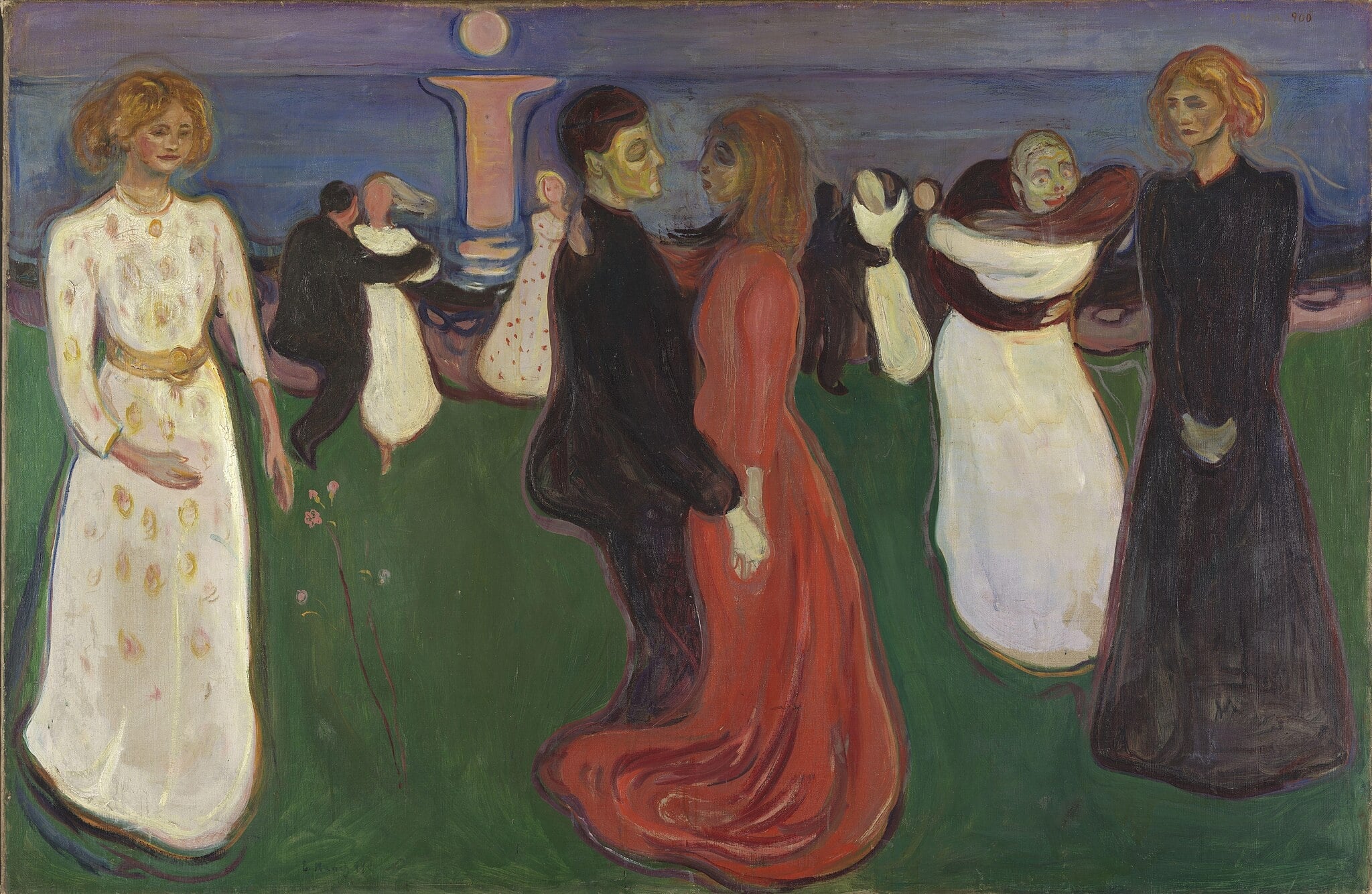
The Dance of Life compresses <strong>youth, passion, and renunciation</strong> into a single moonlit scene on the Åsgårdstrand shore. A pale girl in white, a red‑clad woman entwined with a dark-suited man, and a withdrawn figure in black form a symbolic arc that binds love to <strong>time and mortality</strong> <sup>[1]</sup><sup>[2]</sup>.
The Scream
Edvard Munch (1893)
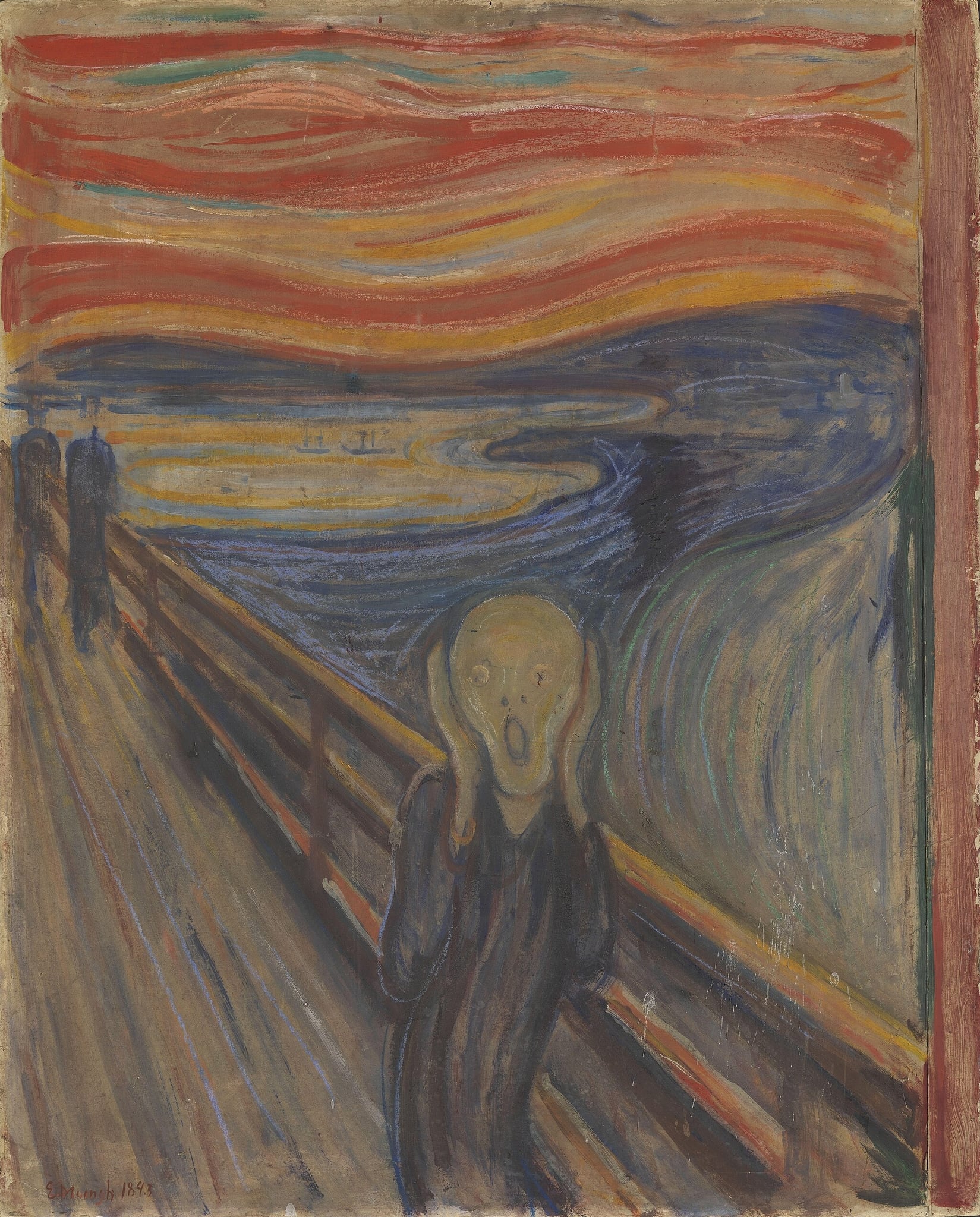
Edvard Munch’s The Scream condenses modern dread into an image where the self and the world collapse: an androgynous, skull-like figure grips its head as a <strong>blood-red sky</strong> and <strong>vibrating shoreline</strong> pulse around it. The rigid, receding bridge rails counter the turbulence, staging a clash between <strong>inner panic</strong> and <strong>outer reality</strong> <sup>[1]</sup><sup>[2]</sup>.
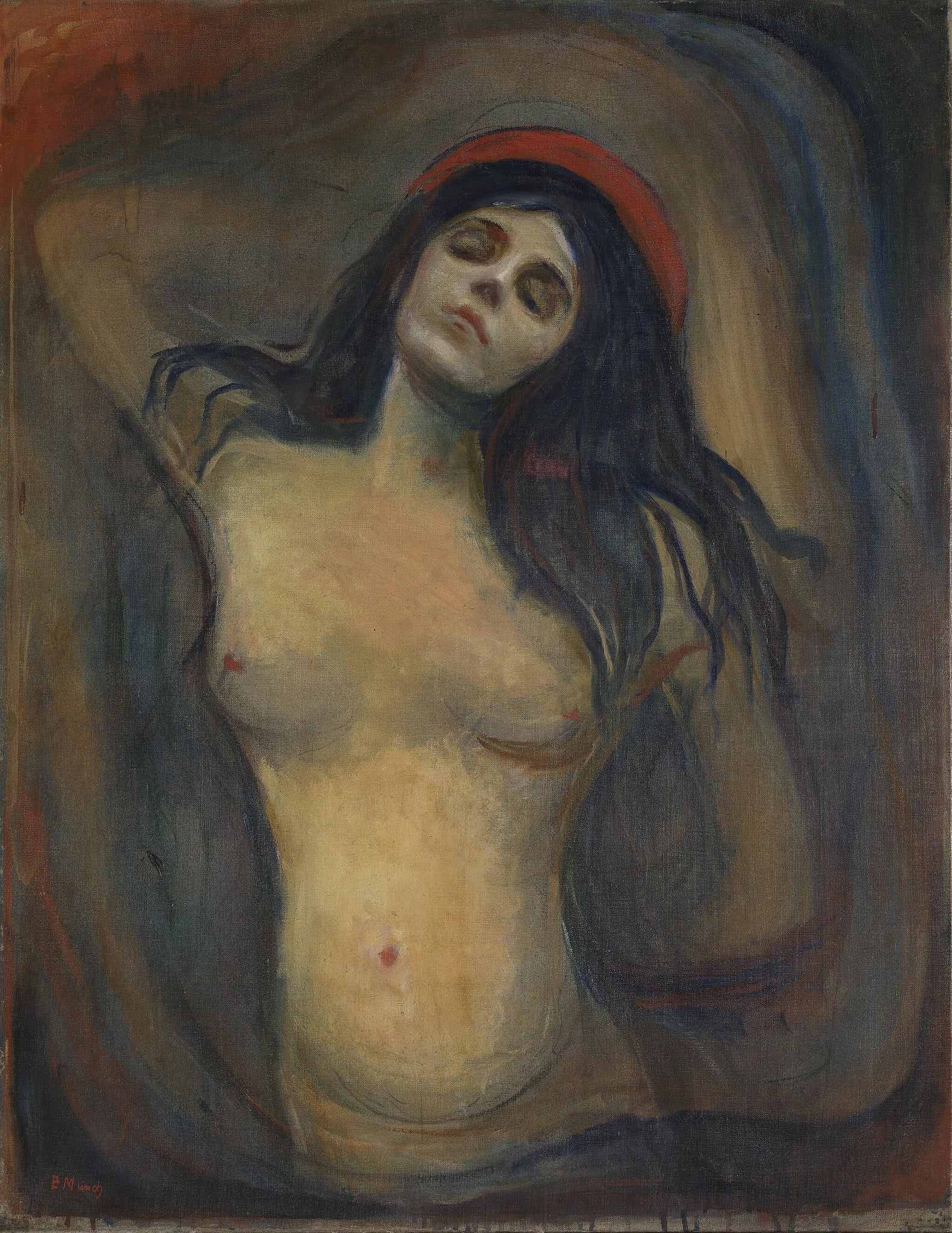
Madonna
Edvard Munch (1894)
Munch’s Madonna stages a collision of <strong>sanctity and sensuality</strong>: a half-length nude, eyes closed, tilts into a crimson nimbus while a dark, tidal field seems to carry her body. With smeared contours and a sparse palette, the figure hovers between emergence and dissolution, turning the Virgin’s icon into a modern emblem of <strong>eros, creation, and death</strong> <sup>[1]</sup><sup>[2]</sup><sup>[3]</sup>.