Kitchen‑garden rows Symbolism
Kitchen‑garden rows are the ordered plots and furrows of household agriculture. In art they signal cultivation, daily subsistence, and the measured rhythm of work across the seasons, often set against dwellings that anchor human labor to place.
Kitchen‑garden rows in The Hermitage at Pontoise
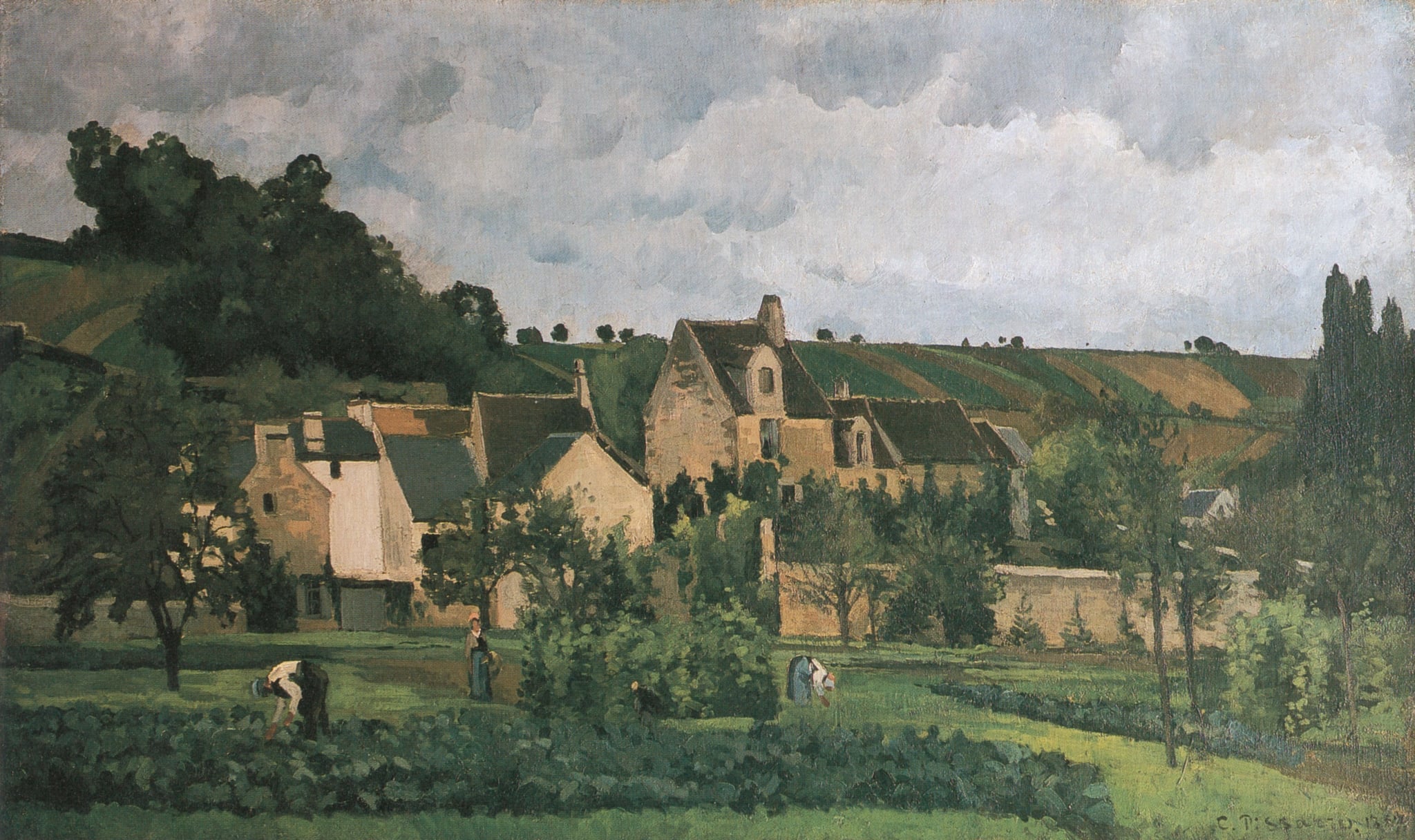
Camille Pissarro’s The Hermitage at Pontoise (ca. 1867) stages a hillside village interlaced with kitchen gardens, where neat rows lead the eye between stone houses and the fields that sustain them. Workers bent to their tasks emphasize subsistence and routine, while the low, cloud‑laden sky and the regular geometry of the beds register seasonal time and repeated effort. The painting sets the disciplined rows in quiet counterpoint to architectural permanence, making the gardens a visual measure of cyclical work within village life.