Mont Sainte‑Victoire summit Symbolism
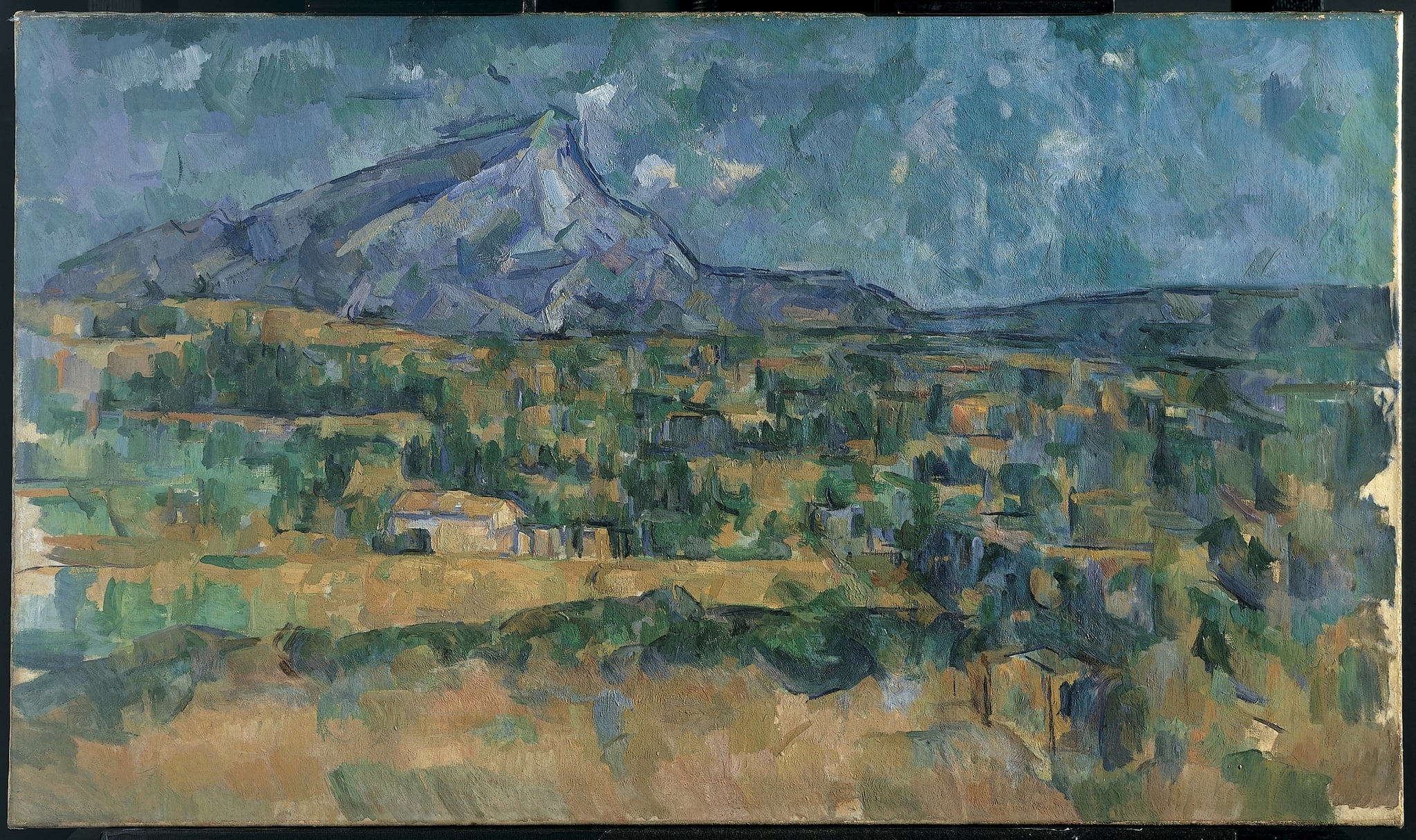
In Cézanne’s practice, the Mont Sainte‑Victoire summit functions as a regulating peak—less a picturesque backdrop than an architectonic anchor for the view. As a symbol it denotes enduring, governing form, a fixed axis that holds shifting light and color in place. This emphasis redirects landscape from transient effects toward constructed pictorial order.
Mont Sainte‑Victoire summit in Mont Sainte-Victoire
In Paul Cézanne’s Mont Sainte‑Victoire (1902–1906), the summit stabilizes the entire scene, turning the massif into a framework of planes rather than a momentary impression. Cool blues and violets articulate the mountain’s facets, while ochres and greens laminate the fields and blocky houses below, binding air, terrain, and architecture into a single structure. Here the summit operates as the painting’s governing form, organizing perception into durable order.