Pyramidal heap of jagged ice Symbolism
The pyramidal heap of jagged ice signifies nature’s architectonic force—geometric, impersonal, and crushing—where order and ruin converge. In Romantic painting, as exemplified by Caspar David Friedrich, the icy pyramid becomes a vehicle for the sublime, provoking awe while negating human ambition.
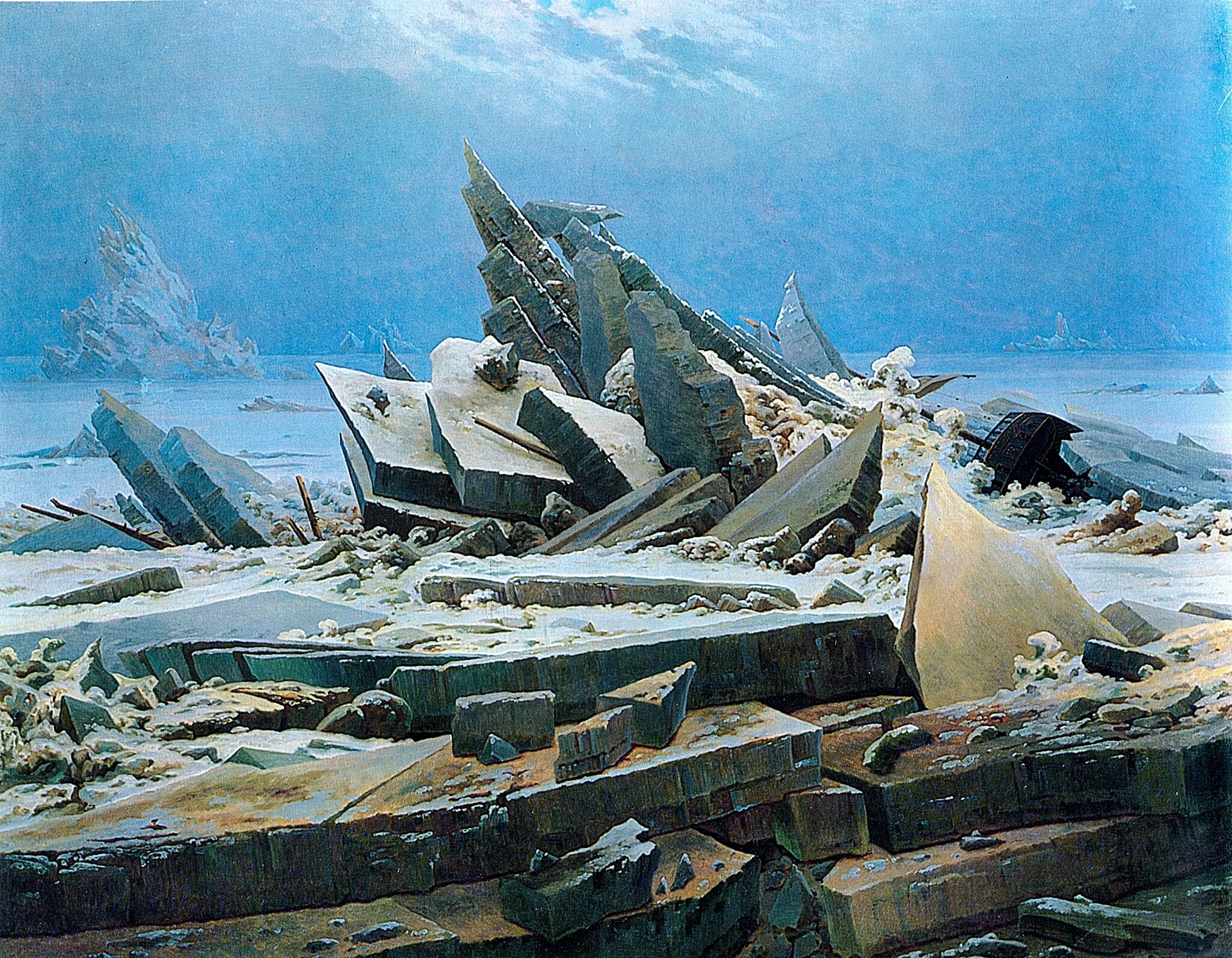
Pyramidal heap of jagged ice in The Sea of Ice
In Caspar David Friedrich’s The Sea of Ice (1823–1824), the symbol is literal and central: a towering, jagged mass of frozen slabs forms a stark architecture that crushes a ship and, with it, human pretension. The disciplined, almost geometric stacking of ice embodies order, while the wrecked vessel marks ruin, fusing them into a single, overwhelming structure. Friedrich uses this pyramid of ice to stage the Romantic sublime as both awe and negation, replacing any narrative of heroic conquest with the finality of ice and silence.