Railing and stage platform Symbolism
Railings and stage platforms mark a clear threshold between everyday space and staged display. In art, they frame access and distance, organizing performers and audiences while directing attention toward spectacle. Especially in modern urban scenes, these structures visualize crowd control and the rituals of public entertainment.
Railing and stage platform in Circus Sideshow (Parade de cirque)
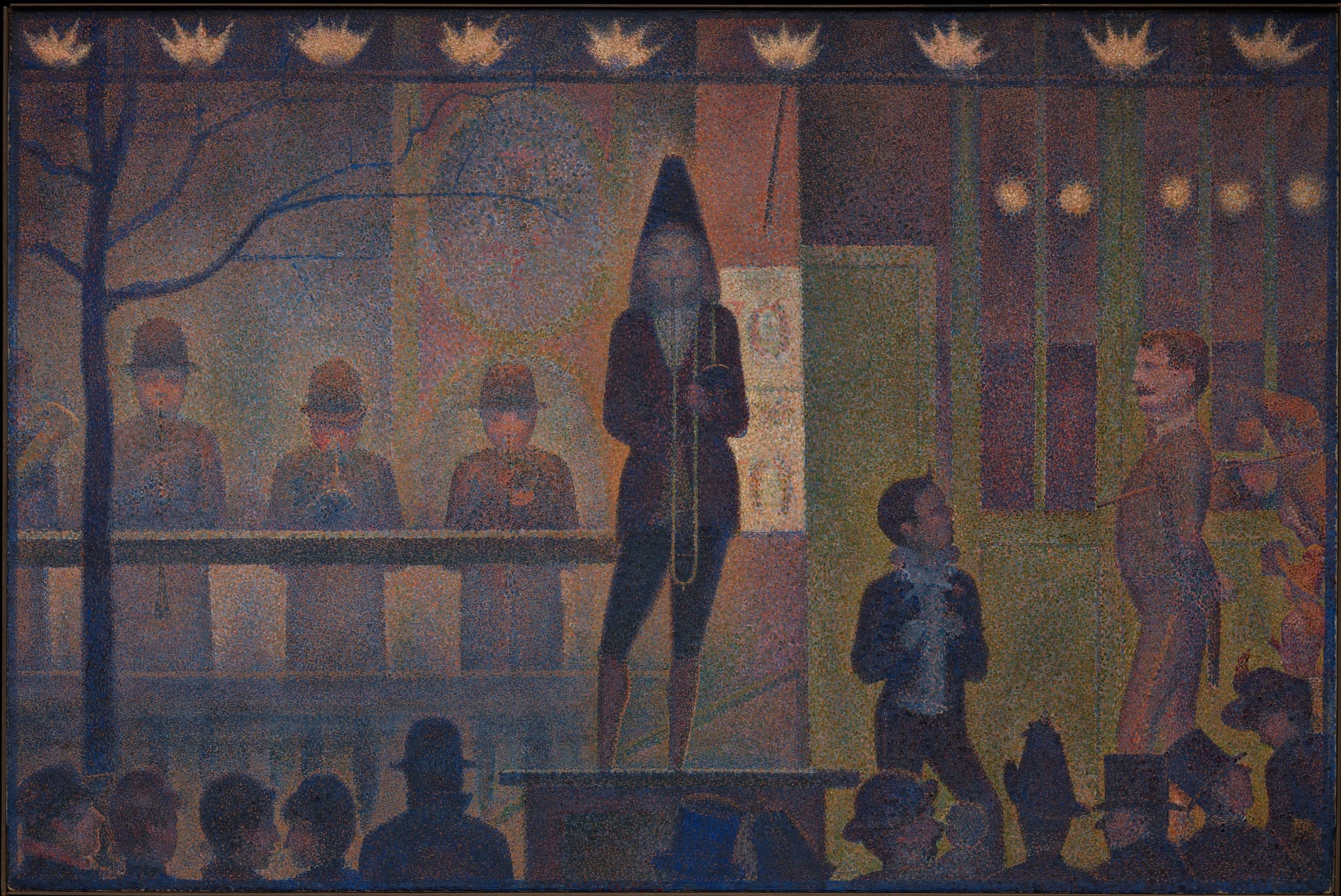
In Georges Seurat’s Circus Sideshow (Parade de cirque) (1887–88), the railing and raised platform structure the scene. A barker, musicians, and attendants align on the platform beneath nine crownlike gaslights, while the crowd remains a band of silhouettes held at the edge; the barrier enforces the divide between street and performance and concentrates the act of looking.
Seurat’s Neo‑Impressionist dots make the night hum yet stay eerily still, turning this publicity event into an icon of order and mood. Within this calm geometry, the railing and stage platform function as the work’s symbolic hinge—defining who performs, who watches, and where the spectacle begins.