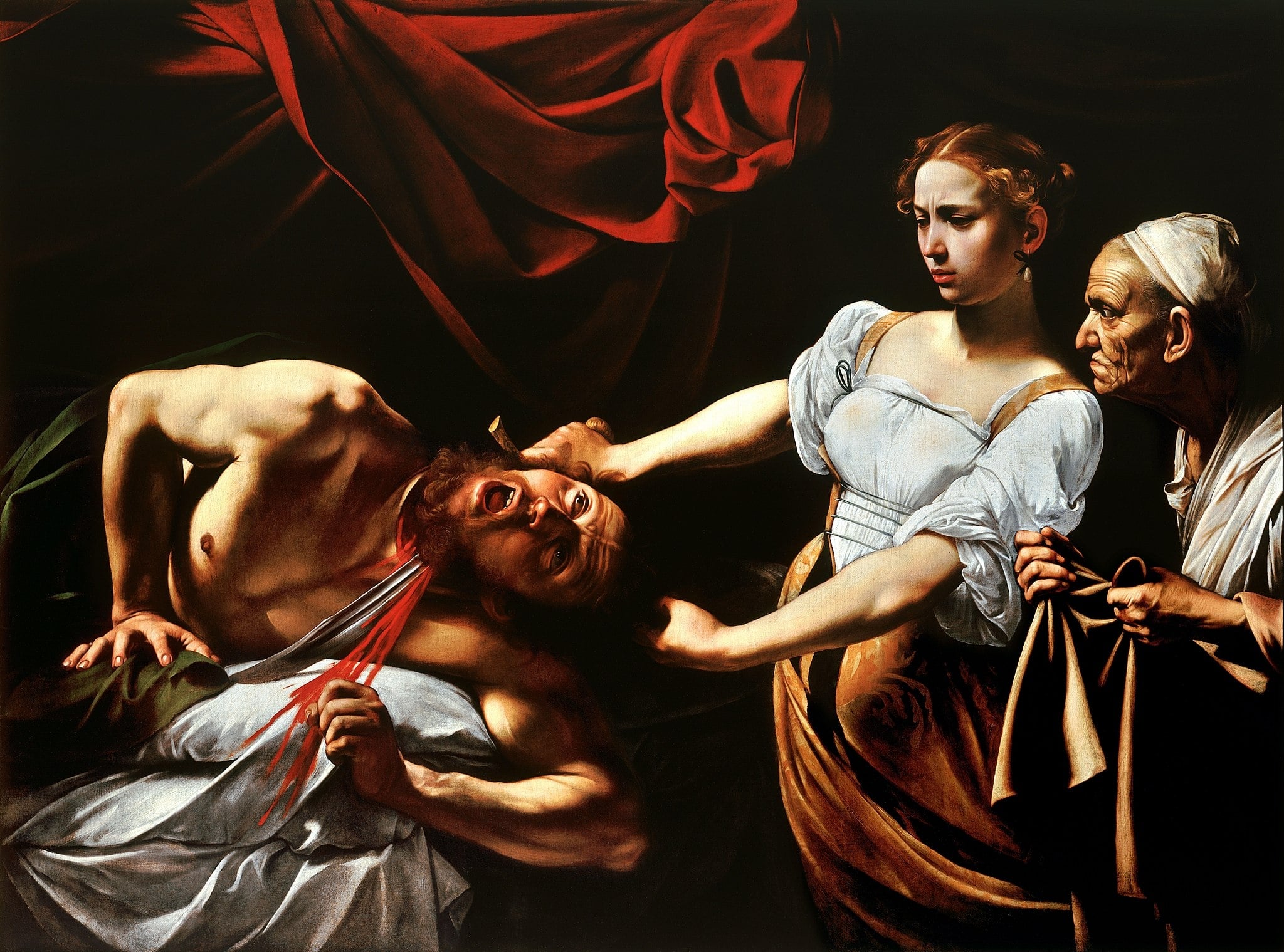
Red curtain (crimson drape) Symbolism

In painting, a red curtain (crimson drape) often acts like a stage curtain, marking a scene as deliberate spectacle and heightening the sense of revelation. Its saturated color has long been associated with passion and blood, giving episodes of violence or deliverance a ritual weight. By framing or parting around figures, it guides the viewer’s attention and judgment toward the action at center.

Red curtain (crimson drape) in Judith Beheading Holofernes

In Caravaggio’s Judith Beheading Holofernes (1599), the red curtain frames the execution as a staged revelation. Drawn across the upper field like a theatrical valance, it brackets Judith’s decisive act and Holofernes’ convulsed resistance, converting the beheading into a moral spectacle. Its crimson amplifies the ribboning blood, tying the scene’s violence to a sense of solemn, irreversible deliverance. Set against Caravaggio’s deep shadow and raking light, the drape concentrates the gaze on virtue overthrowing tyranny and underscores the gravity of judgment the viewer is asked to render.

Common Themes

Artworks Featuring This Symbol