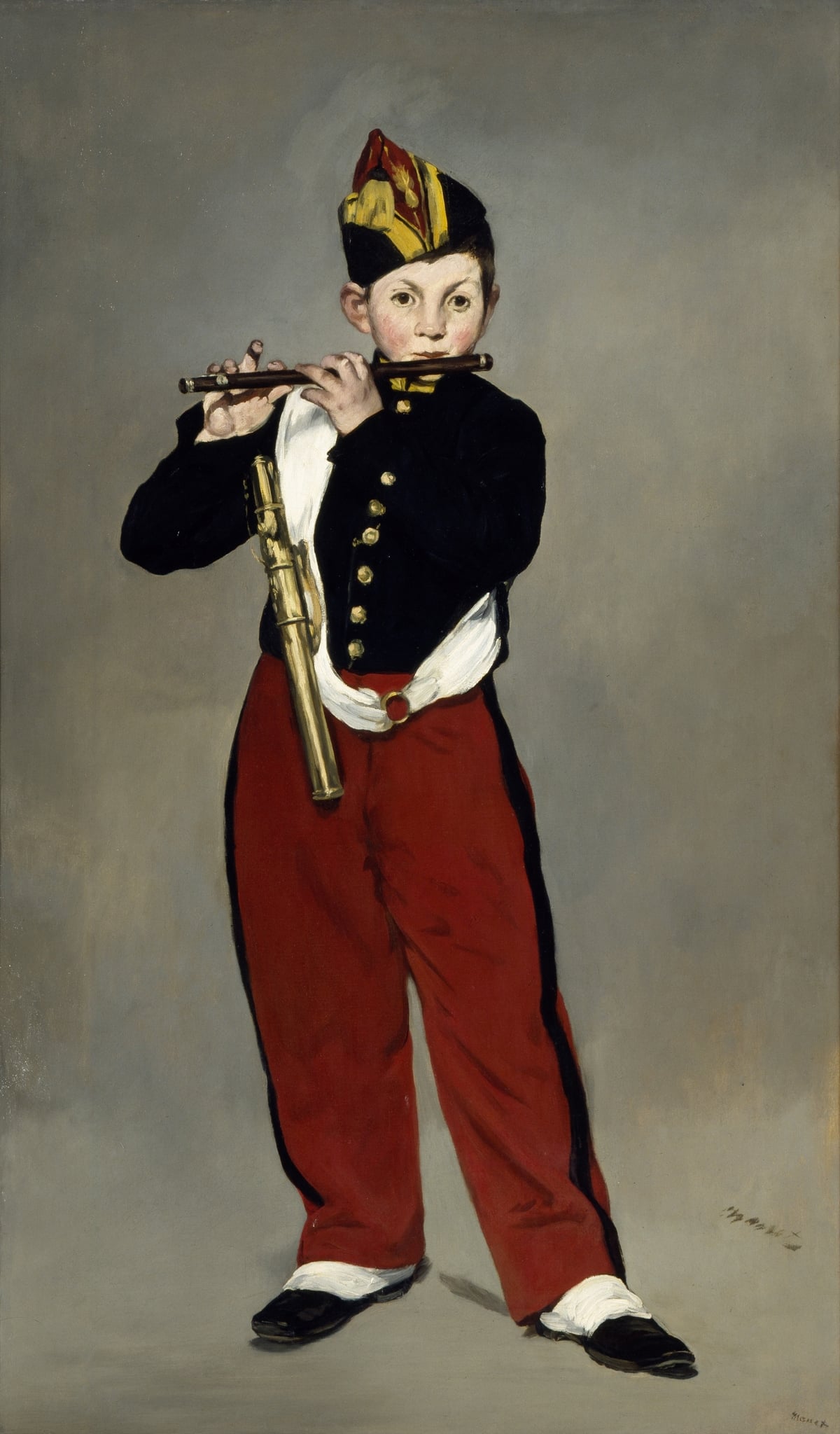
Shako cap (red-yellow-black) Symbolism
The shako—a tall, rigid military cap—signals regimental identity and ceremonial pageantry in nineteenth-century art. Its high crown and colored trim mark the wearer as part of an organized corps, projecting discipline and belonging. Artists often use the shako’s clear geometry to make military affiliation legible even without narrative context.
Shako cap (red-yellow-black) in The Fifer
In The Fifer (1866), Édouard Manet isolates a military child against a flat gray field so the red‑yellow‑black shako reads as an unmistakable badge of corps membership. The cap’s upright silhouette punctuates the figure’s crisp outline and aligns with Manet’s unmodulated blocks of color—the black tunic, red trousers, and white gaiters—turning uniform and headgear into emblems of sound, order, and pageantry. By stripping away setting, Manet lets the shako carry regimental identity on its own, underscoring the child’s formal place within the military corps.