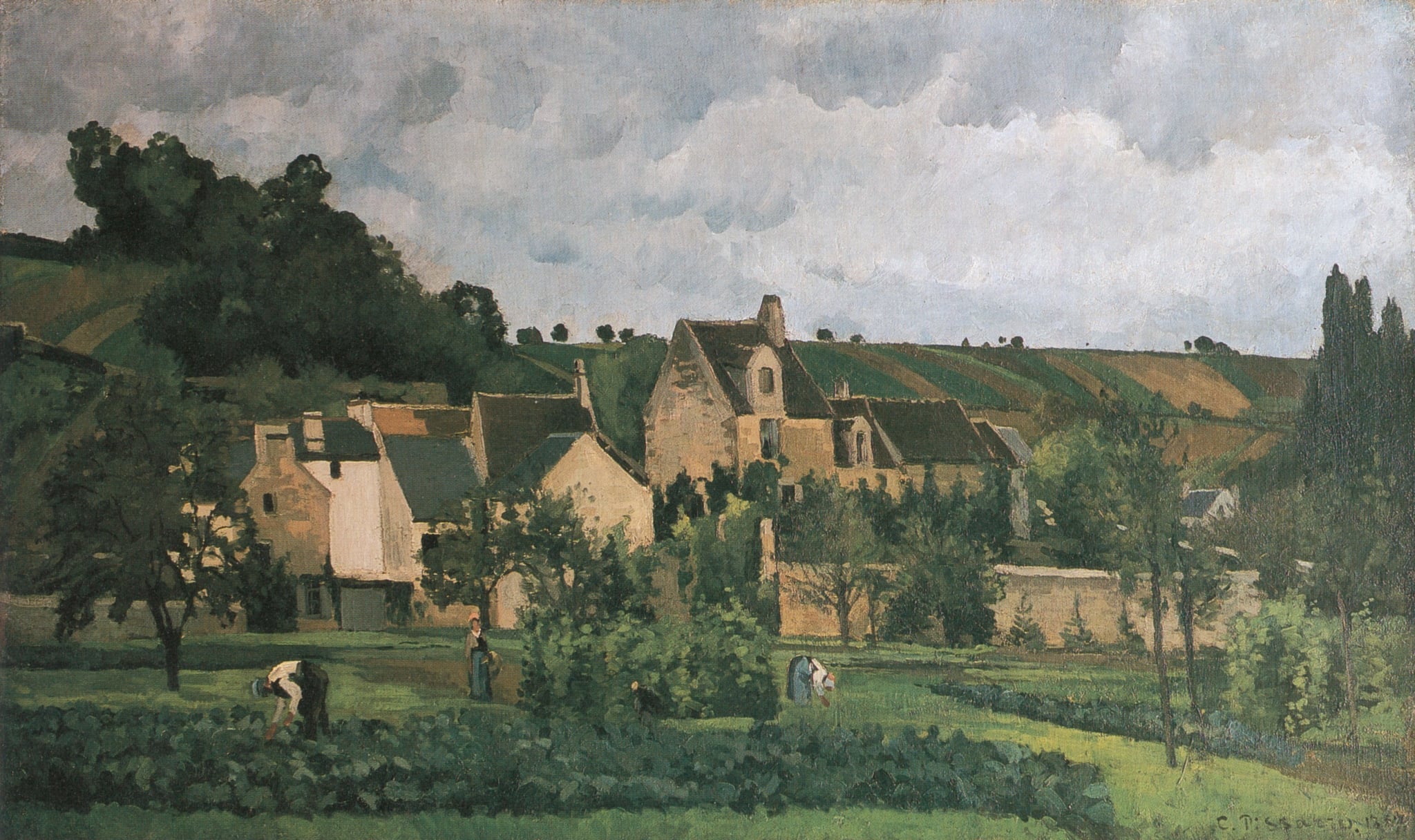
Walled boundary Symbolism
In art, walled boundaries signal ownership, protection, and the human shaping of space where architecture meets cultivated land. Across landscape traditions, such thresholds mark the point of contact between durable structures and seasonal labor, organizing how viewers read order within the scene.
Walled boundary in The Hermitage at Pontoise
In Camille Pissarro’s The Hermitage at Pontoise (ca. 1867), a hillside village interlaced with kitchen gardens and stone houses makes the meeting line between built structures and cultivation the picture’s central focus. The proximity of garden plots to masonry facades creates a legible network of boundaries: property is conveyed through edges and plot divisions, while workers bent to their tasks situate human labor within these defined spaces. Pissarro counterbalances architectural permanence against the seasonal flux of fields under a low, cloud-laden sky, so the boundary functions as protection and continuity precisely where changeable growth is managed.