How Much Is An Old Man in an Armchair Worth?
Last updated: September 1, 2026
Quick Facts
- Methodology
- comparable analysis
We estimate Rembrandt’s An Old Man in an Armchair at $2–5 million based on its current National Gallery attribution, “Probably by Rembrandt.” This bracket reflects strong scale and mid‑1650s qualities, discounted for the absence of unanimous autograph consensus while aligning with recent Old Master price behavior.
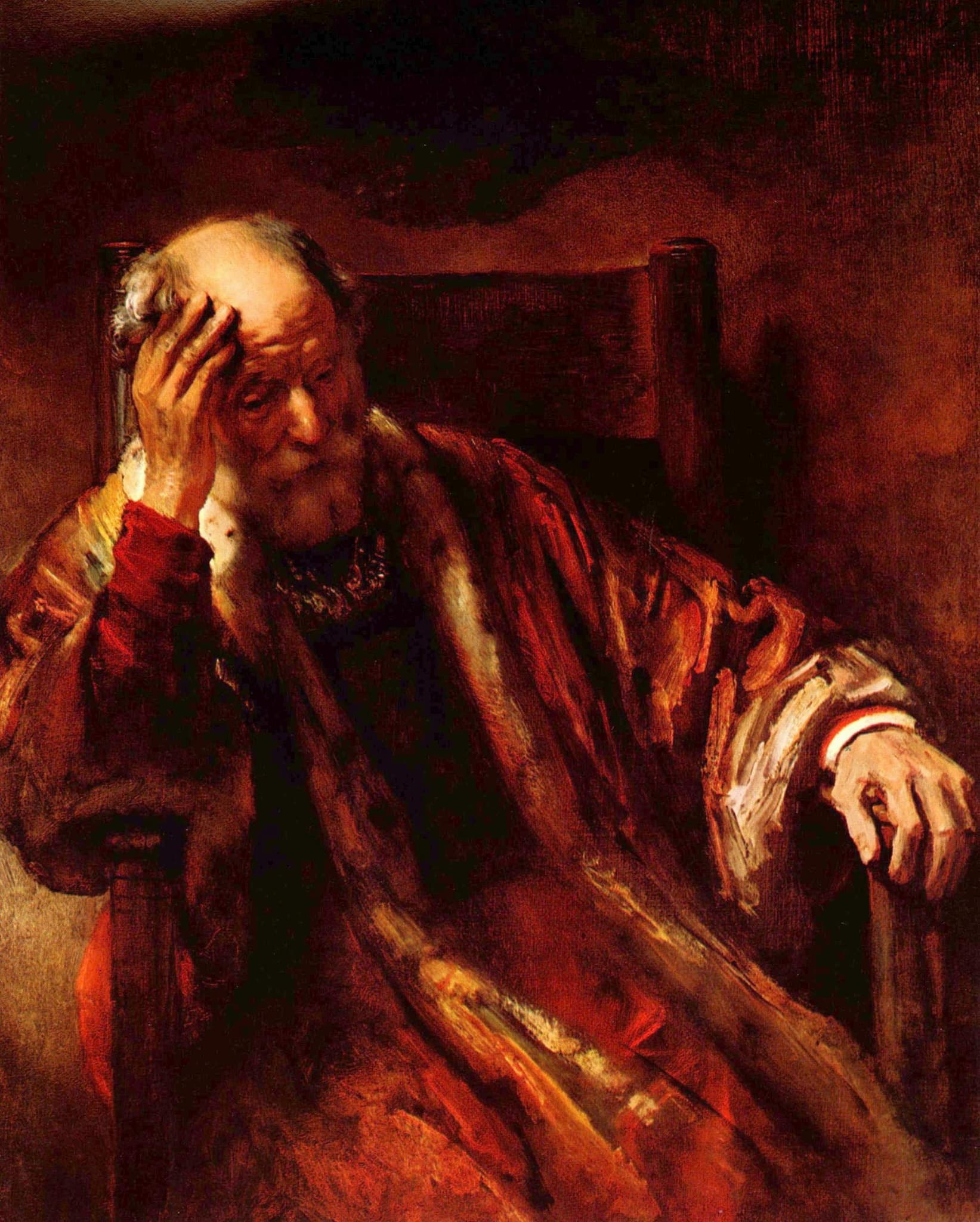
An Old Man in an Armchair
Rembrandt van Rijn, 1652 (signed; generally dated 1650s) • Oil on canvas
Read full analysis of An Old Man in an Armchair →Valuation Analysis
Work and status. An Old Man in an Armchair (oil on canvas, 111 × 88 cm; National Gallery, London, NG6274) is presently catalogued as “Probably by Rembrandt,” with an apparent 1652 signature and date at upper left. This institutional label—together with the painting’s mid‑1650s character-study subject and substantial scale—drives our core valuation framework [1].
Comparable market anchors. Using recent public benchmarks for autograph Rembrandt oils, we place a hypothetical fair-market range of $2–5 million under the work’s current “Probably by” status. Fully accepted, signed works of comparable quality have realized $13.7 million (The Adoration of the Kings, Sotheby’s London, Dec 2023) and $14.27 million (rediscovered pendant portraits, Christie’s London, July 2023), while the standing auction record for a mid‑period half‑length, Portrait of a Man with Arms Akimbo (1658), is $33.2 million (2009). These datapoints frame upper tiers for unambiguous autograph pictures and contextualize our discounted bracket for a work that stops short of unanimous attribution [2][3][4].
Attribution as the decisive price lever. The spread between “circle/workshop” and autograph is stark: The Adoration of the Kings itself sold as “Circle of Rembrandt” for about €860,000 in 2021 before reattribution and restoration vaulted it into the eight figures two years later [6]. Given its size, visibility, and mid‑1650s date, An Old Man in an Armchair merits the top of the “Probably by” cohort; hence a low‑ to mid‑seven‑figure bracket rather than a low‑six‑figure outcome.
Upside scenario for full consensus. Should new technical work and scholarship shift the label to “by Rembrandt,” we would rerate fair market value into roughly $15–35 million, aligning with post‑2000 outcomes for strong but not iconic portraits/tronies [2][3]. The state purchase of The Standard Bearer at €175 million illustrates the institutional ceiling for masterpieces—while not a direct comparable, it underscores enduring depth of demand at the apex of the artist’s market [5].
Practical context. The National Gallery is highly unlikely to deaccession, so this valuation is hypothetical and most applicable for agreed‑value insurance or state indemnity discussions. The range assumes condition consistent with a mid‑17th‑century canvas and the present “Probably by” label; material conservation concerns would narrow the band, while a firm autograph consensus would unlock the higher scenario noted above.
Key Valuation Factors
Attribution and Scholarship
High ImpactAttribution is the dominant price driver for Rembrandt. The National Gallery currently catalogs the work as “Probably by Rembrandt,” acknowledging a visible 1652 signature while reflecting scholarly debate around authorship. In today’s market, a work without unambiguous autograph consensus trades at a steep discount to fully accepted paintings. Recent cases show order-of-magnitude price shifts when robust technical dossiers and scholarly endorsements converge. Placing this large, museum-held canvas at $2–5 million recognizes its prominent status within the ‘Probably by’ cohort—benefiting from scale, date, and institutional visibility—while appropriately discounting for the absence of consensus authentication.
Period, Subject, and Scale
Medium ImpactThe painting’s mid‑1650s dating aligns with Rembrandt’s mature style, an important period for the development of his later, more “rough” manner. The subject—a compelling character study of an elderly man—fits a category that is deeply associated with the artist’s oeuvre, though it lacks the market premium tied to self‑portraits, named sitters, or grand narratives. Its substantial size (111 × 88 cm) and powerful presence exceed many small panels that have transacted recently, supporting a value at the upper end of works lacking full autograph consensus. Overall, the period quality and scale are strong positives, moderated by the more intimate, non‑commissioned subject type.
Provenance and Institutional Context
Medium ImpactProvenance traces through the Devonshire/Burlington collections and the painting entered the National Gallery via Acceptance in Lieu in 1957. A long, distinguished provenance and stewardship in a major national museum enhance credibility and visibility, both of which support value within any attribution tier. That said, institutional ownership also implies deaccession is unlikely and precludes the kind of ‘fresh‑to‑market’ dynamic that can amplify bidding. In practical terms, the museum context positions this valuation for indemnity or agreed‑value insurance scenarios rather than an imminent sale, while still serving as a reliable indication of what the work would realize if hypothetical disposal were possible.
Rarity and Supply Dynamics
High ImpactAutograph Rembrandt oils in private hands are exceptionally scarce; most reside in museums. That structural scarcity underpins strong pricing for well-documented works and keeps overall demand resilient. Within that landscape, pieces not universally accepted as autograph face a narrower buyer pool, but large, high‑quality, mid‑period paintings with prominent museum exposure still command significant sums. Recent auctions show that rediscovered or newly documented Rembrandts can achieve eight‑figure prices, whereas workshop/circle material clusters in the six‑ to low seven‑figure range. This supply‑demand asymmetry supports our $2–5 million bracket for a ‘Probably by’ picture of this caliber and explains the step‑change in value if full consensus emerges.
Sale History
An Old Man in an Armchair has never been sold at public auction.
Rembrandt van Rijn's Market
Rembrandt remains one of the most coveted Old Masters. Supply of indisputable autograph oils is extremely limited, concentrating demand among deep-pocketed private collectors and institutions. The standing auction record for a Rembrandt painting is $33.2 million for Portrait of a Man with Arms Akimbo (Christie’s London, 2009). At the apex, private/state transactions demonstrate far higher ceilings: the Louvre/Rijksmuseum jointly acquired the Soolmans/Coppit pendants for about €160 million (2016), and the Dutch State purchased The Standard Bearer for €175 million (2022). Recent public results for authenticated works, such as The Adoration of the Kings (~$13.7m, 2023) and the rediscovered pendant portraits (~$14.27m, 2023), show durable eight‑figure appetite when quality, condition, provenance, and scholarship align.
Comparable Sales
The Adoration of the Kings
Rembrandt van Rijn
Autograph Rembrandt oil sold publicly in 2023; strong reattribution momentum. While an early small devotional panel (c.1628) rather than a mid‑1650s half‑length, it is a current market anchor for autograph Rembrandt paintings.
$13.7M
2023, Sotheby's London (Old Masters Evening Sale)
~$14.4M adjusted
Portraits of Jan Willemsz. van der Pluym and Jaapgen Carels (pendant pair)
Rembrandt van Rijn
Signed and dated 1635 rediscovered pendant portraits; recent public benchmark for autograph Rembrandt portraiture. Not a tronie, but half‑length named sitters provide a useful portrait pricing reference.
$14.3M
2023, Christie's London (Old Masters Part I)
~$15.0M adjusted
Saint John on Patmos
Rembrandt van Rijn
Single-figure half‑length with recent scholarship supporting an autograph attribution; close in spirit to a mid‑period half‑length and useful for gauging value when technical dossier is pivotal.
$9.0M
2025, Sotheby's London (Old Masters Evening Sale)
Let the Little Children Come Unto Me
Rembrandt van Rijn
Early (c.1627) rediscovered Rembrandt oil sold in 2026; shows present appetite and pricing for autograph Rembrandt paintings propelled by restoration/scholarship, despite differing subject type.
$10.6M
2026, Sotheby's London (Old Master & 19th Century Evening)
~$10.3M adjusted
Portrait of a Man with Arms Akimbo
Rembrandt van Rijn
1658 half‑length male portrait—close in date and format; the standing auction record for a Rembrandt painting. Serves as an upper‑bound auction benchmark for strong mid‑period portraits.
$33.2M
2009, Christie's London
~$49.6M adjusted
The Standard Bearer
Rembrandt van Rijn
Grand single-figure, museum-caliber masterpiece acquired by the Dutch State in 2022; sets a state-backed ceiling for iconic Rembrandt single-figure works, framing the very top of the market.
$198.0M
2022, Private/state purchase (Dutch State for Rijksmuseum)
~$217.0M adjusted
Current Market Trends
The Old Masters market is selective but firm at the top, with scholarship, condition, and provenance determining outcomes. Supply scarcity remains the defining constraint; when high‑quality consignments appear, cross‑category bidders step in and price discovery is robust. Recent sales confirm a bifurcation: rediscoveries and fully documented works secure eight‑figure prices, while workshop or ambiguously attributed pictures transact at significant discounts. Broader sector totals fluctuate with the availability of trophies rather than demand collapse, and strong institutional purchases underscore depth for the very best Rembrandts. Prints and drawings also show renewed energy, but paintings with clear technical and scholarly support remain the primary value drivers.
Study print
Study this painting as a print
Pair the full artwork with a museum-style study sheet focused on one meaningful detail.
Sources
- National Gallery, London: Probably by Rembrandt, An Old Man in an Armchair (NG6274)
- Art History News: Sotheby’s Old Masters results (Dec 6, 2023)
- Christie’s Press Release: Classic Week London – Evening Sales Total (July 6, 2023)
- Artprice Trends 2009: Rembrandt auction record (Portrait of a Man with Arms Akimbo)
- Dutch Parliamentary Record: Acquisition of Rembrandt’s The Standard Bearer (2022)
- Sotheby’s: 2021 sale listing (Circle of Rembrandt) prior to reattribution of The Adoration of the Kings