How Much Is Portraits of Susanna van Collen and her Daughter Anna Worth?
Last updated: September 1, 2026
Quick Facts
- Methodology
- comparable analysis
Hypothetical fair-market value for Rembrandt’s Portraits of Susanna van Collen and her Daughter Anna is $15–25 million. This range reflects its importance as an early Amsterdam-period pendant portrait tempered by current “Rembrandt and workshop” attributions and recent benchmarks for early Rembrandt oils.
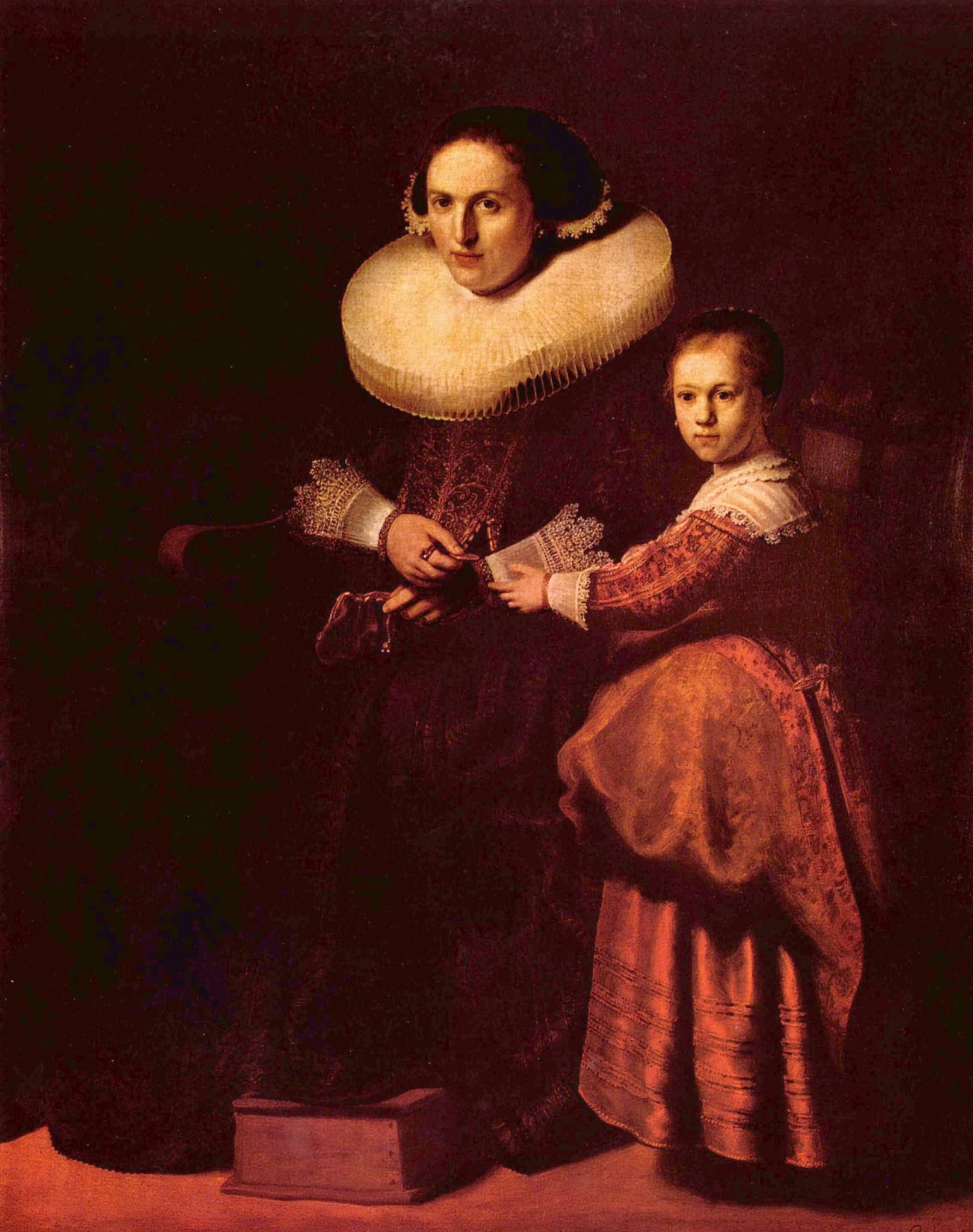
Portraits of Susanna van Collen and her Daughter Anna
Rembrandt van Rijn, c. 1632–33 • Oil on canvas
Read full analysis of Portraits of Susanna van Collen and her Daughter Anna →Valuation Analysis
Estimate: $15–25 million (hypothetical). This valuation synthesizes recent market evidence for early Rembrandt oils with nuanced authorship, the painting’s art-historical standing as part of a rare pendant family pair, and current Old Masters demand. Because the Wallace Collection is a UK national collection with inalienable status, the figure represents a theoretical fair‑market level rather than an actionable price [6].
Comparables and calibration. At auction, a prime mid‑career portrait holds Rembrandt’s painting record ($33.2m; 2009) and anchors the upper public-sale range for single-figure autograph portraits [1]. Early-1630s comparables include the 2020 Self‑Portrait at $20.0m [2] and the 2023 rediscovered early oil, The Adoration of the Kings, at about $13.8m with fees [3]. Museum‑caliber trophies can command much higher private/state prices (e.g., the Soolmans/Coppit full‑length pendants at €160m; The Standard Bearer at €175m), which set a ceiling for the very top tier rather than a direct benchmark for this work [4][5].
Authorship and significance. The Wallace picture is widely discussed as an important early Amsterdam commission (c. 1632–33) and forms a pendant with Jan Pellicorne and his Son Caspar—an intact family pair that is art‑historically desirable. However, several references characterize the mother-and-child as “Rembrandt and workshop” or note studio participation, a nuance that materially affects price versus a fully autograph designation [7]. Given this prevailing scholarship, the estimate is set below the $20–35m+ zone we would ascribe to a securely autograph, comparably compelling early portrait, and above the level typical for workshop‑heavy or fragmentary works.
Market context (2025–26). The Old Masters segment has strengthened, with high sell‑through and renewed competition for fresh, well‑documented works. Recent pricing for early or attribution‑complex Rembrandts (e.g., Let the Little Children Come Unto Me at ~£8m/$10.6m in 2026) shows depth below the trophy level and supports a mid‑teens to mid‑twenties estimate for a strong early portrait with pendant interest and blue‑chip provenance [8]. The 2020 Self‑Portrait at $20.0m helps fix the midpoint of our band for an early, market-friendly work with clear authorship; workshop participation, if confirmed, justifies a discount into the teens [2].
Positioning and pairing effect. Our figure is for the single painting. If the pendant were marketed alongside it as a reunited pair, we would expect a pairing premium (often 15–25%) over the sum of the parts; conversely, uncertainty around authorship or material condition issues would push value lower. Finally, the Wallace Collection’s statutory inalienability means no sale is contemplated; this is a benchmark for insurance, risk assessment, or scholarly reference, grounded in current comparables and market behavior [6][7].
Key Valuation Factors
Art Historical Significance
High ImpactPainted c.1632–33 during Rembrandt’s pivotal early Amsterdam years, this mother-and-child portrait forms a rare intact pendant with the sitter’s husband and son. Family pendants from this phase demonstrate Rembrandt’s rapid ascent in the city’s portrait market and retain enduring scholarly and collector appeal. The composition, tenderness of the filial motif, and the work’s continuous presence in a major historic English collection elevate its standing within the oeuvre. While not a life-size full-length like the Soolmans/Coppit pair, it remains a meaningful commission that documents patronage, fashion, and Rembrandt’s evolving portrait idiom at a moment of creative consolidation.
Authorship and Attribution
High ImpactCurrent references describe the painting as "Rembrandt and workshop" or note studio participation. This is the single largest value driver. A secure, fully autograph status would propel the work toward or above the $20–35m bracket for early portraits; by contrast, a mixed authorship reading typically implies a 30–50% discount relative to autograph peers. Our estimate assumes competent workshop involvement in passages with key areas by Rembrandt’s hand, consistent with early‑1630s studio practice. Any future consensus upgrade (or, conversely, a downgrade) following technical imaging and scholarly review would move the valuation band materially.
Condition and Technical State
Medium ImpactAs with most 17th‑century portraits, valuation is highly sensitive to original paint survival, surface coherence, and conservation history. Our range assumes sound museum-level condition appropriate to a well‑kept Wallace Collection painting, with no disfiguring overpaint or structural instability. A fresh technical dossier (IRR/X‑ray, pigment analysis) that confirms high autograph passages and stable structure would underpin the upper half of the range. Conversely, significant abrasion, overcleaning, or broad retouching in critical areas (faces, hands) could depress value by 20–40%, placing the work in the low‑to‑mid teens even with pendant interest.
Pendant Relationship and Marketability
Medium ImpactAs one half of a documented pendant pair with Jan Pellicorne and his Son Caspar, this picture benefits from the desirability of intact family commissions. If reoffered with its companion, a pairing premium (often 15–25% above the sum of parts) is plausible, driven by completeness, narrative appeal, and institutional demand for reunited ensembles. Conversely, selling a single pendant can face a modest discount versus optimal pairing. The pendant context is thus an amplifying factor when marketed correctly, particularly to museums or private buyers focused on historically coherent groupings.
Provenance and Institutional Status
Medium ImpactLong-held in the Hertford/Wallace collections and bequeathed to the nation in 1897, the painting has blue‑chip provenance and a prominent, well-documented museum context—factors that bolster buyer confidence and underwriting assumptions. While the Wallace Collection is inalienable (the work is not for sale), this status does not diminish hypothetical fair‑market value; rather, it underscores rarity and the improbability of a close substitute. Any past Government Indemnity Scheme valuation would further support pricing confidence, even if confidential, by indicating a vetted institutional risk assessment.
Sale History
Portraits of Susanna van Collen and her Daughter Anna has never been sold at public auction.
Rembrandt van Rijn's Market
Rembrandt’s market is among the deepest in Old Masters, with an extremely constrained supply of autograph paintings—most in museums. The standing auction record for a painting is $33.2m (Portrait of a Man, 1658; 2009) [1], while an early Self‑Portrait fetched $20.0m in 2020 [2]. Rediscovered early oils can bring $10–15m+ (Adoration of the Kings, 2023) [3]. Private and state acquisitions demonstrate vastly higher trophy pricing: the 1634 full‑length pendants of Marten Soolmans and Oopjen Coppit sold privately for €160m, and The Standard Bearer was acquired for €175m [4][5]. Recent years also saw record results for Rembrandt drawings and prints, reinforcing broad, cross‑media demand and the artist’s blue‑chip status.
Comparable Sales
Self-Portrait (1632)
Rembrandt van Rijn
Autograph early-1630s portrait on panel; very close in date, scale, and genre to the Wallace mother-and-child pendant; strong benchmark for period portraits.
$20.0M
2020, Sotheby's London
~$24.4M adjusted
The Adoration of the Kings (c. 1628)
Rembrandt van Rijn
Recent, high-profile sale of an early Rembrandt oil; confirms contemporary appetite and pricing for early works (Leiden period), useful for bracketing value even though subject is biblical, not portrait.
$13.8M
2023, Sotheby's London
~$14.4M adjusted
Portrait of a Man, half-length, with his arms akimbo (1658)
Rembrandt van Rijn
Auction record for a Rembrandt painting; anchors the public-sale upper range for single, autograph portraits (though later in date than the Wallace pair).
$33.2M
2009, Christie's London
~$48.8M adjusted
Abraham and the Angels (1646)
Rembrandt van Rijn
Accepted autograph oil sold privately at c.$20m; demonstrates private‑treaty pricing for blue‑chip Rembrandt paintings around the mid‑market for top Old Masters.
$20.0M
2021, Private sale (Sotheby's)
~$23.4M adjusted
Portraits of Marten Soolmans and Oopjen Coppit (pendant full-lengths) (1634)
Rembrandt van Rijn
Direct pendant-portrait analogue from the same decade; museum-level masterpieces that set an extreme upper bound for Rembrandt portrait pairs.
$176.0M
2016, Private sale (Rijksmuseum & Louvre via Christie's)
~$232.3M adjusted
Let the Little Children Come Unto Me (early Rembrandt; reattributed)
Rembrandt van Rijn
Early Leiden-period painting whose authorship was strengthened by restoration; useful proxy for pricing when attribution is complex—relevant if the Wallace work remains 'Rembrandt and workshop.'
$10.6M
2026, Sotheby's London
~$10.4M adjusted
Current Market Trends
Old Masters rebounded in 2025–26 with high sell‑throughs and stronger evening‑sale totals. For Rembrandt specifically, scarcity of strong oils persists, but demand remains robust for early, well‑documented works and for pieces clarified by recent technical research. Auction momentum shows depth in the $10–20m band for compelling early pictures, while museum‑level masterpieces can command exceptional private/state prices. Concurrent records in Rembrandt drawings and prints signal a widening collector base and healthy liquidity across media, supporting confident pricing for paintings that combine quality, provenance, and clear authorship.
Study print
Study this painting as a print
Pair the full artwork with a museum-style study sheet focused on one meaningful detail.
Sources
- Christie’s – Rembrandt artist page and 2009 record
- Sotheby’s – Self-Portrait (1632), 28 July 2020 result
- Artnet – Old Masters London Week 2023 results (Adoration of the Kings)
- Louvre press – Marten Soolmans and Oopjen Coppit acquisition (€160m)
- Dutch Parliament – The Standard Bearer acquisition (€175m)
- UK Parliament – Inalienable national collections (incl. Wallace)
- The Wallace Collection – Paintings (collection overview)
- Artnet News – Rembrandt ‘Let the Little Children Come Unto Me’ (2026 sale and reattribution context)