How Much Is Titus, the Artist's Son Worth?
Last updated: September 1, 2026
Quick Facts
- Methodology
- comparable analysis
Hypothetical replacement value for Rembrandt’s Titus, the Artist’s Son (c.1657, Wallace Collection) is $60–100 million. The range is grounded in top-tier Rembrandt benchmarks—most notably recent national-treasure acquisitions—scaled for type, subject appeal, and rarity, and positioned well above public auction records for the artist.
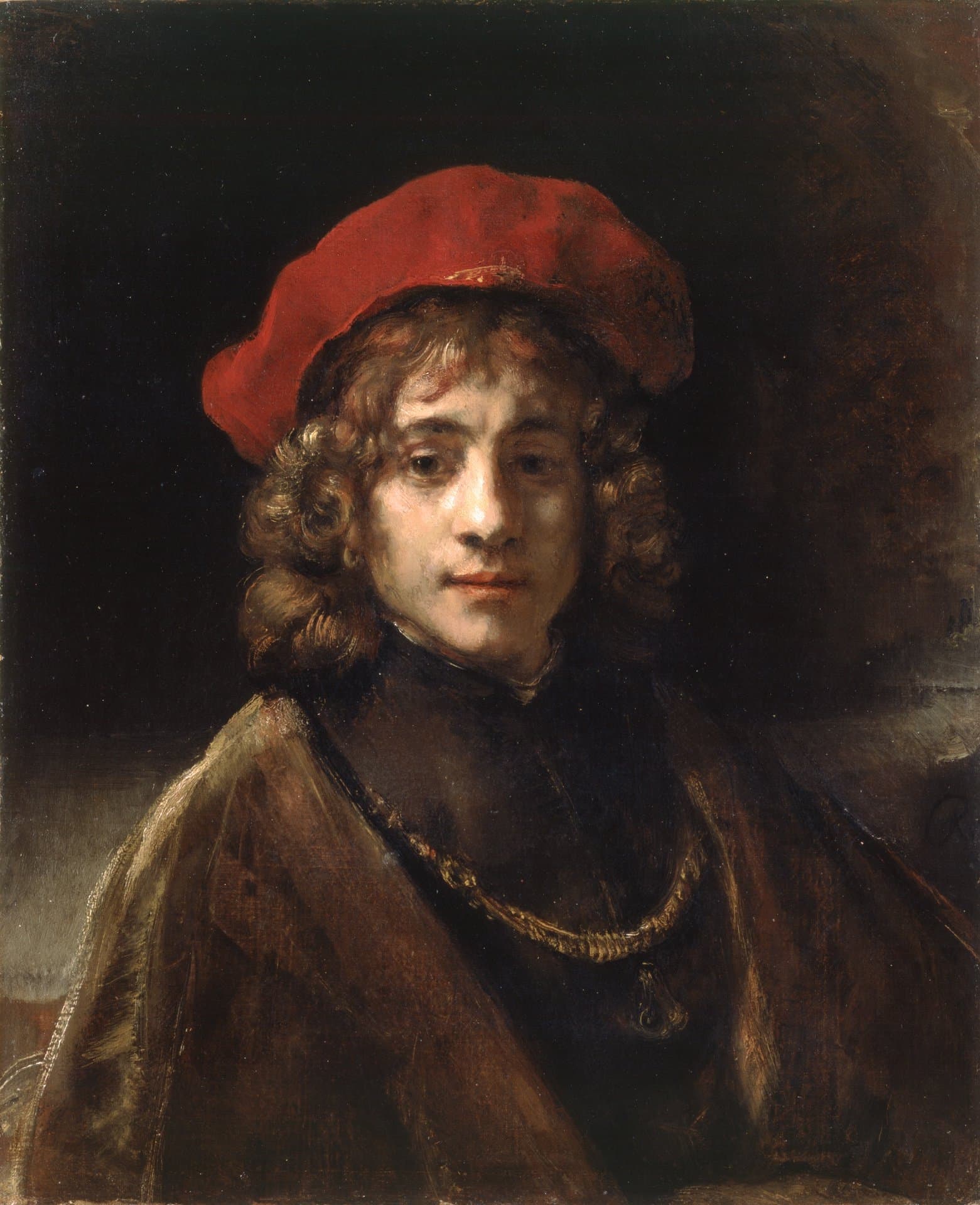
Titus, the Artist's Son
Rembrandt van Rijn, c. 1657 • Oil on canvas
Read full analysis of Titus, the Artist's Son →Valuation Analysis
Estimate: $60–100 million (hypothetical replacement/open‑market value). Rembrandt’s Titus, the Artist’s Son (Wallace Collection) is an accepted, mature-period portrait of one of the artist’s most beloved subjects, long published and continuously held in a leading national collection [1]. Because the Wallace Collection does not deaccession, this valuation functions as an insurance-type replacement proxy rather than a forecast of a real sale.
Anchors and ceilings. The most relevant modern price signals for prime Rembrandt portraits come from state/private acquisitions: The Standard Bearer was acquired by the Netherlands in 2022 for €175 million (≈$198m at the time) [2], while the Louvre/Rijksmuseum jointly acquired the full-length pendants of Maerten Soolmans and Oopjen Coppit in 2016 for €160 million [3]. These national‑treasure transactions set an effective ceiling for singular, canonical Rembrandt portraits.
Public auction context. At auction, the record for a Rembrandt painting remains Portrait of a Man with Arms Akimbo (1658) at $33.2 million (Christie’s, 2009) [4]. More recently, Sotheby’s sold The Adoration of the Kings (c.1628) for about $13.8 million in December 2023—evidence of solid floor pricing for authenticated but less comparable early works [5]. Compared to these, a mature, autograph single-figure portrait with Titus’s name recognition, scale, and quality should command a materially higher valuation.
Why Titus supports an upper‑tier range. Within Rembrandt’s oeuvre, intimate portraits of family—and Titus in particular—carry exceptional resonance and broad public familiarity. The Wallace picture is widely reproduced and, per the museum, has not faced sustained attributional challenge, enhancing confidence [1]. Scarcity also matters: late, unquestioned Rembrandt portraits of this caliber are virtually absent from private trade, pushing hypothetical replacement costs into the upper eight to low nine figures, even as auction comparables lag behind the rarified private/state benchmarks.
Deriving the number. Positioning the Wallace Titus between public-auction evidence (c.$33m record; $13.8m for a smaller early work) and national‑treasure acquisitions (€160–175m) supports a $60–100m range. This reflects the subject’s iconicity and Rembrandt’s blue‑chip status, yet prudently discounts from once‑in‑a‑generation sovereign purchases for larger or more politically charged masterpieces. The top of the band anticipates competitive demand from institutions or patrons for whom the subject’s cultural salience and the work’s museum halo confer outsized value.
Key variables. A current condition/technical dossier (varnish, retouching, structural stability) could refine the band; impeccable condition would press toward the upper range. Any fresh scholarship would likewise influence placement, though the work’s standing is already strong [1]. In sum, the $60–100 million indication accurately reflects today’s market for an indisputable, mature Rembrandt portrait with exceptional subject appeal, scaled beneath sovereign‑level acquisitions yet well above auction precedents.
Key Valuation Factors
Art Historical Significance
High ImpactPainted in Rembrandt’s mature period, this portrait of Titus occupies a privileged place within the artist’s intimate family imagery. It showcases late stylistic hallmarks—economy of touch, psychological presence, and rich chiaroscuro—central to Rembrandt’s reputation. While not on the geopolitical scale of The Night Watch, it is a touchstone within Rembrandt’s portrait corpus and one of the most reproduced depictions of Titus. That combination of maturity, mastery, and thematic importance places the work firmly in the upper tier of the artist’s oeuvre and supports a valuation that meaningfully exceeds public auction comparables for less resonant subjects or earlier, smaller works.
Subject Appeal and Iconicity (Titus)
High ImpactTitus is among Rembrandt’s most recognizable family subjects; depictions of him carry strong emotional and cultural resonance that broadens demand beyond specialist Old Master buyers. This iconicity is commercially potent: family images humanize the artist, attract institutional attention, and serve pedagogical and exhibition narratives. Among portrait subjects available to private buyers (hypothetically), Titus stands near the top for cross‑audience appeal, which justifies pricing well above generic single‑figure portraits. The subject’s fame also enhances long‑term desirability, making the replacement cost higher even in thin markets where top material trades privately.
Provenance and Institutional Halo
High ImpactThe painting has been a cornerstone of the Hertford/Wallace holdings since the 19th century and is now part of a UK national collection. Long, uncontested museum ownership confers exceptional credibility: exhaustive publication, scholarly scrutiny, and public visibility all contribute to perceived quality and rarity. Although the Wallace Collection does not deaccession, the same institutional halo that limits marketability elevates any hypothetical replacement value—this is the caliber of object normally pursued by governments or national museums. The credibility premium attached to century‑plus museum stewardship is a major driver of the $60–100 million range.
Rarity and Market Supply
High ImpactUndisputed autograph Rembrandt portraits of the late period are extraordinarily scarce in private hands, and single‑figure subjects of comparable emotional charge scarcely appear at auction. Recent state acquisitions (e.g., The Standard Bearer) underscore how infrequently works of this stature become available and how aggressively institutions move when they do. In such a supply‑starved environment, pricing is anchored less by routine auction comps and more by replacement cost and national‑treasure benchmarks. That scarcity premium, combined with the subject and maturity of the work, compels an upper‑eight to low‑nine‑figure valuation band.
Sale History
Titus, the Artist's Son has never been sold at public auction.
Rembrandt van Rijn's Market
Rembrandt remains the bellwether of the Old Masters market: supply of indisputable autograph oils is vanishingly small, and institutional demand is intense. Public auction records for paintings lag sovereign/private deals (the current auction record for a Rembrandt painting is c.$33.2m from 2009), but national-treasure acquisitions have reset expectations: The Standard Bearer sold to the Netherlands in 2022 for €175m and the Soolmans/Oopjen pendants in 2016 for €160m. Recent auctions show robust floors for authenticated works (e.g., $13.8m in 2023 for an early painting) and surging prices for works on paper and prints. In this context, prime portraits with strong subjects can justify replacement values far above standard auction comparables.
Comparable Sales
The Standard Bearer (De Vaandeldrager)
Rembrandt van Rijn
Single-figure, iconic Rembrandt portrait acquired by a national museum; sets the modern ceiling for a prime autograph Rembrandt portrait.
$198.0M
2022, Private/state acquisition by the Netherlands (Rijksmuseum)
~$219.0M adjusted
Pendant portraits of Maerten Soolmans and Oopjen Coppit (pair)
Rembrandt van Rijn
Masterpiece-level full-length portraits from Rembrandt’s prime; the most expensive Rembrandt works acquired in modern times; strong benchmark for top-tier portrait valuations.
$177.5M
2016, Private sale to the Rijksmuseum and the Louvre
~$239.3M adjusted
Portrait of a Man with Arms Akimbo (1658)
Rembrandt van Rijn
Late, half-length male portrait close in date to Titus (1657); current public auction record for a Rembrandt painting; directly relevant single-figure portrait benchmark.
$33.2M
2009, Christie's London
~$50.1M adjusted
Self-portrait, half-length, wearing a ruff and black hat (1632)
Rembrandt van Rijn
Autograph portrait by Rembrandt (self-portrait), providing a recent public price for a coveted portrait subject; earlier period but strong demand indicator for portraits.
$18.7M
2020, Sotheby's London
~$23.4M adjusted
The Adoration of the Kings (c.1628)
Rembrandt van Rijn
Recent public auction of an authenticated Rembrandt painting; not a portrait but a useful floor-price reference for autograph works coming fresh to market.
$13.8M
2023, Sotheby's London
~$14.6M adjusted
Current Market Trends
Old Masters have rebounded since 2024, with measured but competitive bidding for top-tier, well‑attributed works and renewed institutional participation. The market is bifurcated: masterpieces and best‑in‑class objects perform strongly, while mid‑tier material remains selective. Guarantees, realistic estimates, fresh scholarship, and compelling provenance are decisive. Category scale is modest relative to Contemporary/Modern, but depth for blue‑chip names like Rembrandt is evident in recent state acquisitions and records for drawings and prints. Against this backdrop, hypothetical replacement values for singular, museum‑caliber Rembrandt portraits sit well above public auction comparables and are best anchored to national‑treasure benchmarks.
Study print
Study this painting as a print
Pair the full artwork with a museum-style study sheet focused on one meaningful detail.
Sources
- Wallace Collection — Titus, the Artist’s Son (object record)
- Government of the Netherlands — Acquisition of Rembrandt’s The Standard Bearer (€175m)
- Louvre Press Release — Joint acquisition with Rijksmuseum of Rembrandt’s Maerten Soolmans and Oopjen Coppit (€160m)
- Artnet News — Auction Sales Round‑Up (Rembrandt auction record, 2009)
- The Art Newspaper — London Old Masters sales (Rembrandt, The Adoration of the Kings, 2023)