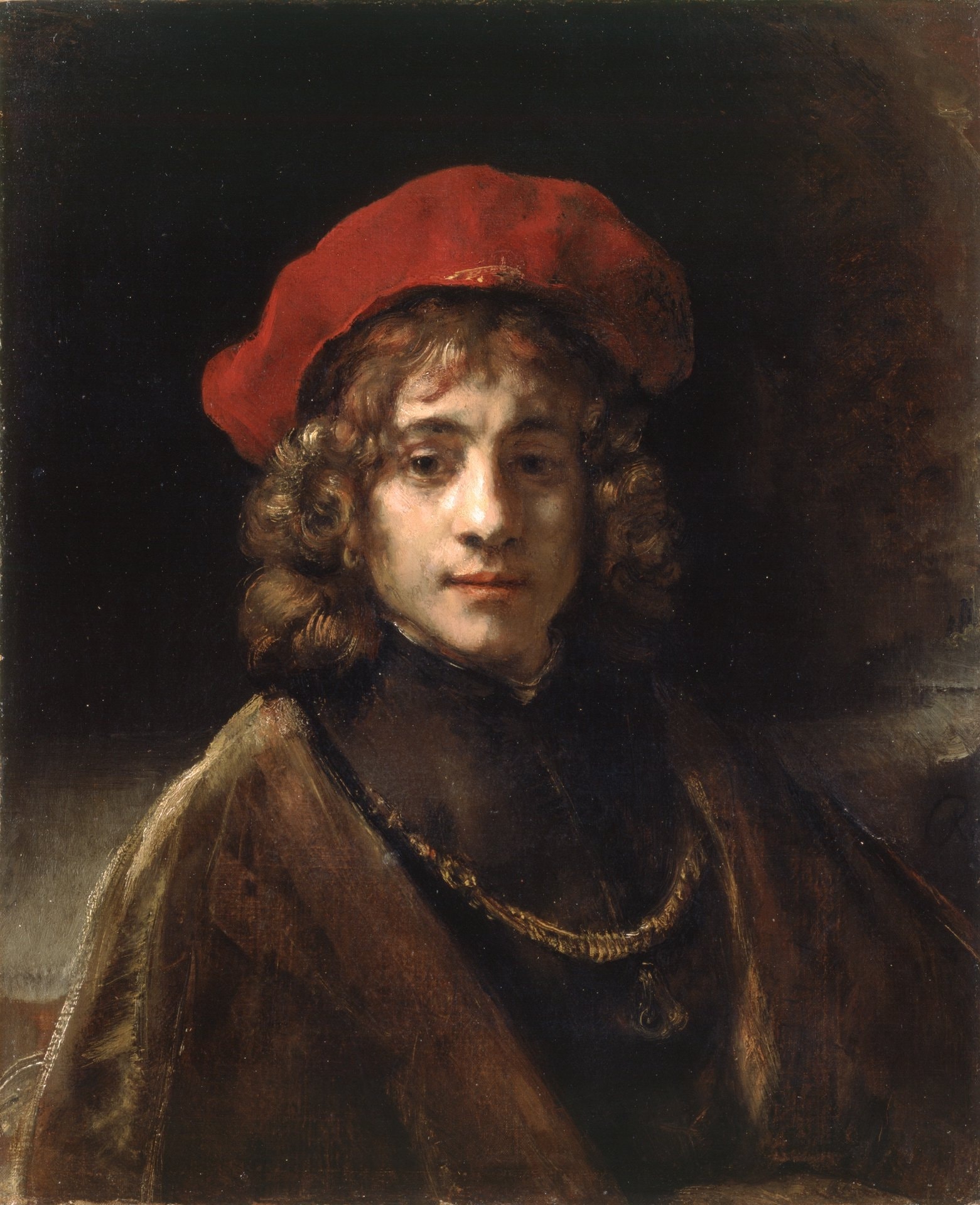
Titus, the Artist's Son

by Rembrandt van Rijn

Rembrandt van Rijn’s Titus, the Artist’s Son is a poised, half-lit study of youth, where tender chiaroscuro gathers on the face and crimson cap while the rest dissolves into shadow. The fancy Venetian costume, notably the red beret and simple gold chain, elevates a private likeness into a meditation on dignity and becoming [1][2].

Study Print Studio

Create a personal study print

Build a companion study sheet around the part of this painting that speaks to you most. Choose a detail, shape an interpretation, and walk away with something personal and display-worthy.

Fast Facts

Year
c. 1657
Medium
Oil on canvas
Dimensions
68.5 × 57.3 cm
Location
The Wallace Collection, London
See all Rembrandt van Rijn paintings in London
Titus, the Artist's Son by Rembrandt van Rijn (c. 1657) featuring Red beret, Gold chain, Teardrop pendant, Concentrated facial light (chiaroscuro)

Click on any numbered symbol to learn more about its meaning

Meaning & Symbolism

Rembrandt grounds the picture in a disciplined chiaroscuro that asserts meaning rather than mere effect. Light pools on Titus’s forehead, eyelids, and softly closed lips, then recedes across the cheeks before vanishing into a sable ground. That trajectory—illumination gathered and then withheld—stages youth as a state of nascent clarity. The eyes, painted with exquisite control, fix the viewer with steady attention, while the mouth’s slight tension resists easy sentiment. Around this intensely focused core, Rembrandt loosens his touch: the brown cloak is laid in with broad, tactile strokes; the shoulder seam and sleeve catch errant highlights that feel improvised, as if acknowledging the unfinishedness of a life still being made. The famous red beret crowns the head like a flare of vitality, its saturated crimson catching the strongest light and projecting the sitter forward from the gloom. The gold chain, thin yet deliberate, arcs across the chest as a modest emblem of distinction—suggesting aspiration without triumphal claim 126. These choices embed the portrait in a tradition of historicizing costume that Rembrandt used to construct elevated personae—outmoded berets and Venetian cloaks functioning as learned, al’antica signals rather than literal Dutch street dress 159. Here the costume is not disguise but frame: it removes Titus from the contingencies of Amsterdam fashion and places him in a timeless register where character, not occupation, defines him. The strategy aligns with the family’s real circumstances. In 1656 Rembrandt’s bankruptcy forced legal and commercial reorganization, with Hendrickje Stoffels and the adolescent Titus assuming new roles in managing sales and stock; painted about 1657, the likeness reads as a declaration of steadiness and capability at a precarious moment 12. That biography is not narrated by props but condensed into the painting’s ethics of light: darkness encircles the figure like uncertainty, while concentrated illumination marks intelligence, resolve, and the father’s affectionate regard. Rembrandt’s handling confirms the work’s purpose. The head is modeled with a high tonal key and minute calibrations—glints in the lower eyelid, a cool touch along the nasal bridge—techniques consistent with the artist’s mid‑late style that prizes inwardness over display 45. The cloak’s impasto, by contrast, refuses finish, turning paint itself into a metaphor for potential. This hierarchy of finish directs the viewer from costume to consciousness, then lets the fancy dress perform its secondary function: linking Titus to a lineage of artists, scholars, and courtiers who wore similar berets in Northern portraiture. The chain likewise remains deliberately non-specific; unlike honorific chains that announce an order or medal, it is a generalized emblem of dignity—akin to the symbolic chain in Rembrandt’s Aristotle with a Bust of Homer—asserting worth without tying the youth to a fixed office 6. Such calibrated ambiguity protected the portrait’s timelessness and made it a touchstone for later copies and studio variants, with the Wallace canvas widely acknowledged as the canonical type among Titus images 7. This is why Titus, the Artist’s Son is important: it exemplifies Rembrandt’s ability to convert private likeness into public statement without losing psychological truth. The painting synthesizes technical mastery—light, impasto, and edge—with a humanistic claim that dignity emerges in the interval between shadow and light. As a securely attributed Rembrandt long held in esteem within a collection where other attributions have shifted, it also anchors debates about authorship and workshop practice with a benchmark of authenticity 18. Above all, it offers a durable image of becoming: a youth meeting the viewer with composure, illuminated enough to see, shadowed enough to grow.

Explore Deeper with AI

Ask questions about Titus, the Artist's Son

Popular questions:

Powered by AI • Get instant insights about this artwork

💬 Ask questions about this artwork!

Interpretations

Symbolic Reading: Fancy Dress as Persona

The portrait’s sixteenth‑century Venetian costume and flamboyant red beret enact a learned, al’antica persona rather than documenting Dutch street dress. In Rembrandt’s practice, such fancy dress frames the sitter within a timeless register where character supersedes civic office. The Wallace notes this “fantastic” costume as a deliberate elevation of Titus’s demeanor; scholarship on Rembrandt’s costumes and Northern “hat language” shows outmoded berets signaling scholarly identity and artistic lineage. The effect is double: the costume historicizes Titus, while Rembrandt’s concentrated finishing at the face retracts theatre in favor of psychological presence. In this balance, attire is not disguise but ethical scaffolding—a visual grammar that dignifies a youth poised between apprenticeship and agency 13.

Source: Wallace Collection; National Gallery of Art; Journal of Historians of Netherlandish Art

Historical Context: Bankruptcy and Youthful Stewardship

In 1656 Rembrandt’s bankruptcy forced a legal and commercial reorganization of the household; by c. 1657, Hendrickje Stoffels and Titus were managing sales and stock. The Wallace explicitly situates this likeness in that precarious interval, making the image read as a compact declaration of steadiness and capability. Rembrandt sidesteps overt props of trade: instead, he compresses biography into a rhetoric of light and finish—the grave gaze, the modest gold chain, and the controlled chiaroscuro that confers dignity without triumphal proof. The result is a portrait of labor translated into poise, granting a young administrator the symbolic resources (dress, chain, lighting) of status while remaining pointedly free of a specific office or guild insignia, preserving both privacy and timelessness 21.

Source: Wallace Collection (object record and highlight entry)

Formal Analysis: The Ethics of Light

Rembrandt’s mid‑late style uses light as argument. The head is modeled in a high tonal key with minute calibrations—the glinting tear-duct, cool touches along the nose—while the cloak turns painterly, almost improvised. This hierarchy of finish funnels attention to consciousness and lets costume recede into a conceptual frame. Such staging aligns with museum analyses of Rembrandt’s later portraiture, where chiaroscuro and textured surface construct inwardness over display. In Titus, the light’s “gathering and withholding” reads epistemologically—knowledge emerging from shadow—and ethically, as a tender adjudication of what to reveal. The result is not virtuoso effect but meaning-bearing illumination, a pictorial ethos that converts technical choices into moral inference 431.

Source: National Gallery of Art (systematic catalogue on Rembrandt’s technique); Wallace Collection

Authorship & Reception: The Canonical Titus

The Wallace canvas is widely treated as the canonical type for Titus, spawning copies and studio variants that testify to its reception. The Met explicitly points back to this portrait in cataloguing a “Style of Rembrandt” copy, while broader scholarship charts the volatile climate of Rembrandt attribution and workshop practice. Notably, the Wallace emphasizes this painting’s stable authorship within a collection where other Rembrandts were later downgraded. Some critics note the canvas may have been cut down, leaving only a remnant “R,” which helps explain the circa dating. Together, the work’s copy-history and secure status make it a benchmark in debates about originality, replication, and studio ecology in Rembrandt’s orbit 7829.

Source: The Metropolitan Museum of Art; National Gallery of Art; Wallace Collection; Andrew Graham‑Dixon

Symbolic Reading: The Chain Without an Order

The slim gold chain arcs across Titus’s chest as an emblem of dignity that avoids tying him to any particular order or medal. In Rembrandt’s corpus, chains can announce honor or intellectual virtue—most famously in Aristotle with a Bust of Homer—but here the chain is deliberately non-specific, operating within the idiom of fancy dress. This calibrated ambiguity preserves the portrait’s timelessness: Titus is marked as worthy, yet unencumbered by office. It also mirrors the household’s fragile status after bankruptcy, signaling aspiration without swagger. The chain thus functions as a portable sign of esteem, a visual potential rather than a title, harmonizing with the painting’s broader ethic of restraint and inward elevation 16.

Source: Smarthistory (Metropolitan Museum of Art context); Wallace Collection

Psychological/Memento Lens: Youth Under Time’s Shadow

Rembrandt inflects youthful composure with temporal gravity. The description that “darkness encircles the figure like uncertainty” articulates a subtle memento sensibility: the soft closure of the lips, the steadied gaze, and the retreating ground frame Titus as becoming, not yet secured. Biographically, the poignancy deepens knowing Titus died in 1668, shortly before Rembrandt’s own death. Without resorting to vanitas props, the painting temporalizes the face through chiaroscuro—light as life-interval—and the loosened costume paint as open future. In this register, the work holds private tenderness and public gravity in equilibrium, making youth’s promise legible precisely because it is shadowed by the limits of time 12.

Source: Wallace Collection (biographical/contextual notes)

Related Themes

About Rembrandt van Rijn

Rembrandt van Rijn (1606–1669) was a leading Dutch Golden Age painter and printmaker whose Amsterdam years (from 1631) produced virtuosic portraits and ambitious history paintings. In the early 1630s he favored polished finishes, saturated color, and theatrical staging—qualities on display in this 1633 canvas. Although prolific, this is his only known painted seascape [2][4].
View all works by Rembrandt van Rijn

More by Rembrandt van Rijn
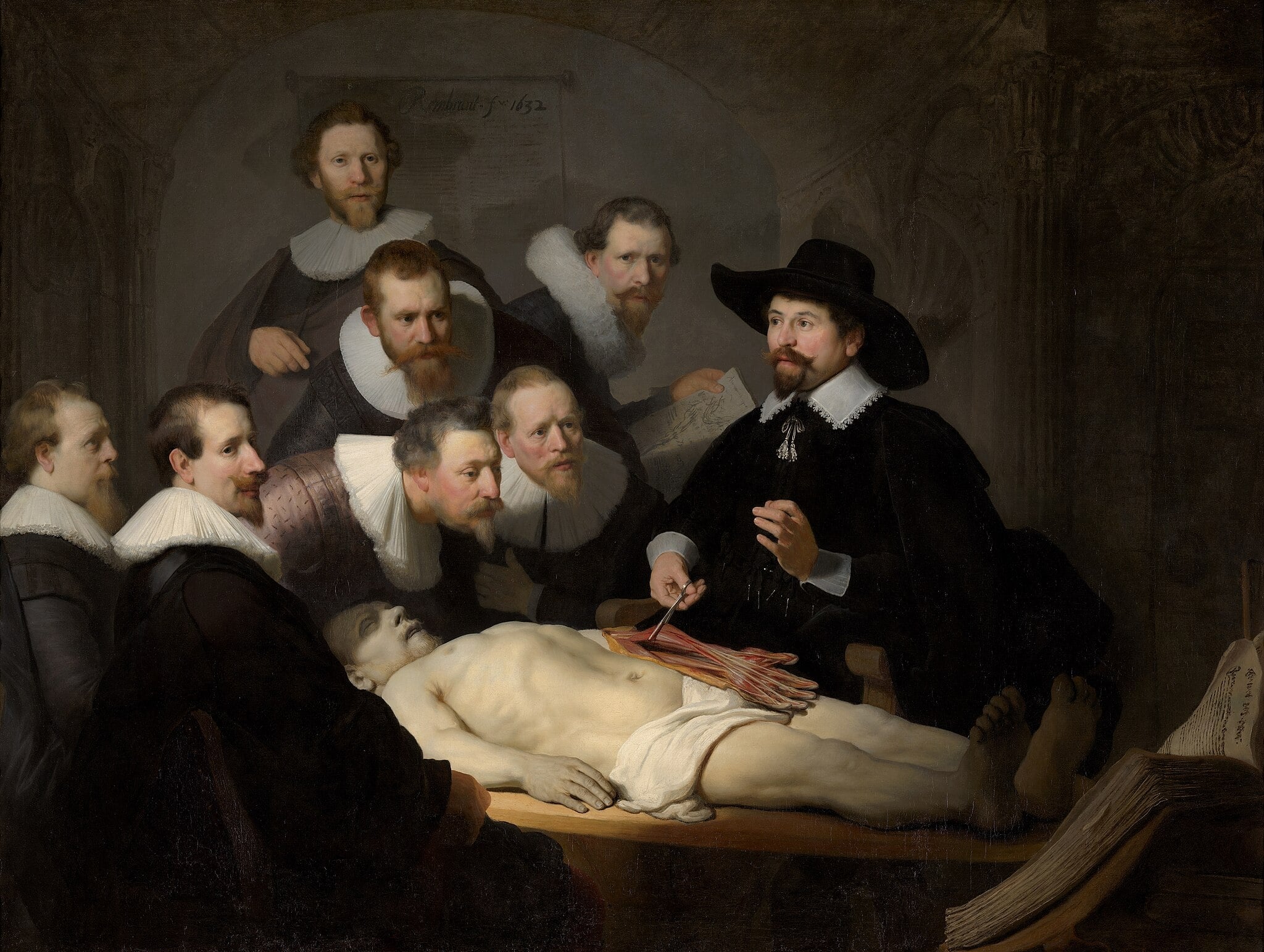
The Anatomy Lesson of Dr. Nicolaes Tulp by Rembrandt van Rijn

The Anatomy Lesson of Dr. Nicolaes Tulp

Rembrandt van Rijn (1632)

Rembrandt van Rijn turns a civic commission into a drama of <strong>knowledge made visible</strong>. A cone of light binds the ruff‑collared surgeons, the pale cadaver, and Dr. Tulp’s forceps as he raises the <strong>forearm tendons</strong> to explain the hand. Book and body face each other across the table, staging the tension—and alliance—between <strong>textual authority</strong> and <strong>empirical observation</strong> <sup>[1]</sup><sup>[2]</sup>.
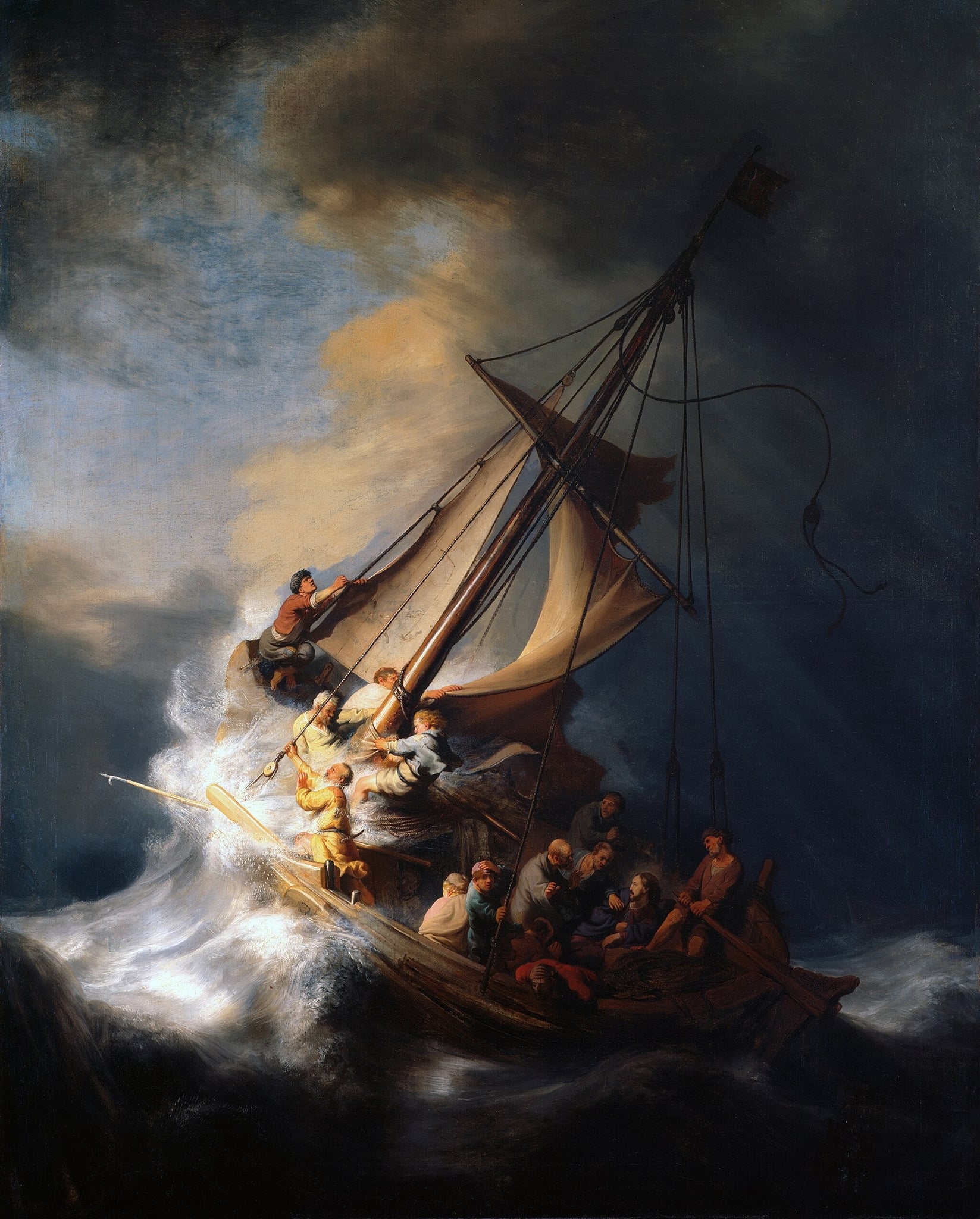
The Storm on the Sea of Galilee by Rembrandt van Rijn

The Storm on the Sea of Galilee

Rembrandt van Rijn (1633)

Rembrandt van Rijn’s The Storm on the Sea of Galilee stages a clash of <strong>human panic</strong> and <strong>divine composure</strong> at the instant before the miracle. A torn mainsail whips across a steeply tilted boat as terrified disciples scramble, while a <strong>serenely lit Christ</strong> anchors a pocket of calm—an image of faith holding within chaos <sup>[1]</sup><sup>[3]</sup>. It is Rembrandt’s only painted seascape, intensifying its dramatic singularity in his oeuvre <sup>[2]</sup>.
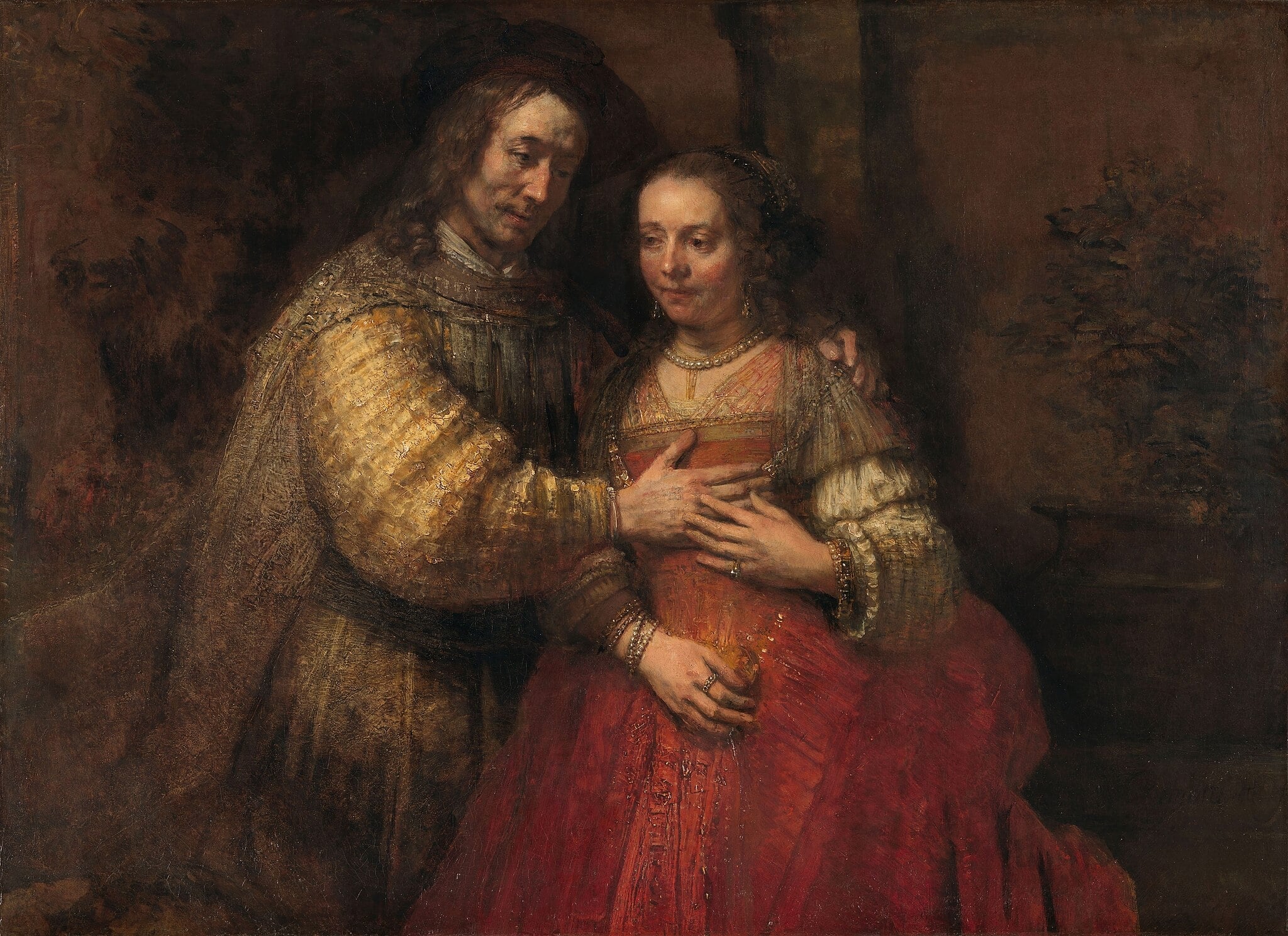
The Jewish Bride by Rembrandt van Rijn

The Jewish Bride

Rembrandt van Rijn (c. 1665–1669)

The Jewish Bride by Rembrandt van Rijn stages an intimate covenant: two figures, read today as <strong>Isaac and Rebecca</strong>, seal their union through touch rather than spectacle. Light concentrates on faces and hands, while the man’s glittering <strong>gold sleeve</strong> and the woman’s <strong>coral-red gown</strong> turn paint itself into a metaphor for fidelity and tenderness <sup>[1]</sup><sup>[3]</sup>. This late masterpiece embodies Rembrandt’s <strong>material eloquence</strong>—impasto as feeling—within a hushed, dark setting <sup>[1]</sup><sup>[2]</sup>.
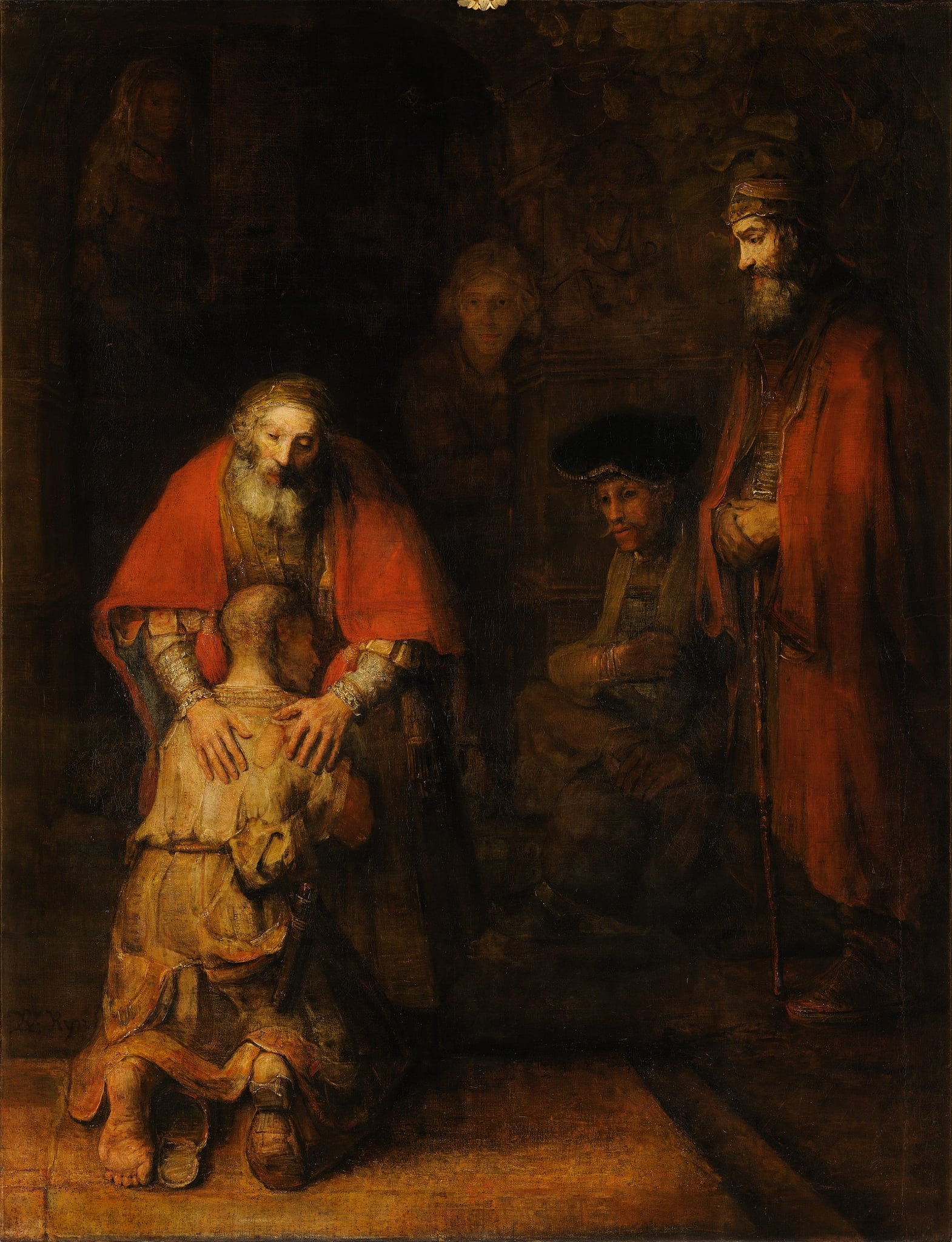
The Return of the Prodigal Son by Rembrandt van Rijn

The Return of the Prodigal Son

Rembrandt van Rijn (c. 1661–1669 (probably completed by 1669))

Rembrandt van Rijn’s The Return of the Prodigal Son is a late-life meditation on <strong>mercy</strong>, <strong>homecoming</strong>, and <strong>restored dignity</strong>. In a hush of dusk-like light, a ragged son kneels into his father’s <strong>embrace</strong>, while an upright elder brother holds back in shadow. The image concentrates meaning in illuminated <strong>faces, hands, and feet</strong>, turning a parable into a timeless human reckoning. <sup>[1]</sup><sup>[2]</sup>
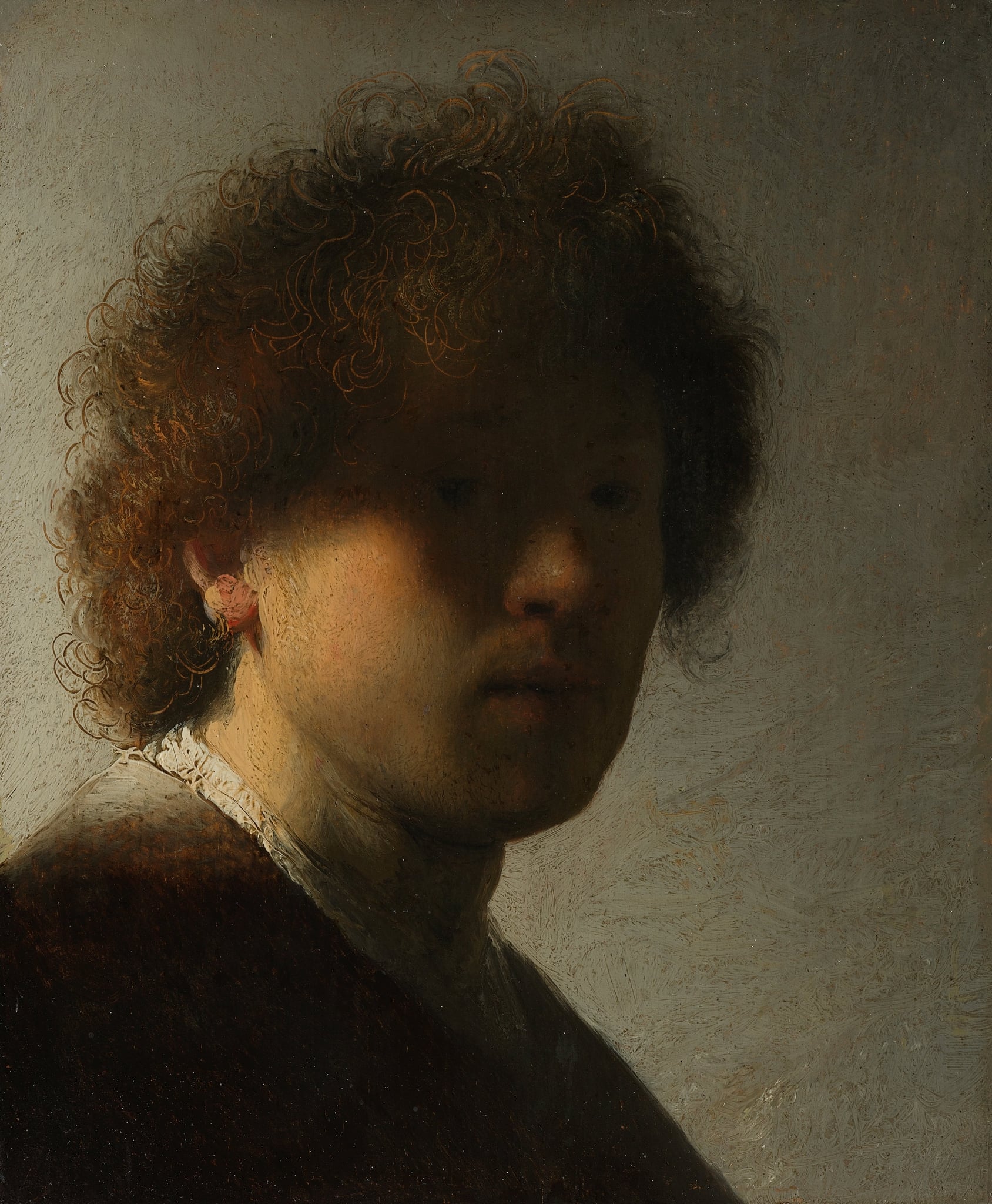
Self-portrait (with tousled hair) by Rembrandt van Rijn

Self-portrait (with tousled hair)

Rembrandt van Rijn (c. 1628)

A young Rembrandt van Rijn tests how <strong>light both reveals and withholds</strong> by letting his face emerge from darkness while his <strong>scratched, backlit curls</strong> flare like a rough halo. The small oak panel makes <strong>process itself the subject</strong>, turning hair, stubble, and a raking highlight into a statement of identity-in-formation <sup>[1]</sup><sup>[5]</sup>.
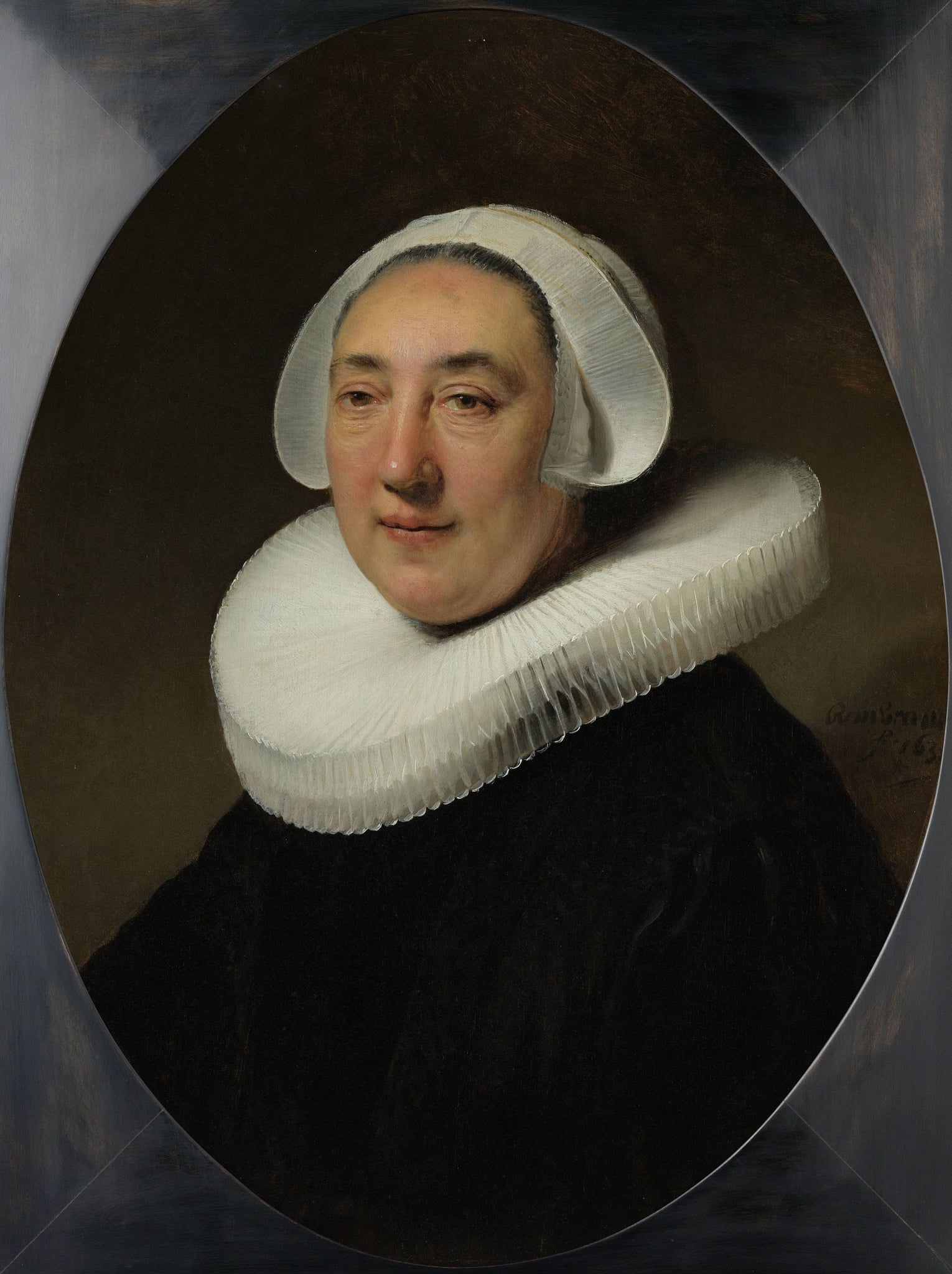
Portrait of Haesje Jacobsdr van Cleyburg by Rembrandt van Rijn

Portrait of Haesje Jacobsdr van Cleyburg

Rembrandt van Rijn (1634)

Rembrandt’s 1634 Portrait of Haesje Jacobsdr van Cleyburg stages a Dutch burgher within a feigned <strong>oval</strong> opening, illuminated by selective <strong>chiaroscuro</strong> that models warm skin against brilliant <strong>millstone ruff</strong> and sober black dress. The painting balances <strong>modesty and status</strong>, making virtue visible while quietly declaring prosperity through immaculate linen and craft <sup>[1]</sup><sup>[4]</sup>.