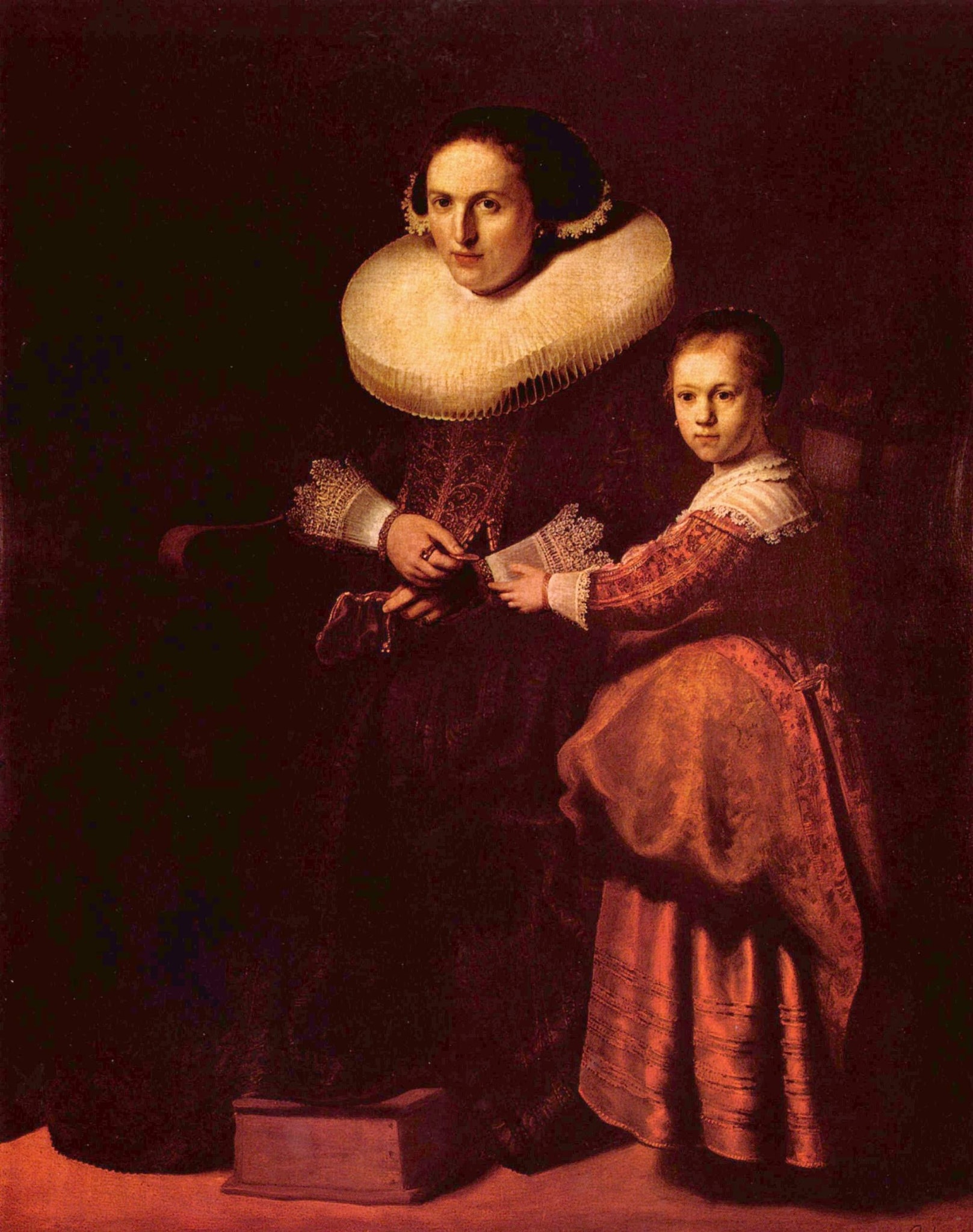
Portraits of Susanna van Collen and her Daughter Anna

by Rembrandt van Rijn

A mother and daughter step out of darkness, their faces, hands, and fabrics seized by Rembrandt’s chiaroscuro. The mother’s monumental ruff and sober black gown declare prosperity with restraint, while gloves, a clasped hand, and a book encode civility, lineage, and piety [1][4][5].

Study Print Studio

Create a personal study print

Build a companion study sheet around the part of this painting that speaks to you most. Choose a detail, shape an interpretation, and walk away with something personal and display-worthy.

Fast Facts

Year
c. 1632–33
Medium
Oil on canvas
Dimensions
155.3 × 122.5 cm
Location
The Wallace Collection, London
See all Rembrandt van Rijn paintings in London
Portraits of Susanna van Collen and her Daughter Anna by Rembrandt van Rijn (c. 1632–33) featuring Large lace ruff, Gloves, Book, Clasped hands (mother and child)

Click on any numbered symbol to learn more about its meaning

Meaning & Symbolism

Rembrandt shapes a moral theater from darkness: the deep brown field suppresses place and time so the eye cannot escape the eloquence of faces, hands, and ornament. The mother’s enormous, crisp ruff functions like a luminous halo, asserting dignity while throwing her composed features into relief. Her black gown, edged with lace cuffs and a discreet sparkle of jewels, signals prosperity tempered by restraint, a hallmark of respectable Dutch taste in the 1630s 4. In her hands she turns a pair of gloves—an accessory that in seventeenth‑century portraiture advertised breeding and self‑command, and in familial contexts connoted honor and loyal conduct 5. At her feet rests a large book, its mass anchoring the group and tacitly pledging the household to learning and piety—a conventional sign in Dutch portraits of moral instruction within the home 4. The child, clothed in a glowing salmon dress whose satin catches the beam, touches her mother’s hand and looks outward with calm assurance, a visual claim that manners and faith are already taking root. Gesture is the grammar of the painting. The small hand that gently clasps the mother’s becomes a conduit through which lineage and conduct pass forward. Rembrandt’s light dwells on this linkage, just as it articulates the textures of lace, skin, and figured silk; texture becomes argument. These motifs resonate with the work’s pendant—Jean Pellicorne with his son—where a purse models stewardship and household economy; together the pair emblemize a balanced program of civility, piety, and fiscal prudence across gendered roles in a prosperous Amsterdam family 24. The sparse background is not emptiness but moral stagecraft: by denying anecdote, the painter elevates codes of behavior to the subject itself, a strategy that defines early Amsterdam portraiture and helps explain the sitters’ dignified stillness within a charged void. The painting also embodies the workshop dynamics of Rembrandt’s early Amsterdam years. Commissioned soon after his move from Leiden, when he collaborated closely with the dealer Hendrick van Uylenburgh, such portraits often involved carefully orchestrated studio practice; today leading catalogues describe this canvas as Rembrandt and workshop, even as some scholars have argued for stronger autograph passages since the 1990s 123. That tension is legible in the picture’s priorities: the heads and hands—carriers of likeness and virtue—command the most intensive modeling, while expanses of costume and ground read as efficient, studio‑savvy staging. Far from diminishing the work, this collaborative facture expresses how early‑1630s Amsterdam portraiture met rising burgher demand without sacrificing gravitas. In sum, Portraits of Susanna van Collen and her Daughter Anna fuses the expressive power of chiaroscuro with a precise social vocabulary—ruff, gloves, book, linked hands—to proclaim a household where affection and virtue are one and the same, and where a child steps confidently into the light of inherited example 1245.

Explore Deeper with AI

Ask questions about Portraits of Susanna van Collen and her Daughter Anna

Popular questions:

Powered by AI • Get instant insights about this artwork

💬 Ask questions about this artwork!

Interpretations

Gesture, Texture, and the Social Contract

Rembrandt’s light dwells on interlaced hands, crisp lace, and satin, turning texture into argument. In Dutch portrait conventions, such tactile emphases were not neutral description; they indexed manners and virtue learned within the home. The child’s small hand forming a conduit to the mother’s is emblematic: a visible “contract” of lineage where touch equates to tutelage. Augmented by the open presence of a book (learning/piety) and gloves (civility/honor), the painting translates social ideals into haptic signs, making ethics legible through fabric, flesh, and sheen 56.

Source: Mauritshuis; Metropolitan Museum of Art

Authorship as Studio Strategy

The picture’s shifting attribution—variously “workshop” or “Rembrandt and workshop”—is not a detraction but a clue to how portraiture was produced in Amsterdam c. 1632–33. Early in his Uylenburgh period, Rembrandt delegated repeatable passages (expanses of black cloth, neutral grounds) while concentrating on physiognomy and the expressive nexus of hands and light. This tiered facture explains the painting’s intense heads/hands versus more economical fabrics, aligning with connoisseurial observations and the National Gallery’s account of Rembrandt’s collaborative model. The result is a calibrated hierarchy of finish that serves the genre’s aims: likeness, virtue, and social legibility delivered efficiently to a burgeoning burgher clientele 124.

Source: RKD; Wallace Collection; National Gallery of Art (Washington)

Gendered Pedagogy Across the Pendants

Read with its companion of Jean Pellicorne and son, the mother–daughter canvas completes a didactic diptych: the father tutors in money’s management (purse), the mother in reading and deportment (book, gloves). This partition of props visualizes a bifurcated curriculum of citizenship—economy and devotion—mapped onto gendered roles, a trope in Dutch family portraiture. The quiet choreography of touch (the child’s hand meeting the mother’s) seals that instruction as affectionate habit, not stern doctrine. Together, the pendants propose the household as a micro‑republic where virtue is rehearsed daily and transmitted generationally through exemplary objects and gestures 35.

Source: Wallace Collection (Jean Pellicorne with his Son Caspar); Mauritshuis (Portraits genre overview)

Ethics of Dress: Restraint as Display

Susanna’s sumptuous but sober attire models a specifically Dutch ethic: costly refinement displayed as restraint. The black gown amplifies white linens and lace, while a few controlled jewels register prosperity without theatrical excess. In the Republic’s moral economy of appearances, such dress signaled honnêteté—uprightness and self‑mastery—especially in portraits. Gloves intensify this rhetoric, connoting civility, honor, and self‑command in seventeenth‑century codes of comportment. The sitter becomes a living summa of material culture’s moral uses: fabrics and accessories as proofs of character rather than mere finery 67.

Source: Metropolitan Museum of Art; Royal Collection Trust

Collecting, Display, and the Politics of Taste

The canvas’s journey—from the Pellicorne/Valkenier orbit to King William II’s famed collection and finally the Wallace Collection—tracks how Dutch burgher virtue was canonized by nineteenth‑century princely and aristocratic taste. William II’s display of “Rembrandt” portraits signaled cultural capital in a national key; the Wallace bequest later naturalized such Dutch exempla within Britain’s museum culture. Attribution debates aside, the painting’s collecting history reveals how images of domestic piety and prudent prosperity accrued new meanings as they moved into royal galleries and public patrimony, becoming emblems of sober taste and civic virtue writ large 98.

Source: Research on King William II’s collection; NPG Scharf Sketchbook (Wallace inventory records)

Related Themes

About Rembrandt van Rijn

Rembrandt van Rijn (1606–1669) was a leading Dutch Golden Age painter and printmaker whose Amsterdam years (from 1631) produced virtuosic portraits and ambitious history paintings. In the early 1630s he favored polished finishes, saturated color, and theatrical staging—qualities on display in this 1633 canvas. Although prolific, this is his only known painted seascape [2][4].
View all works by Rembrandt van Rijn

More by Rembrandt van Rijn
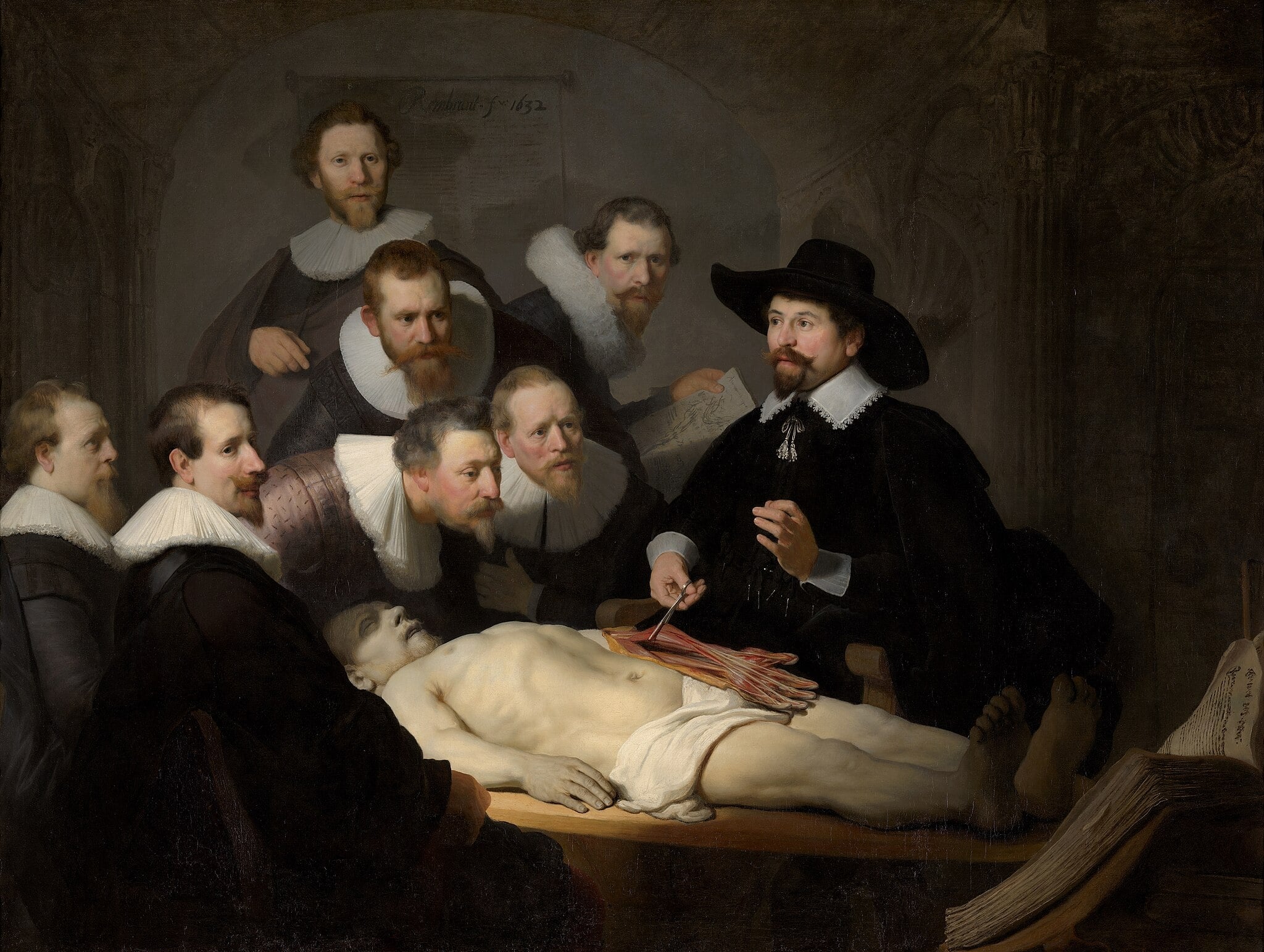
The Anatomy Lesson of Dr. Nicolaes Tulp by Rembrandt van Rijn

The Anatomy Lesson of Dr. Nicolaes Tulp

Rembrandt van Rijn (1632)

Rembrandt van Rijn turns a civic commission into a drama of <strong>knowledge made visible</strong>. A cone of light binds the ruff‑collared surgeons, the pale cadaver, and Dr. Tulp’s forceps as he raises the <strong>forearm tendons</strong> to explain the hand. Book and body face each other across the table, staging the tension—and alliance—between <strong>textual authority</strong> and <strong>empirical observation</strong> <sup>[1]</sup><sup>[2]</sup>.

The Storm on the Sea of Galilee by Rembrandt van Rijn

The Storm on the Sea of Galilee

Rembrandt van Rijn (1633)

Rembrandt van Rijn’s The Storm on the Sea of Galilee stages a clash of <strong>human panic</strong> and <strong>divine composure</strong> at the instant before the miracle. A torn mainsail whips across a steeply tilted boat as terrified disciples scramble, while a <strong>serenely lit Christ</strong> anchors a pocket of calm—an image of faith holding within chaos <sup>[1]</sup><sup>[3]</sup>. It is Rembrandt’s only painted seascape, intensifying its dramatic singularity in his oeuvre <sup>[2]</sup>.
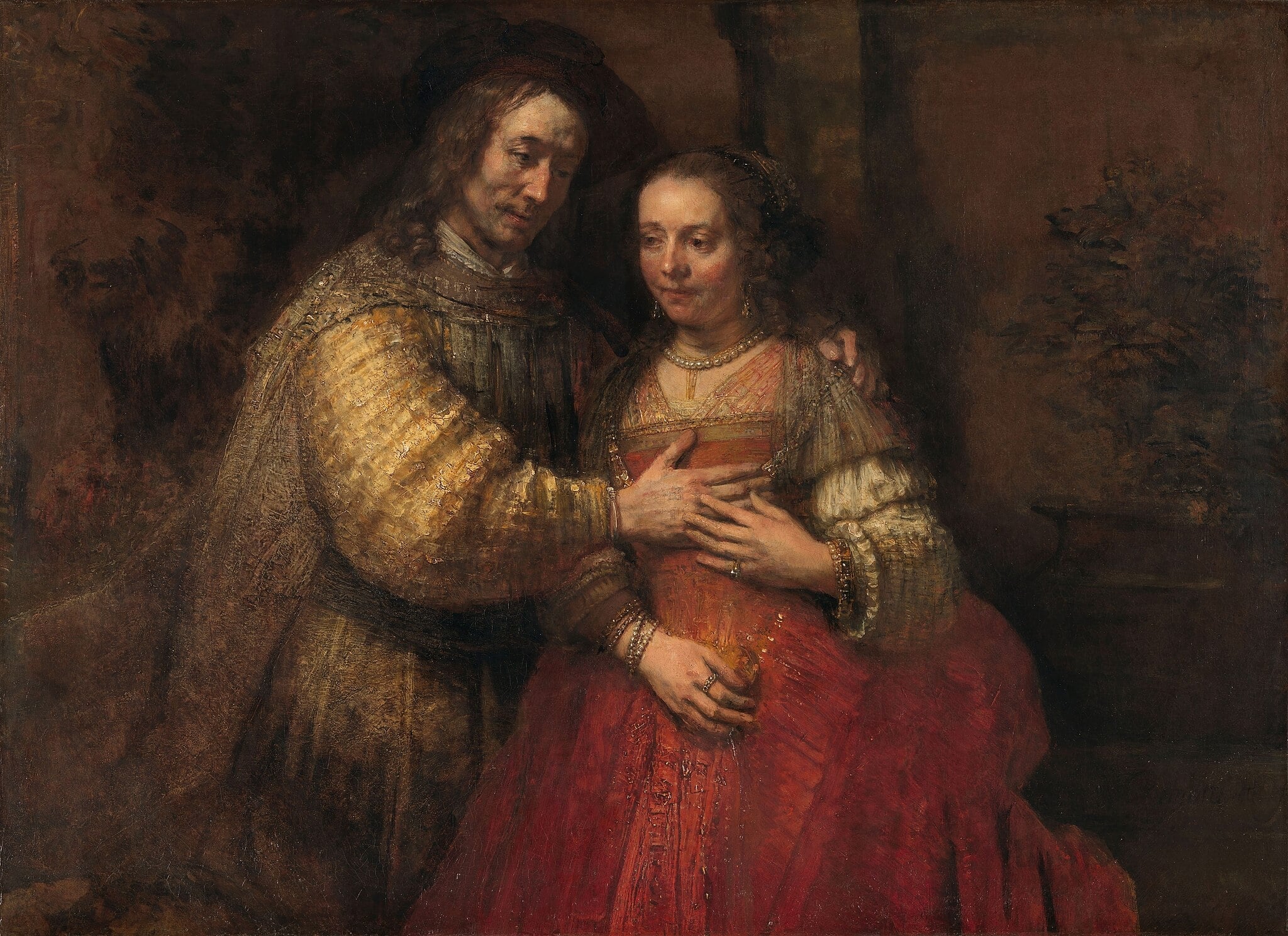
The Jewish Bride by Rembrandt van Rijn

The Jewish Bride

Rembrandt van Rijn (c. 1665–1669)

The Jewish Bride by Rembrandt van Rijn stages an intimate covenant: two figures, read today as <strong>Isaac and Rebecca</strong>, seal their union through touch rather than spectacle. Light concentrates on faces and hands, while the man’s glittering <strong>gold sleeve</strong> and the woman’s <strong>coral-red gown</strong> turn paint itself into a metaphor for fidelity and tenderness <sup>[1]</sup><sup>[3]</sup>. This late masterpiece embodies Rembrandt’s <strong>material eloquence</strong>—impasto as feeling—within a hushed, dark setting <sup>[1]</sup><sup>[2]</sup>.
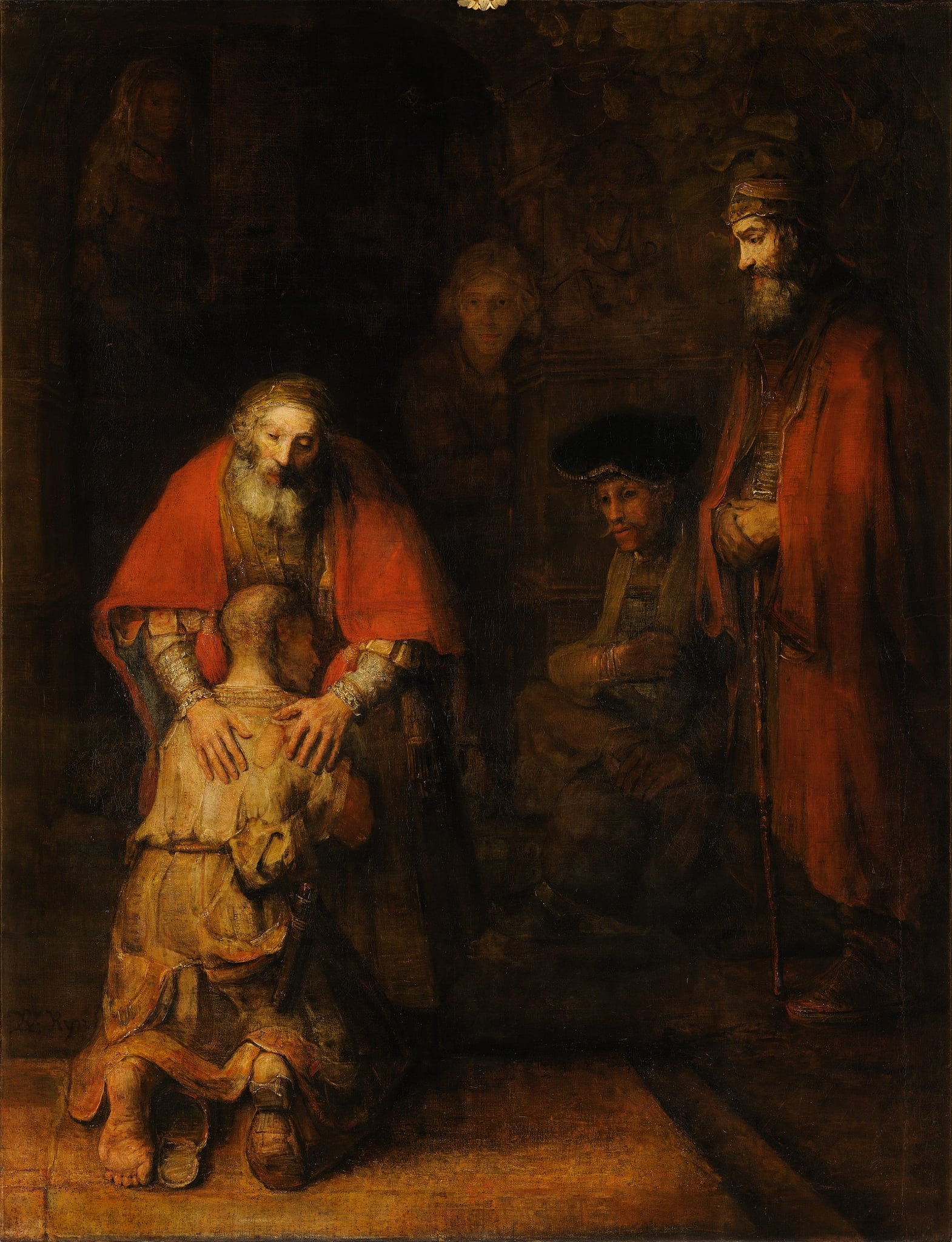
The Return of the Prodigal Son by Rembrandt van Rijn

The Return of the Prodigal Son

Rembrandt van Rijn (c. 1661–1669 (probably completed by 1669))

Rembrandt van Rijn’s The Return of the Prodigal Son is a late-life meditation on <strong>mercy</strong>, <strong>homecoming</strong>, and <strong>restored dignity</strong>. In a hush of dusk-like light, a ragged son kneels into his father’s <strong>embrace</strong>, while an upright elder brother holds back in shadow. The image concentrates meaning in illuminated <strong>faces, hands, and feet</strong>, turning a parable into a timeless human reckoning. <sup>[1]</sup><sup>[2]</sup>
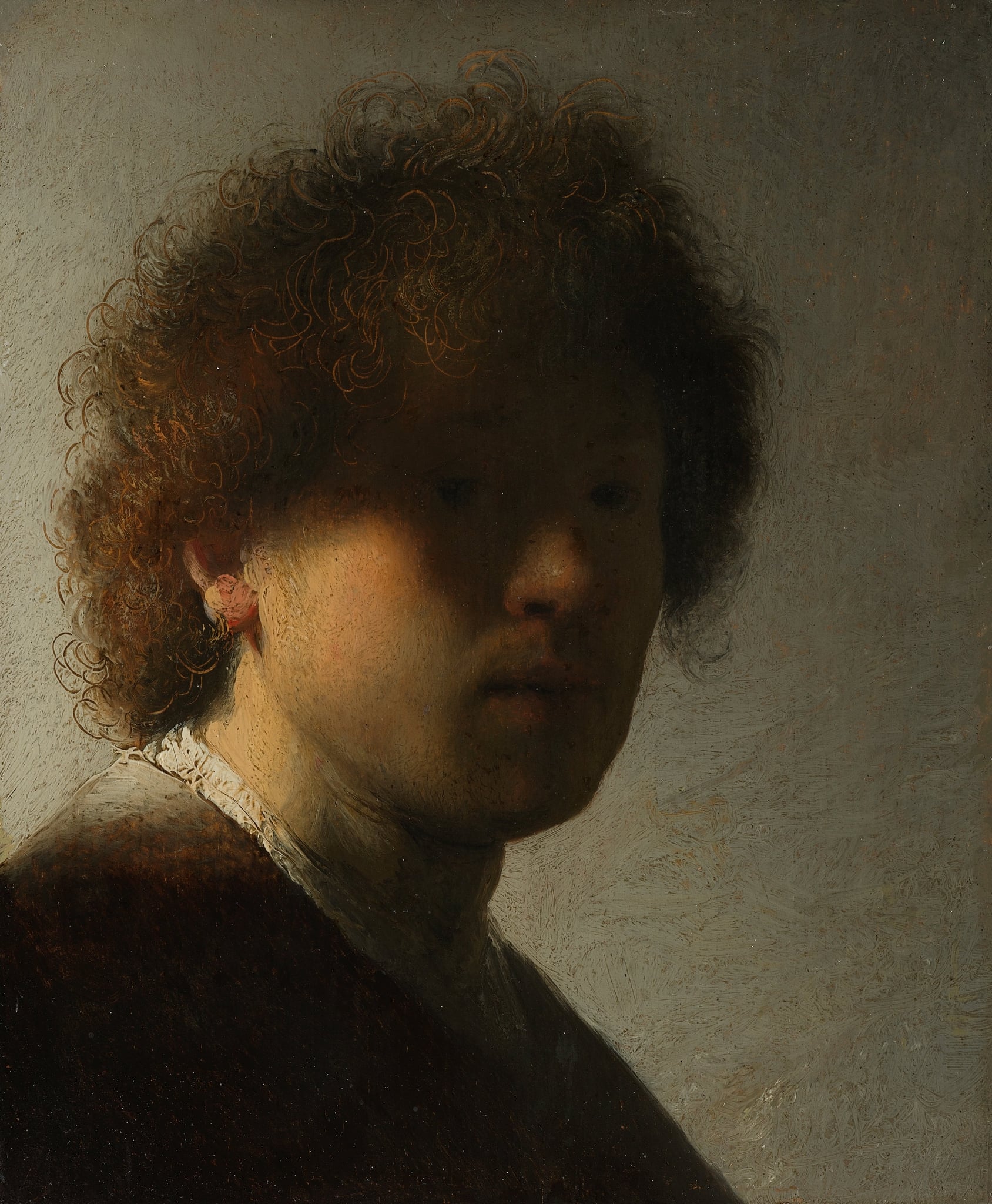
Self-portrait (with tousled hair) by Rembrandt van Rijn

Self-portrait (with tousled hair)

Rembrandt van Rijn (c. 1628)

A young Rembrandt van Rijn tests how <strong>light both reveals and withholds</strong> by letting his face emerge from darkness while his <strong>scratched, backlit curls</strong> flare like a rough halo. The small oak panel makes <strong>process itself the subject</strong>, turning hair, stubble, and a raking highlight into a statement of identity-in-formation <sup>[1]</sup><sup>[5]</sup>.
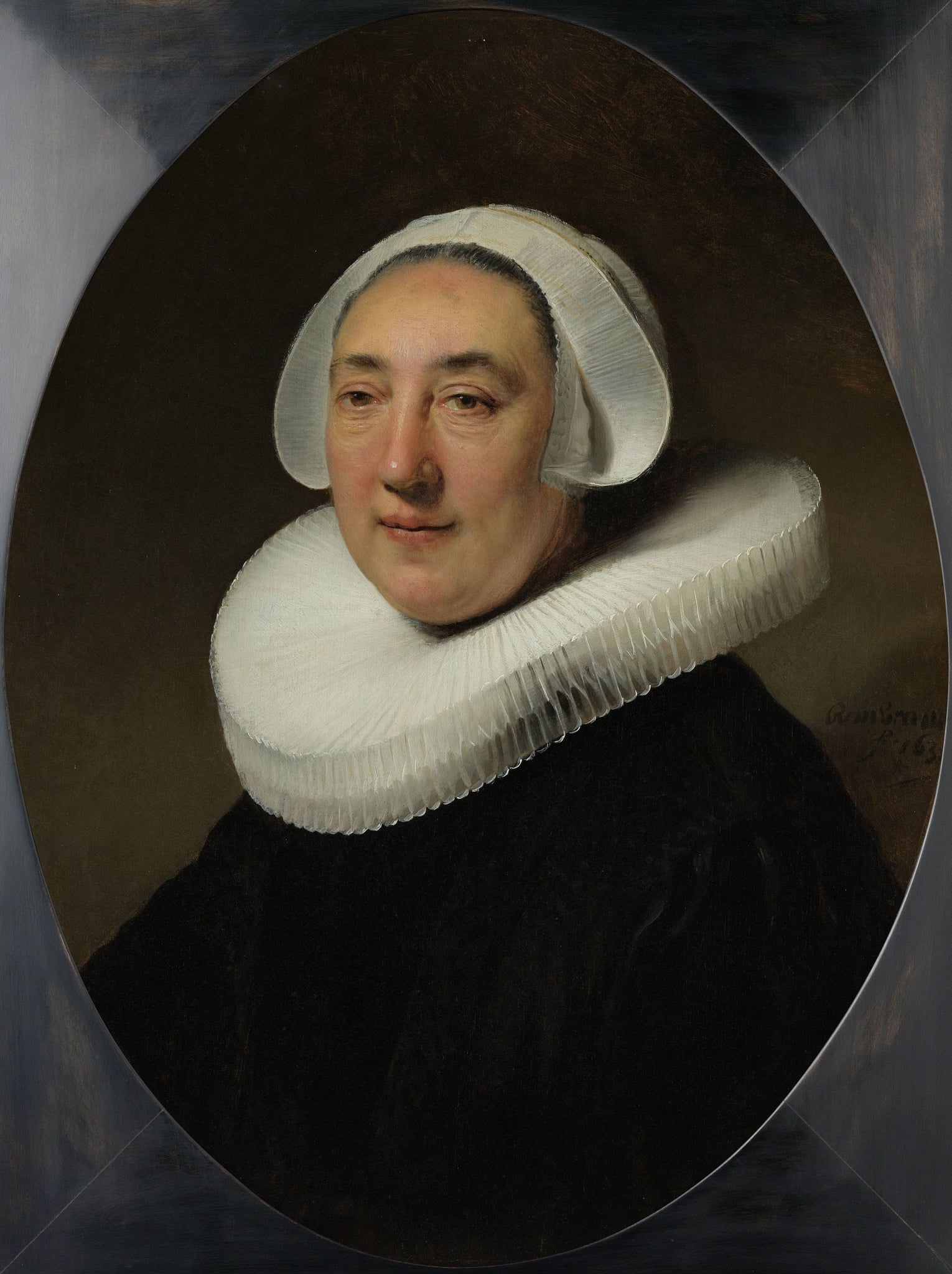
Portrait of Haesje Jacobsdr van Cleyburg by Rembrandt van Rijn

Portrait of Haesje Jacobsdr van Cleyburg

Rembrandt van Rijn (1634)

Rembrandt’s 1634 Portrait of Haesje Jacobsdr van Cleyburg stages a Dutch burgher within a feigned <strong>oval</strong> opening, illuminated by selective <strong>chiaroscuro</strong> that models warm skin against brilliant <strong>millstone ruff</strong> and sober black dress. The painting balances <strong>modesty and status</strong>, making virtue visible while quietly declaring prosperity through immaculate linen and craft <sup>[1]</sup><sup>[4]</sup>.