How Much Is Self Portrait at the Age of 34 Worth?
Last updated: July 28, 2026
Quick Facts
- Methodology
- comparable analysis
Rembrandt’s Self Portrait at the Age of 34 (1640, National Gallery, London) is a textbook, museum‑grade masterpiece and among the artist’s most reproduced images. Based on nine‑figure private benchmarks for top Rembrandts—especially the €175m Standard-Bearer self‑portrait (2022) and the €160m Maerten/Oopjen pendants (2016)—a realistic open‑market estimate today is $160–220 million.
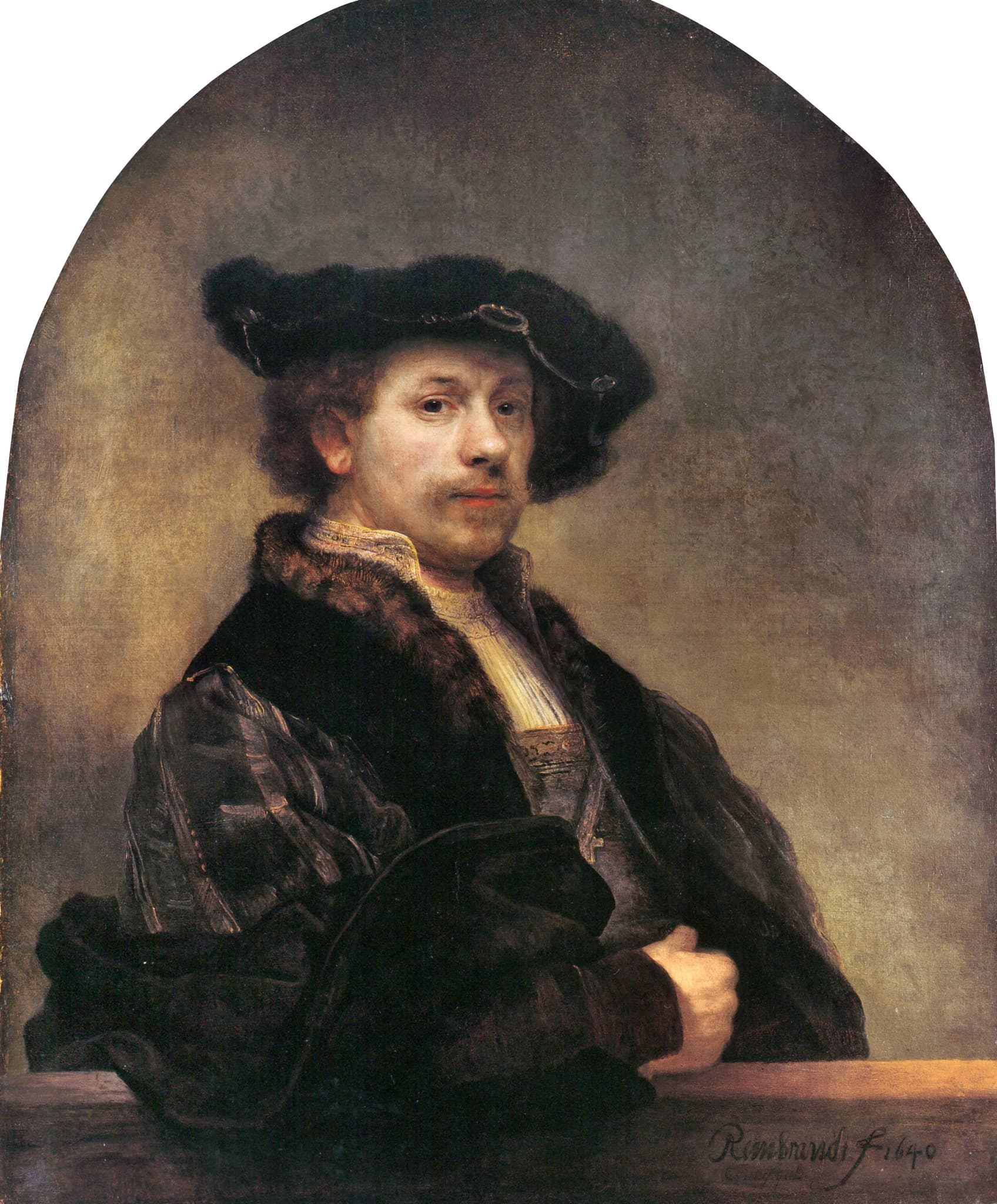
Self Portrait at the Age of 34
Rembrandt van Rijn, 1640 • Oil on canvas
Read full analysis of Self Portrait at the Age of 34 →Valuation Analysis
Conclusion: A fair, current open‑market estimate for Rembrandt’s Self Portrait at the Age of 34 (1640, National Gallery, London) is $160–220 million. This range is anchored to the most relevant modern benchmarks for prime Rembrandt portraits and self‑portraits, adjusted for the painting’s exceptional art‑historical stature, its ubiquity in scholarship and reproduction, and the extreme scarcity of fully accepted masterpieces in private hands [1].
Comparables and rationale: The most persuasive comp is Rembrandt’s self‑portrait The Standard-Bearer, acquired by the Netherlands state for the Rijksmuseum in 2022 for €175 million (≈$199 million at the time). That transaction is the clearest contemporaneous signal of nine‑figure pricing for a mid‑1630s, autograph Rembrandt self‑portrait of museum caliber [2]. A second anchor is the 2016 joint acquisition by the Louvre and Rijksmuseum of the full‑length pendant portraits of Maerten Soolmans and Oopjen Coppit for €160 million (≈$178 million at the time), confirming sustained institutional willingness to transact at the high nine figures for top‑tier Rembrandt portraiture [3]. By contrast, the artist’s public auction record for a painting—$28.5 million in 2009—reflects the rarity of offering prime, undisputed masterpieces at open auction, not a ceiling for this work’s potential [4].
Positioning of the 1640 self‑portrait: Within Rembrandt’s self‑portrait corpus—central to his legacy—the 1640 London canvas is one of the most iconic and oft‑illustrated images, deliberately engaging Raphael’s Baldassare Castiglione and Titian’s Man with a Quilted Sleeve. It is a mature, highly finished, autograph statement picture, reproduced in textbooks and monographs and frequently used to represent Rembrandt to a broad public [1]. That level of recognition commands an “icon premium” over otherwise comparable works: it broadens the buyer pool (including museums and UHNW collectors) and increases the likelihood of spirited competition.
Market calibration: Starting from the €175m Standard-Bearer result, we calibrate for (1) subject equivalency (both self‑portraits of canonical stature), (2) similar period quality (mid‑1630s vs. 1640), (3) enormous visibility for the London painting, and (4) the Old Masters market’s strong top‑end liquidity when “best of the best” material appears. These inputs support a value at or moderately above the Standard-Bearer benchmark under open‑market conditions. The $160–220 million band reflects that upside while allowing for inevitable lot‑specific sensitivities such as condition, marketing, and transactional mechanics.
Process and practicalities: The National Gallery states the work was acquired in 1861 and is not for sale; any valuation is therefore hypothetical [1]. If openly marketed with museum‑grade presentation and global outreach, we would expect robust competition at the nine‑figure level. Public auction outcomes for lesser Rembrandts in the tens of millions do not contradict this indication; they simply reflect differences in subject, scale, attribution certainty, and caliber. In short, this painting sits at the very top of the Old Master market, warranting an estimate bracket consistent with the highest recent private Rembrandt transactions.
Key Valuation Factors
Art Historical Significance
High ImpactThis is one of the canonical images in Rembrandt’s self‑portrait series—central to how the artist is understood and taught. Executed in 1640, the painting is a mature, highly finished statement that consciously engages Raphael’s and Titian’s paradigms, placing Rembrandt in a lineage of great masters. Its frequent reproduction in textbooks, catalogues, and museum materials has made it one of the most recognizable faces of Rembrandt. Such art‑historical weight confers an ‘icon premium’ because it appeals simultaneously to museums (mission‑driven acquisition rationales) and to private collectors who value universally acknowledged masterpieces.
Subject Rarity: Prime Self‑Portrait
High ImpactFully accepted, prime‑quality Rembrandt paintings are exceptionally scarce; prime self‑portraits of major stature are rarer still and almost never trade. The 1640 work sits at the heart of Rembrandt’s identity as an artist, a subject category proven to command nine‑figure prices in recent years. Within the Old Masters market—where supply irregularity and attribution risk often restrain bidding—unambiguous self‑portraits by Rembrandt form a micro‑segment with deep, trophy‑level demand that far exceeds typical category pricing bands.
Market Evidence and Buyer Pool
High ImpactTwo modern private benchmarks define the upper register: the Netherlands’ €175m purchase of The Standard-Bearer in 2022 and the Louvre/Rijksmuseum’s €160m acquisition of the Maerten/Oopjen pendants in 2016. These sales confirm deep institutional and UHNW appetite for the very best Rembrandt portraiture. While public auction records lag (owing to scarce supply of top works), a well‑staged private or hybrid process would likely draw global museums, foundations, and top collectors—conditions supportive of a competitive nine‑figure result.
Provenance, Visibility, and Institutional Standing
High ImpactIn the National Gallery since 1861, the painting benefits from unimpeachable provenance, constant public exposure, and continuous scholarly endorsement. Decades of display and reproduction confer global brand recognition that directly influences perceived quality and marketability. This institutional halo effect tends to compress attribution risk (already minimal here), amplifies demand if a sale were possible, and justifies pricing at the apex of the Old Masters market.
Condition and Technical Merit
Medium ImpactOld Master valuations are sensitive to condition and structure (support, ground, retouching, varnish). The National Gallery’s stewardship implies high standards of care and documentation. Our estimate assumes sound condition consistent with display in a leading museum; a current technical report could shift the bracket at the margins. That said, the painting’s finish, handling, and presence—core value drivers—are evident and would remain decisive in buyer assessments.
Sale History
Paris, sale of pictures belonging to Monsieur Perin
Offered (lot 37); reportedly unsold. Later in General Dupont’s collection; acquired by the National Gallery in 1861.
Rembrandt van Rijn's Market
Rembrandt van Rijn sits at the pinnacle of the Old Masters market. Supply of fully accepted, prime‑quality paintings is vanishingly thin, and the best examples are anchored in major museums. Modern public auction records for Rembrandt paintings are in the tens of millions (the current auction record is $28.5m from 2009), but private treaties for masterpieces have reached the high nine figures, including €175m for The Standard-Bearer (2022) and €160m for the Maerten/Oopjen pendants (2016). Demand is deep among museums and UHNW collectors; prints and drawings also show strong liquidity. When top‑tier paintings surface, competition is intense and price discovery is driven less by comparables than by rarity and institutional appetite.
Current Market Trends
Old Masters have rebounded at the top end, with trophy consignments and rediscoveries catalyzing category records in 2024–2026. The depth of bidding is strongest for works with unambiguous authorship, prime quality, and museum‑grade provenance—precisely where Rembrandt sits. While public auction results for lesser works can appear subdued, private transactions for masterpieces have established a durable nine‑figure tier. Cross‑category buyers from Modern/Contemporary continue to enter the segment, viewing blue‑chip Old Masters as culturally de‑risked trophies, and guarantees/irrevocable bids often underpin placement of star lots.
Study print
Study this painting as a print
Pair the full artwork with a museum-style study sheet focused on one meaningful detail.
Sources
- National Gallery, London – Object page: Self Portrait at the Age of 34 (NG672)
- Guinness World Records – Most expensive painting by Rembrandt (private sale): The Standard-Bearer
- Musée du Louvre press – Joint acquisition of Rembrandt’s Portraits of Maerten Soolmans and Oopjen Coppit (€160m)
- Guinness World Records – Most expensive Rembrandt painting sold at auction (2009)